


How to Remove Pet Odors From Rugs Safely
Learn how to remove pet odors from rugs without harming color or fibers, plus when professional washing is the smarter choice for a fresh home that lasts.
A beautiful rug can still feel wrong once the furniture is in place. The sofa may suddenly look too heavy, the room may feel disconnected, or the colors that worked in the store may fall flat at home. If you have ever wondered how to match rugs with furniture without making the room feel forced, the answer usually comes down to balance rather than perfect matching.
The most polished rooms do not treat the rug as an afterthought. They use it as a foundation. A rug can soften strong furniture lines, bring warmth to a large room, and connect finishes, fabrics, and colors that might otherwise compete. When it is chosen well, the entire space feels more effortless and deeply personal.
Before color or pattern, start with size. Scale is what makes a room feel grounded. Even a gorgeous rug will feel off if it is too small for the furniture grouping.
In a living room, the rug should usually be large enough for at least the front legs of the sofa and chairs to sit on it. If the room is spacious, placing all major furniture legs on the rug often creates a more luxurious, finished look. A rug that floats in the middle with no connection to the seating area tends to make the room feel fragmented.
In a dining room, the rug should extend beyond the table far enough that chairs remain on the rug when pulled out. In a bedroom, the rug should frame the bed rather than disappear beneath it. These choices may sound technical, but they shape how the room feels every day. Correct sizing adds calm. Undersized rugs almost always create visual tension.
If your furniture is substantial, lean toward a rug with enough presence to hold its own. A large sectional paired with a small rug often makes the rug look decorative rather than intentional. On the other hand, in a smaller sitting area, an oversized rug can make the room feel softer and more expansive, as long as it respects the room’s edges.
Not all furniture carries the same visual weight. A low-profile linen sofa feels lighter than a dark leather sectional with wide arms. A glass coffee table behaves differently than a carved wood one. This is where many homeowners get stuck. They are not just matching color. They are balancing presence.
If your furniture is heavy, dark, or traditional, a rug can either echo that richness or lighten the room. A patterned rug with a softer ground color often helps break up visual heaviness while still feeling cohesive. If every piece in the room is dark and dense, the space can start to feel closed in.
If your furniture is light, clean-lined, or more contemporary, a rug with texture or subtle pattern can keep the room from feeling flat. Think of wool blends, tonal designs, or gentle distressing that adds depth without clutter. In design, contrast is often what makes a room feel considered.
This is where it depends on the mood you want. If you love quiet luxury, keep the contrast subtle and let texture do more of the work. If you want a room with more energy, use the rug to introduce movement through pattern or color variation.
One of the easiest mistakes is trying to match the rug exactly to the sofa or chairs. Exact matches can make a room feel overly coordinated, and not in a good way. A better approach is to look for connection.
A rug should relate to the room’s furniture color, but it does not need to repeat it. If your sofa is cream, your rug might include warm taupe, soft gray, muted blue, or layered neutrals that support the same palette. If your chairs bring in rust or olive, a rug that carries a hint of that tone can tie the arrangement together beautifully.
When thinking about how to match rugs with furniture, work with a color story of two to four tones already present in the room. Pull from upholstery, wood finishes, pillows, art, or drapery. That keeps the rug from feeling random.
Neutral rooms especially benefit from variation. Cream furniture with a cream rug can work, but only if there is enough texture and tonal difference to create depth. Otherwise, the space may feel washed out. In those rooms, a rug with layered beige, ivory, greige, or subtle pattern often creates a more elevated result.
Pattern is where personality comes in, but it needs a clear role. If your furniture is solid and tailored, a patterned rug can become the room’s visual anchor. This is often the easiest way to bring life into a space without over-accessorizing.
If your sofa or chairs already feature a bold print, keep the rug quieter. That does not mean plain. It means controlled. A tonal design, small-scale pattern, or textured weave can support the room without adding noise.
Scale matters here too. Large furniture often pairs well with larger rug motifs because they feel proportional. Delicate patterns can get lost under substantial pieces. In a smaller room with lighter furnishings, finer patterns may feel more graceful.
Traditional and vintage-inspired rugs are particularly useful because they mix multiple tones and age beautifully into a room. They are forgiving with wood finishes, upholstery changes, and seasonal styling. A more graphic or modern rug can look striking, but it usually asks for more discipline from the rest of the space.
Some rooms have the right colors and the right layout, yet still feel unfinished. Texture is often the reason. A rug does more than cover the floor. It changes how the room feels visually and physically.
Smooth leather furniture, polished wood, and sleek metal finishes benefit from a rug with softness and dimension. Wool, hand-tufted textures, and high-low patterns bring warmth and keep the room from feeling rigid. If your furniture is already plush and relaxed, a flatter weave or more structured rug can create welcome balance.
Practicality matters too. High-pile rugs can feel luxurious in bedrooms and quieter sitting spaces, but they may not be ideal under dining chairs or in active family rooms. Flatweaves and low-pile options are often easier for high-traffic areas. The best choice is the one that looks beautiful and lives well with your household.
The right rug for a formal living room may not be right for a family room, breakfast nook, or primary bedroom. Furniture matching should always be filtered through how the space is used.
In a room where kids, pets, or regular entertaining are part of daily life, durability should shape your decision. A pale silk-like rug under heavy use may create unnecessary stress, no matter how stunning it looks with the furniture. A richly patterned rug with forgiving tones can still feel elevated while being far easier to maintain.
For quieter rooms, you may have more freedom to prioritize softness, intricate design, or lighter color. There is no single perfect formula. The best interiors are the ones that respect both your style and your routines.
For many homeowners, seeing rug materials and colors in person makes this decision much easier. What reads as warm gray online may lean blue in your home. A pattern that feels subtle on a screen may feel much bolder beside your actual sofa. That tactile comparison is often what helps a room come together with confidence.
A well-matched rug and furniture arrangement does not necessarily stand out piece by piece. Instead, the room feels settled. Your eye moves comfortably across the space. Nothing looks stranded, too sharp, too busy, or too small.
If you are second-guessing a rug, ask a few simple questions. Does it connect to at least one or two colors already in the furniture? Does its size support the conversation area? Does its texture balance the finishes in the room? Does it fit the way the room is actually used?
If the answer is yes to most of those, you are likely very close. Sometimes the final layer is not replacing the rug at all but adding a pillow, throw, or accent that bridges the relationship between the rug and furniture more clearly.
At Home Rug Gallery, this is often where the showroom experience matters most. Seeing rugs alongside furnishings and décor helps homeowners move beyond guesswork and toward rooms that feel cohesive, comfortable, and effortlessly styled.
The best rug is rarely the one that matches everything exactly. It is the one that gives your furniture a sense of place and makes the whole room feel like home.
Learn how to remove pet odors from rugs without harming color or fibers, plus when professional washing is the smarter choice for a fresh home that lasts.
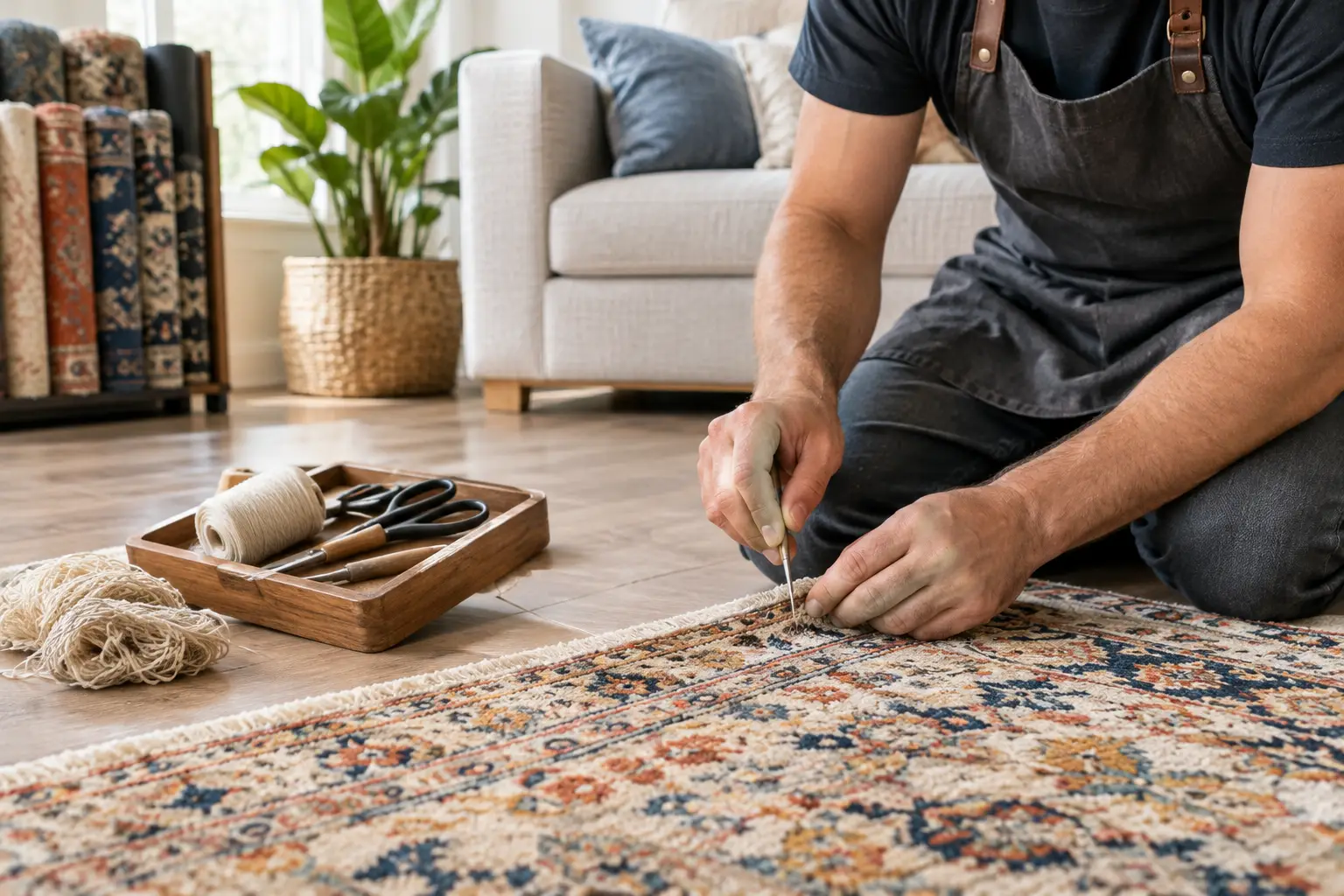
Use this Kennesaw rug repair guide to spot damage early, choose the right restoration, and protect the color, texture, and comfort of your favorite rug.
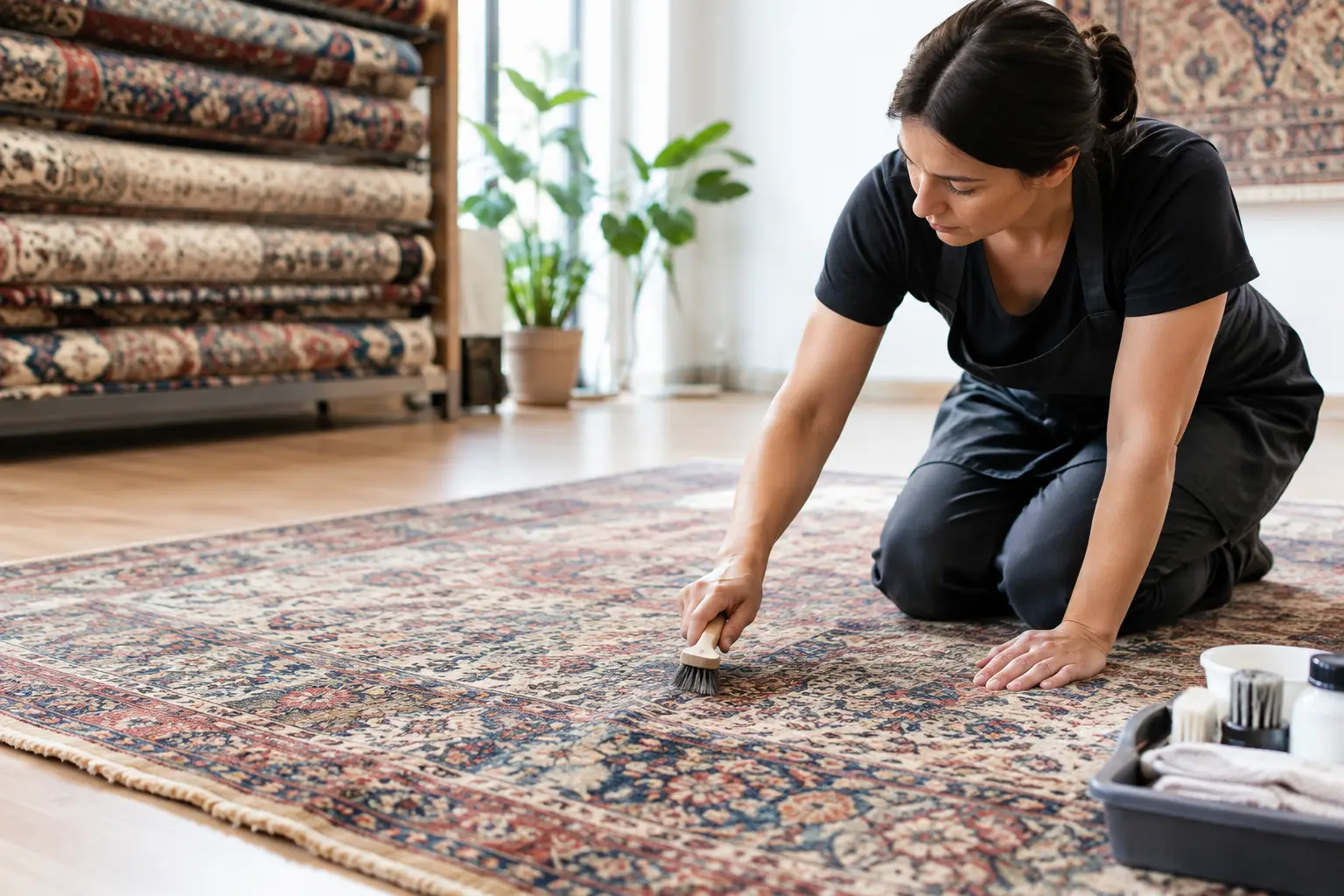
Marietta rug restoration can preserve color, texture, and history. Learn when repair makes sense and how thoughtful care protects a cherished rug at home.
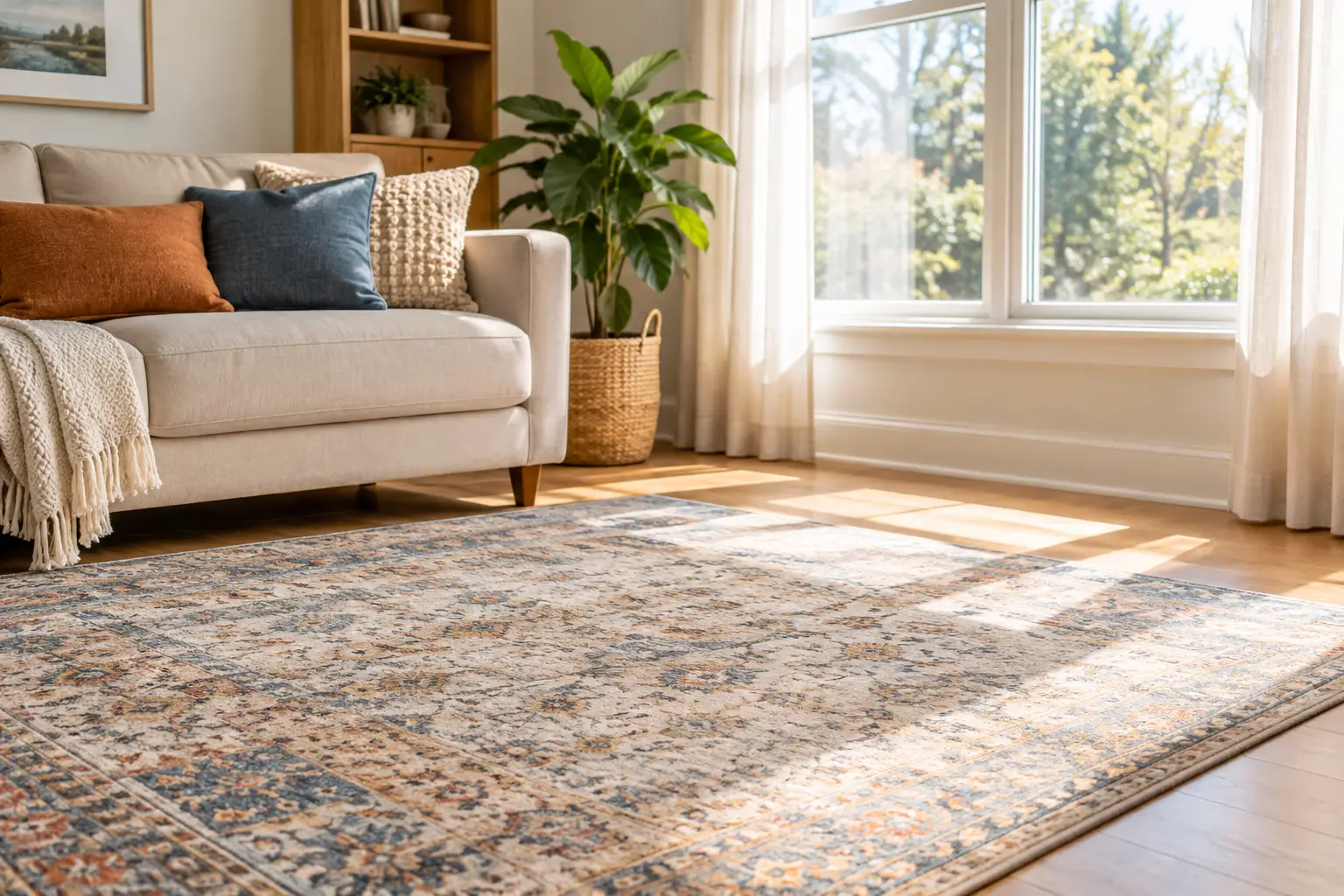
Learn how to protect rugs from sun fading with thoughtful window treatments, rotation, cleaning, and placement tips that preserve color and comfort daily.
From cozy area rugs to statement-making wall décor, our curated categories make it easy to explore what speaks to your space. Whether you’re refreshing a single corner or reimagining your whole home, start here and discover pieces that bring it all together.