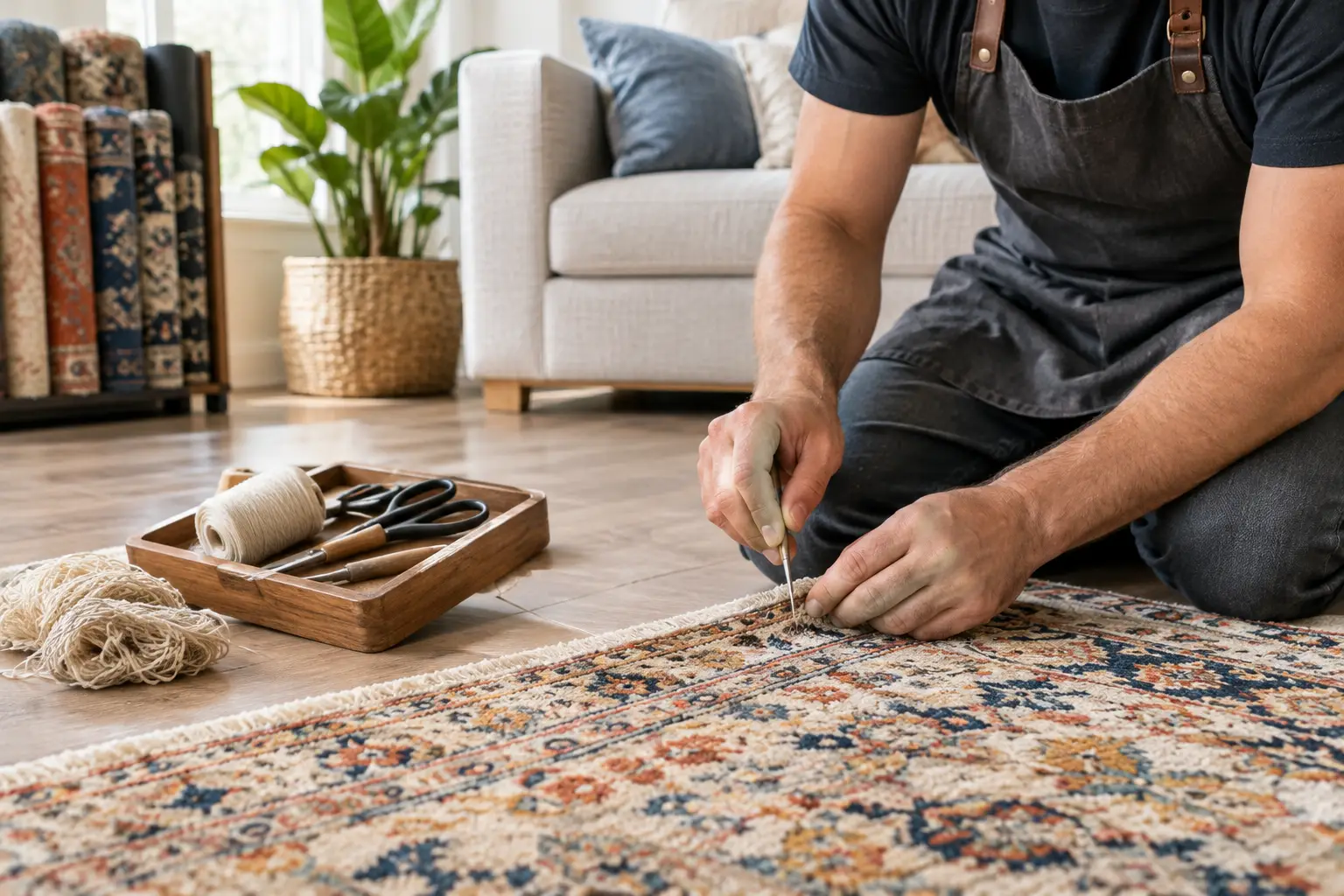
A rug rarely announces that it needs attention all at once. It may begin with a small gap along the binding, a fringe that looks thinner than it once did, or a worn patch in the exact spot where the family gathers most. For homeowners seeking rug repair Marietta GA services, the right response is not always replacement. A well-made rug can often be thoughtfully restored, preserving the color, texture, and character that make it feel deeply personal in your home.
Repair is especially worthwhile when a rug anchors the room. Perhaps it brings warmth to a living room with pale upholstery, softens a formal dining space, or carries colors that tie together the artwork, pillows, and furnishings you have collected over time. A careful repair can protect that visual foundation while extending the life of a piece you already love.
What Professional Rug Repair Can Preserve
Rug damage is not all the same, and neither is the repair. The best approach begins with a close look at how the rug was made, what fibers it contains, where it has worn, and whether the problem is stable or still getting worse. Hand-knotted, handwoven, wool, silk, vintage, and heirloom rugs deserve a different level of consideration than a machine-made accent rug.
The goal is not to make every rug look brand new. In many cases, a successful restoration protects the rug’s structure and keeps the repair visually quiet, allowing the original design to remain the focus. A repaired edge should feel finished rather than bulky. Restored fringe should complement the rug’s proportions rather than look artificially uniform. Color matching should respect the rug’s natural variation and age.
Common repair needs include weakened or unraveling edges, missing or damaged fringe, holes, tears, moth-related fiber loss, worn areas, and sections that have pulled away from their foundation. Addressing these issues early matters. A small opening at the edge can gradually work its way inward, turning a limited repair into a larger restoration project.
When Rug Repair in Marietta GA Makes Sense
A rug is often worth repairing when its construction, materials, design, or sentimental value would be difficult to replace. A quality wool rug with a softened, collected look may have years of life remaining even if its fringe needs attention. An antique or family piece may hold meaning that a new rug simply cannot recreate. A custom-sized rug can also be worth preserving when it fits a room beautifully and replacing it would disrupt the entire furniture layout.
There is also a practical design reason to repair rather than replace. Rugs are not isolated accessories. Their scale, color, and texture influence how every other element in a room reads. Replacing a rug may mean reconsidering paint undertones, upholstery, pillows, and even lighting. If the existing piece still supports the room’s overall direction, restoration can be the more thoughtful choice.
That said, repair is not automatically the right answer. If a rug has extensive deterioration across its foundation, significant dry rot, pervasive odor, or severe damage in several high-traffic areas, the result may not offer the longevity you want. The value of the rug, the intended room, and the extent of the damage all shape the decision. A rug in a quiet bedroom may tolerate a more delicate restoration than one placed beneath an active dining table or at the center of a busy family room.
The Details That Matter Before Restoration
Before committing to a repair, consider where the rug lives and how your household uses the space. A hallway runner faces a different kind of wear than a rug beneath a coffee table. Homes with pets, young children, frequent entertaining, or direct sunlight may need a care plan that supports the repair once it is complete.
The rug’s fiber is equally important. Wool is naturally resilient and often responds beautifully to skilled restoration. Silk can be luminous and refined but is more delicate, particularly in high-traffic spaces. Cotton foundations, natural fibers, and synthetic constructions each have their own strengths and limitations. A professional assessment helps determine whether the repair will support the way you actually live, not just the way the rug looks on the day it returns home.
It is also wise to pay attention to the back of the rug. Homeowners often notice surface wear first, but the foundation can reveal more about the rug’s condition. Loose threads, weakened backing, rippling, or areas that feel unusually thin may indicate that the piece needs attention before another season of use causes additional loss.
A Repair Should Support Your Room, Not Interrupt It
The most pleasing interiors have a sense of ease. Rugs help create that feeling by grounding furniture, absorbing sound, and adding tactile depth underfoot. When a rug is repaired with care, it can continue doing that work without becoming a distraction.
This is where a design-minded approach is valuable. A restored rug may be ready to return to its original room, or it may be better suited to a less demanding space after repair. For example, a treasured piece that has become delicate can bring quiet luxury to a bedroom, study, or sitting room, while a more durable rug takes its place in a high-traffic area. That is not settling. It is thoughtful placement that lets each piece contribute at its best.
At Home Rug Gallery, rug care is considered part of the larger home story. The aim is to help homeowners preserve pieces that still bring comfort, beauty, and cohesion to their rooms, while making practical recommendations about what comes next.
How to Protect a Rug After Repair
Once a rug has been restored, a few simple habits can help preserve the work. Use an appropriate rug pad to reduce slipping and cushion the fibers from hard-floor abrasion. Rotate the rug periodically so foot traffic and sunlight do not concentrate on one section. Vacuum with care, especially around fringe and repaired edges, and address spills promptly without aggressive scrubbing.
Professional cleaning also plays a role in long-term preservation. Soil does more than dull color. Fine grit can settle into fibers and create friction as people walk across the rug, gradually contributing to wear. The right cleaning method depends on the rug’s construction and materials, which is why a one-size-fits-all approach can be risky for quality or heirloom pieces.
If you notice a small issue, resist the temptation to trim loose fringe, glue down an edge, or stitch a tear with household thread. These quick fixes can complicate later restoration and may cause more visible damage over time. A careful evaluation while the problem is still limited usually gives you more options.
A Rug Can Still Have a Place in Your Home
A repaired rug does not need to be perfect to be beautiful. A gentle variation in texture, a softened edge, or the quiet evidence of age can be part of what gives a room its layered, collected feeling. What matters is that the rug is structurally sound, suited to its setting, and still feels right beneath the life happening around it.
When a beloved piece begins to fray, fade, or come apart at the edges, treat it as an invitation to look closer. With the right repair and placement, a rug that seems worn can remain one of the most enduring and expressive details in your home.