


A Guide to Rug Color Matching for Every Room
This guide to rug color matching helps you choose tones, patterns, and textures that make every room feel balanced, personal, and effortlessly styled.
The wrong rug placement can make a beautiful bedroom feel slightly off – crowded at the foot of the bed, too narrow at the sides, or visually disconnected from the furniture. The right placement does the opposite. It softens the room, adds balance, and makes the entire space feel more intentional. If you are looking for bedroom rug placement ideas, the best approach starts with your bed size, room layout, and how you want the room to feel when you step into it.
A bedroom rug is not just there to fill floor space. It creates a frame for the room, adds warmth underfoot, and helps the bed feel grounded within the overall design. In a space that is meant to feel restful and deeply personal, placement matters just as much as color or pattern.
Some rug layouts are classic for a reason. They solve common design problems while making the room feel layered and effortlessly styled. The key is choosing a placement that supports the scale of the bed and leaves enough visible rug to make an impact.
This is often the most versatile option for a primary bedroom. The rug begins slightly in front of the nightstands and extends beyond the sides and foot of the bed. You get softness where you actually step down in the morning, and the room instantly feels more finished.
This layout works especially well with queen and king beds because it gives the bed a strong visual anchor without hiding most of the rug underneath. If the rug is too small, however, the effect can feel skimpy rather than tailored. In most bedrooms, a rug should extend at least 18 to 24 inches beyond each side of the bed if you want it to read as intentional.
If your bedroom is generous in size, placing a large rug fully under the bed and both nightstands creates a luxurious, hotel-like look. It makes the entire sleeping area feel unified and calm.
The trade-off is size and budget. This arrangement usually calls for a substantial rug, and in some rooms it can feel like more rug than the layout really needs. Still, when the proportions are right, it brings a quiet luxury that is hard to match.
Not every bedroom needs one large area rug. In narrower rooms, guest rooms, or spaces with a lot of furniture, two runners can be the smarter choice. One runner on each side of the bed gives you softness where it counts and keeps the room feeling open.
This approach is also useful when you want texture without covering too much floor. It works beautifully in bedrooms with wood flooring you want to show off. The look can feel especially polished when the runners coordinate with the room rather than match everything exactly.
A rug placed at the foot of the bed can define that zone without competing with the bed itself. This works well when you have a bench, trunk, or sitting area at the foot of the bed and want to create a distinct moment there.
It is not the same as anchoring the entire bed, so it will not give you the same all-over softness. But it can be a strong design move in smaller bedrooms where a full under-bed rug feels too bulky. If the room already has a lot happening, choose a rug with enough presence to look purposeful, not accidental.
This is one of the most overlooked bedroom rug placement ideas, and it can make a carpeted bedroom feel much more custom. A patterned or textured rug layered over broadloom carpet adds depth and gives the eye a focal point.
Placement still matters here. You can use the lower two-thirds layout under the bed or place a smaller statement rug at the foot of the bed or in a seating corner. The contrast in texture is often what makes the room feel curated rather than builder-basic.
A rug should relate to the bed, not fight with it. When the rug is too small for the bed, the whole room can feel visually top-heavy. When it is too large for the room, the edges can crowd walls and make the layout feel tight.
For a twin bed, runners or a smaller rug placed partially under the bed often feel more balanced than a very large rug. In a full or queen bedroom, the lower two-thirds placement is usually the sweet spot. For king beds, many homeowners need a larger rug than they first expect in order to keep the proportions generous and comfortable.
Nightstands also affect the choice. If your nightstands are substantial, a rug that stops before them can still work beautifully. If they are lighter and more open, you may prefer a larger rug that includes them for a more complete frame.
Before choosing a layout, take a close look at how the room functions day to day. Bedrooms are not styled from a bird’s-eye view. They are lived in from the doorway, from the bedside, and from the path to the closet or bathroom.
The most practical bedroom rug placement ideas start with comfort. If you want that soft landing in the morning, make sure the rug extends far enough on the sides of the bed. A rug that is mostly hidden beneath the bed may look fine in a photo, but it will not add much comfort where you actually need it.
Furniture changes the feel of rug placement. A bench at the foot of the bed can sit fully on the rug or just overlap it slightly, depending on the look you prefer. Nearby doors should open easily, and dresser drawers need clearance. This is where exact measurements matter more than good intentions.
A rug should not press up against every wall. In most bedrooms, leaving visible flooring around the rug helps the room feel lighter and more tailored. The ideal border depends on the room, but the principle stays the same – the rug should feel placed, not squeezed in.
Once the layout is right, the rug itself should support the bedroom’s mood. Bedrooms usually benefit from a softer visual hand than high-traffic living areas. That does not mean boring. It means thoughtful.
In a serene bedroom, subtle pattern and tonal color can add interest without creating visual noise. In a simpler room, a stronger rug can become the feature that gives the space personality. Texture also plays a major role. A low-pile wool rug feels refined and grounded, while a plush or higher-pile option can make the room feel especially inviting.
This is also where in-person shopping makes a difference. Texture, scale, and undertone are much easier to judge when you can see the rug near other finishes and furnishings. A rug that looks perfect online can feel entirely different once it is placed beside your flooring, bedding, and lighting.
The most common mistake is choosing a rug that is too small. A small rug under a large bed tends to look like an afterthought, even if the color and pattern are beautiful. If you are deciding between two sizes, the larger option is often the better design choice.
Another mistake is centering the rug in the room instead of centering it with the bed. In most bedrooms, the bed is the dominant feature, so the rug should support that focal point. Placing it according to the room’s walls rather than the furniture can make the layout feel unsettled.
It is also easy to overcorrect by covering too much floor. If the rug runs too close to every wall or traps surrounding furniture awkwardly, the room can lose that easy, balanced feel. Good placement is rarely about maximum coverage. It is about proportion.
Some bedrooms have unusual layouts – oversized suites, angled walls, fireplaces, or tight furniture groupings that make standard rug sizes feel close but not quite right. In those cases, custom sizing can be the difference between a room that looks almost finished and one that feels fully resolved.
That is especially true if you are working with a specific bench, a seating corner, or a layered look over carpet. A custom rug allows you to solve the placement challenge rather than forcing the room to fit a standard size.
The best bedroom rug placement ideas are the ones that make your room feel calm, balanced, and comfortable every time you walk in. When the size is right and the placement is thoughtful, the whole bedroom settles into place – and that is what makes it feel like home.
This guide to rug color matching helps you choose tones, patterns, and textures that make every room feel balanced, personal, and effortlessly styled.

Learn how to remove pet odors from rugs without harming color or fibers, plus when professional washing is the smarter choice for a fresh home that lasts.
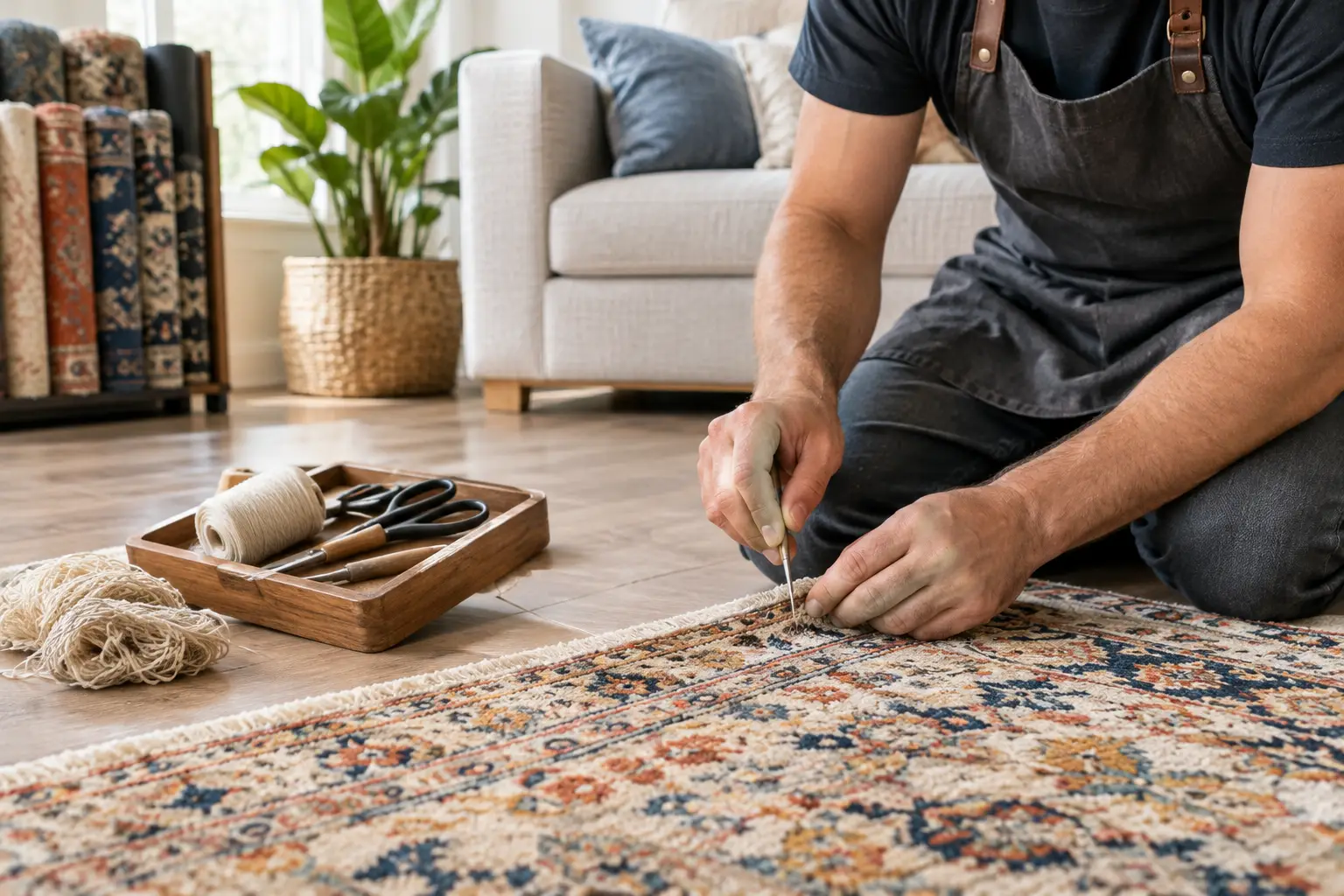
Use this Kennesaw rug repair guide to spot damage early, choose the right restoration, and protect the color, texture, and comfort of your favorite rug.

Marietta rug restoration can preserve color, texture, and history. Learn when repair makes sense and how thoughtful care protects a cherished rug at home.
From cozy area rugs to statement-making wall décor, our curated categories make it easy to explore what speaks to your space. Whether you’re refreshing a single corner or reimagining your whole home, start here and discover pieces that bring it all together.