A rug can be the quiet foundation of a room – the piece that softens a hardwood floor, brings a seating area together, and makes the colors around it feel intentional. When that rug is damaged, faded, or worn, replacing it is not always the best answer. Marietta rug restoration gives homeowners a thoughtful way to preserve rugs with lasting quality, personal history, or a look that still belongs beautifully in the home.
The right restoration approach depends on the rug itself, the type of damage, and how you use the space. A hand-knotted wool rug with a small fringe issue deserves a very different level of attention than a machine-made rug with widespread backing damage. Knowing the difference helps you make a decision that is both practical and design-conscious.
What Rug Restoration Can Preserve
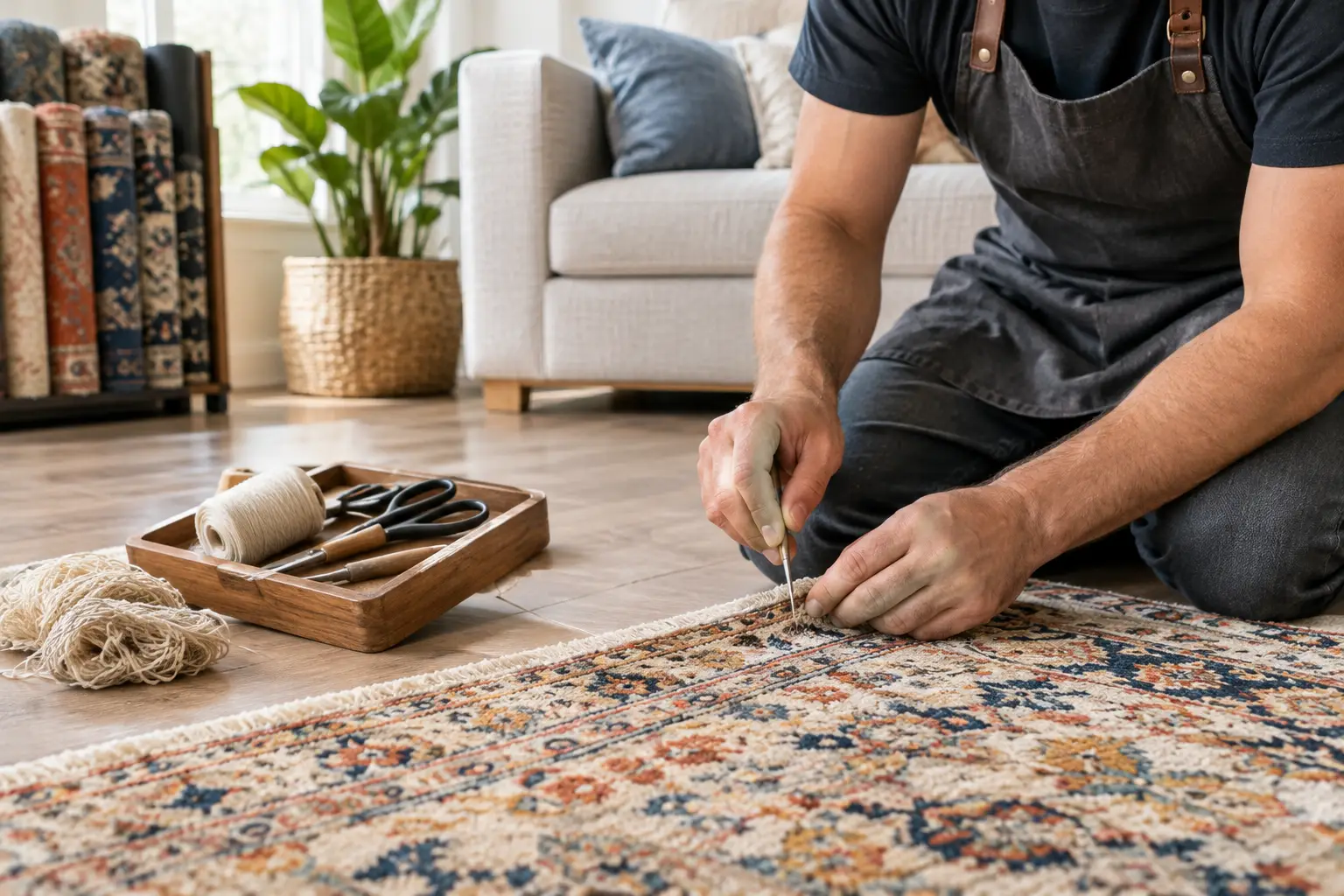
Restoration is more than making a rug look better at a glance. Skilled repair work addresses the structural details that allow a rug to lie flat, wear evenly, and remain part of your home for years to come. That may include stabilizing frayed edges, repairing unraveling fringe, reinforcing weakened areas, correcting small holes, or addressing damage caused by pets, furniture, moisture, or everyday foot traffic.
For rugs with handwoven construction, those details are especially meaningful. The foundation, pile, binding, and fringe all work together. If an edge begins to unravel, the issue can gradually travel farther into the body of the rug. Addressing it early can help preserve both the pattern and the integrity of the weave.
Color and texture matter, too. A carefully restored rug should still feel like itself. The goal is not to make a cherished piece look artificially new. It is to protect its character while helping it continue to function beautifully within your room.
When Marietta Rug Restoration Makes Sense
A restoration consultation is often worthwhile when a rug has clear value beyond its current condition. That value may be financial, sentimental, or entirely design-driven. Perhaps it was collected during a meaningful trip, passed down through family, or selected specifically because its colors complete the room. If it is difficult to replace with something of comparable quality and personality, repair may be the more considered choice.
Look closely at the type and extent of the damage. Small tears, loose binding, thinning spots, detached fringe, and localized stains may be repairable when addressed promptly. Water damage, mildew, extensive dry rot, or severe deterioration can be more complex. In those cases, the decision comes down to the construction of the rug, the condition of its foundation, and whether restoration will support the way you want to live with it.
It also helps to consider placement. A repaired heirloom rug may be better suited to a quieter bedroom, formal sitting room, or low-traffic office than a busy entryway. That is not a compromise in style. It is a smart way to give a special piece the setting it deserves while choosing a more durable rug for high-use areas.
The Value of Early Attention
The most manageable repairs are often the ones handled before the damage becomes dramatic. A small pulled thread can become a larger opening. Worn fringe can expose the end of the rug’s construction. Pet accidents and spills can leave behind more than a visible mark if they reach the foundation.
If you notice curling corners, loose threads, edge wear, uneven pile, or a new odor after a spill, avoid the temptation to hide the issue under furniture and hope it settles. Roll the rug carefully if needed, keep it dry, and have it assessed. A timely repair can be gentler on the rug and more likely to preserve its original proportions and texture.
Restoration Begins With the Right Evaluation
Not every damaged rug needs the same service, and not every rug should receive the same treatment. Material is one of the first considerations. Wool is naturally resilient and often responds well to careful cleaning and repair. Silk requires a lighter hand and more controlled handling. Cotton, viscose, jute, and synthetic fibers each have their own limitations when it comes to staining, moisture, color stability, and wear.
Construction matters just as much. A hand-knotted rug, hand-tufted rug, flatweave, and machine-made area rug are built differently. Their repair options, expected longevity, and ideal care methods will vary. This is why a close inspection is more useful than a one-size-fits-all recommendation.
At Home Rug Gallery, rug care is approached with the same eye for detail that helps homeowners select a rug for a finished room. The goal is to understand what makes the piece worth keeping, what it needs now, and how it will fit into your home after restoration.
What to Share During a Consultation
A few details help create a more accurate restoration plan. Mention where the rug has been used, how long the damage has been present, whether pets or moisture were involved, and if there have been prior repairs. If a stain is part of the concern, avoid using harsh spot treatments before the assessment. Some household products can set stains, alter dyes, or leave residue that complicates professional cleaning.
It is also useful to think about the room where the rug will live next. A restoration plan should support the rug’s future, not only repair its past. If you are refreshing a family room, replacing furniture, or moving a treasured rug from one space to another, those design decisions can influence the most appropriate care and placement.
Protecting a Restored Rug at Home
Once a rug has been restored, a few daily habits can make a meaningful difference. Use a properly fitted rug pad to reduce slipping, cushion the foundation, and minimize friction against the floor. Rotate the rug periodically so sunlight and foot traffic are distributed more evenly. In rooms with direct sun, window treatments can help preserve richer colors and delicate fibers.
Vacuum thoughtfully. For many rugs, regular vacuuming is helpful, but aggressive brush settings can pull at fringe and stress delicate pile. Keep the beater bar away from fringe, and use gentler settings for rugs with longer fibers or more intricate construction. If a thread comes loose, resist cutting it flush or pulling it free. Tuck it gently beneath the pile until it can be examined.
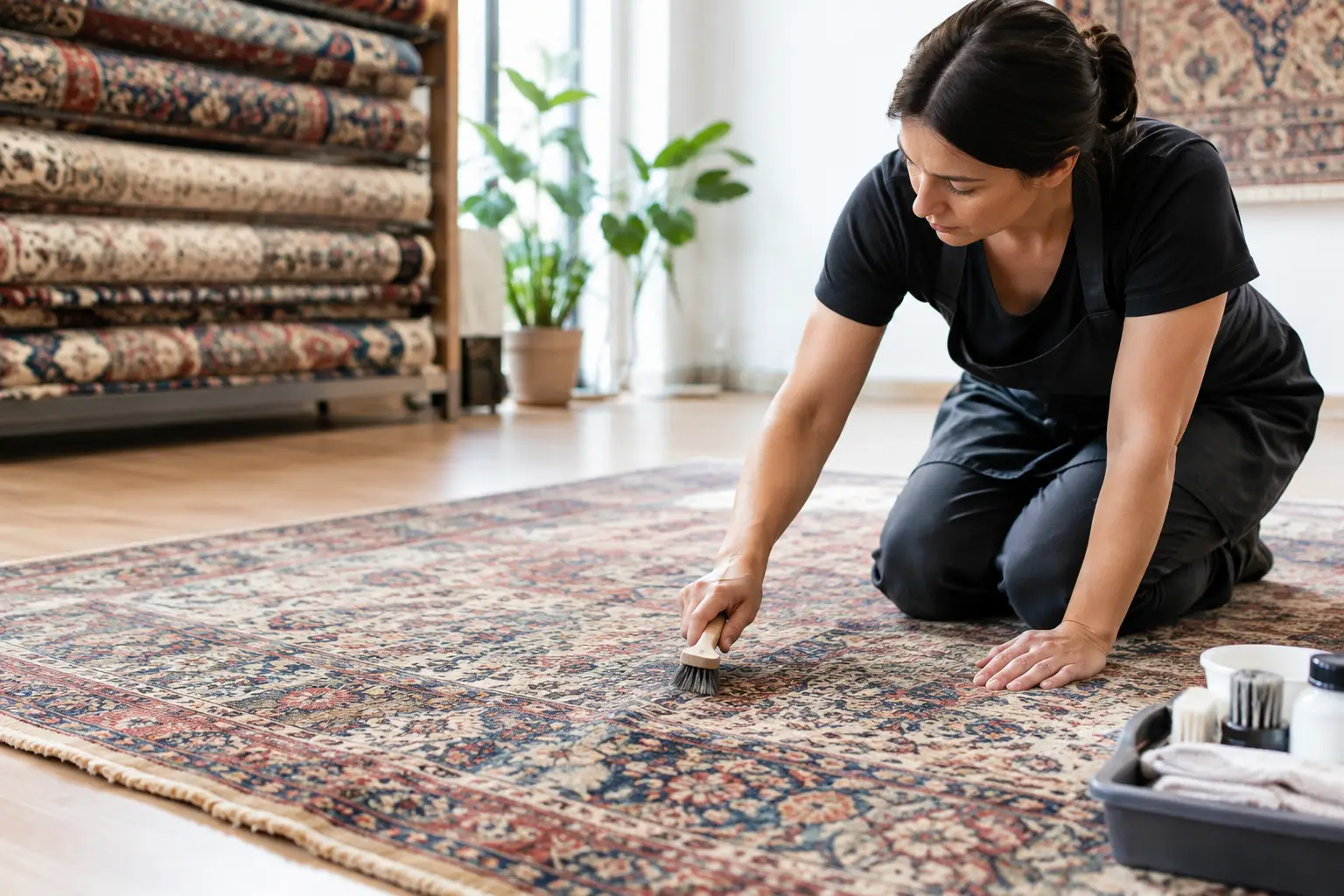
Spills call for calm, not scrubbing. Blot immediately with a clean, absorbent white cloth, working from the outer edge toward the center. Avoid saturating the rug and avoid heat, which can set certain stains. The sooner a spill is addressed appropriately, the better the chances of protecting the rug’s color and foundation.
A Restored Rug Can Still Define the Room
A repaired rug does not have to feel fragile or outdated. In many homes, it becomes the piece with the most presence because it brings depth that newly purchased décor cannot imitate. Its softened color variation, hand-finished texture, and lived-in character can balance clean-lined furniture, contemporary lighting, and fresh textiles with a sense of quiet luxury.
The key is to style it with intention. Let its palette guide a few smaller choices, such as pillows, throws, or artwork, without trying to match every color exactly. Give the rug enough visual room to be noticed. A restored piece often looks most effortless when the surrounding furnishings are edited rather than overly coordinated.
A beloved rug has already helped shape the life of a home. With informed restoration and thoughtful placement, it can continue adding warmth, texture, and deeply personal style to the rooms you love.