


How to Remove Pet Odors From Rugs Safely
Learn how to remove pet odors from rugs without harming color or fibers, plus when professional washing is the smarter choice for a fresh home that lasts.
A rug rarely asks for attention until something changes. The fringe begins to thin, a corner starts to curl, colors look uneven after a spill, or a worn pathway appears where the room gets the most life. That is usually the moment homeowners start thinking about rug repair and restoration – not as an extra service, but as the difference between replacing a piece they love and keeping it beautifully in the room.
For many homes, a rug is more than a soft layer underfoot. It grounds the seating area, softens hard surfaces, and quietly sets the tone for the entire space. When it is damaged, the room can feel unfinished even if everything else is in place. Repairing or restoring that rug is often about preserving both function and the look of a room that feels collected, comfortable, and deeply personal.
These two terms are often used together, but they are not exactly the same. Rug repair typically focuses on a specific issue such as fringe replacement, edge repair, hole patching, or reweaving a damaged section. Restoration is usually more involved. It aims to bring the rug back as closely as possible to its original structure, appearance, and usability.
That distinction matters because not every rug needs the same level of intervention. A newer area rug with a loose binding may need a straightforward repair. A hand-knotted wool rug with moth damage, fading, and foundation wear may call for restoration work that is slower, more detailed, and more specialized.
The best approach depends on the rug itself – its age, materials, construction, condition, and value to the homeowner. Sometimes value is financial. Just as often, it is sentimental. A rug that has moved with a family from one home to the next deserves a different conversation than a fast replacement purchase.
Small issues have a way of becoming expensive ones. A little edge unraveling can spread. Fringe loss can expose the foundation. Minor tears can widen each time furniture shifts or the rug is vacuumed. Even water-related damage can set off a chain reaction if it is left untreated.
A few signs are worth acting on early. If the rug no longer lies flat, if the edges are curling, if you notice visible wear in one lane of traffic, or if the backing or foundation is exposed, it is time to have it evaluated. Color bleeding, dry rot, moth damage, pet damage, and odor that lingers after cleaning also point to a bigger structural or fiber issue.
The sooner repair begins, the more options tend to be available. Early work is usually more discreet and more cost-effective than waiting until the damage changes the shape or integrity of the piece.
Some repairs are cosmetic, while others protect the life of the rug. Fringe work is one of the most common. Because fringe is often the first part to show wear, it can fray, detach, or disappear unevenly. In some rugs, fringe is decorative. In others, it is part of the rug’s structure, which makes proper replacement much more important.
Edge repair is another frequent need. The edges keep the rug contained, and once they begin to break down, unraveling can travel quickly into the body of the rug. Rebinding or securing the edges helps maintain both the look and the stability of the piece.
Then there is reweaving. This is the detailed work required when a rug has holes, tears, missing knots, or damaged pile. Good reweaving is part craftsmanship, part patience. The goal is not simply to cover the problem, but to rebuild the damaged area in a way that respects the rug’s original pattern, texture, and structure.
Color correction and restoration may also come into play after sun fading, spills, or dye damage. This is where experience matters most. Some color work can improve visual balance beautifully. Some situations are less predictable and require restraint. Not every faded rug should be aggressively recolored. Sometimes preserving character is the better design decision.
It can be tempting to think of rug damage the way we think of other household wear – patch it, trim it, glue it, move on. With rugs, especially woven or handmade pieces, quick fixes often create bigger problems later.
Adhesives can harden fibers and distort the rug. Machine stitching can look obvious and put stress on surrounding areas. Cutting loose fringe may tidy the look for a moment while quietly exposing the foundation to more damage. Even standard carpet repair methods are not always appropriate for area rugs made from wool, silk, cotton, or specialty fibers.
Professional rug repair and restoration starts with understanding how the rug was made. That affects everything from thread choice to repair technique to how the rug should be cleaned before work begins. A rug with handmade construction deserves a different level of care than a mass-produced synthetic style, and the treatment plan should reflect that.
Not every damaged rug should automatically be restored. This is where honest guidance matters. The right decision depends on the rug’s quality, age, construction, replacement cost, and role in your home.
If the rug is handmade, heirloom-quality, custom-sized, or difficult to replace, restoration often makes strong sense. If it anchors a room you have carefully layered with furniture, lighting, and textiles, preserving it may also protect the overall design of the space. Even from a practical standpoint, restoring a well-made rug can be smarter than replacing it with something that does not have the same feel, size, or character.
On the other hand, if a lower-value rug has extensive structural failure, severe staining, and heavy wear across multiple areas, replacement may be the better route. That is not a failure. It is simply a matter of balance.
A good service provider will not treat every rug the same way. They should explain what is possible, what is advisable, and where the trade-offs are. Sometimes a repair is meant to make the rug fully usable again. Sometimes the goal is to stabilize damage and improve appearance without promising perfection.
A worn rug has a way of pulling attention for the wrong reasons. Even a beautiful room can feel slightly unsettled when the foundation piece looks tired, buckled, or visibly damaged. Restoring that rug often changes the room more than homeowners expect.
Once the edges are clean, the pattern reads clearly again, and the rug sits properly in the space, the whole room feels more intentional. Upholstery looks fresher. Wood tones feel warmer. The layered look becomes quieter and more refined.
That is part of what makes rug care such a design decision as much as a maintenance one. Restoration is not only about saving a textile. It is about protecting the comfort, balance, and visual ease of a room that has been thoughtfully put together.
Most successful repair work begins with inspection. The rug should be evaluated for fiber type, construction, wear pattern, previous repairs, and any cleaning needs before restoration starts. In many cases, cleaning is part of the process because dirt can hide damage and interfere with proper repair.
From there, the recommended work should be specific. Homeowners deserve a clear understanding of what will be repaired, how close the result will be to the original look, and how long the process may take. Detailed work is rarely fast, and that is usually a good sign.
If you are local to Woodstock and want guidance that considers both craftsmanship and room design, working with a showroom-based rug specialist can be especially helpful. Home Rug Gallery offers the advantage of seeing rug care not as an isolated service, but as part of how a home comes together over time.
Once a rug has been repaired or restored, a few habits help protect that investment. Rotate it regularly so traffic wears more evenly. Use an appropriate rug pad for support and stability. Address spills promptly, and avoid harsh store-bought spot treatments unless you know they are safe for the fiber.
It also helps to schedule professional cleaning before the rug begins to look visibly tired. Waiting too long allows grit to settle into the fibers, which speeds wear from the inside out. A restored rug does not need perfection to look beautiful, but it does benefit from consistent care.
Some of the most inviting rooms are not built around brand-new pieces. They are shaped around pieces with staying power – rugs included. A well-restored rug brings history, softness, and confidence back into the space, which is often exactly what a home needs to feel finished again.
Learn how to remove pet odors from rugs without harming color or fibers, plus when professional washing is the smarter choice for a fresh home that lasts.
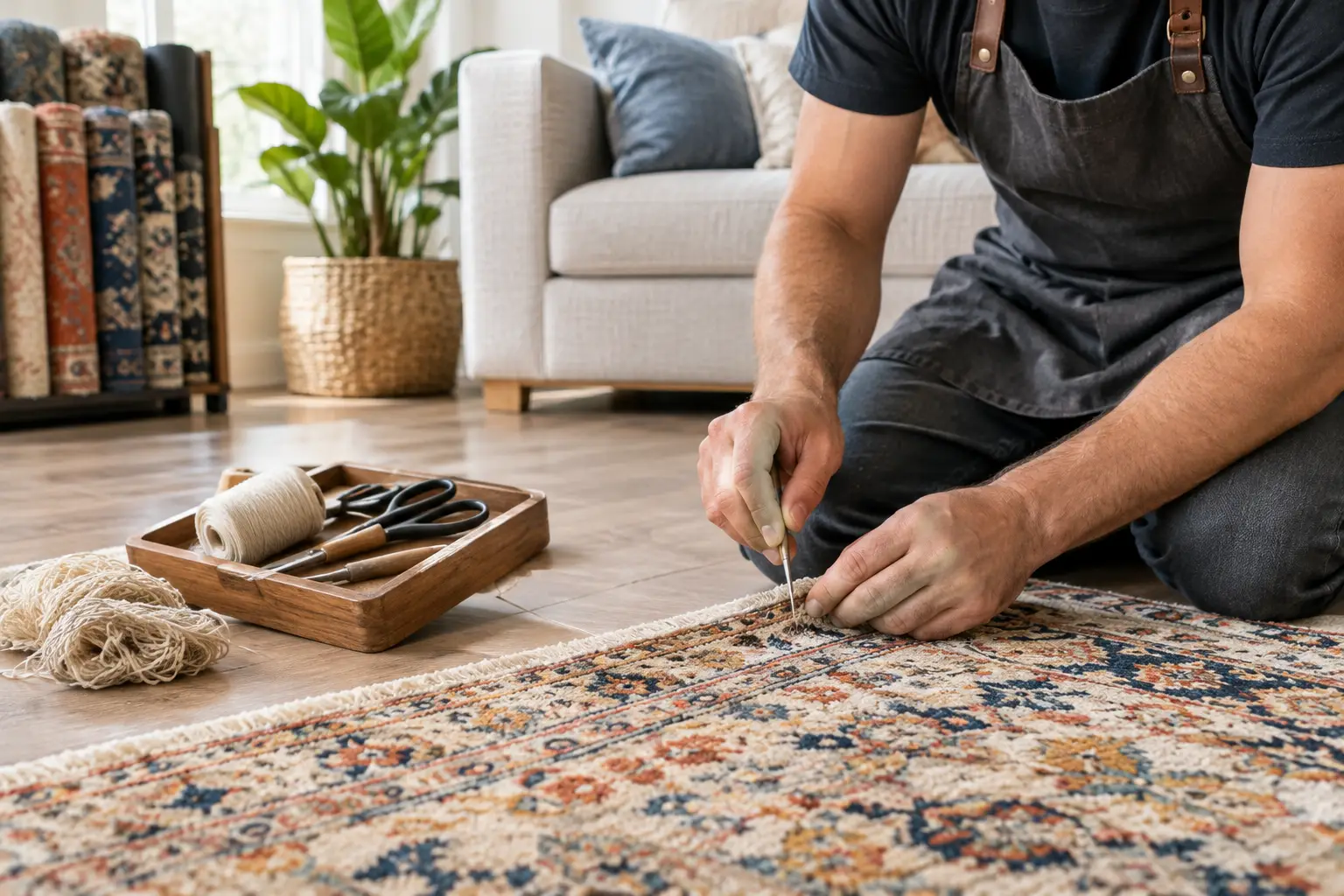
Use this Kennesaw rug repair guide to spot damage early, choose the right restoration, and protect the color, texture, and comfort of your favorite rug.
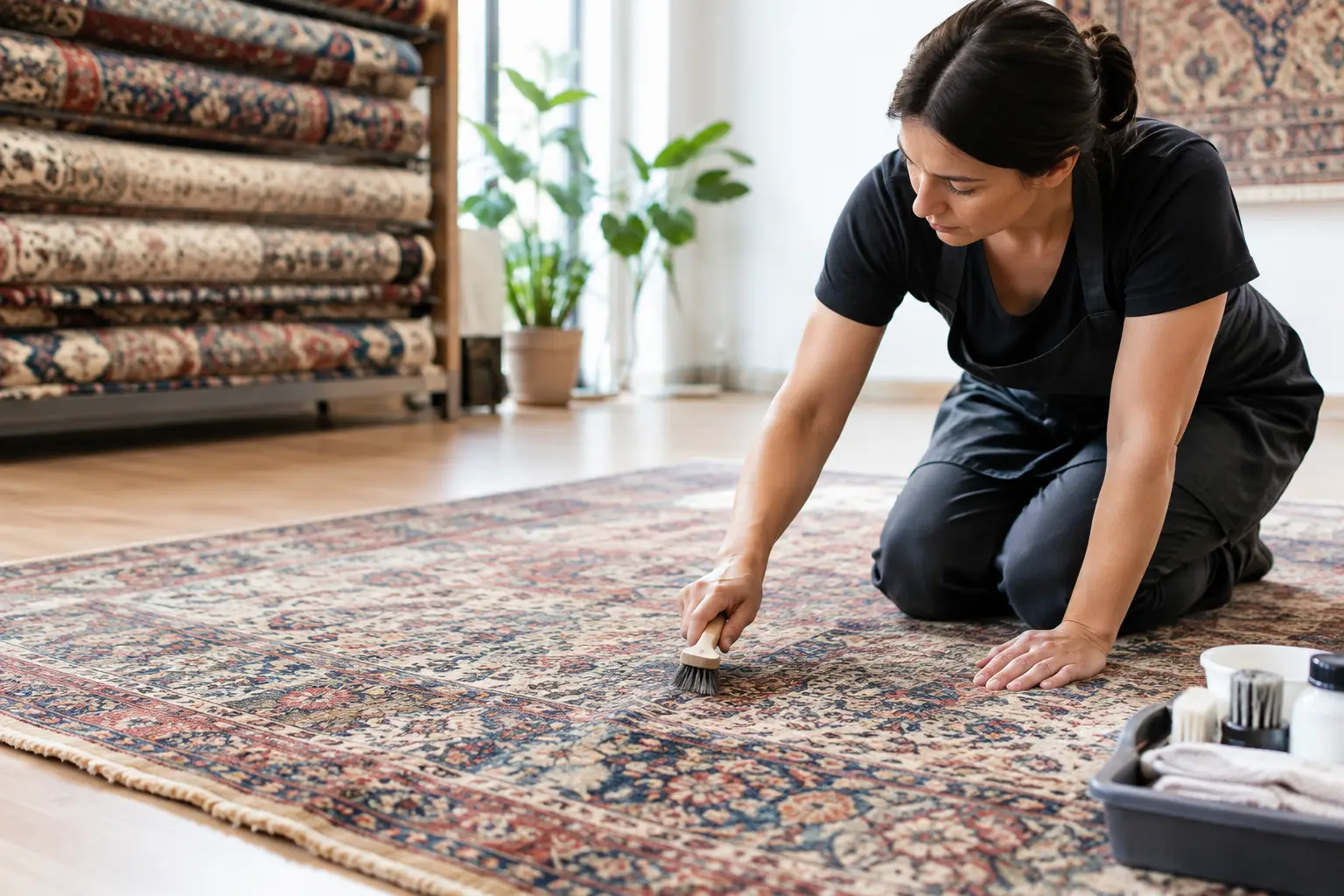
Marietta rug restoration can preserve color, texture, and history. Learn when repair makes sense and how thoughtful care protects a cherished rug at home.

Learn how to protect rugs from sun fading with thoughtful window treatments, rotation, cleaning, and placement tips that preserve color and comfort daily.
From cozy area rugs to statement-making wall décor, our curated categories make it easy to explore what speaks to your space. Whether you’re refreshing a single corner or reimagining your whole home, start here and discover pieces that bring it all together.