


A Guide to Rug Color Matching for Every Room
This guide to rug color matching helps you choose tones, patterns, and textures that make every room feel balanced, personal, and effortlessly styled.
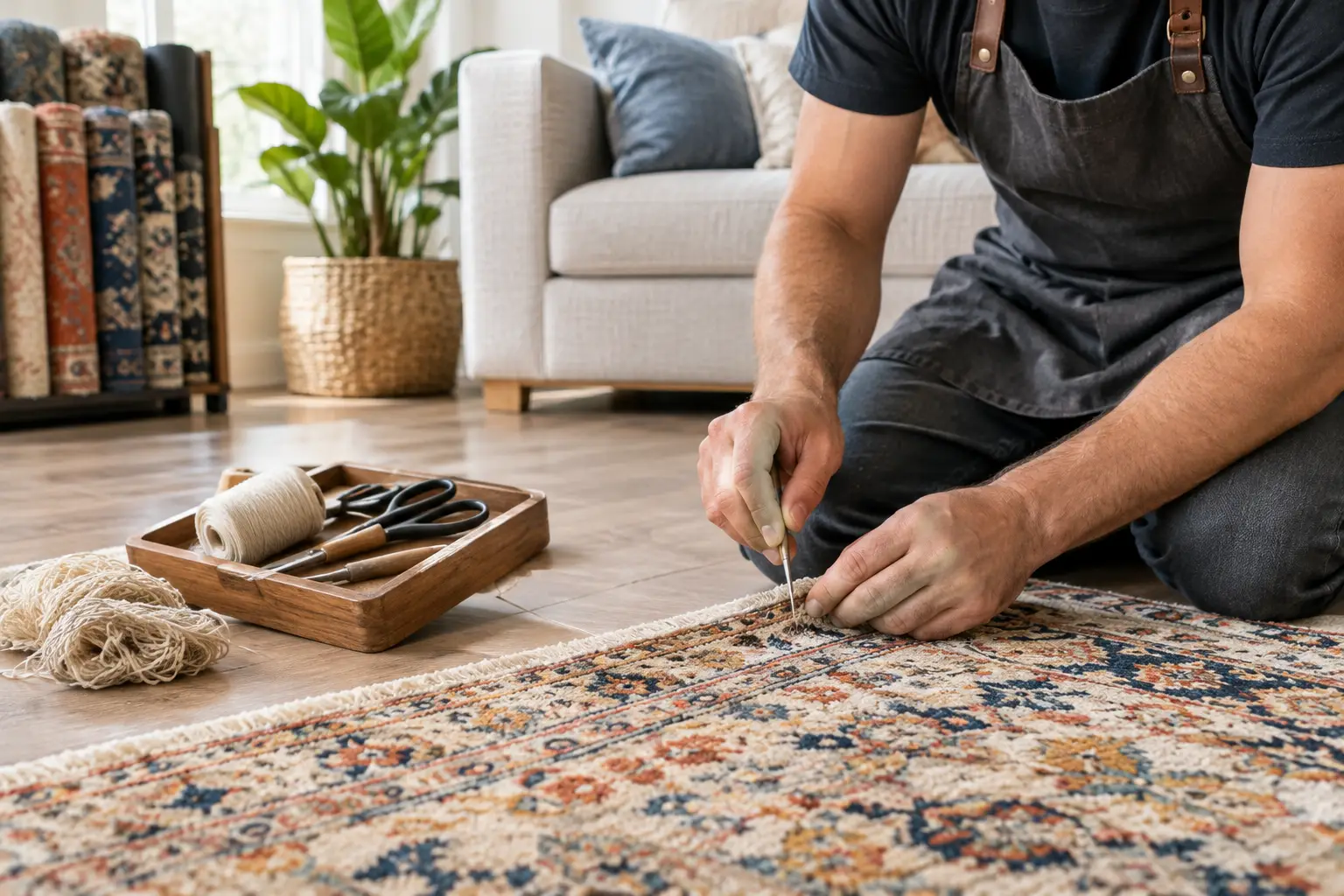
The moment you notice a pulled edge, a worn patch, or fringe starting to unravel, the question becomes very practical very quickly: can a damaged rug be repaired? In many cases, yes – but the real answer depends on the type of damage, the age and construction of the rug, and whether the repair will preserve both its function and its beauty.
A good rug does more than cover the floor. It softens a room, anchors furniture, and gives a space that collected, deeply personal feeling homeowners are after. When damage shows up, it can feel like the whole room loses some of its polish. The encouraging part is that many rugs, from everyday area rugs to more detailed hand-knotted pieces, can often be restored with the right care.
Not every rug should be repaired, and not every rug can be repaired to the same standard. That distinction matters.
Some damage is fairly straightforward. Loose fringe, a split seam, minor edge wear, or a small area of unraveling can often be corrected before it spreads. These are the repairs that tend to protect the life of the rug and help it continue performing well in a busy home.
Other issues are more complex. Pet damage, heavy staining, moth activity, dry rot, and large torn sections may still be repairable, but the process can become more detailed and more expensive. The goal shifts from a simple fix to restoration – bringing back stability, appearance, and usability as much as possible.
There are also cases where repair is technically possible but not especially worthwhile. A low-value machine-made rug with widespread backing failure may cost more to restore than replace. A handmade or custom piece, on the other hand, often deserves a closer look because its craftsmanship, sentiment, or design value changes the equation.
The best repairs usually begin early. Small signs of wear are easier to address than damage that has been ignored for months or years.
Fringe is one of the first areas to show stress. It gets vacuumed, stepped on, caught under furniture, and sometimes chewed by pets. If the fringe is only fraying at the ends, repair may be relatively simple. If it has worn back into the body of the rug, the work becomes more structural because the foundation may be affected.
When the edges begin to curl, fray, or separate, that damage can creep inward. Edge repair is common and often very worthwhile because it helps prevent a much larger failure in the pile and foundation.
A tear from moving furniture or a hole caused by wear does not always mean the rug is beyond saving. Depending on the rug’s construction, a specialist may be able to stabilize the surrounding area, reweave missing sections, or reinforce the damaged foundation.
High-traffic paths, especially in living rooms, hallways, and under dining tables, can wear down the pile over time. Some worn areas can be improved visually and structurally, though full invisibility is not always realistic. This is where expectations matter. A repair may stop further damage and make the rug look far more refined, even if it does not erase every sign of age.
Pet accidents can do more than create odor. If moisture reaches the foundation, it can weaken fibers, distort shape, or cause color migration. Prompt cleaning is essential, and in some cases repair follows cleaning if the structure has been compromised.
This is where practical judgment and design value meet.
The first factor is construction. Handmade wool rugs, hand-knotted rugs, and many natural fiber pieces tend to justify repair more often than lower-grade mass-produced rugs. Their materials, longevity, and visual character usually support restoration.
The second is the extent of damage. A single damaged corner is very different from broad deterioration across the entire rug. Localized issues are typically better candidates for repair than widespread breakdown.
The third is replacement reality. If the rug is custom sized, part of a room’s color story, or difficult to match with your existing furnishings, repair may make more sense than starting over. A rug does not live in isolation. It works with your sofa, lighting, pillows, art, and wood tones. Replacing it can change more in a room than people expect.
Sentimental value matters too. Family pieces, travel finds, or rugs chosen for a meaningful room often deserve consideration beyond simple price comparison.
Rug repair is not the same as a quick household fix. Adhesives, improvised stitching, or patch attempts from the back often create bigger problems later. What looks like a small shortcut can distort the rug’s shape, stiffen the fibers, or make future restoration harder.
A professional evaluates the rug’s fiber type, weave structure, dyes, age, and pattern before recommending the right approach. That matters because wool, silk, synthetics, flatweaves, tufted rugs, and hand-knotted rugs all respond differently to repair techniques.
There is also the visual side of the work. A repaired rug should still feel like it belongs in a beautifully finished room. Even when a repair is not invisible, it should be sympathetic to the rug’s design and proportion rather than distracting from it.
These terms are often used interchangeably, but they are not exactly the same.
Repair usually refers to addressing a specific issue such as edge binding, fringe replacement, or closing a tear. Restoration is broader. It may involve multiple steps, such as cleaning, color correction, foundation work, reweaving, and finishing, all with the goal of returning the rug to a more complete and stable condition.
For homeowners, the difference often comes down to scope. If a rug has one trouble spot, repair may be enough. If damage has affected both appearance and structure, restoration is the more accurate term.
A proper assessment comes first. The rug is examined for visible damage, but also for less obvious issues such as fiber weakness, odor, hidden moisture effects, or stress in surrounding areas.
Cleaning is often part of the process. Dirt can hide the true extent of damage, and repairs made on an unclean rug are rarely ideal. Once the rug is clean and fully evaluated, the repair plan becomes much clearer.
Then the work itself begins. Depending on the issue, that could mean securing edges, rebuilding fringe, reinforcing backing, reweaving damaged sections, or correcting shape distortion. Timing varies widely. A simple repair may be relatively quick, while detailed restoration takes more time because it is careful, hand-oriented work.
There are honest moments when replacement is the more sensible path. If a rug has extensive structural failure, severe material breakdown, or very low original quality, investing heavily in repair may not serve you well.
That does not make the decision disappointing so much as practical. Sometimes the smarter move is choosing a new rug that better suits how the room functions now. Homes evolve. Kids grow, pets arrive, layouts change, and style preferences become more refined. A replacement can be an opportunity to improve both durability and design.
Still, it is worth getting a professional opinion before assuming a rug is done for. Homeowners are often surprised by what can be saved.
Once a rug has been repaired, a little prevention goes a long way. Use the right rug pad, rotate the rug periodically, and keep vacuum settings appropriate for its construction. Address spills quickly, and do not ignore early signs of edge wear or fringe stress.
Professional cleaning also helps extend the life of repairs because embedded grit acts like sandpaper inside the fibers. For rugs in active family spaces, regular care is part of preserving that effortlessly styled look people want without sacrificing everyday comfort.
If you are unsure whether a rug is worth repairing, seeing it in person matters. A hands-on evaluation often reveals options that photos alone miss, especially when the rug plays an important role in the overall feel of a room. For homeowners in Woodstock and nearby communities, working with a local rug specialist can make that decision feel much more confident and much less guesswork.
A damaged rug is not always the end of the story. Sometimes it is simply the point where good care, expert repair, and thoughtful design come together to give a favorite piece a second life.
This guide to rug color matching helps you choose tones, patterns, and textures that make every room feel balanced, personal, and effortlessly styled.

Learn how to remove pet odors from rugs without harming color or fibers, plus when professional washing is the smarter choice for a fresh home that lasts.
Use this Kennesaw rug repair guide to spot damage early, choose the right restoration, and protect the color, texture, and comfort of your favorite rug.

Marietta rug restoration can preserve color, texture, and history. Learn when repair makes sense and how thoughtful care protects a cherished rug at home.
From cozy area rugs to statement-making wall décor, our curated categories make it easy to explore what speaks to your space. Whether you’re refreshing a single corner or reimagining your whole home, start here and discover pieces that bring it all together.