A rug can change the feeling of a room in an instant, but damage can change the decision just as quickly. A frayed edge in the dining room, a wine stain on a favorite wool rug, or fading near a sunny window can leave homeowners weighing rug restoration versus replacement. The right answer is rarely just about what looks damaged. It is about craftsmanship, the rug’s role in your home, its history, and whether it still supports the room you want to create.
For some rugs, careful restoration preserves a piece with real character and lasting value. For others, replacement is a welcome opportunity to rethink scale, color, texture, and the overall mood of the space. Knowing the difference helps you make a confident choice rather than a rushed one.
When Rug Restoration Is Worth Considering
Restoration is often the more thoughtful path when a rug has quality construction, personal significance, or a design that still belongs in your home. Hand-knotted, handwoven, wool, silk, antique, and heirloom rugs can be especially strong candidates, even when the damage appears significant at first glance.
A well-made rug has a foundation worth preserving. Individual fibers, fringe, edges, and sections of pile can often be repaired by skilled hands. The goal is not to make a rug look artificially new. It is to stabilize the structure, improve its appearance, and allow it to continue being part of daily life.
Damage that can often be repaired
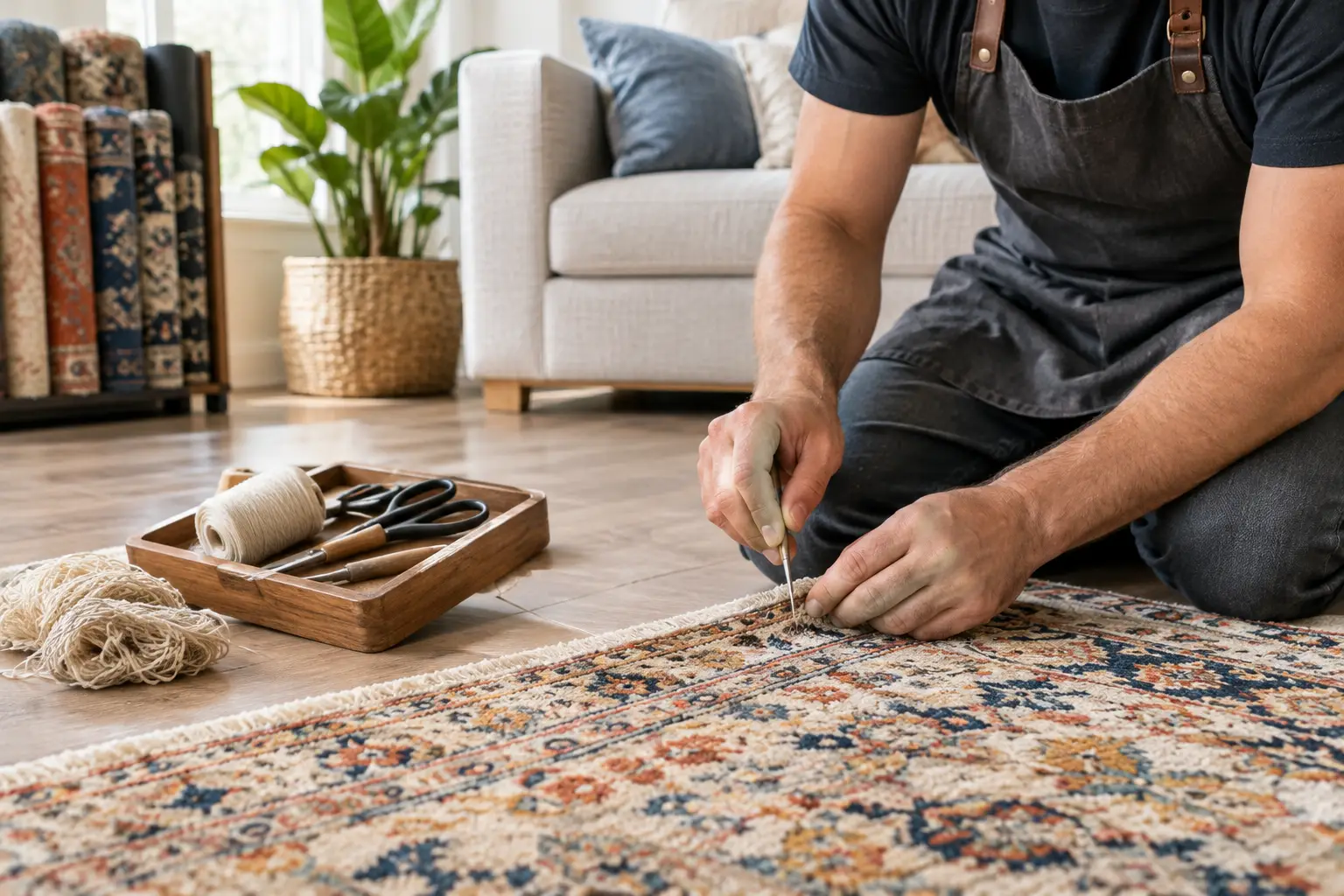
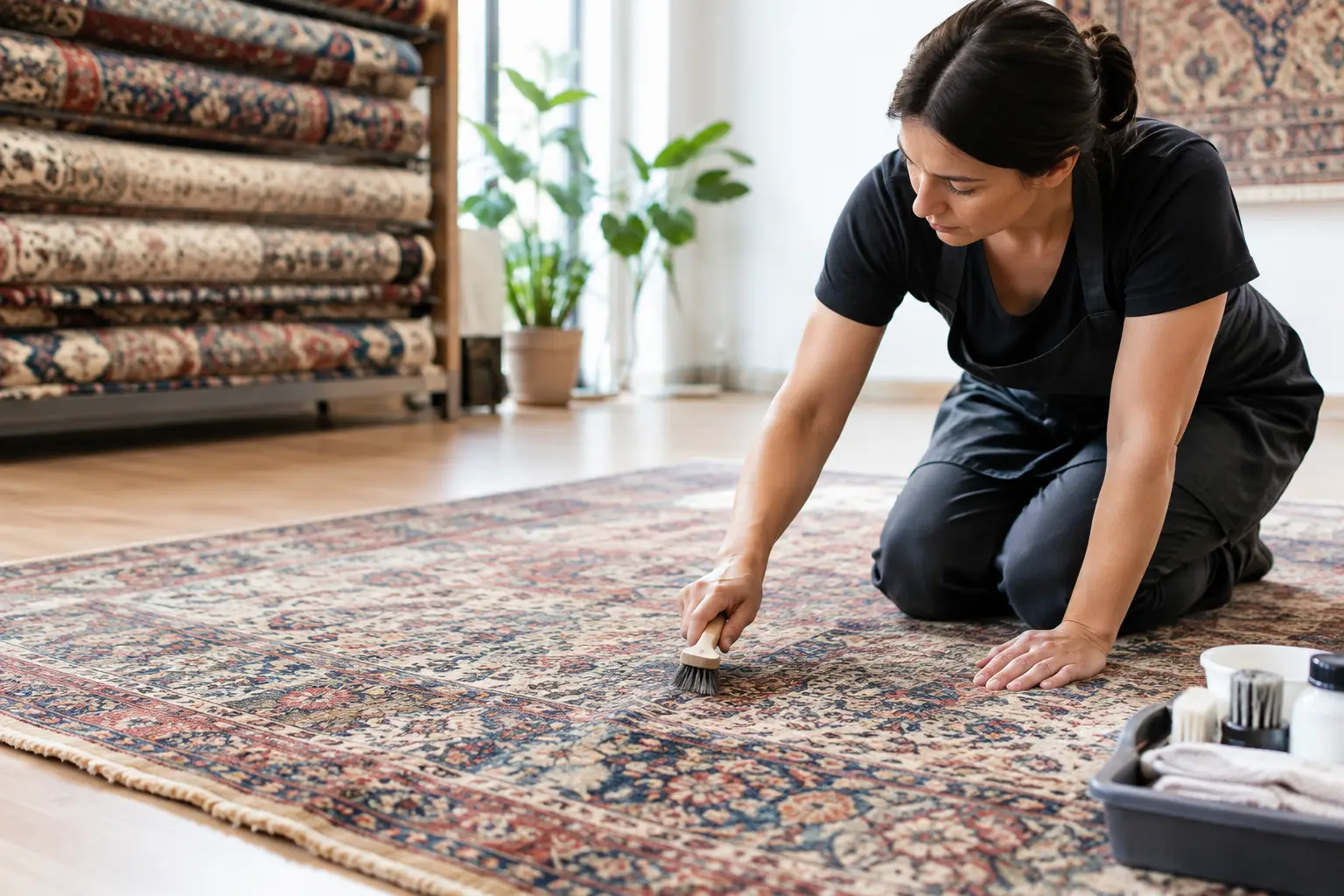
Many homeowners assume a damaged rug has reached the end of its life when it has not. Common repairable concerns include loose or missing fringe, unraveling edges, small holes, pulled threads, pet damage, minor burn marks, and areas where the pile has worn thin. Stains and odors may also respond well to professional cleaning, particularly when they are addressed before settling deeply into the fibers.
Water damage calls for a closer look. If a rug has been wet for an extended period, mold, dye bleeding, and weakened fibers can complicate restoration. Still, prompt professional attention may prevent a temporary problem from becoming permanent damage.
Sentiment and design continuity matter
Not every restoration decision is practical in a narrow sense. A rug inherited from family, collected during travel, or chosen to mark a meaningful chapter of life carries a value that cannot be measured by its condition alone. Restoring it can preserve the story woven into the room.
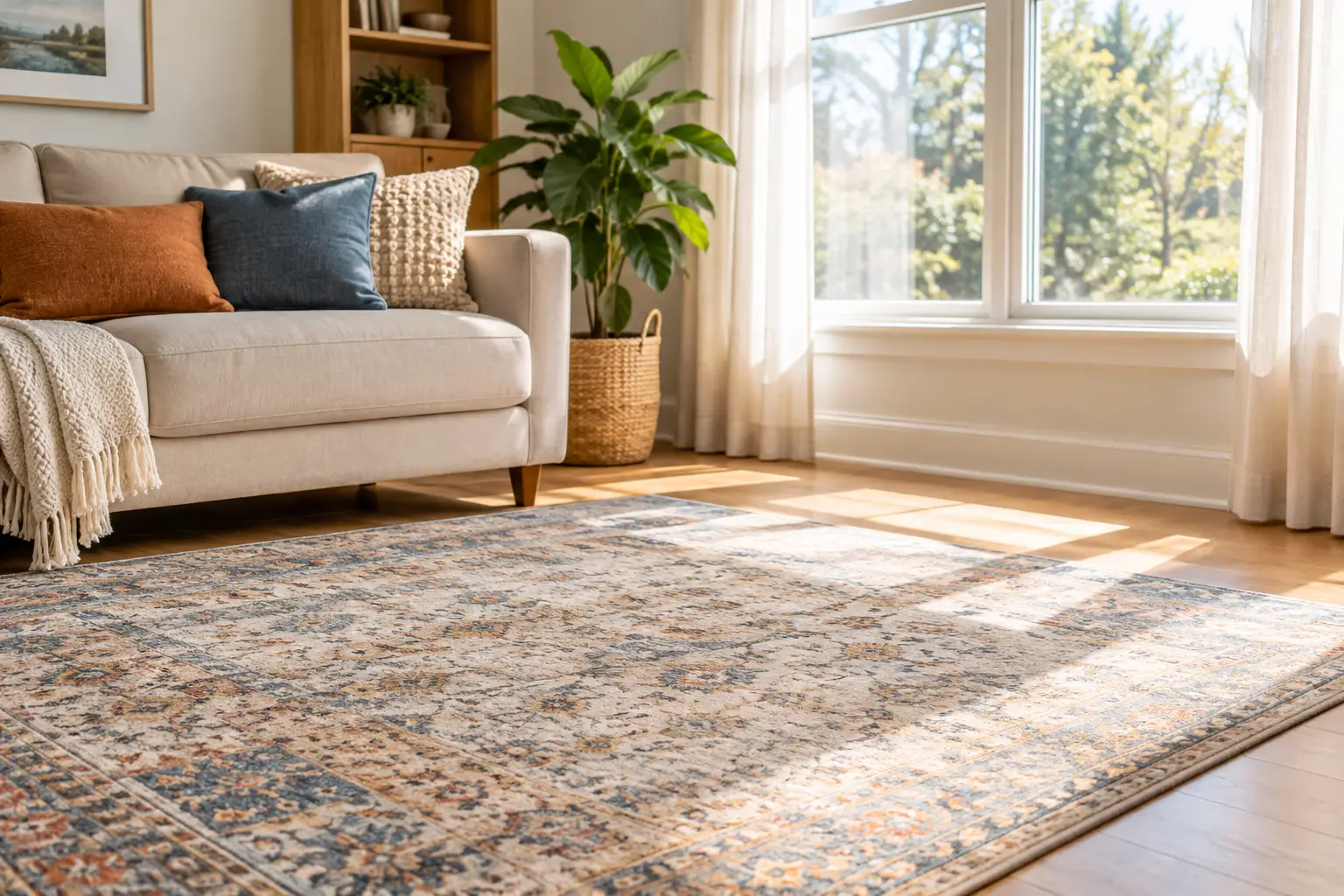
There is also the design question. Perhaps your rug brings together the warm wood tones, soft neutral upholstery, and layered pillows you have spent years collecting. If it still feels aligned with your style, repair may be the most effortless way to keep the room feeling settled and personal.
When Replacement Makes More Sense
Replacement becomes appealing when damage affects the rug’s safety, performance, or ability to support the room visually. A rug with extensive dry rot, broad areas of missing pile, severe mildew, or a weakened foundation may no longer be dependable underfoot. In high-traffic spaces, a structurally compromised rug can continue to deteriorate quickly even after limited repairs.
Sometimes the rug itself is sound enough, but the room has moved on. A small rug that leaves too much floor exposed can make a living room feel disconnected. A once-loved pattern may compete with a new sofa, flooring update, or more refined direction for the home. In those cases, replacing the rug is not a failure of the old piece. It is a design decision.
Consider function before color
A beautiful rug must also work for the way your household lives. A light, delicate rug may no longer suit an entry, family room, or breakfast area with pets, children, and frequent entertaining. A replacement can give you a more appropriate fiber, weave, pattern, or pile height without giving up style.
For example, a low-profile, patterned rug may be easier to live with in a busy dining area, while a softer wool rug can bring quiet luxury to a bedroom or formal sitting room. A larger, properly scaled rug can also make furniture arrangements feel more intentional, especially in open-concept homes where rooms need visual definition.
Rug Restoration Versus Replacement: Questions to Ask
The most useful decision starts with an honest assessment of the rug and the room. Before choosing either path, consider whether the rug is structurally stable, whether its materials are worth preserving, and whether it still fits your home’s current style and needs.
Ask yourself how the rug makes you feel when you enter the room. Does it still ground the space? Does it coordinate naturally with the furnishings you love, or are you constantly trying to work around it? A rug should not simply fill an empty area. It should help the room feel composed.
It also helps to think about the type of damage. A worn edge is very different from widespread fiber breakdown. One localized stain is different from years of overall fading. Repair is most compelling when the issue is contained and the rug’s structure remains strong. Replacement is often wiser when problems are extensive or recurring.
How Material Changes the Decision
Material plays a major role in what can be restored and how long the rug may continue to perform afterward. Natural fibers such as wool often have resilience that surprises homeowners. Wool can be cleaned, repaired, and enjoyed for many years when it has been properly made and cared for.
Silk rugs require particular care because their fine fibers and subtle sheen can be vulnerable to moisture, sunlight, and aggressive cleaning. Their beauty may justify specialized restoration, but their placement should also be reconsidered if they are living in a high-traffic or sun-drenched area.
Machine-made synthetic rugs can be excellent practical choices for active homes, but restoration is not always the best investment when damage is substantial. If the backing is breaking down, the surface is heavily worn, or the rug no longer serves the room, a replacement may deliver better long-term value and a fresher visual result.
A Replacement Can Be a Design Reset
Choosing a new rug creates an opportunity to look at the room as a whole. Instead of shopping only for a similar version of what you had, consider what the space needs now. A more generous size can anchor a seating area. A softer palette can calm a busy room. A rich texture can add dimension to a neutral interior without introducing visual clutter.
Seeing rugs in person is especially valuable at this stage. Color shifts with light, texture changes the mood of a room, and the feel underfoot matters more than a screen can convey. Bring along photos of your space, fabric samples, paint colors, or even a pillow cover you love. These details make it easier to find a rug that feels intentionally chosen rather than simply convenient.
At Home Rug Gallery, homeowners can explore new options while also getting knowledgeable guidance on cleaning, repair, and restoration. That perspective makes it easier to decide whether a beloved rug deserves another chapter or whether the room is ready for something new.
Do Not Wait Too Long on Repairable Damage
Even if you are not ready to make a final decision, avoid letting a small rug issue become a larger one. Loose binding can lead to unraveling. A pet-damaged corner can spread. A spill left untreated may become more difficult to remove. Proper care protects both the appearance and the usable life of the rug.
If replacement is the answer, take the same measured approach. Let the new rug solve a real need, whether that is better scale, easier maintenance, warmer texture, or a more cohesive color story. The best choice is the one that lets your home feel beautiful, comfortable, and fully lived in.