


How to Remove Pet Odors From Rugs Safely
Learn how to remove pet odors from rugs without harming color or fibers, plus when professional washing is the smarter choice for a fresh home that lasts.
The room is set, the chandelier is glowing, and the table is ready for company – yet the dining room can still feel strangely unfinished. Statement rugs for formal dining rooms solve that problem by giving the table a visual foundation, defining the gathering space, and introducing the layer of color or pattern that makes the room feel considered rather than simply furnished.
A statement rug does not have to be loud. In a formal dining room, it can be an artful antique-inspired pattern, a richly toned wool design, or a quiet, sculptural texture that gives the entire setting more presence. The right choice balances visual impact with the practical reality of moving chairs, serving meals, and hosting the people you love.
A formal dining room has a natural center of attention: the table. But even a beautiful table can appear to float when it sits directly on hardwood, tile, or a large expanse of neutral flooring. A rug anchors the arrangement, softens the acoustics of a room made for conversation, and creates a more intimate sense of place.
It also gives you a valuable opportunity to express personality. Dining furniture is often chosen for longevity, which can mean classic wood finishes, tailored upholstered chairs, or a timeless buffet. The rug is where a tailored room can take on warmth, movement, and a more deeply personal point of view. A faded botanical motif may lend collected character. A modern geometric design can sharpen a traditional room. A tonal, high-low pattern can bring quiet luxury without competing with a dramatic light fixture or detailed millwork.
The trade-off is simple: the more visual energy a rug brings, the more intentional the rest of the room needs to feel. A statement piece should create a focal point, not turn every surface into a separate conversation.
The most beautiful rug in the showroom will not work if chairs catch on its edge every time someone sits down. For a formal dining room, the rug should extend beyond the table on every side far enough for chairs to remain fully on it when pulled out.
A useful starting point is to add at least 24 inches to each side of the table, with 30 inches often feeling more generous in a spacious room. Measure with the chairs pulled back, not tucked in. This step matters especially with armchairs at the heads of the table, which often need more room than expected.
An 8-by-10 rug can suit a smaller rectangular table, while 9-by-12 and 10-by-14 sizes are frequently better for larger dining rooms and extended tables. Round tables can look beautiful on round rugs, but a square or rectangular rug may be the smarter choice if it better accommodates the movement of chairs and reflects the room’s architecture.
Leave a visible border of floor around the rug whenever possible. The ideal amount depends on the room, but a rug that nearly touches every wall can make a formal dining room look crowded. If the room is especially large, a custom rug can provide a more tailored solution than compromising on scale.
The strongest statement rugs for formal dining rooms relate to what is already present. Before choosing a color or motif, look at the room’s fixed elements: wall color, window treatments, flooring, molding, built-ins, and the finish of the dining table. These details do not need to match the rug, but they should feel like they belong in the same story.
Patterned rugs are often the most practical choice under a dining table because they are naturally forgiving of the occasional crumb, splash, or dropped napkin. Traditional medallions, abstract florals, faded Persian-inspired designs, and updated block prints all offer visual interest while helping everyday life recede into the overall design.
If the walls, chairs, and drapery are fairly restrained, a rug with layered color can become the room’s defining feature. Pull one or two supporting tones from the rug for pillows in an adjacent sitting area, artwork, or a centerpiece. Avoid repeating every color exactly. A room feels more polished when the connection is subtle.
A deep indigo, warm terracotta, muted olive, or smoky rose can make a formal dining room feel distinctive without becoming overly formal or precious. Darker grounds tend to add drama and offer a little more grace for active households. Lighter rugs can be beautiful in sun-filled rooms, especially when the goal is airy elegance, but they ask more of daily maintenance.
For a room with a dark table and darker floors, consider a rug with a lighter field or a higher-contrast pattern to keep the arrangement from feeling heavy. In a room with pale walls and a light oak table, a saturated rug can provide the grounding note that gives the space definition.
Not every dining room needs a colorful pattern. A hand-knotted wool rug with varied pile, a subtle lattice, or a softly dimensional neutral can be just as memorable. This approach works especially well when the room already has visual interest through wallpaper, ornate lighting, or architectural details.
Texture does require a realistic conversation about use. Very thick pile, exaggerated looped texture, fringe, and highly raised designs may be less convenient beneath chairs. The goal is a surface that feels beautiful underfoot while allowing chairs to glide with ease.
A rug should support the shape of the table without creating an overly rigid outline. Rectangular tables generally look most natural with rectangular rugs. A round rug under a round pedestal table can create a graceful, centered composition, particularly in a square room or a dining nook with a defined footprint.
For an oval table, both oval and rectangular rugs can work. An oval rug echoes the curves and feels formal in a soft, traditional way. A rectangular design offers contrast and can make the room feel more structured. The deciding factor is usually chair clearance and the shape of the room, not a strict decorating rule.
Pay attention to direction, too. In a long dining room, orient the rug with the length of the table and room. This reinforces proportion and makes the space feel more intentional. A rug turned the wrong way can visually shorten the room, even when it technically fits.
Formal does not mean untouched. Dining rooms now host holiday meals, homework, celebrations, and weekday dinners as often as they host special occasions. The rug material should suit the life happening around the table.
Wool remains a favorite for dining spaces because it is resilient, naturally textured, and comfortable underfoot. Its fibers can handle regular use well, and a patterned wool rug often ages with character. Low-pile constructions are generally easier for chair movement and make it simpler to retrieve a dropped fork before it disappears into the texture.
Synthetic blends can be a sensible option for homes that want the look of a more elaborate design with a lower-maintenance mindset. They can offer excellent color and pattern choices, though the feel and long-term character may differ from natural fibers. Silk and silk-blend details bring luminosity, but they are usually better reserved for lower-risk rooms or households comfortable with more attentive care.
A rug pad is worth considering even in a formal room. It helps prevent shifting, adds a touch of cushion, and protects the rug and floor beneath it. Choose a pad that keeps the rug stable without creating a bulky edge that interferes with chairs.
A polished dining room feels layered, not purchased as a set. If the rug is expressive, let the dining chairs, drapery, and wall color provide calmer support. If the rug is tonal and textural, you have more freedom to introduce a patterned fabric on the chairs or a bolder piece of art.
Metal finishes can offer another useful connection. A rug with warm camel, rust, or honey tones tends to flatter brass and aged bronze. Cool grays, slate blues, and charcoal patterns often sit comfortably with polished nickel or black accents. These are tendencies, not rules. A well-designed room can mix warm and cool notes when there is enough repetition to make the combination feel deliberate.
In an open layout, let the dining rug acknowledge the nearby living room rug without duplicating it. They might share a color family, similar warmth, or a common level of formality. Matching patterns from room to room often feels flat, while coordinated contrast gives each space its own identity.
A rug is easier to judge when you can see its scale, touch its surface, and view it beside samples of the finishes already in your home. Bring photos of the room in natural and evening light, along with paint swatches or a fabric sample if you have them. The same rug can read dramatically different beside cool gray walls than it does against creamy white paint.
At Home Rug Gallery in Canton, seeing statement options in person also makes it easier to compare pile height, color variation, and the way a pattern reads from a standing view versus a seated one. Ask yourself whether the rug still feels special when you look at it from the doorway. That is often the view that tells you whether it truly anchors the room.
For daily care, address spills promptly by blotting rather than rubbing, and rotate the rug periodically when sunlight reaches one side of the room more strongly than the other. Professional cleaning and expert rug care can help preserve the color, fibers, and structure of a piece you intend to enjoy for years.
The best dining room rug does more than fill the space beneath a table. It invites people to pull up a chair, linger over dessert, and feel that the room was designed with both beauty and real life in mind.
Learn how to remove pet odors from rugs without harming color or fibers, plus when professional washing is the smarter choice for a fresh home that lasts.
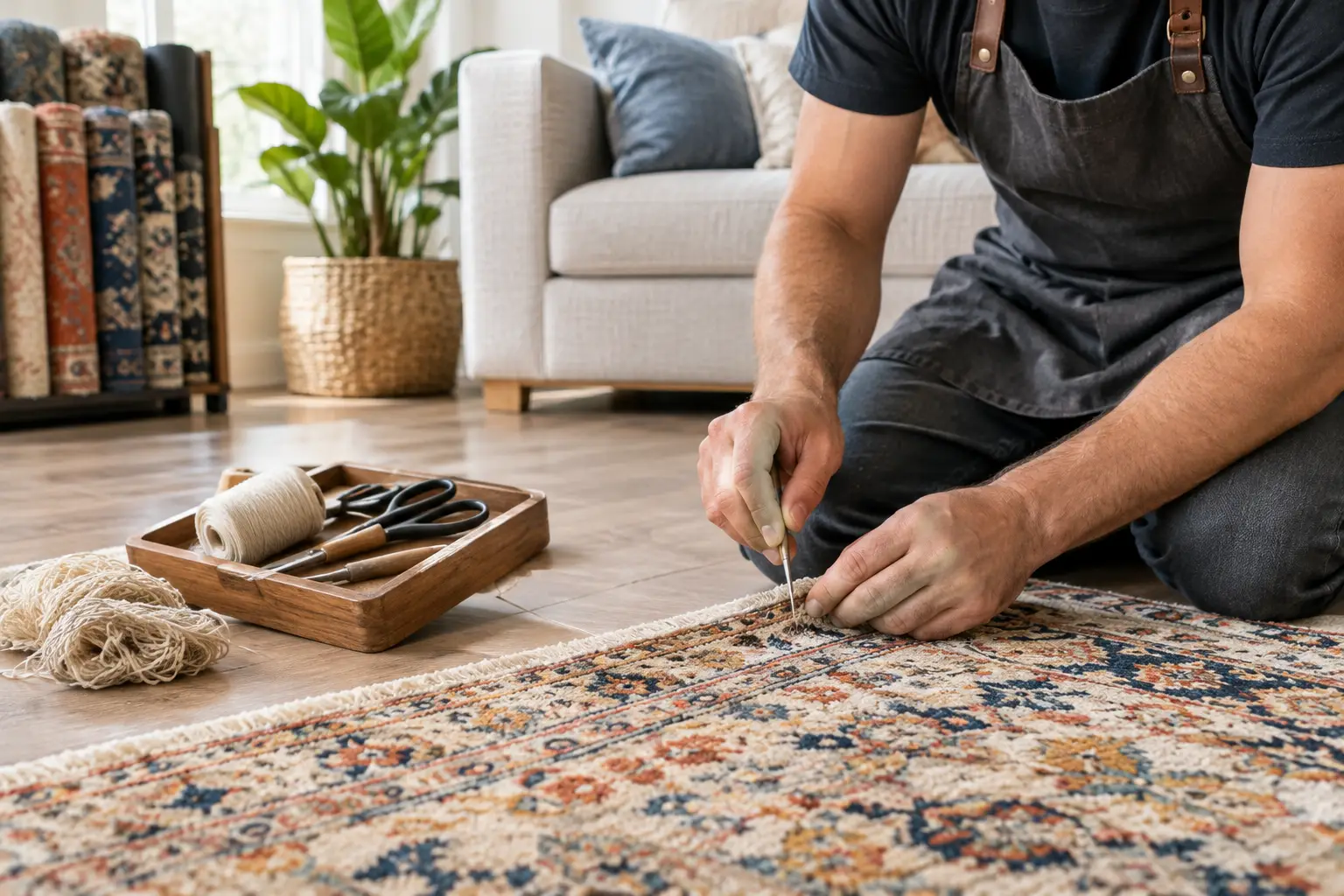
Use this Kennesaw rug repair guide to spot damage early, choose the right restoration, and protect the color, texture, and comfort of your favorite rug.
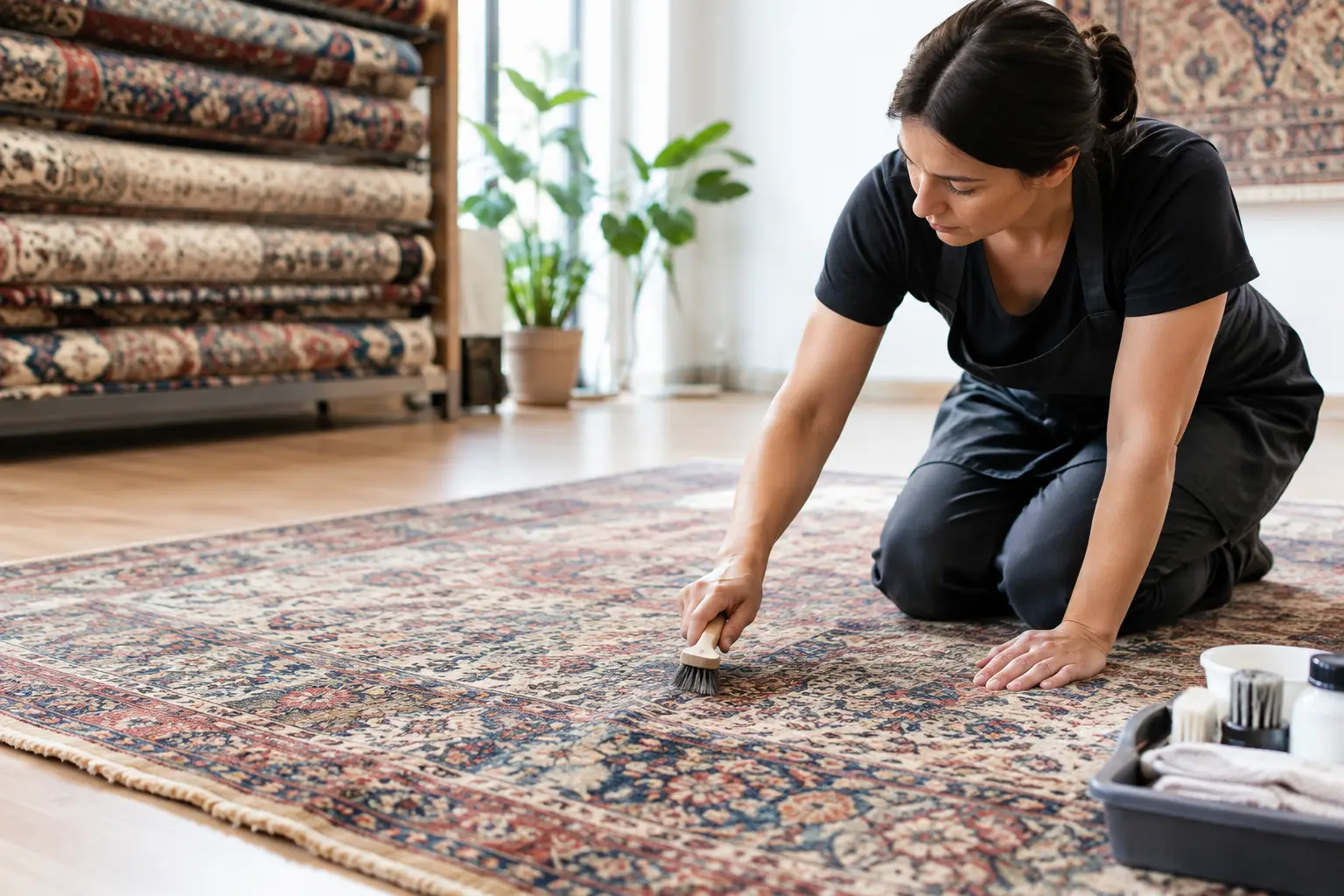
Marietta rug restoration can preserve color, texture, and history. Learn when repair makes sense and how thoughtful care protects a cherished rug at home.
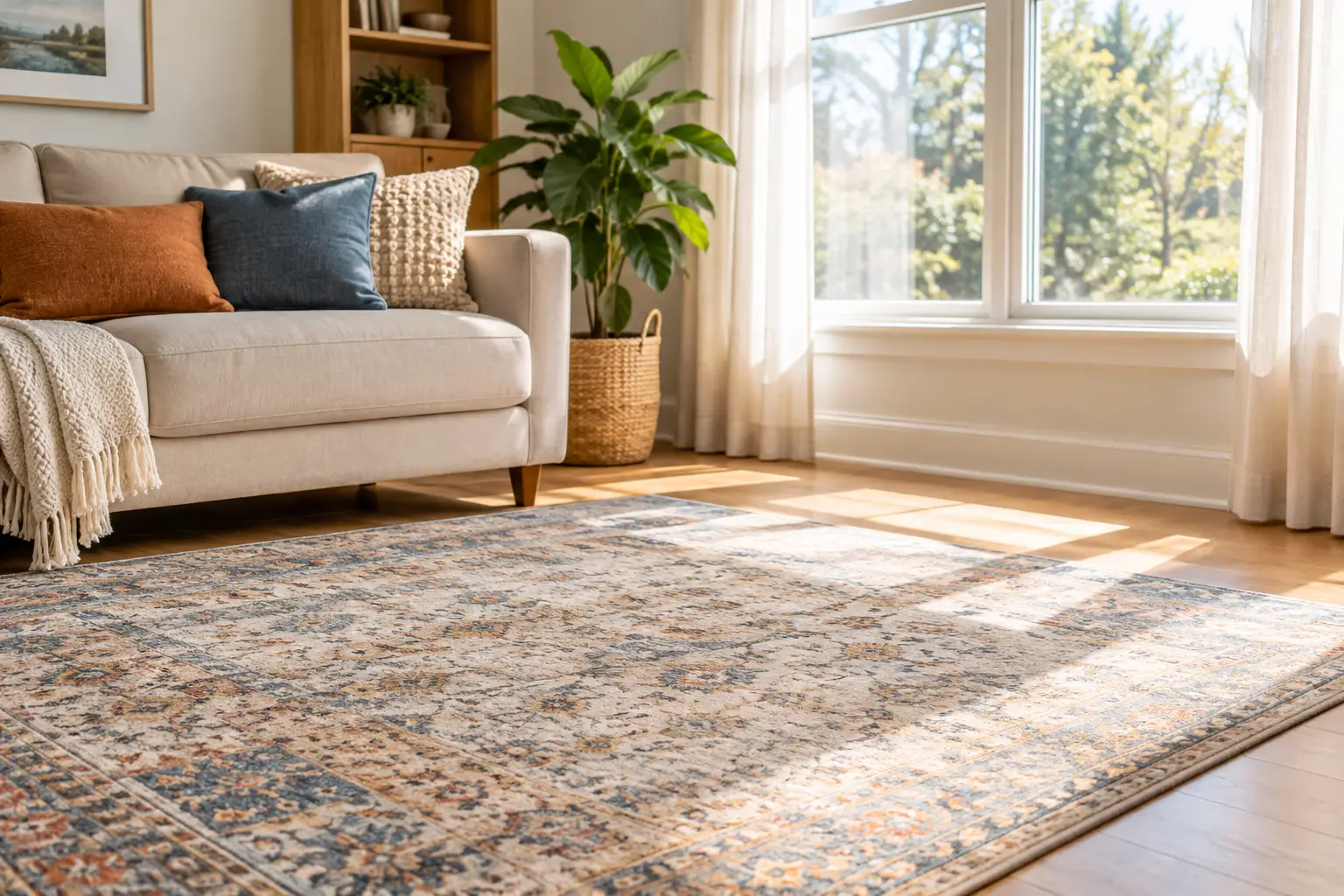
Learn how to protect rugs from sun fading with thoughtful window treatments, rotation, cleaning, and placement tips that preserve color and comfort daily.
From cozy area rugs to statement-making wall décor, our curated categories make it easy to explore what speaks to your space. Whether you’re refreshing a single corner or reimagining your whole home, start here and discover pieces that bring it all together.