


How to Remove Pet Odors From Rugs Safely
Learn how to remove pet odors from rugs without harming color or fibers, plus when professional washing is the smarter choice for a fresh home that lasts.
A neutral sofa gives you a beautiful foundation, but it can also reveal every styling decision around it. The best pillows for neutral sofas do more than add a little color. They bring scale, texture, comfort, and a sense that the room was thoughtfully composed rather than finished in a hurry.
Whether your sofa is ivory, soft gray, taupe, camel, or greige, the goal is not to cover it with matching cushions. It is to create a layered mix that gives the upholstery more presence while still allowing its quiet, versatile color to shine.
“Neutral” is a broad category, and the right pillow palette depends on what is happening beneath the surface. A warm beige or oatmeal sofa often looks most at home with earthy shades such as olive, tobacco, rust, muted terracotta, and warm ivory. These colors build an inviting, grounded room without creating a sharp contrast.
Cooler gray and stone sofas respond beautifully to slate blue, soft denim, charcoal, sage, dusty rose, and creamy white. If the sofa leans greige, you have more flexibility. It can support either warm or cool accents, but the surrounding rug, flooring, and wall color should help guide the direction.
A simple way to assess undertones is to hold a pillow beside the sofa rather than viewing it from across the room. A beige cushion with a yellow cast may make a cool gray sofa look slightly blue. A crisp white pillow may feel too stark beside a cream sofa. Seeing the materials together in person helps you notice these subtle relationships before they become a distraction in the finished room.
Neutral upholstery is especially forgiving, which makes it tempting to choose every pillow you love. The result can become visually busy when there is no clear thread connecting the group. Instead, build contrast in a few intentional ways: color, pattern, texture, and shape.
Choose one dominant accent family and one supporting neutral. For example, a warm taupe sofa might pair with moss green pillows and textured ivory accents. A light gray sofa may feel refined with denim blue and soft cream. A camel leather sofa can carry deep plum, faded indigo, or rich tobacco tones with ease.
You do not need to use bright color for the arrangement to have energy. Deep mineral shades, softened botanical hues, and sun-washed earth tones often feel more enduring than a single high-contrast pop. They add personality while preserving the calm, polished quality homeowners often want from neutral furnishings.
Patterned pillows are often the piece that makes a neutral sofa feel collected. A block print, subtle stripe, small-scale floral, or tailored geometric can introduce movement without overwhelming the room.
The key is variation in scale. If one pillow has a larger, expressive motif, pair it with a smaller print or a solid fabric with visible texture. Keep the colors connected, even if the patterns differ. A blue-and-ivory floral can sit comfortably beside a narrow blue stripe and a nubby cream linen because the palette gives the mix a shared language.
If your area rug already carries a strong pattern, let the pillows be quieter. A pair of textured solids and one small-scale accent pillow may be all the sofa needs. In a room with a more understated rug, pillows can take on a greater decorative role.
Texture is what keeps a neutral-on-neutral arrangement from looking flat. Consider linen, woven cotton, velvet, bouclé, embroidered details, raised appliqué, or a softly fringed edge. These materials catch the light differently and make the sofa feel inviting even when the palette is restrained.
For a relaxed, organic room, combine washed linen with handwoven texture and a touch of leather or suede. For a more tailored setting, pair a smooth velvet with a structured woven fabric and a refined contrast welt. The trade-off is practicality: highly textured or light-colored pillows can show wear more quickly in a busy family room, while darker velvets and washable cotton blends tend to be more forgiving.
Even beautiful pillows can look undersized on a generously scaled sofa. On most full-size sofas, 20- to 22-inch square pillows create a strong starting point. A deeper sofa with broad arms can support 24-inch pillows, especially at the outer corners. Smaller 18-inch pillows work well as front layers or on more compact seating.
Lumbar pillows are useful because they break up a row of squares and add a tailored silhouette. A long lumbar centered on a bench seat feels clean and considered, while a pair of smaller lumbars can add support on a deeper sectional. Round or bolster pillows can soften a sofa with very linear arms, but use them as a deliberate accent rather than adding one of every shape.
Pillow inserts matter as much as the cover. A full, supportive insert gives a pillow a relaxed yet elevated profile. Underfilled pillows tend to slump, which can make even a carefully selected arrangement look less finished. For square covers, choosing an insert slightly larger than the cover often creates that fuller, lightly tailored look.
The answer depends on how you use the sofa. A formal living room can carry a more decorative arrangement, while the family room needs room for people to sit comfortably. For many standard sofas, four or five pillows strike the right balance. A sectional may need five to seven, especially if it has a corner that benefits from visual softness.
Avoid perfect symmetry unless the room itself is highly traditional. Two matching pillows at the ends with a different pair layered in front can look balanced without feeling rigid. On a sectional, try anchoring the outside corners with larger pillows, then using one or two contrasting accents toward the center or chaise.
A dependable formula is to combine two larger solids or subtle textures, two medium-scale patterned pillows, and one lumbar or distinctive accent. This creates a clear hierarchy. Your eye has places to rest, rather than trying to process every cushion at once.
For an ivory or cream sofa, consider olive, faded blue, tobacco, warm clay, and richly textured flax. These tones prevent the sofa from feeling too precious and make the room more livable.
For a beige or oatmeal sofa, look to rust, forest green, cinnamon, navy, and antique gold. A blue-and-cream pattern can be particularly effective here because it introduces contrast while keeping the overall mood approachable.
For a gray sofa, choose according to its temperature. Blue-gray, charcoal, and cool sage suit a cooler gray; camel, mushroom, muted brick, and creamy ivory warm up a gray with beige undertones. Black can add definition, but it works best as a small detail in a pattern or trim rather than the entire pillow arrangement.
For a taupe or greige sofa, use the room’s existing finishes as your guide. If the space includes warm wood, brass, or a sand-toned rug, bring in warmer hues. If it has black metal, silver-toned details, or cool stone, work with charcoal, ink, sage, and soft blue.
Pillows are small, but they have a big job: they should connect the sofa to the rug, artwork, window treatments, and lighting. Before committing, consider what the pillows need to repeat. It may be a thread of blue from the rug, a warm brown from the coffee table, or a quiet green that echoes the view outside.
At Home Rug Gallery, comparing pillows beside rugs and other décor in the showroom can make the selection process far more intuitive. You can feel the fabrics, see how colors shift in real light, and build a combination that looks personal instead of pulled from a formula.
The most successful pillow arrangement is one you do not have to keep correcting. Choose pieces with enough contrast to give your neutral sofa character, enough comfort to invite people in, and enough connection to the rest of the room that everything feels naturally at home.
Learn how to remove pet odors from rugs without harming color or fibers, plus when professional washing is the smarter choice for a fresh home that lasts.
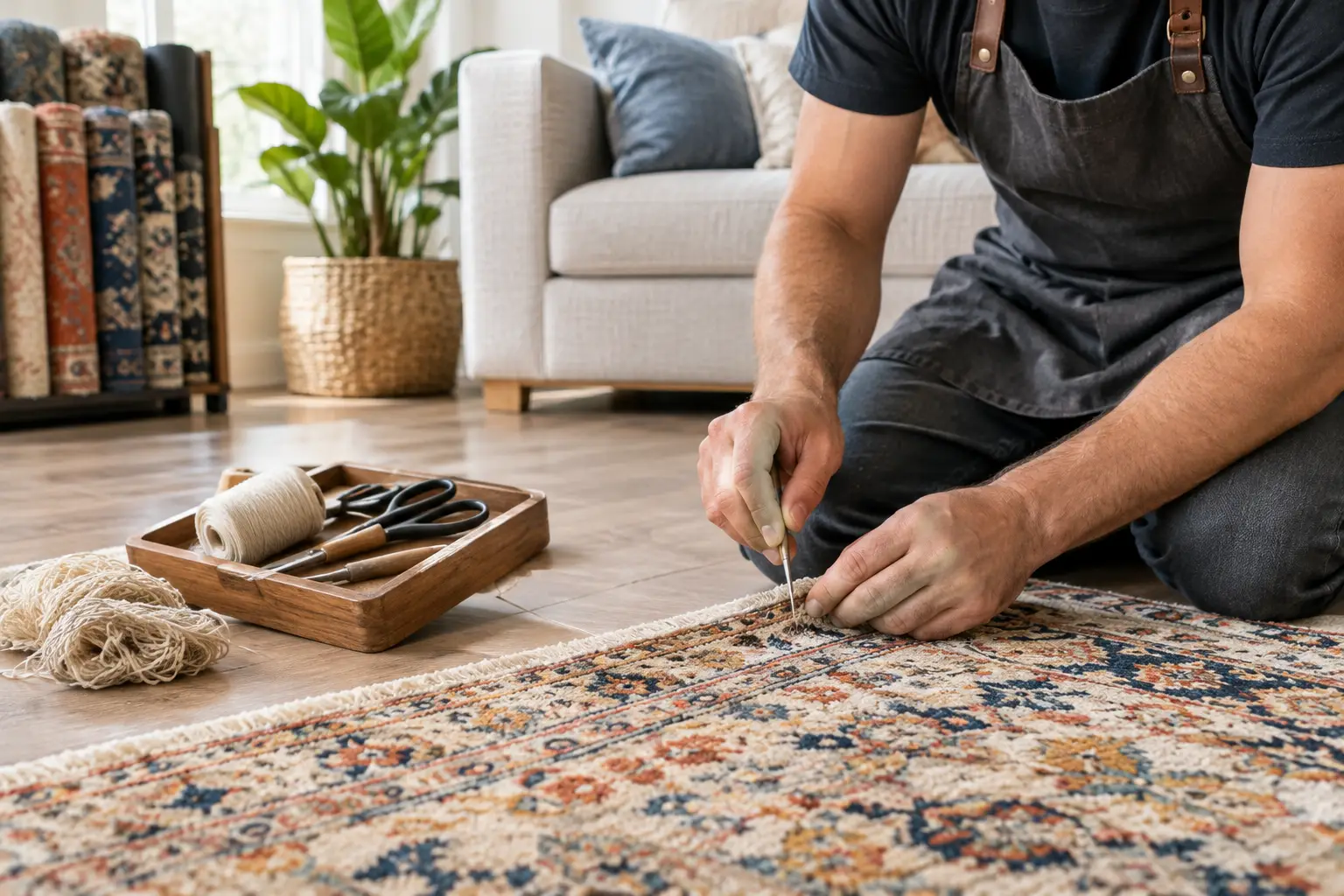
Use this Kennesaw rug repair guide to spot damage early, choose the right restoration, and protect the color, texture, and comfort of your favorite rug.
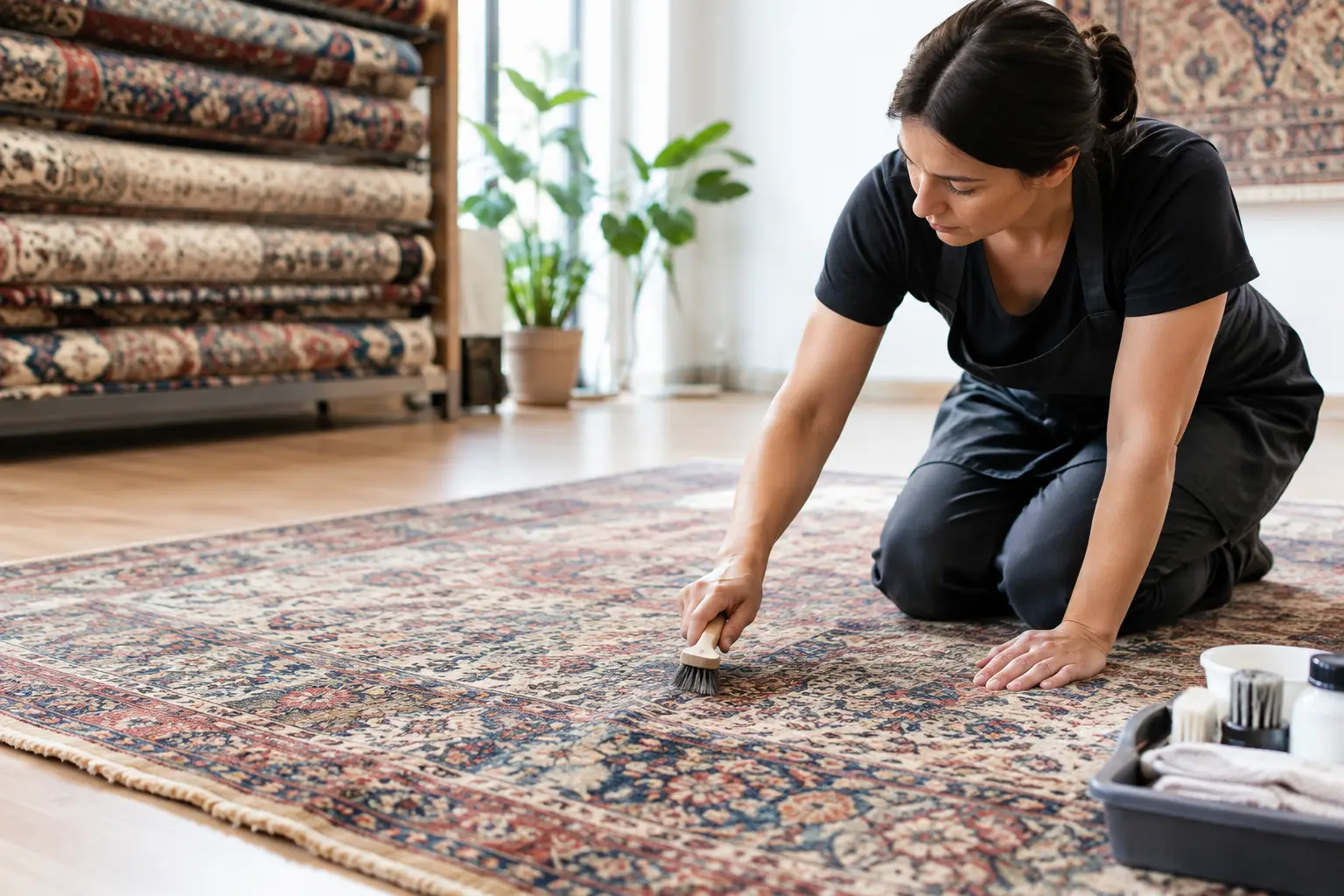
Marietta rug restoration can preserve color, texture, and history. Learn when repair makes sense and how thoughtful care protects a cherished rug at home.
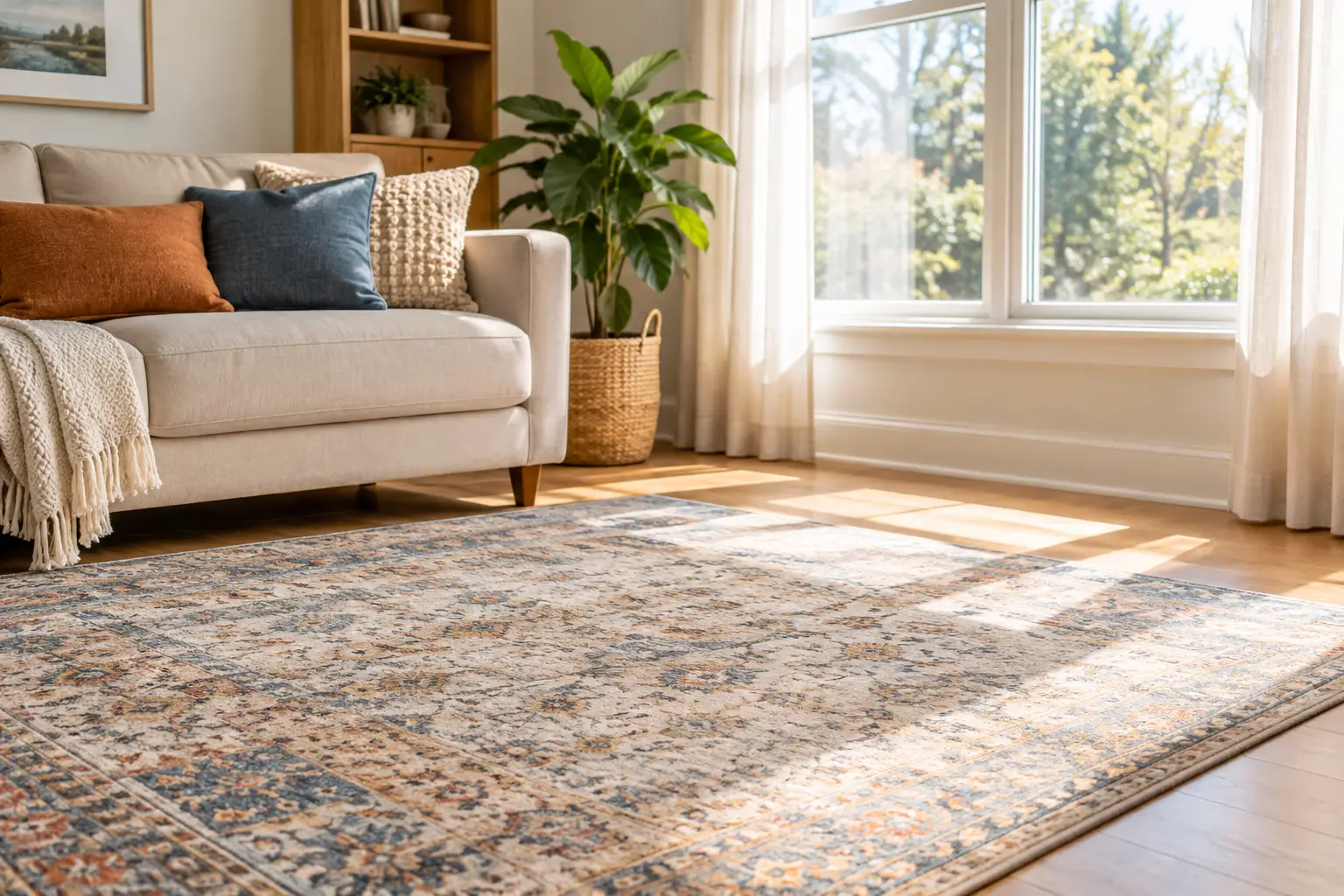
Learn how to protect rugs from sun fading with thoughtful window treatments, rotation, cleaning, and placement tips that preserve color and comfort daily.
From cozy area rugs to statement-making wall décor, our curated categories make it easy to explore what speaks to your space. Whether you’re refreshing a single corner or reimagining your whole home, start here and discover pieces that bring it all together.