


How to Remove Pet Odors From Rugs Safely
Learn how to remove pet odors from rugs without harming color or fibers, plus when professional washing is the smarter choice for a fresh home that lasts.
A room can have beautiful furniture and still feel unfinished when everything sits on a single, predictable plane. That is why 2026 rug layering trends are moving beyond the casual “rug on rug” look and toward rooms with more intention: grounded foundations, tactile contrast, and combinations that feel collected over time. The best layered spaces are not busy. They are comfortable, personal, and quietly polished.
For homeowners refining a living room, bedroom, dining area, or second home, layering offers a practical design advantage too. It can soften large spaces, define a conversation area, add warmth underfoot, and bring new life to a favorite rug that no longer feels substantial enough on its own.
The strongest direction for 2026 is texture with a point of view. Rather than stacking two highly patterned rugs and hoping they work together, designers are pairing a restrained base with an expressive top layer. Think a woven neutral beneath a smaller wool rug, a low-profile flatweave under a plush vintage-inspired piece, or a natural-fiber foundation with a soft, sculptural accent rug.
This approach gives a room visual depth without asking every surface to compete. It also supports the warmer, more lived-in interiors many homeowners are choosing over overly coordinated spaces. A layered arrangement should look effortless, but the proportions and materials still need to be considered carefully.
In previous years, the lower rug was often treated as a purely decorative backdrop. In 2026, it is doing more of the functional work. Large neutral rugs in wool, wool blends, jute, sisal-inspired weaves, and durable indoor-outdoor materials will anchor seating groups and protect high-traffic flooring.
A foundation rug is especially helpful when your favorite patterned or heirloom rug is too small for the room. Instead of replacing it, place it over a larger base that reaches beneath the front legs of your furniture. The smaller rug becomes the focal point, while the room gains the scale it needs.
Natural fibers remain appealing because they bring an honest, organic texture to wood floors, painted floors, and even wall-to-wall carpet. Still, they are not the right answer for every household. Looser weaves can be difficult for pet claws, and some natural materials feel too coarse for a bedroom. In those cases, a soft flatweave or low-pile wool rug offers a similarly relaxed look with more comfort.
Matching has given way to coordination. The most compelling layered rugs share one or two visual qualities, rather than duplicating every color or motif. A creamy base may pair beautifully with a faded blue and rust accent rug. A warm taupe foundation can support a rug with olive, tobacco, charcoal, or muted rose.
The goal is contrast that feels intentional. If the bottom rug is textured and tonal, the top rug can carry pattern. If the base has a subtle border or small-scale weave, choose a simpler accent rug with a solid field or gentle variation. Two bold geometric designs can work in a maximalist room, but they require a calmer sofa, upholstery, and wall treatment to keep the composition from feeling crowded.
For a more timeless look, repeat a color already found elsewhere in the room. Pull a soft green from the drapery, a cognac note from a leather chair, or a deep brown from wood furniture into the upper rug. That small thread of continuity makes the entire room feel thoughtfully styled.
Scale is the difference between a layered room that feels tailored and one that feels improvised. The lower rug should be noticeably larger than the upper rug, with enough of a border showing to make the layering visible. In most living rooms, allowing roughly 8 to 18 inches of the base rug to show around the top piece creates a balanced frame.
The foundation layer should still follow the rules of good rug sizing. It needs to ground the furniture, not float in the middle of the room. Ideally, the front legs of sofas and chairs rest on it, or the entire seating arrangement sits within its boundaries when the room allows.
A living room is often the easiest place to experiment because the furniture naturally creates a focal zone. Start with the larger rug placed squarely under the seating arrangement. Then add the accent rug centered beneath the coffee table or slightly shifted toward the main seating area if that better suits the room’s architecture.
A slight offset can feel relaxed and contemporary, particularly with an irregular hide, a round rug, or a softly shaped accent piece. However, asymmetry works best when it is clearly deliberate. If the smaller rug merely looks crooked, reset it. The eye should read personality, not an unfinished adjustment.
Layered rugs in bedrooms should prioritize the first step out of bed. A large neutral rug under the bed can establish softness across the room, while a smaller vintage-style runner or sheepskin-like accent brings extra comfort to one side or at the foot of the bed.
Avoid piling very thick rugs together in a bedroom with low-clearance doors or a bed that already sits close to the floor. Too much height can create an awkward transition and make vacuuming more difficult. A low-profile base paired with a medium-pile accent is usually the more practical choice.
A layered look in a dining room can be beautiful, but it has the narrowest margin for error. Chairs need to move easily, and both rugs must extend far enough beyond the table to keep chair legs stable when guests are seated. Thick top layers, fringes, and uneven edges can interfere with chair movement.
If you love the look, choose a flat, durable base and a very low-profile top rug, or reserve the layered approach for a nearby breakfast nook where furniture moves less often. In a formal dining room used regularly, one properly sized rug may be the better long-term decision.
The color palette behind rug layering is becoming warmer and more nuanced. Expect to see earthy neutrals such as flax, oat, sand, mushroom, and warm gray paired with grounded accents: olive, clay, ink blue, oxblood, deep teal, and softened black. These shades add richness without making a room feel heavy.
Quiet luxury remains relevant, but it is becoming less about pale minimalism and more about material depth. A creamy wool rug over a deeper taupe weave feels elevated because the textures are distinct. A faded Persian-inspired pattern layered over charcoal creates a similarly refined mood, especially when balanced with linen, wood, and warm metal finishes.
Homeowners who prefer lighter rooms do not need to avoid contrast. Use it in a measured way. A dark border, a small amount of tobacco brown, or a gently distressed pattern can give an airy room the definition it needs.
Layering changes how rugs wear. Dirt and grit can settle between layers, especially in busy living rooms, entry areas, and homes with pets. A rug pad beneath the bottom rug helps prevent shifting, while a thin grip layer between rugs can keep the upper piece from creeping or curling at the corners.
Vacuum both rugs regularly, paying attention to the edges and the floor below. Rotate the top rug occasionally when sunlight or foot traffic hits one side more heavily. For wool, hand-knotted, antique, or delicate rugs, professional cleaning and restoration guidance can protect the fibers and color far better than aggressive at-home treatments.
At Home Rug Gallery, seeing materials side by side in the showroom can make these decisions much easier. Texture, scale, and undertones are difficult to judge from a screen, especially when you are combining two rugs that need to live together gracefully.
The right layered pairing should make your room feel more like yours, not more complicated. Begin with the rug you already love, give it a foundation that fits the room, and let comfort lead the final choice.
Learn how to remove pet odors from rugs without harming color or fibers, plus when professional washing is the smarter choice for a fresh home that lasts.
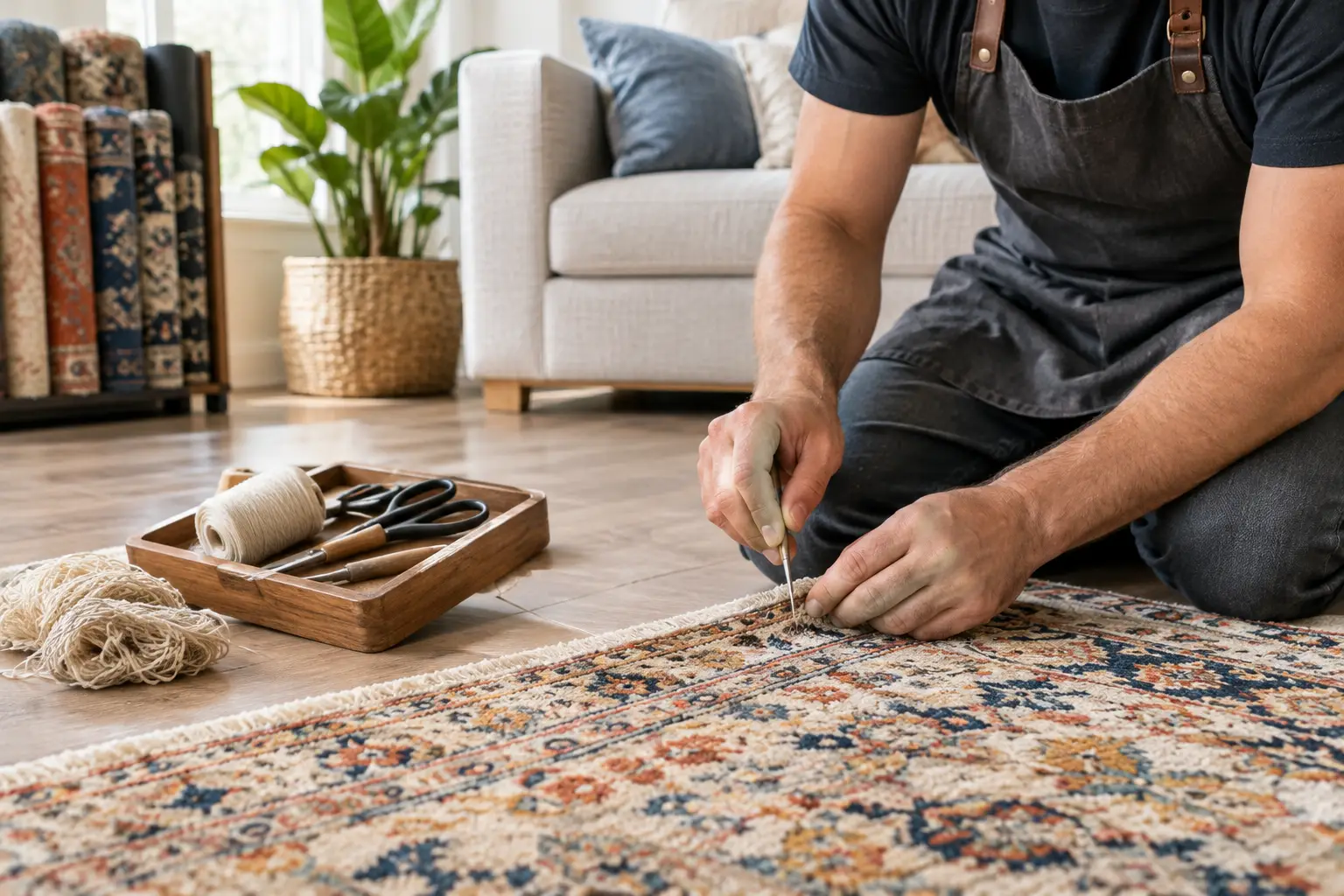
Use this Kennesaw rug repair guide to spot damage early, choose the right restoration, and protect the color, texture, and comfort of your favorite rug.
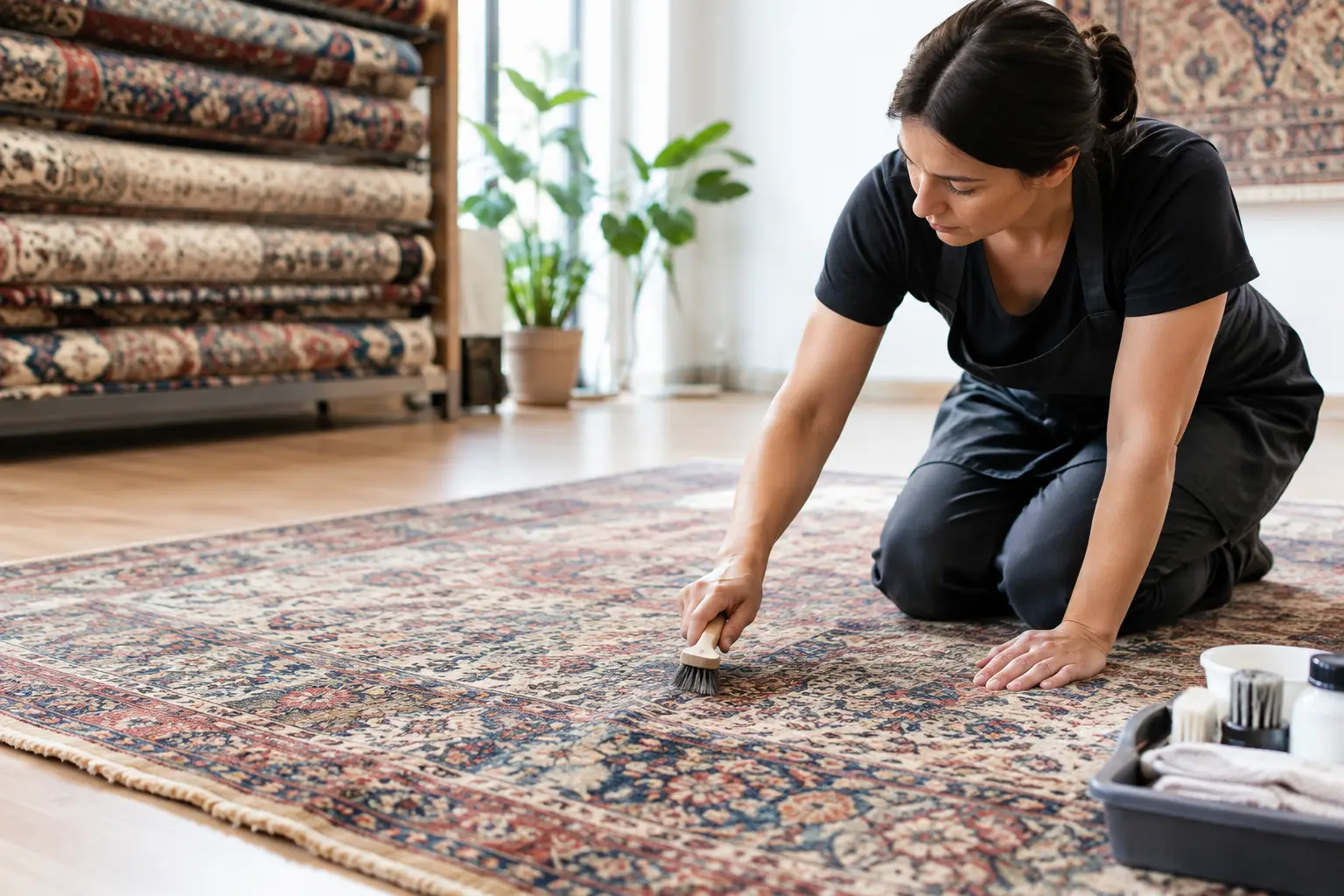
Marietta rug restoration can preserve color, texture, and history. Learn when repair makes sense and how thoughtful care protects a cherished rug at home.
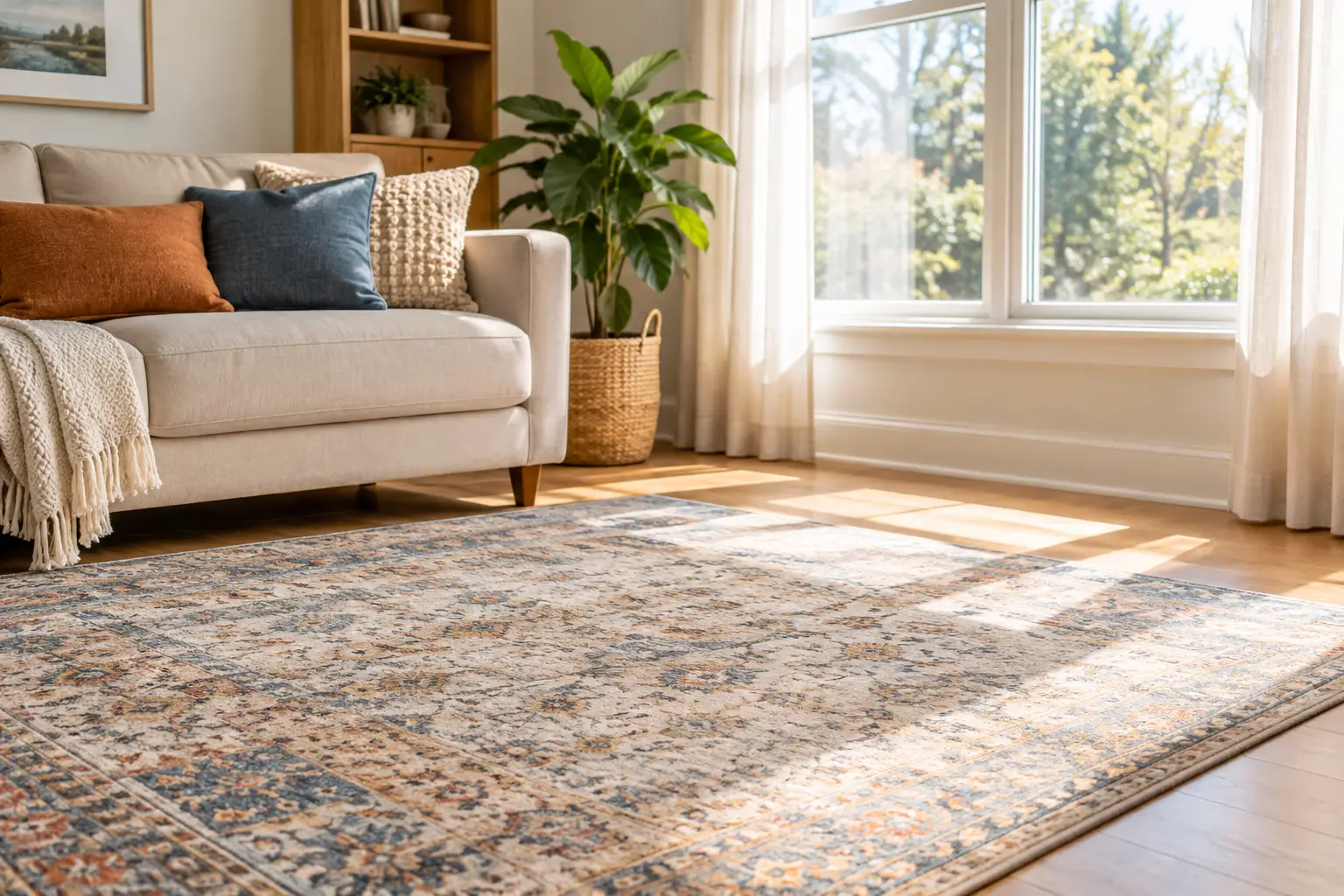
Learn how to protect rugs from sun fading with thoughtful window treatments, rotation, cleaning, and placement tips that preserve color and comfort daily.
From cozy area rugs to statement-making wall décor, our curated categories make it easy to explore what speaks to your space. Whether you’re refreshing a single corner or reimagining your whole home, start here and discover pieces that bring it all together.