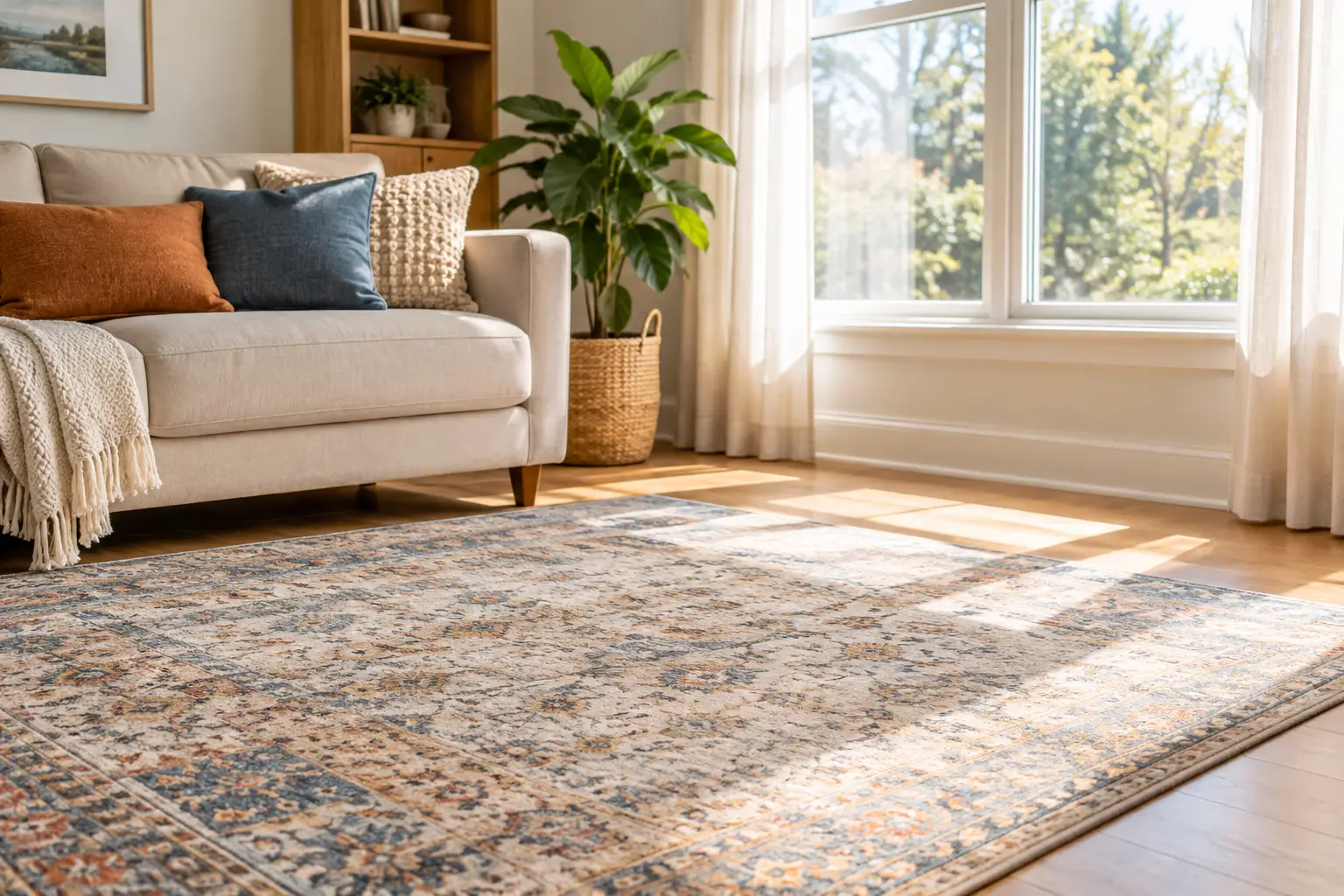
A room can have beautiful furniture and still feel unfinished until the right rug settles everything into place. When visiting rug stores Canton GA homeowners rely on, the goal is not simply to find something soft for the floor. It is to find a piece that gives the room proportion, warmth, color, and a sense of intention.
A thoughtfully chosen area rug can make an open living room feel grounded, turn a bedroom into a quieter retreat, or bring an inherited dining table into a more current setting. The difference often comes down to seeing materials, scale, and color in person, then having the guidance to choose what will truly work in your home.
What Sets Rug Stores in Canton GA Apart
Shopping locally gives you the chance to experience a rug the way you will live with it. You can feel the pile underfoot, notice whether a neutral leans warm or cool, and see how a pattern changes from a few feet away. A photo on a screen can be helpful for inspiration, but it rarely tells the whole story about texture, density, or how a color responds to natural light.
A showroom also makes it easier to compare options side by side. A soft, tonal rug may bring quiet luxury to a formal living room, while a more patterned piece can disguise everyday activity in a busy family space. Neither approach is automatically better. The right choice depends on how the room is used, the colors already present, and whether you want the rug to recede gracefully or become part of the room’s personality.
At Home Rug Gallery, the shopping experience is designed around those real decisions. Area rugs, pillows, lighting, poufs, throw blankets, and accessories can be considered together, so a homeowner is not left trying to create a cohesive room one isolated purchase at a time.
Start With Scale, Not Pattern
The most common rug regret is not choosing the wrong color. It is choosing a rug that is too small. A smaller rug may appear economical or easy to place, but it can make a generous room feel fragmented and leave furniture floating without purpose.
Living rooms need a connected seating area
In most living rooms, the rug should either hold the front legs of every main seating piece or sit fully beneath the furniture grouping. The first option works well in many rooms and creates a connected, tailored look. A rug that reaches only the coffee table usually feels undersized unless the room itself is very compact.
Before you shop, use painter’s tape to mark a few likely rug dimensions on the floor. Walk around the outline and pay attention to pathways, fireplace clearances, and where doors open. This simple exercise reveals more than measurements alone because it lets you feel the scale in the actual room.
Dining rooms need room for chairs
A dining rug should extend far enough beyond the table that chairs remain on the rug when pulled out. If chairs catch at the edge each time someone sits down, the rug is not serving the room well. A low-profile weave is often a practical choice here because it allows chairs to move more easily while still adding softness and definition.
Bedrooms benefit from softness where it counts
For a primary bedroom, a large rug placed beneath the bed can extend beyond both sides and the foot, creating a calm, generous foundation. In tighter rooms, runners along the sides of the bed can offer a similar underfoot comfort. The best layout depends on the bed size, furniture placement, and how much floor you want the rug to cover.
Choose Color and Texture for Real Life
A beautiful rug should support daily living, not create constant anxiety. Households with children, pets, frequent guests, or outdoor traffic often need more visual flexibility than a rarely used sitting room. That does not mean settling for a dull or overly casual look. It means choosing color variation, pattern, and fiber with intention.
Multitone designs can be especially forgiving because small marks and everyday wear disappear more naturally within the movement of the pattern. Textured neutrals offer another versatile direction, adding depth without demanding too much attention. In a room with dramatic artwork, bold upholstery, or patterned window treatments, a quieter rug may give the eye a place to rest.
Material matters as much as appearance. Wool is admired for its natural resilience, rich hand feel, and ability to bring depth to a room. Synthetic fibers can be a practical option for spaces where easy care is a priority. Natural-fiber looks can add beautiful texture, though they may feel less soft and may suit some rooms better than others. There is no single best material for every household. A great selection accounts for where the rug will live and what it needs to withstand.
Let the Rug Lead or Support the Room
Every room needs a visual hierarchy. If your sofa, curtains, and artwork are understated, the rug can be the element that introduces pattern and character. A vintage-inspired medallion, a modern geometric, or an artful abstract may give a neutral room its point of view.
If you already have expressive furnishings, the rug can work more quietly. Look for tonal variation, subtle borders, or a restrained pattern that echoes a color from the room without duplicating it exactly. Matching every item too closely can make a space feel flat. Coordinating is more interesting when the colors relate but each layer has its own texture and presence.
Bring a few useful references when you visit a showroom: a photo of the room in daylight, fabric or paint samples if you have them, and the dimensions of the space. These details make design guidance far more specific. They also help you identify whether the room needs warmth, contrast, softness, or a stronger focal point.
Look Beyond the Purchase
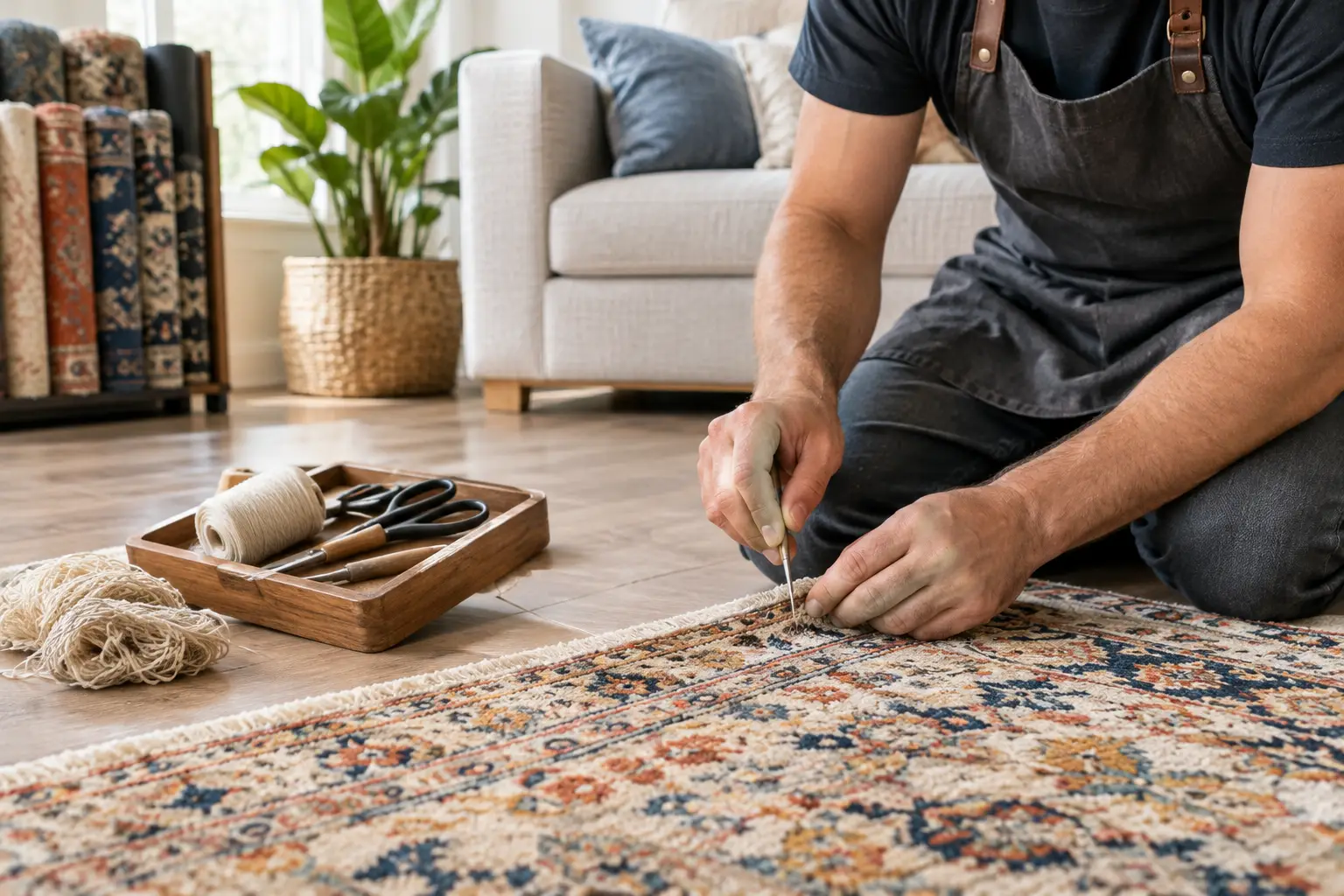
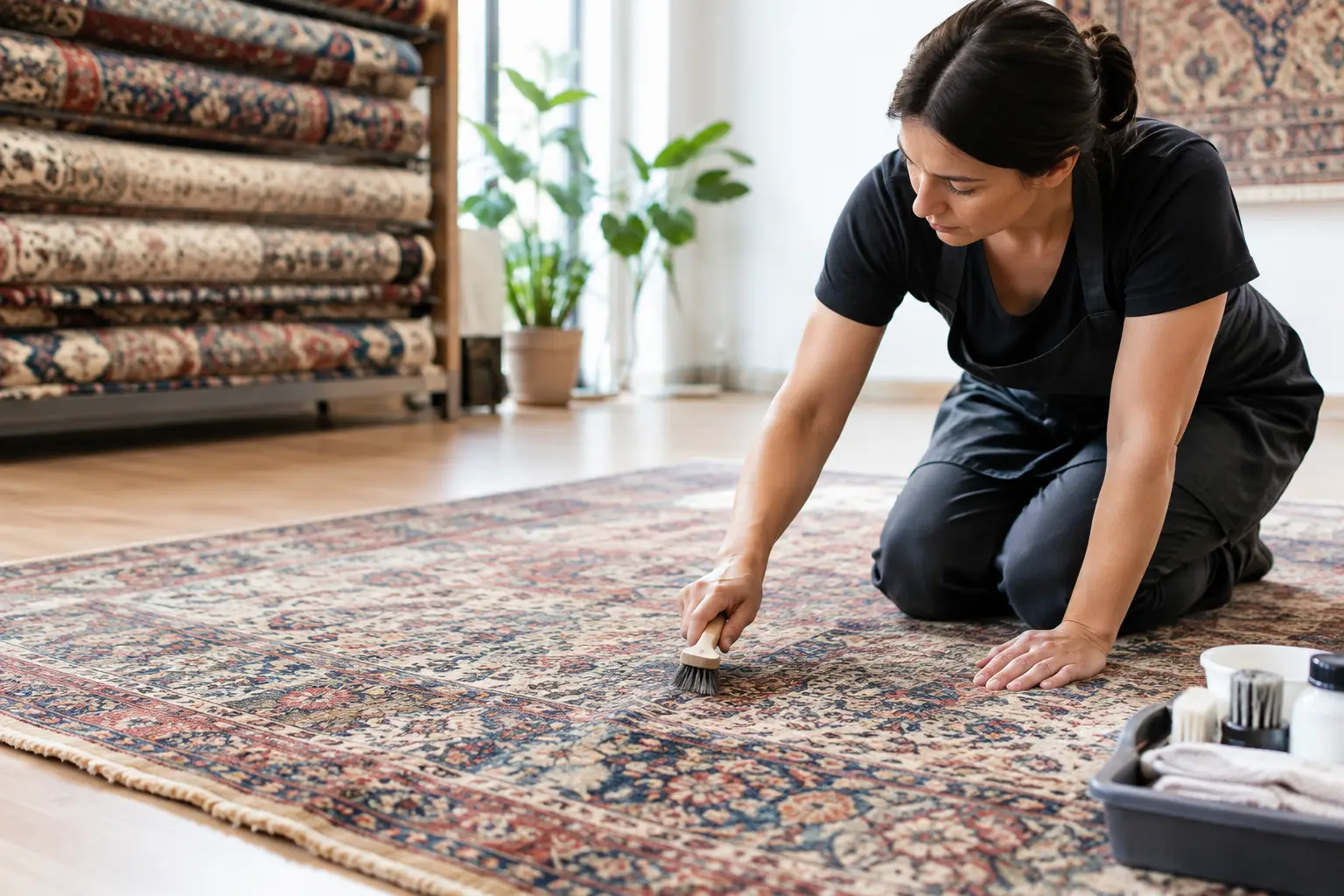
A rug is a long-term part of the home, particularly when it is well made or deeply personal. That is why choosing a local resource with care and restoration knowledge has value long after the initial styling decision. Everyday maintenance, professional cleaning, and repair can extend the life of a rug while preserving the comfort and character it brings to a room.
Cleaning needs vary by fiber, construction, stain type, and age. A hand-knotted piece, a delicate fringe, or a rug with pet-related damage deserves a more considered approach than a standard surface treatment. Repair and restoration can also be meaningful for rugs with worn edges, damaged binding, tears, or family history worth protecting.
For rooms with unusual dimensions or a very particular design vision, a custom rug can be the right answer. It gives you greater control over size, shape, color, and construction, which can be especially helpful in an open floor plan, a long hallway, or a space where standard proportions do not quite fit.
A More Confident Way to Shop
The best showroom visit starts with a clear sense of function, but it leaves room for surprise. You may arrive convinced that you need gray and discover that a soft taupe, muted blue, or warm ivory makes your existing furniture feel more elevated. You may expect a bold pattern and realize that a textured neutral is what finally lets the whole room breathe.
Give yourself permission to compare. Step back from the rug, view it from different angles, and imagine it in morning light as well as evening lamp light. Ask how it will feel after months of use, not only how it looks in the moment. A well-chosen rug does more than fill empty floor space. It makes the room feel settled, personal, and ready to be lived in.