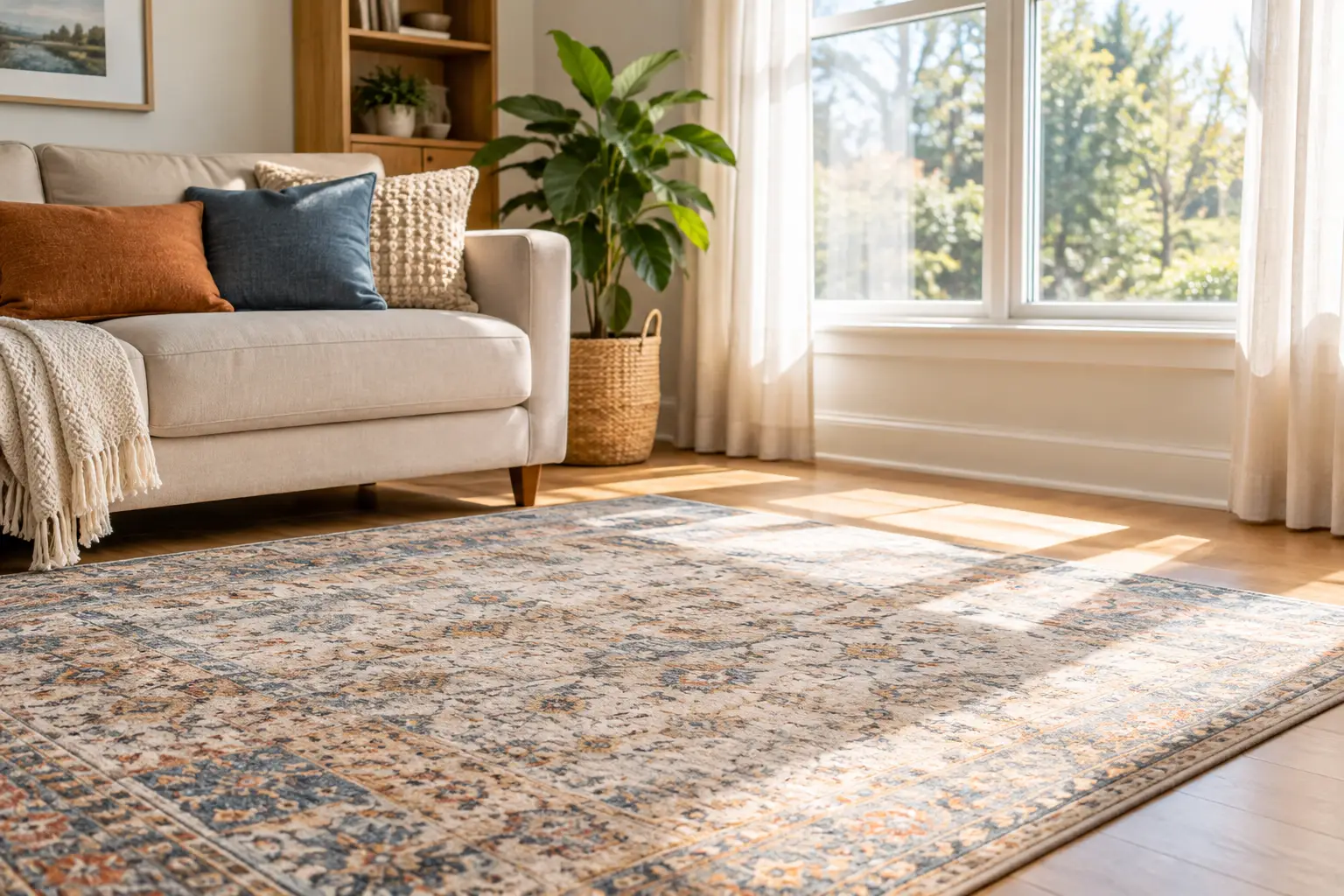
A rug can be beautifully made, richly textured, and exactly the right color, yet still leave a room feeling unfinished if its proportions are off. For homeowners considering rug resizing Canton GA, the goal is not simply to make a rug smaller. It is to create a better visual relationship between the rug, furniture, architecture, and daily life in the room.
A thoughtful alteration can help a beloved rug feel at home in a new space. But resizing is not the best answer for every rug or every layout. Before making a change, it helps to understand what can be altered, what should be preserved, and when a new or custom-sized rug may create the more polished result.
When Rug Resizing Makes Sense
Rugs often outlive the rooms they were originally selected for. A formal dining room rug may be too large after a move, an inherited piece may need to fit a more intimate sitting area, or a favorite runner may be slightly too long for a renovated hallway. In these situations, resizing can be a practical way to continue enjoying a rug that already carries quality, character, or personal meaning.
The strongest candidates are usually rugs that are oversized for their new location and have enough usable field around the pattern to allow for a clean adjustment. A simple, tonal design often offers more flexibility than a rug with a large central medallion, a dramatic border, or a highly symmetrical motif. The construction also matters. Hand-knotted, hand-tufted, machine-made, flatwoven, and natural-fiber rugs each respond differently to cutting and finishing.
Resizing is most successful when the change solves a clear fit issue. Perhaps a rug extends too close to a doorway, prevents dining chairs from moving comfortably, or leaves too little visible flooring around the perimeter of a room. If trimming a few inches will improve function without compromising the design, it may be worth exploring.
The Design Details That Can Change the Decision
A rug is not just a rectangle of color underfoot. Its borders, pile direction, weave, and pattern placement all affect whether resizing will look intentional once complete. The question is less “Can this be cut?” and more “Will it still look balanced when it is finished?”
A bordered rug deserves particular care. Removing material from one side only can make the border uneven and shift the visual center of the pattern. In some cases, taking an equal amount from opposite sides creates a more composed result. In others, the rug’s design leaves very little room for adjustment at all.
The finished edge matters just as much. A newly cut rug needs an appropriate binding or serged edge to prevent fraying and give it a refined appearance. The ideal finish should suit the rug’s material and style rather than calling attention to itself. A heavy contrast binding can feel decorative on a casual natural-fiber rug, for example, but may distract from a quieter, more traditional piece.
Then there is the matter of value. Rugs with heirloom quality, delicate silk content, extensive handwork, or collectible character deserve a careful evaluation before any permanent alteration. Preservation may be the better choice, especially when the rug could work beautifully in another room, at the foot of a bed, beneath a console, or as an accent layer over a larger foundation rug.
Measure the Room Before You Alter the Rug
The most avoidable resizing mistake happens before any work begins: measuring only the open floor. Furniture placement should lead the decision. In a living room, the rug should generally connect the seating arrangement rather than float in the middle like an island. In a dining room, it needs enough room beyond the table for chairs to remain on the rug when pulled out.
Before deciding on a final size, use painter’s tape to outline the proposed dimensions on the floor. This simple step makes scale visible in a way numbers on paper cannot. Walk through the room, pull out dining chairs, open nearby doors, and notice where the taped shape sits in relation to fireplaces, built-ins, and windows.
Keep these room-specific considerations in mind:
- In a living room, aim to anchor at least the front legs of major seating pieces when the layout allows.
- In a dining room, allow a comfortable margin beyond the table on every side for chair movement.
- In a bedroom, consider where bare feet will land when getting out of bed and whether the rug should extend beyond the sides and foot.
- In a hallway or entry, preserve clearance at doors and avoid a size that makes a narrow passage feel even tighter.
These guidelines are not rigid rules. A compact den may call for a smaller rug with all furniture legs off the edge, while an expansive open-plan room may benefit from a larger rug that clearly defines a conversation area. The right proportion depends on the room’s architecture and the feeling you want it to have.
Rug Resizing in Canton GA Starts With the Whole Room
It is easy to focus on the rug as a standalone item, particularly when it is a piece you already own. Yet the best resizing decision considers the layers around it: upholstery, wall color, drapery, lighting, wood tones, and the amount of visible floor. A smaller rug reveals more flooring, which can make a room feel airy and expansive. It can also make a large seating arrangement feel disconnected if the new size is too restrained.
This is where seeing materials and proportions in person can make a meaningful difference. A rug that seems oversized at home may actually be the element giving a room its calm, grounded feeling. Conversely, a rug that has always felt slightly awkward may only need a measured adjustment to make the layout feel effortlessly styled.
For Canton-area homeowners refining a room, Home Rug Gallery offers a useful setting to compare rug scales, textures, and coordinating accents firsthand. Bringing room measurements, photos, and a clear sense of how the space is used can make the conversation far more productive. Sometimes the right direction is to preserve the existing rug and style around it. Other times, a custom rug solution or a different standard size offers a cleaner long-term fit.
When a New Size May Be the Better Choice
Resizing is a specialized solution, not a default answer. If the needed reduction would remove a major part of the pattern, leave the border unbalanced, or create a shape that still does not suit the furniture layout, replacing the rug may be the more satisfying decision. This is particularly true when a room needs a substantially different proportion, such as changing from a large rectangle to a narrow runner or from a standard size to an unusually wide format.
A new rug also gives you the opportunity to reconsider color, pile height, and performance. A family room with pets and children may need a more forgiving texture than a formal rug selected years ago. A bedroom may benefit from a softer, more luxurious pile. A refreshed rug can become the starting point for pillows, throws, lighting, and smaller decorative details that make a room feel deeply personal rather than merely furnished.
If you are attached to the original rug, do not assume the choice is either alteration or removal. It may have a wonderful second life in a guest room, home office, reading corner, or layered entry. Well-chosen rugs have a way of finding their place when the scale is right.
A Better Fit Should Still Feel Like Your Home
The most successful rug decisions balance practical dimensions with the mood of the space. A rug should support the rhythm of daily life, welcome people into the room, and make furnishings look intentionally placed. Whether resizing is appropriate depends on the rug’s construction, design, condition, and the amount of change required.
Before committing to an alteration, take the time to map the room, study the pattern, and picture the finished edge in context. The right rug size does more than fill a floor. It gives the whole room a sense of ease, proportion, and quiet confidence.