

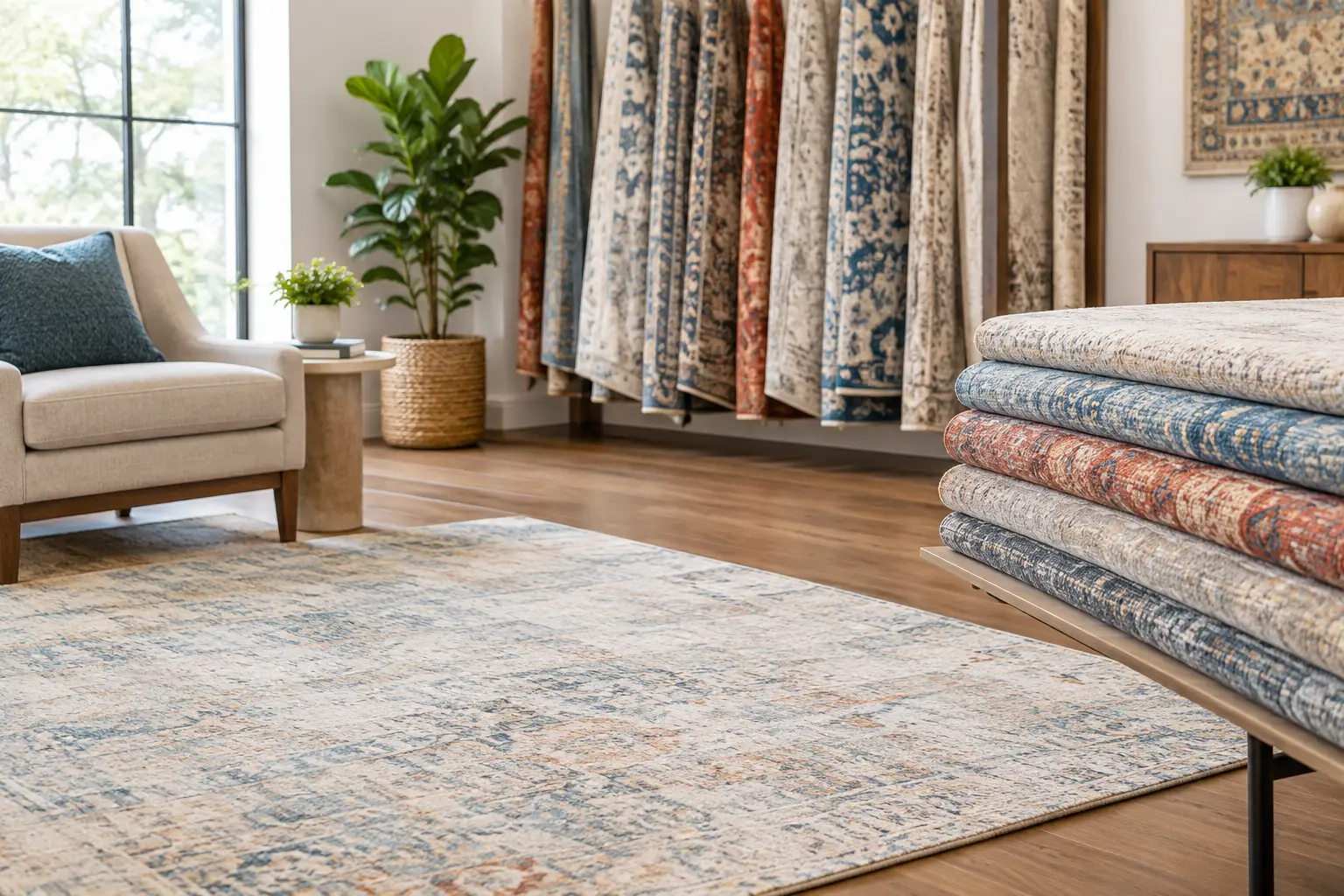
Home Rug Gallery Canton for Size, Color and Style
Visit Home Rug Gallery in Canton to get help choosing the right size, color, and style for your home, then create a room that feels polished and personal.
A large living room has a wonderful kind of potential: space for generous seating, layered lighting, and the details that make a home feel deeply personal. It also makes one design decision especially visible. When you are deciding how to choose a rug for a large living room, the right piece does more than soften the floor. It gives the room an intentional center, connects the furniture, and makes an expansive layout feel comfortably composed.
The most common mistake is treating a rug as a small accent in the middle of the room. In a larger space, a too-small rug can make beautiful furniture appear scattered and leave the entire room feeling unfinished. Start with proportion, then let color, texture, and construction shape the mood.
A rug should define the conversation area, not simply fill open flooring. Before measuring, decide where the seating arrangement will live and how people will move through the room. In an open-concept home, the rug is often what signals that the living area has its own purpose, even when it shares space with a kitchen or dining area.
For a primary seating group, the most polished approach is usually to place all major furniture legs on the rug. A sofa, accent chairs, and coffee table feel grounded when the rug extends beneath each piece. This creates a relaxed, generous look that suits a large living room particularly well.
If the room is exceptionally wide or long, placing only the front legs of the sofa and chairs on the rug can still look balanced. The key is consistency. Each major seating piece should relate to the rug in the same way, rather than having one chair floating outside its edge.
Leave a visible border of flooring around the rug, generally 8 to 18 inches depending on the size of the room. That breathing room preserves the architecture of the space while keeping the rug substantial enough to do its job.
Measure the seating zone with painter’s tape before shopping. Mark the rug dimensions directly on the floor, then walk around the perimeter. Sit in each chair if possible and notice whether the planned size feels connected to the furniture or cramped beneath it. This small step can prevent a costly guess.
In many large living rooms, an 8-by-10 rug is better suited to a compact arrangement than a truly generous one. A 9-by-12 or 10-by-14 rug often gives a larger sofa, two chairs, and a coffee table the scale they need. For rooms with oversized sectionals or multiple seating areas, a 12-by-15 rug or a custom size may be the more natural choice.
Dimensions alone do not tell the whole story. A 9-by-12 rug can feel too small in a room with a deep sectional, while the same size may be ideal beneath a tailored sofa and slim-profile chairs. Measure the furniture footprint, including the depth of the pieces, not just the room itself.
Rectangular rugs are the natural choice for most large living rooms because they echo the shape of the space and align easily with sofas. A square rug can be striking in a square room or beneath a symmetrical arrangement of four chairs. Round rugs bring softness to rooms with lots of straight lines, but they need enough visual space around them to feel deliberate rather than undersized.
An irregular or subtly shaped rug can add personality in a contemporary room, especially when the furniture is simple and architectural. In a traditional space, a classic rectangular silhouette may create the quiet luxury that lets the rest of the furnishings shine.
A large rug carries significant visual weight, so its color influences the entire room. That does not mean it must match the sofa exactly. In fact, a little contrast often gives a space more depth. The goal is coordination, not perfect sameness.
If your furnishings are neutral, a rug can introduce muted blue, warm terracotta, olive, soft gold, or a layered pattern that makes the room feel collected over time. In a room with colorful upholstery, art, or drapery, a more restrained rug may offer welcome balance. Look for a design that repeats one or two existing tones without competing with every element in the room.
Light rugs can make a large room feel airy, but they require more consideration in homes with children, pets, or frequent entertaining. A heathered pattern, low-contrast design, or multi-tonal weave often disguises everyday life more gracefully than a solid pale surface. Darker rugs provide definition and warmth, though an all-over dark rug can feel heavy in a room with limited natural light.
Bring fabric swatches, paint samples, and a few photos of the room when you shop. Color shifts dramatically between a bright showroom, a window-filled living room, and an evening lit by lamps. Seeing rug options in person makes it easier to compare undertones and decide whether a cream leans warm, a gray leans blue, or a navy has enough softness for your home.
The best large living room rug is one you will enjoy living with, not simply looking at from across the room. Texture changes the emotional temperature of a space. A plush wool pile feels inviting underfoot and brings warmth to formal seating areas. A flatweave or low-pile rug offers a cleaner, more tailored profile and can be easier to manage beneath furniture and around doorways.
Natural fibers such as wool are valued for softness, resilience, and rich visual texture. They are a beautiful choice for living rooms where comfort and long-term quality matter. Performance-oriented fibers can be a practical fit for active households, offering easy-care confidence without giving up a refined look. Silk-blend or high-sheen rugs create a luminous, dressier effect, though they may be better reserved for lower-traffic spaces.
Consider the pile height alongside your coffee table, ottoman, and side chairs. A very thick rug can make low furniture feel lower and may cause a rolling coffee table to wobble. A thinner construction can be ideal for a modern room or a space where doors need to clear the rug edge.
Pattern can unite a large room, but its scale matters. Small, intricate motifs tend to feel classic and detailed, especially when viewed up close. Larger patterns read more clearly from across a generous room and can give a simple furniture arrangement a stronger point of view.
If the room already includes patterned pillows, bold artwork, or drapery, choose a rug with a quieter pattern or tonal variation. If the furniture is solid and streamlined, a more expressive rug can become the layer that gives the room its character. There is no rule that every surface must be quiet, but each room benefits from one visual element that leads and others that support it.
Not every large living room needs one enormous rug. A room with a fireplace seating group at one end and a reading nook near a window may feel more inviting with two rugs that define two distinct uses. This approach works especially well in long great rooms, where a single rug can appear stretched or leave one end of the room without purpose.
The rugs should feel related, not identical. Pairing a softly patterned wool rug with a complementary textured neutral can create an effortlessly styled result. Keep a shared color, material feeling, or design era between them so the room remains cohesive.
For one expansive conversation area, however, a single larger rug is usually the better choice. Multiple small rugs can fragment the floor and make a generous room feel busier than it needs to be.
A quality rug pad is part of the finished design, particularly with a large rug. It helps prevent shifting, adds cushioning, and supports even wear over time. Choose a pad that suits both the rug construction and the flooring beneath it. The pad should sit slightly inside the rug edge so it remains invisible.
Plan for care from the beginning as well. Rotate the rug periodically where sun exposure is strong or seating creates uneven pressure. Address spills promptly, and use professional cleaning and restoration support when a treasured rug needs more than surface care. Thoughtful maintenance preserves both appearance and comfort, especially for a piece that anchors everyday family life.
A large living room should feel spacious without feeling distant. Bring your room measurements, photos, and a clear sense of how you want to live in the space to Home Rug Gallery. Seeing the scale, texture, and color of a rug in person can turn an uncertain choice into the finishing layer that makes the entire room feel at home.
Visit Home Rug Gallery in Canton to get help choosing the right size, color, and style for your home, then create a room that feels polished and personal.
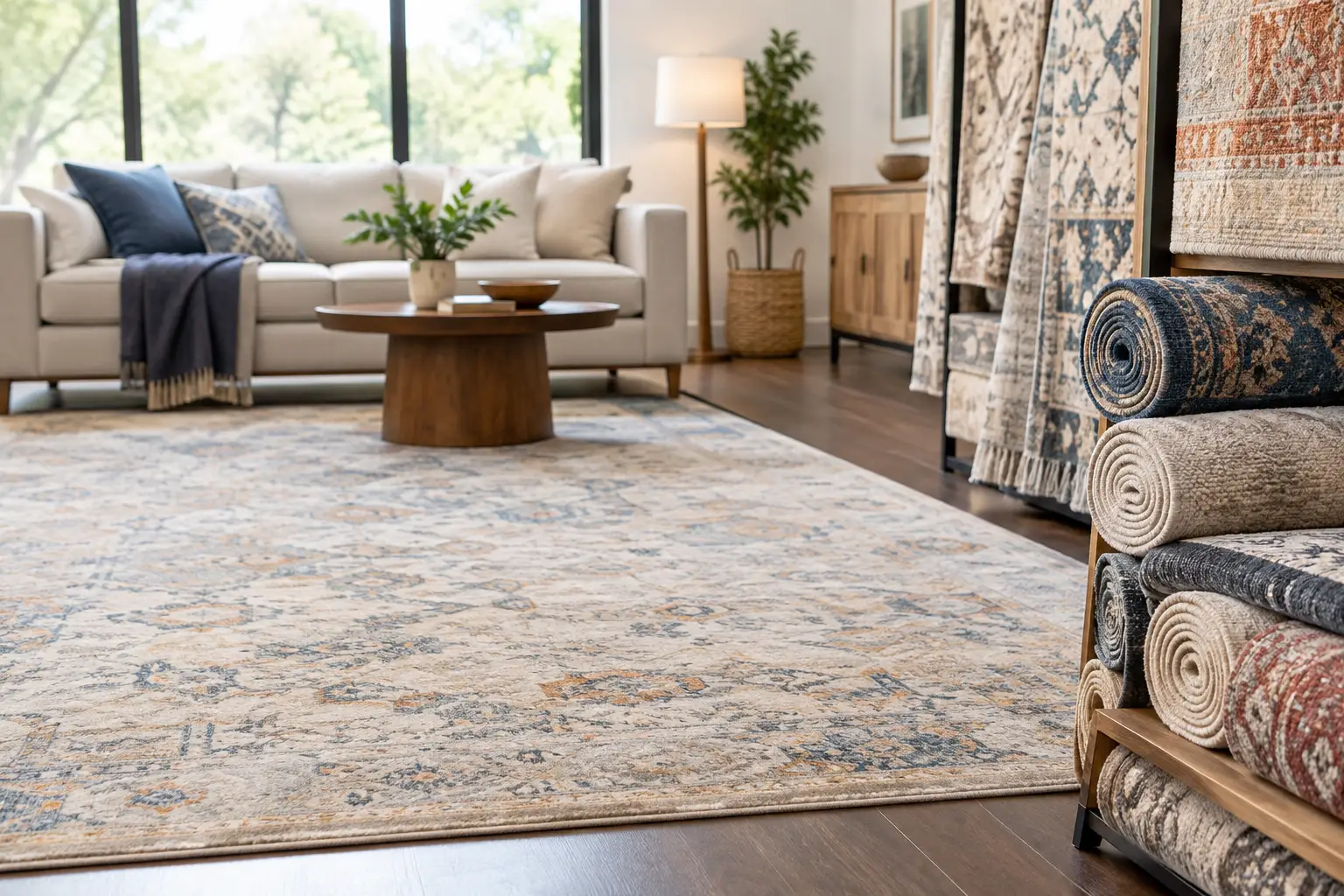
Looking for a rugs store Ball Ground GA homeowners can visit in person? Find room-right rugs, coordinated décor, and thoughtful local design guidance.
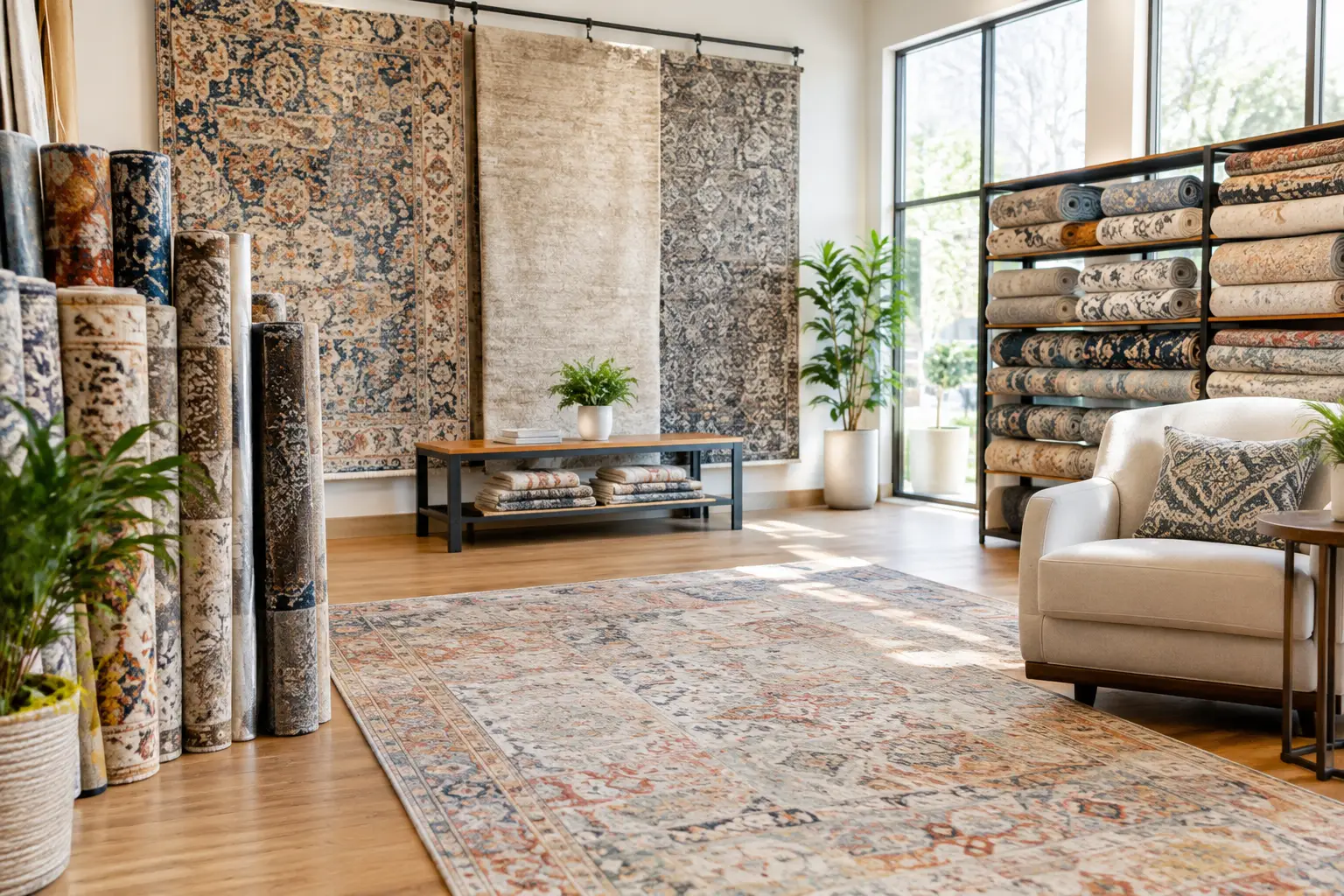
Looking for a rug store Holly Springs GA homeowners can trust? Learn how to choose size, material, and color with a showroom-first approach to design.
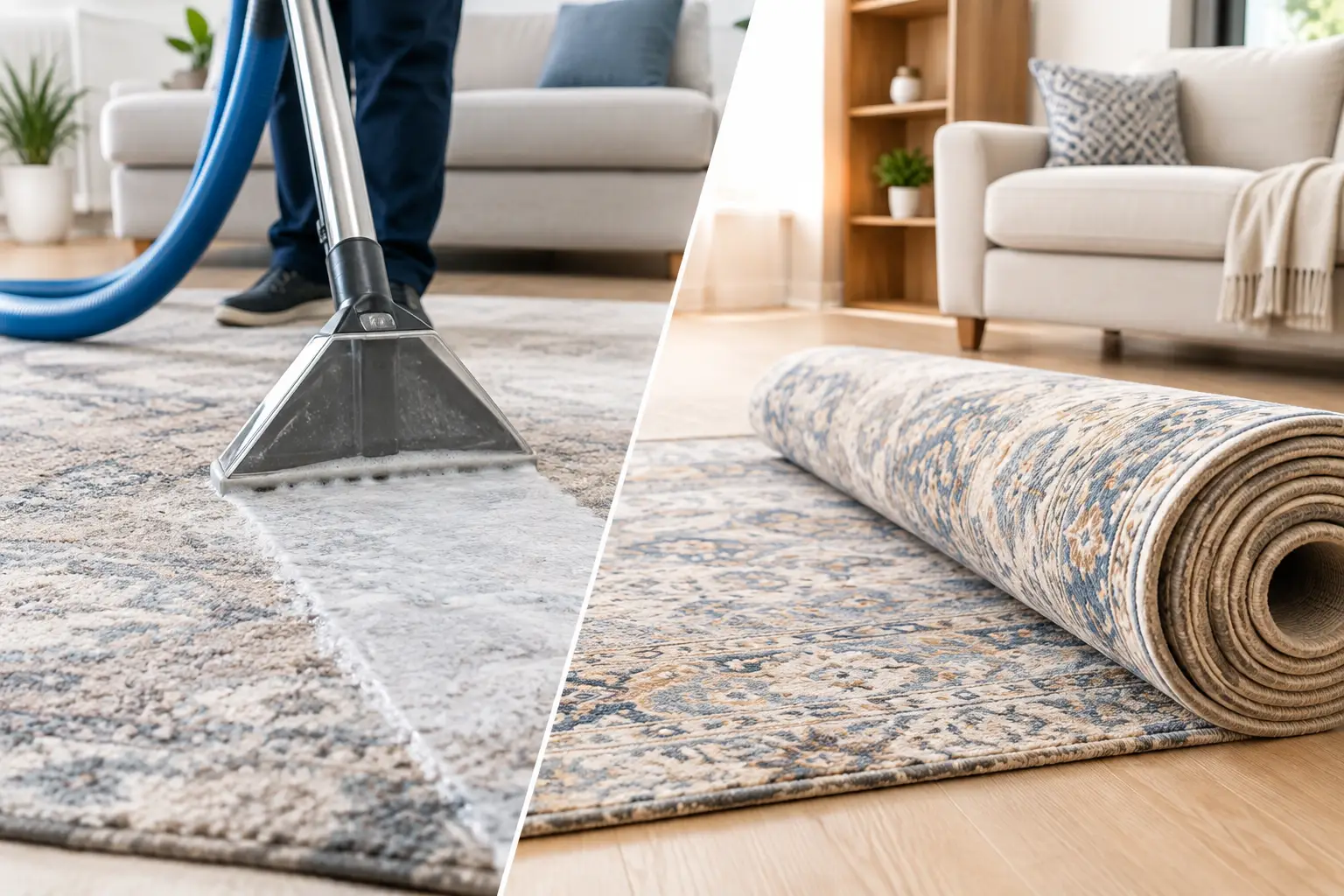
Rug cleaning vs. replacing your rug comes down to fiber, damage, style, and use. Learn which choice protects your home and its finished feel for years.
From cozy area rugs to statement-making wall décor, our curated categories make it easy to explore what speaks to your space. Whether you’re refreshing a single corner or reimagining your whole home, start here and discover pieces that bring it all together.