A gallery wall does not have to be made entirely of framed prints. A beautifully woven rug can bring in the history, softness, and quiet luxury that paper art alone often misses. If you are wondering how to style a gallery wall with rugs, think of each textile as both artwork and an anchor: it introduces color, pattern, and tactile depth while making the arrangement feel deeply personal.
The result can be relaxed and collected or polished and tailored. What matters most is that the rug feels intentionally placed, properly supported, and connected to the room around it.
Start With a Rug Worth Looking At
Not every floor rug is meant to move to the wall. The best candidates are smaller pieces with a distinct design, such as a vintage-inspired runner, a handwoven flatweave, a textile with a central medallion, or a richly patterned accent rug. Look for character from a few feet away. Fine details are a bonus, but the overall color balance and silhouette should still read clearly across the room.
Scale matters just as much as style. A small rug can function like an oversized piece of art above a console, bench, or bed. A narrow runner works especially well in a hallway, beside a staircase, or on a tall wall where a horizontal framed print may feel too expected. If the rug is large or especially weighty, it may be better as the room’s main wall statement rather than one piece within a dense collection.
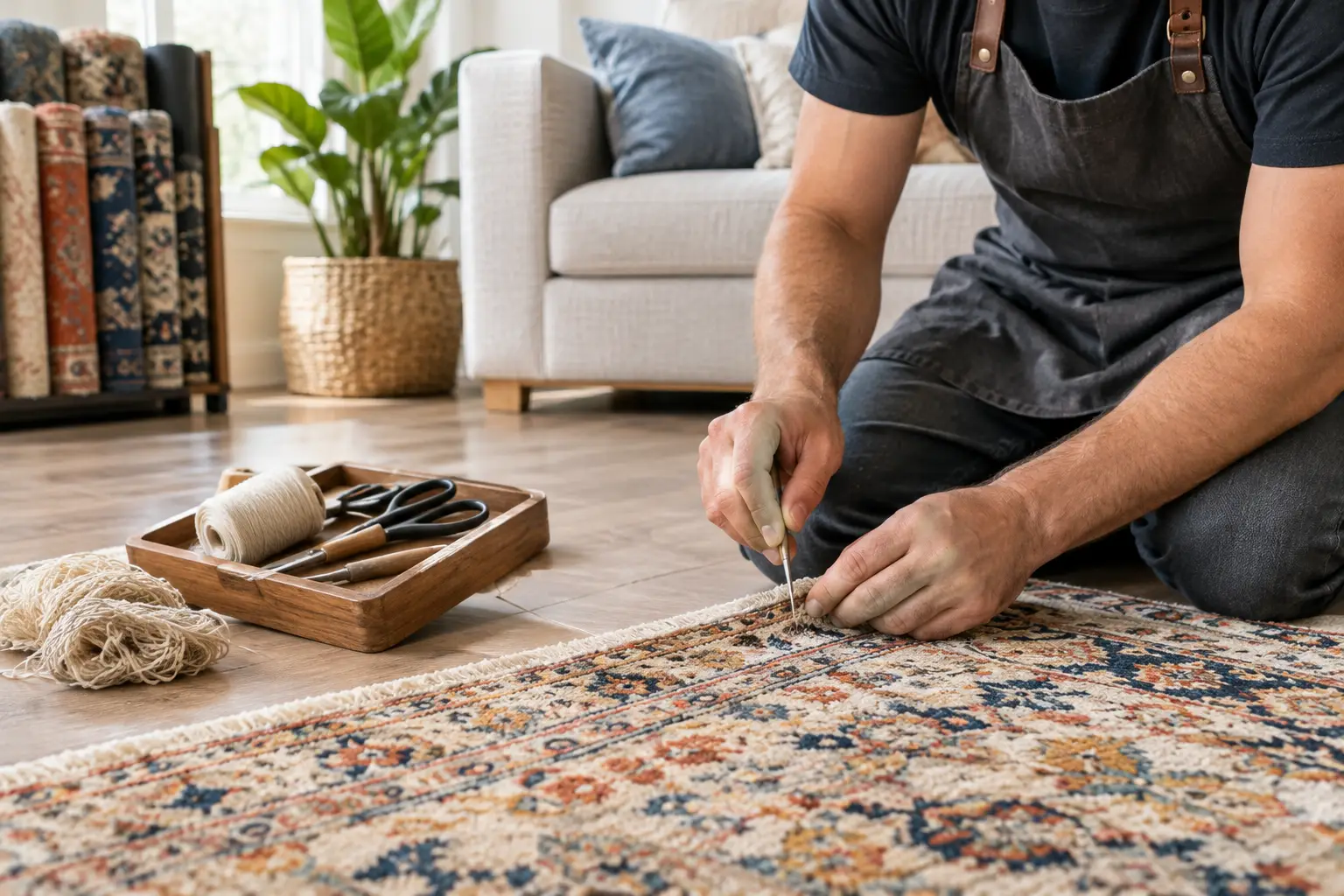
Before hanging anything, assess condition. A fragile heirloom, a rug with loose fringe, or a piece that needs repair deserves professional attention before it is displayed. Wall hanging reduces foot traffic, but it does not eliminate stress on fibers if the rug is mounted incorrectly.
How to Style a Gallery Wall With Rugs and Art
The most successful gallery walls have rhythm. A rug brings a softer, less rigid shape to the mix, so use that quality to loosen an arrangement of frames, mirrors, and objects. Rather than treating the textile as an afterthought, choose it first and build outward from its strongest colors and patterns.
A rug with faded rust, olive, and ivory can guide the rest of the wall toward warm wood frames, sepia photography, cream mats, and a small brass accent. A cooler blue and charcoal rug might pair beautifully with black frames, abstract line art, and a smoky glass sconce. You do not need to repeat every color in the textile. Pulling out two or three key tones creates a more edited look.
Balance visual weight, not perfect symmetry. A bold rug placed slightly off-center can be balanced by a pair of smaller framed pieces on the other side. If the rug has an intricate pattern, give it breathing room with quieter artwork nearby. If it is a simple neutral flatweave, it can sit beside more expressive prints without competing for attention.
It also helps to vary texture. Smooth glass frames, natural wood, woven fibers, ceramic wall pockets, and metal accents create the layered effect homeowners often want in a curated space. Keep the palette controlled so the variety feels intentional rather than busy.
Plan the Layout Before You Hang
Lay the arrangement on the floor first, or trace each piece onto kraft paper and tape the templates to the wall. This simple step lets you test proportion without committing to holes or hardware. Start by placing the rug, then position larger framed pieces around it before filling in smaller accents.
For a gallery wall above furniture, the overall grouping should relate to the width below it. A collection above a sofa or sideboard generally looks most grounded when it spans a meaningful portion of the furniture, rather than floating as a small cluster in the middle. Keep the lowest pieces visually connected to the furniture, usually with a modest gap between them.
Spacing should be consistent enough to feel deliberate. Two to three inches between framed pieces is often comfortable, while a rug may need slightly more room around its edges so its texture can be appreciated. There is no need to force every item into a grid. A gentle asymmetry often feels more collected and inviting, especially in living rooms, bedrooms, and entryways.
Choose the Right Focal Point
A rug can be the focal point, but it does not always have to be. If you have one especially meaningful painting or a large mirror, let that lead and use the textile as a grounding layer nearby. If the rug has the strongest pattern on the wall, allow it to take center stage and surround it with quieter supporting pieces.
The room itself should help make this decision. In a serene bedroom, a softly textured rug above the headboard can create a restful focal point. In a lively family room, a smaller rug mixed with children’s artwork, travel photographs, and framed sketches can make the space feel warm and lived in.
Hang Rugs With Care
A rug should never be hung by its fringe, and adhesive solutions are rarely appropriate for a valuable textile. The mounting method depends on the rug’s size, weight, construction, and condition. For lighter flatweaves, a fabric sleeve attached along the back can slide onto a secure hanging rod. This distributes the weight more evenly than hanging from clips.
For decorative pieces that are heavier or more delicate, consider having the mounting approach evaluated before installation. You want support across the width of the rug, not pressure concentrated in a few small points. Avoid direct sunlight where possible, since prolonged exposure can fade dyes and weaken natural fibers over time.
If you prefer the relaxed look of visible hardware, use it thoughtfully. A simple wood rod can complement an organic, casual room, while a slim black or brass rod feels more tailored. The hardware should support the rug’s style rather than distract from its design.
Let the Rest of the Room Echo the Wall
A rug gallery wall looks most at home when it has a conversation with the rest of the space. Repeat one of its colors in a throw pillow, a pouf, a lamp shade, or a nearby throw blanket. This does not mean matching everything. A room feels more sophisticated when the connection is subtle.
Consider the rug underfoot, too. Wall textiles and floor rugs can coexist beautifully, even when they are not identical. Pairing a patterned wall rug with a quieter floor rug creates depth without visual competition. If the floor rug is already bold, choose a wall textile with a simpler weave or a more restrained palette.
Lighting makes a meaningful difference. Warm, layered lighting brings out the dimension of woven fibers at night, while a picture light or nearby sconce can make the wall feel considered after sunset. Be mindful of heat and placement, especially with older textiles.
Make It Personal, Not Precious
The appeal of a rug gallery wall is that it can hold more than one style story. A family heirloom can sit beside contemporary art. A geometric flatweave can soften traditional frames. A travel-found textile can add soul to a newer home that still needs a sense of history.
The goal is not to make every piece match. It is to create a composition that feels like it belongs to the people who live there. Leave room for one unexpected element, whether that is a sculptural basket, a handwritten note in a small frame, or a simple mirror that reflects the room’s light.
For homeowners in Canton and across North Georgia, seeing rugs alongside lighting, pillows, and wall décor in person can make these decisions far easier. Texture and scale are difficult to judge from a screen, while a showroom setting makes it possible to compare colors and imagine the complete room.
A well-styled wall should feel collected over time, even when you create it in an afternoon. Choose a textile you genuinely love, give it the support it deserves, and let its color and character lead the room somewhere more personal.