


How to Remove Pet Odors From Rugs Safely
Learn how to remove pet odors from rugs without harming color or fibers, plus when professional washing is the smarter choice for a fresh home that lasts.
That sunny spot beside the windows may be the heart of your living room, but it can be hard on a beautiful rug. To protect rugs from sun fading, think beyond simply closing the blinds. The goal is to preserve the color and character you chose while keeping the room bright, inviting, and deeply personal.
Sun fading happens gradually, which is why it is often missed until a rug is moved, rotated, or replaced. A once-rich navy can look softened, warm terracotta can lose its depth, and a subtle pattern can begin to feel uneven. With a few considered choices, you can enjoy natural light without allowing it to quietly reshape your room.
Ultraviolet rays break down color dyes over time. Direct sunlight is the main concern, but even strong indirect light can affect a rug placed near broad windows, glass doors, or a sunroom wall. The effect depends on the rug’s materials, dye process, color palette, and daily exposure.
Natural fibers such as wool, silk, cotton, and jute each respond differently to light. Silk and some richly dyed natural fibers can be especially sensitive, while indoor-outdoor rugs and certain synthetic constructions may offer greater color resistance. That does not mean one material is always the right answer. A wool rug may be the perfect choice for quiet luxury in a formal sitting room, while a performance-focused rug may make more sense in a sunny family space with doors opening to the backyard.
Dark, saturated colors can show fading more clearly, but pale rugs are not entirely immune. In lighter designs, fading may appear as yellowing, uneven tone, or a loss of detail in the pattern. The most effective approach is to plan for the light the room actually receives, not just the look you want on the day the rug arrives.
The best way to protect a rug is to manage the sunlight before it reaches the floor. Window treatments do not need to make a room feel closed off or overly formal. Sheer drapery, solar shades, lined panels, and UV-filtering window film can soften harsh rays while preserving the open, airy feeling homeowners love.
In a room with morning sun, consider treatments that can be adjusted during the hours when light is most intense. West-facing rooms often need more protection later in the day, when the sun sits lower and shines directly across flooring and furnishings. Layered treatments are especially useful because they offer flexibility: sheer panels can filter everyday light, while lined drapery can be closed when needed.
If a view is a central feature of the room, a nearly invisible UV-filtering film may be worth considering. It is a practical choice for expansive windows and doors where heavy treatments would interrupt the architecture. The trade-off is that window film may slightly alter the appearance of glass, so ask to see a sample before committing.
Regular rotation is one of the simplest habits for protecting rugs from sun fading. Turn the rug 180 degrees every three to six months so the same edge is not always absorbing the strongest light. In a room with exceptionally bright exposure, a seasonal rotation is often wise.
Rotation also helps distribute foot traffic, furniture pressure, and everyday wear. It will not stop color change altogether, but it can make any gradual change more even and far less noticeable. Before moving a large rug, take a quick photo of the room or place painter’s tape under furniture feet to make repositioning easier.
For rugs anchored beneath a sectional, dining table, or substantial bed, rotation may take more planning. If the layout makes a full turn impractical, shifting the rug a few inches from time to time can still change which areas receive the most direct sun.
Furniture placement can help break up a path of direct sunlight. A chair, coffee table, or ottoman will not block UV rays completely, but it can reduce concentrated exposure across one uninterrupted section of the rug. More importantly, thoughtful placement may prevent a sharply defined faded strip from developing in the middle of the room.
Be mindful of the opposite problem: leaving furniture in one position for years can reveal dramatic color differences when the piece is moved. If your room allows it, make small seasonal shifts to accent chairs, tables, or floor lamps. These changes can refresh the room visually while helping the rug age more evenly.
A rug should still be sized and placed for the room first. Do not sacrifice a well-proportioned, grounded layout just to chase a patch of shade. Good design and practical care should support one another.
When shopping for a new rug, bring a few photos of the space at different times of day. A color that looks composed under showroom lighting may read very differently in a room filled with afternoon sun. Seeing the rug in person, feeling its texture, and comparing it with paint, upholstery, and wood tones gives you a more complete picture than a screen ever can.
For bright rooms, patterned rugs are often a graceful choice. Their variation in color and texture can make subtle, gradual changes less noticeable than they would be on a solid field. Mid-tones, heathered designs, and layered neutrals can be especially forgiving while still feeling polished.
That said, do not avoid a darker or more dramatic rug simply because the room is sunny. If it is the piece that gives the space its point of view, pair it with appropriate window protection and a rotation plan. A home should feel like yours, not like it was designed around fear of normal living.
Ask about fiber content and whether the rug is designed for high-light environments. Colorfastness refers to how well a material holds its color when exposed to light and other conditions. It is useful information, though it is not a promise that a rug will never change. Every rug benefits from sensible protection in a sun-filled room.
Handmade and antique-style rugs deserve particular attention because their dyes, age, and fibers may respond differently than newer machine-made pieces. Their patina can be part of their appeal, but uneven fading is not the same as a beautifully developed finish.
Dust and soil can dull a rug long before sun exposure becomes visible. Regular vacuuming helps preserve its clarity and texture, especially in active rooms. Use the setting and attachment appropriate for your rug’s construction, and take care with fringe, delicate fibers, and hand-knotted pieces.
Cleaning does not reverse UV fading, but professional rug cleaning can remove the surface buildup that makes colors look flat or gray. It also gives a rug care specialist the opportunity to spot concerns such as weakened fibers, color migration, or early wear around the edges.
Avoid aggressive DIY treatments and harsh cleaners when trying to brighten a faded-looking rug. Some products can damage fibers or alter dyes, creating a more permanent problem than the one you hoped to solve. If a rug looks noticeably uneven, it is better to have it assessed before attempting a remedy at home.
A quick inspection once or twice a year can prevent surprises. Look beneath furniture, along the window-facing edge, and under the first few inches of a rug near a glass door. These areas often reveal the clearest contrast.
You may notice that the colors facing the window look slightly lighter, warmer, or less defined than protected areas. Catching this early gives you options: adjust your window treatments, rotate the rug, rethink a furniture grouping, or move the rug to a lower-light space.
For a cherished rug with visible fading or fiber damage, professional repair and restoration guidance can be valuable. The right next step depends on the rug’s construction, condition, and sentimental or design value. Not every faded area can be restored to its original tone, but timely care can help preserve the rug’s structure and extend its life.
As the seasons change, so does the angle and intensity of sunlight. A room that feels gentle in winter may receive strong direct exposure in late spring or summer. Use that natural reset point to rotate rugs, inspect window coverings, and notice whether your furniture arrangement is creating new areas of contrast.
This is also a good moment to reconsider whether a particular rug still belongs in that room. A delicate heirloom piece may be better suited to a quieter bedroom or library, while a more resilient design takes center stage in the sunniest gathering space. That is not compromising your style. It is curating your home around the way you actually live in it.
A rug is more than a layer underfoot. It grounds the furniture, softens the room, and carries much of its color story. With thoughtful light control and consistent care, it can continue to make your home feel effortlessly styled for years to come. If you would like help choosing a rug for a bright North Georgia room or caring for one you already love, Home Rug Gallery can offer the in-person perspective that makes the decision feel clear.
Learn how to remove pet odors from rugs without harming color or fibers, plus when professional washing is the smarter choice for a fresh home that lasts.
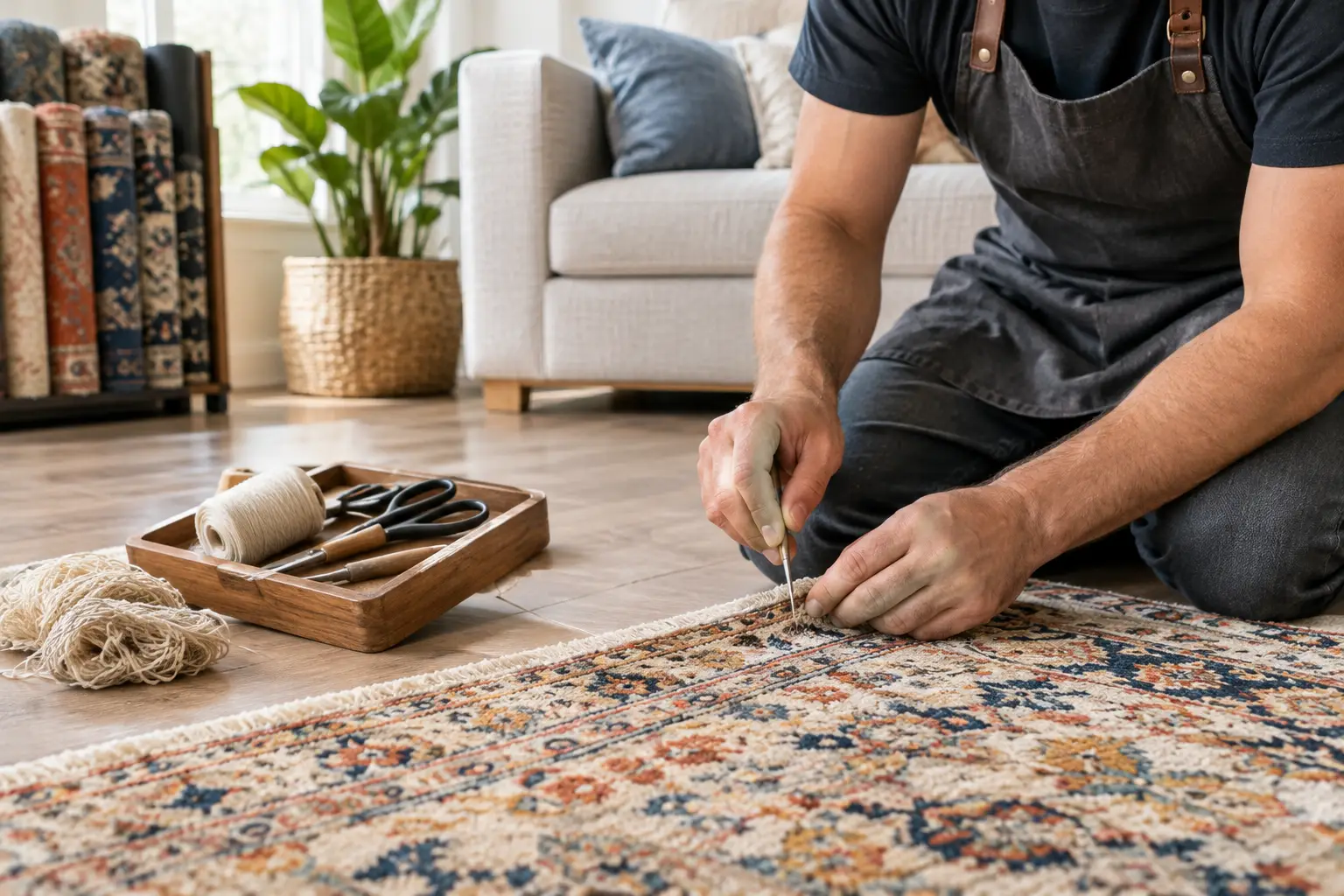
Use this Kennesaw rug repair guide to spot damage early, choose the right restoration, and protect the color, texture, and comfort of your favorite rug.
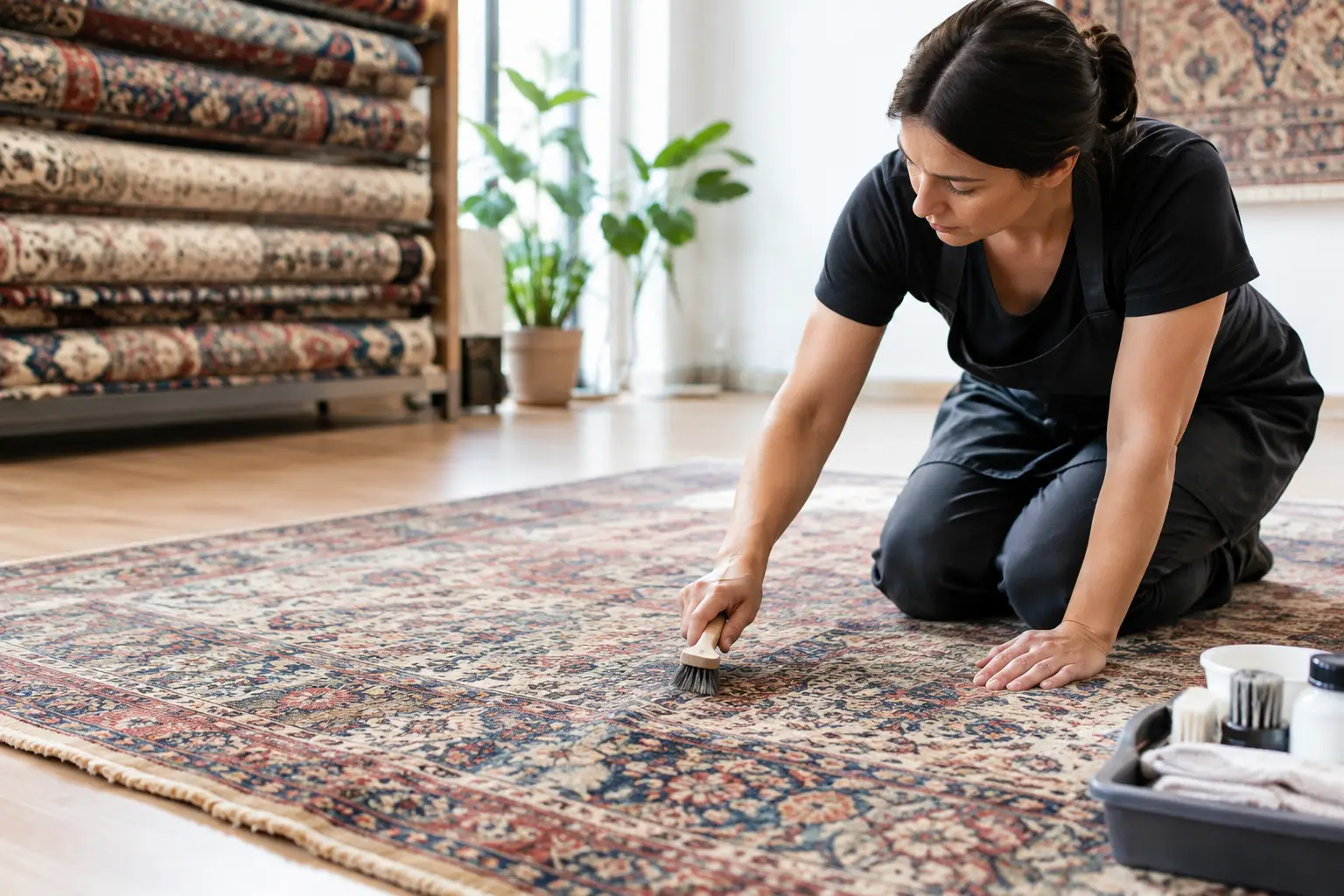
Marietta rug restoration can preserve color, texture, and history. Learn when repair makes sense and how thoughtful care protects a cherished rug at home.
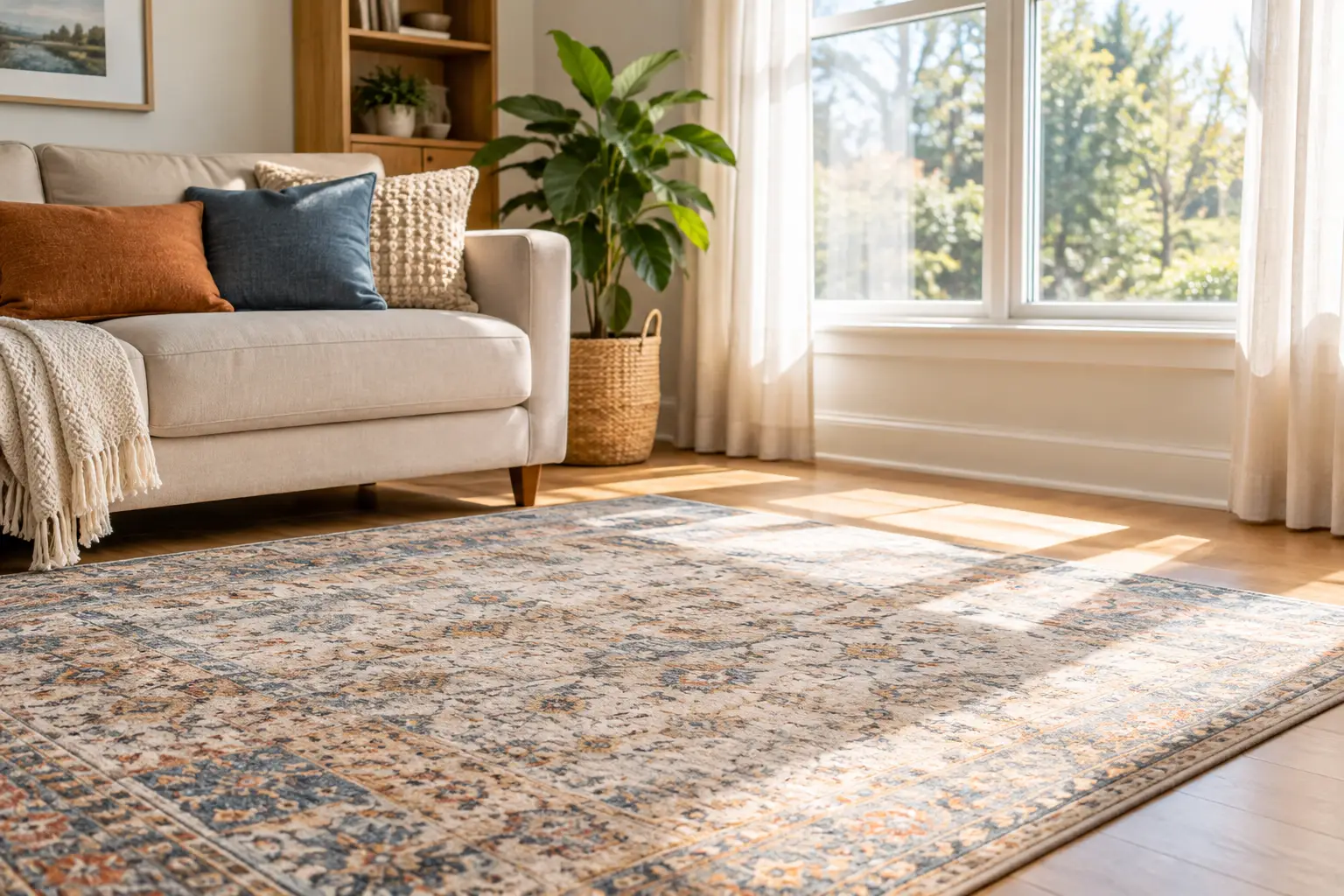
Learn how to protect rugs from sun fading with thoughtful window treatments, rotation, cleaning, and placement tips that preserve color and comfort daily.
From cozy area rugs to statement-making wall décor, our curated categories make it easy to explore what speaks to your space. Whether you’re refreshing a single corner or reimagining your whole home, start here and discover pieces that bring it all together.