


How to Remove Pet Odors From Rugs Safely
Learn how to remove pet odors from rugs without harming color or fibers, plus when professional washing is the smarter choice for a fresh home that lasts.
A rug rarely announces that it needs attention all at once. The first clue may be a softened corner near the sofa, fringe that looks thinner after vacuuming, or a small snag that catches your eye when sunlight moves across the room. This Kennesaw rug repair guide helps homeowners recognize those early signs, understand which repairs protect a rug’s beauty, and make decisions that support a polished, lived-in home.
A well-chosen area rug brings warmth, color, and quiet luxury to a room. It also handles a great deal of daily life: shoes at the entry, chair legs in the dining room, pets finding a favorite sunny spot, and children gathering on the floor. Repair is not only about correcting visible damage. Done thoughtfully, it preserves the texture, proportions, and character that made the rug feel deeply personal in the first place.
Some rug damage is obvious, such as a tear, a missing edge, or a fringe that has begun to unravel. Other concerns develop slowly. Look closely at the perimeter of the rug, especially at corners and the sides that receive the most foot traffic. If the binding is loose, the foundation threads may soon become exposed. Addressing that point early is generally simpler than waiting for the edge to pull farther into the body of the rug.
Shedding is different from structural damage. A newer wool rug may release loose fibers for a period of time, while a hand-knotted or older rug can show wear through thinning pile. When you can see the foundation beneath the surface, or when one pathway across the rug feels noticeably flatter than the rest, the rug needs a more careful assessment.
Color changes deserve attention as well. Sun fading, pet accidents, spills, and cleaning products can all alter a rug’s appearance. A repair professional can help distinguish between surface soil, dye loss, and permanent fiber damage. That distinction matters because the right next step may be cleaning, restoration, or simply a change in placement to prevent further fading.
The best repair is one that respects both the construction of the rug and its role in your room. A casual machine-made rug in a busy family space calls for a practical approach, while a hand-knotted heirloom deserves restoration methods that preserve its original craftsmanship.
Fringe is often the first area to show wear, but it is more than decoration. On many rugs, fringe is the continuation of the foundation. Pulling, trimming, or aggressively vacuuming it can cause the rug to loosen over time. Fringe repair may involve securing the ends, rebuilding sections, or removing damaged fringe and stabilizing the rug properly, depending on how it was constructed.
Edge binding, also called serging or overcasting, protects the sides from unraveling. If you notice loops along the edge, threads coming free, or a curl that makes the rug feel uneven underfoot, do not wait. A reinforced edge keeps a small concern from becoming a broad loss of material.
Tears can happen after furniture is dragged, a pet claws at a favorite spot, or a rug catches beneath a door. For a rug with a stitched seam, the repair may be straightforward. For woven rugs, the process is more involved because it can require rebuilding the foundation and reweaving pile to blend with the surrounding pattern.
The goal is not always to make the area disappear completely. With antique, handmade, or highly detailed rugs, a skilled restoration prioritizes strength, visual balance, and an appropriate match of color and texture. A repair should feel respectful of the rug, not overly new or out of place.
Water damage can leave more than a stain. If a rug stays damp, its fibers may weaken, dyes can migrate, and odors can settle deep into the foundation. Pet incidents may create similar concerns, especially when moisture has reached the backing. Quick professional cleaning and evaluation can make a meaningful difference before discoloration or deterioration becomes set in.
Moth damage often appears as small, irregular bare patches, particularly in rugs stored in quiet areas or tucked beneath furniture. Moths are drawn to natural fibers and organic residue, not to a clean rug itself. Cleaning, inspecting adjacent textiles, and correcting the storage conditions are part of protecting the repair from being undone later.
When a rug is damaged, the understandable instinct is to stop the problem immediately. A few common home fixes, however, can make future restoration more difficult. Avoid applying glue, tape, iron-on patches, or fabric adhesive to loose edges and tears. These materials can stiffen fibers, leave residue, and interfere with the careful work required to stabilize a rug.
Do not cut loose fringe or long yarns flush with the surface. If a yarn has pulled up, gently tuck it beneath the pile if possible, rather than trimming it. Cutting can create a visible low spot and may encourage neighboring yarns to release.
For a fresh spill, blot with a clean white cloth rather than rubbing. Avoid saturating the area or experimenting with household cleaners, particularly on wool, silk, viscose, or rugs with richly saturated color. Move furniture off the affected spot when you can, and allow airflow around the rug until it can be properly evaluated.
The right repair decision begins with the rug itself. Consider its fiber, construction, age, condition, and place in the home. A washable synthetic rug may be best replaced once major damage affects its backing. A quality wool rug, a custom piece, or a rug with sentimental value may be an excellent candidate for repair and restoration.
Think about how the rug lives in the room, too. A dining room rug needs edges that can handle chairs moving in and out. An entry rug benefits from regular cleaning and a secure pad that helps prevent shifting. In a bedroom or formal living room, sun exposure may be the greater concern. Repair should support the way you actually use the space, not just the way it looks on the day it returns home.
Before bringing a rug in for assessment, take a few clear photos of the full rug and close-ups of the damaged area. Note when you first noticed the problem and whether it followed a spill, move, pet incident, or cleaning attempt. This background helps a specialist understand the likely cause and recommend care that fits the situation.
At Home Rug Gallery, rug care is approached with the same attention to detail as selecting a piece for a finished room. The aim is to help your rug continue contributing softness, dimension, and an effortlessly styled foundation to the home.
Once a rug has been restored, prevention becomes part of its care. Use a rug pad sized slightly smaller than the rug to add cushion, reduce slipping, and limit abrasion against the floor. Pads also help rugs lie more smoothly, which can make a room feel more tailored.
Vacuum regularly, but adjust your method to the rug. Use suction without an aggressive beater bar on delicate rugs, and keep the vacuum head away from fringe and weakened edges. Rotate the rug periodically so sunlight and traffic do not concentrate on the same area year after year.
For homes with pets, children, or frequent guests, prompt attention after accidents is more valuable than a shelf full of spot treatments. Scheduled professional cleaning removes the fine soil that works its way into fibers and gradually dulls color. It also provides an opportunity to catch early edge wear or pile loss before it changes the rug’s structure.
A repaired rug does not need to become precious or off-limits. It should return to the room ready to be enjoyed. With the right care, the texture under bare feet, the pattern that pulls a seating area together, and the sense of comfort it brings can remain part of your home for many seasons to come.
Learn how to remove pet odors from rugs without harming color or fibers, plus when professional washing is the smarter choice for a fresh home that lasts.
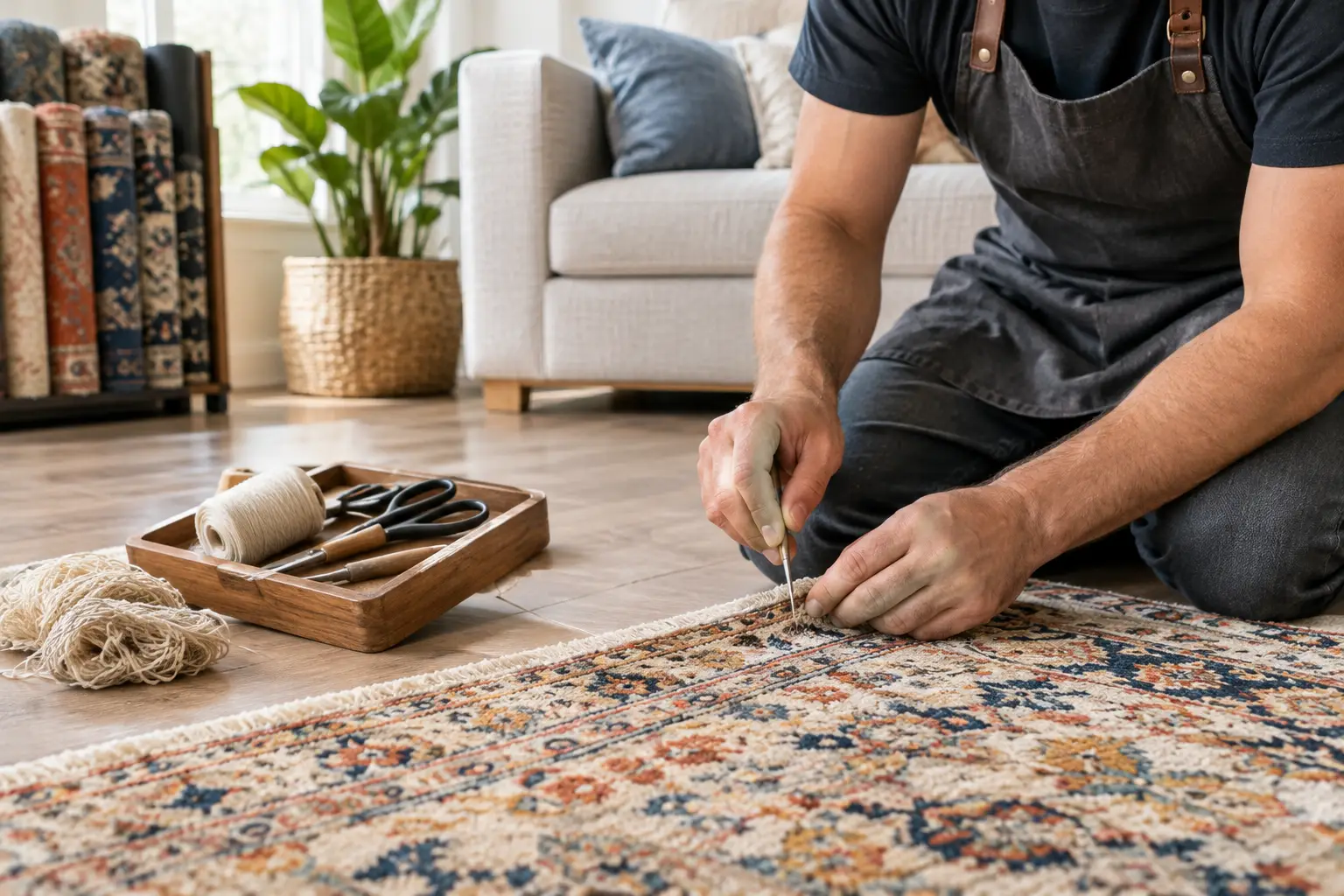
Use this Kennesaw rug repair guide to spot damage early, choose the right restoration, and protect the color, texture, and comfort of your favorite rug.
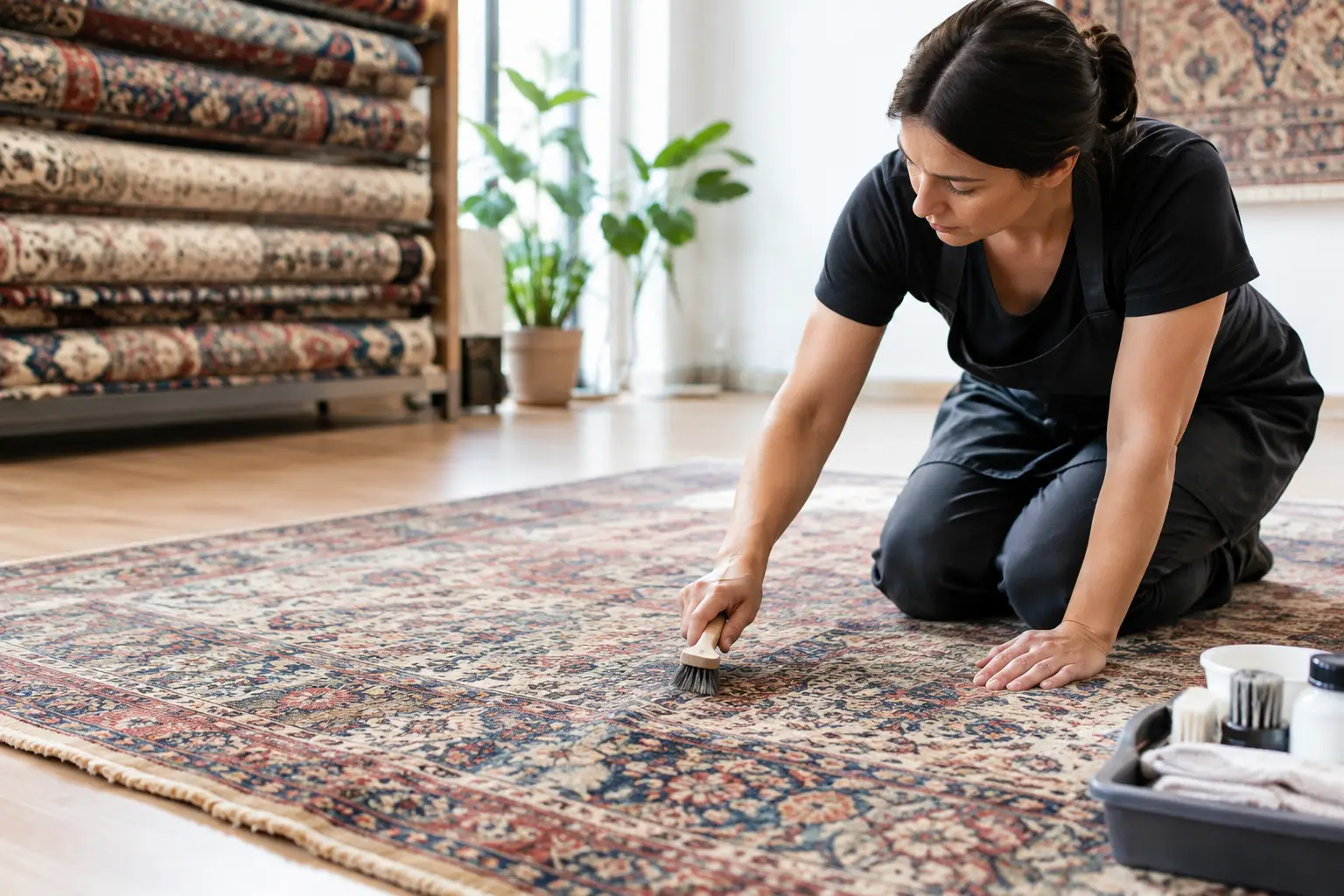
Marietta rug restoration can preserve color, texture, and history. Learn when repair makes sense and how thoughtful care protects a cherished rug at home.

Learn how to protect rugs from sun fading with thoughtful window treatments, rotation, cleaning, and placement tips that preserve color and comfort daily.
From cozy area rugs to statement-making wall décor, our curated categories make it easy to explore what speaks to your space. Whether you’re refreshing a single corner or reimagining your whole home, start here and discover pieces that bring it all together.