A beautiful rug can ground a room, soften the acoustics, and make everyday living feel more considered. But when a pet accident leaves behind a lingering smell, even the most thoughtfully styled space can feel less inviting. To remove pet odors from rugs effectively, the goal is not to cover the scent with fragrance. It is to treat what has settled into the fibers, backing, and sometimes the rug pad beneath.
The right approach depends on the rug’s material, construction, and the age of the accident. A washable synthetic rug may tolerate careful at-home treatment, while wool, silk, viscose, antique, and hand-knotted rugs call for a much gentler hand. Acting quickly helps, but a fresh-looking rug can still hold odor below the surface if the source was not fully addressed.
Why Pet Odors Linger in Area Rugs
Pet urine is more complicated than a visible spot. As it dries, it can leave behind crystals and residue that reactivate when exposed to humidity or moisture. That is why a room may smell fine one day and noticeably unpleasant the next, especially after rain, mopping, or a change in indoor humidity.
Rug construction matters, too. Liquid can travel through the face fibers into the foundation, backing, and pad, where it is harder to reach with surface cleaning. Dense pile, layered construction, and absorbent natural fibers can hold moisture and odor longer than a low-profile synthetic rug.
This is also why heavily perfumed sprays are rarely the answer. They may briefly disguise a smell, but they do not break down the residue causing it. In some cases, adding too much product creates a stiff, sticky area that attracts dirt and makes the rug look dull over time.
How to Remove Pet Odors From Rugs at Home
For a recent accident on a rug with colorfast, durable fibers, a measured response can make a real difference. Before applying any cleaning solution, check the manufacturer’s care instructions if available and test any product on a small, inconspicuous area. If color transfers to a white cloth or the fibers feel delicate, pause and seek professional guidance.
Start by Blotting, Never Scrubbing
Place clean, white absorbent towels over the affected area and press firmly. Stand on the towels if needed to draw moisture out of the rug. Replace them as they become damp, repeating until little moisture transfers.
Avoid rubbing the spot. Scrubbing can push liquid deeper into the rug and rough up the pile, especially on softer wool rugs or rugs with a cut-pile texture. It can also spread the affected area beyond the original accident.
If you can safely reach the underside, blot there as well. Check the floor beneath the rug and the rug pad, since odor that has reached these layers can return even after the top surface appears clean.
Use an Enzyme-Based Pet Treatment Carefully
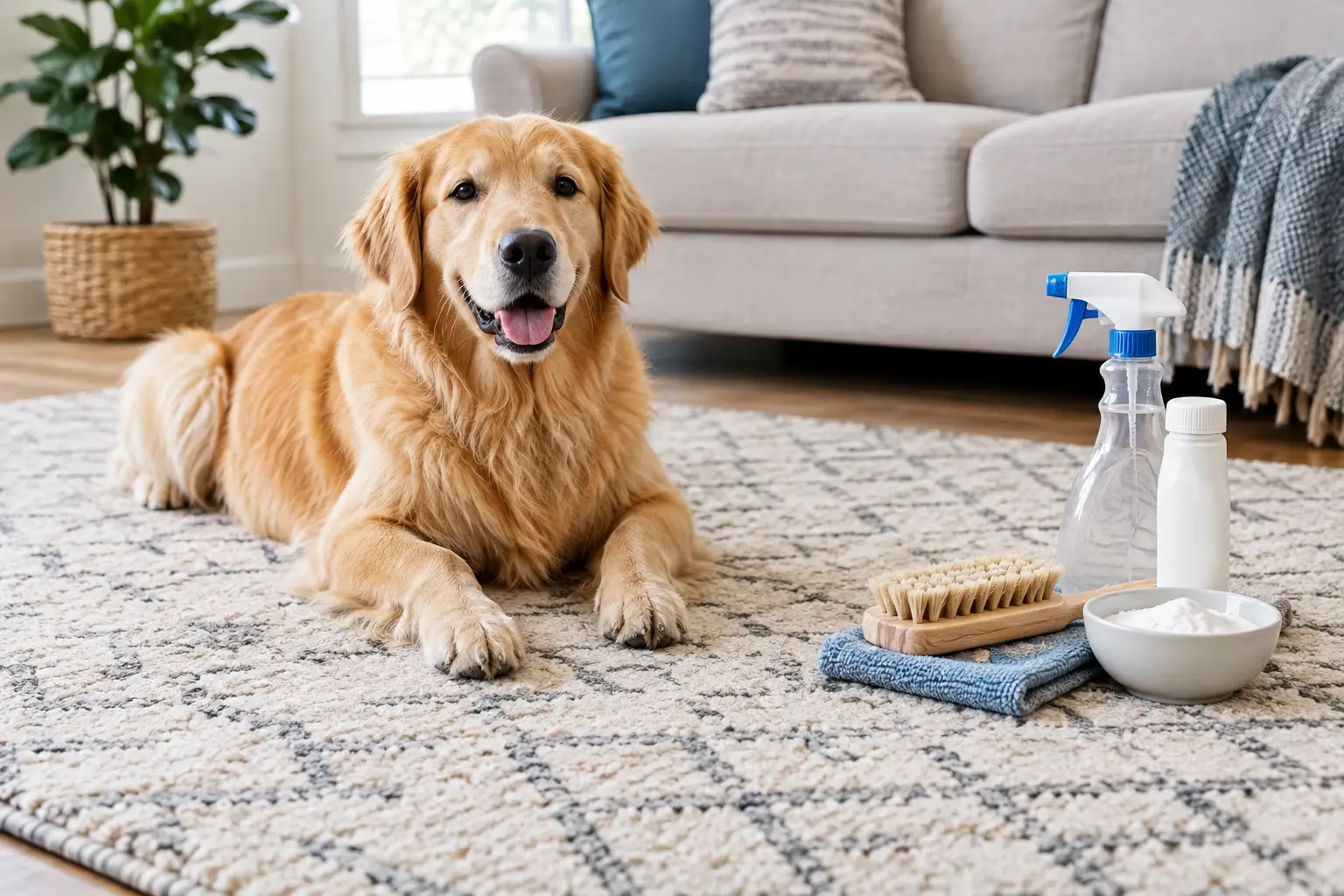
An enzyme-based cleaner designed for pet accidents can help break down the organic residue that creates persistent odor. The key is using enough product to reach the same depth as the original accident, without saturating the entire rug or soaking the floor beneath it.
Follow the product directions closely, particularly the dwell time. Enzymes need time to work. Wiping the solution away immediately may leave much of the odor source behind.
This method is generally best suited to durable, colorfast synthetic rugs. With wool, silk, viscose, jute, sisal, or specialty fibers, many pet treatments can cause discoloration, texture changes, or dye movement. Natural-fiber rugs have a quiet luxury that is worth protecting, so it is better not to experiment with strong cleaners when the material is uncertain.
Dry the Rug Completely
Moisture left in a rug can create a second problem: mildew odor. After treatment, blot again with dry towels and increase airflow in the room with fans. If practical, lift the rug slightly so air can circulate underneath, particularly if the pad became damp.
Do not return furniture to the area until both the rug and pad are fully dry. A rug that feels dry at the surface may still be damp at its foundation. Drying can take longer than expected on thick wool, plush pile, or tightly woven rugs.
Use Baking Soda Only as a Light Follow-Up
Baking soda can be useful for absorbing a faint residual smell after the treated area is completely dry. Sprinkle a light, even layer over the rug, leave it for several hours or overnight, then vacuum thoroughly.
It is not a substitute for treating urine residue, and it should not be worked into a damp rug. Use it sparingly on delicate rugs or rugs with a dense pile, where fine powder can be difficult to fully vacuum away.
What Not to Use on a Rug With Pet Odor
A few common household remedies can make a manageable problem more complicated. Vinegar is often suggested for pet odor, but its acidity is not right for every fiber and may affect dyes or finishes. Steam can set stains or drive odor deeper if residue remains. Ammonia-based products are also a poor choice, as their scent can resemble urine to pets and may encourage repeat accidents.
Bleach, harsh disinfectants, and heavily fragranced carpet shampoos are especially risky on area rugs. They can damage fibers, alter color, leave residue, or compromise the texture that gives the rug its character. A rug is not wall-to-wall carpet, and its care should reflect that difference.
When Professional Rug Cleaning Is the Better Choice
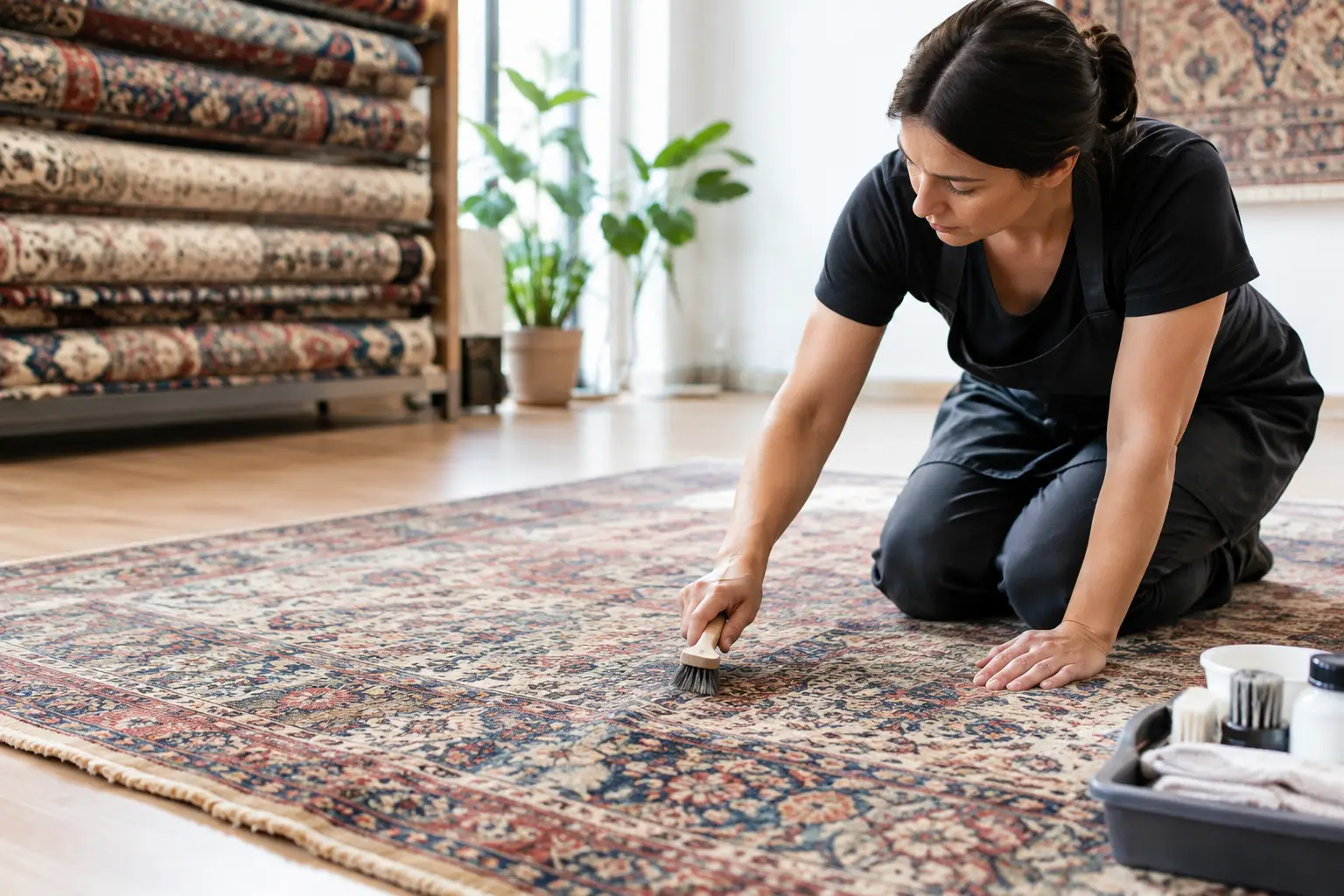
At-home care is best for small, fresh accidents on appropriate materials. Professional washing becomes the wiser choice when odor returns after treatment, the accident has soaked through to the backing or pad, the rug has multiple affected areas, or the rug is made of wool, silk, viscose, or other delicate fibers.
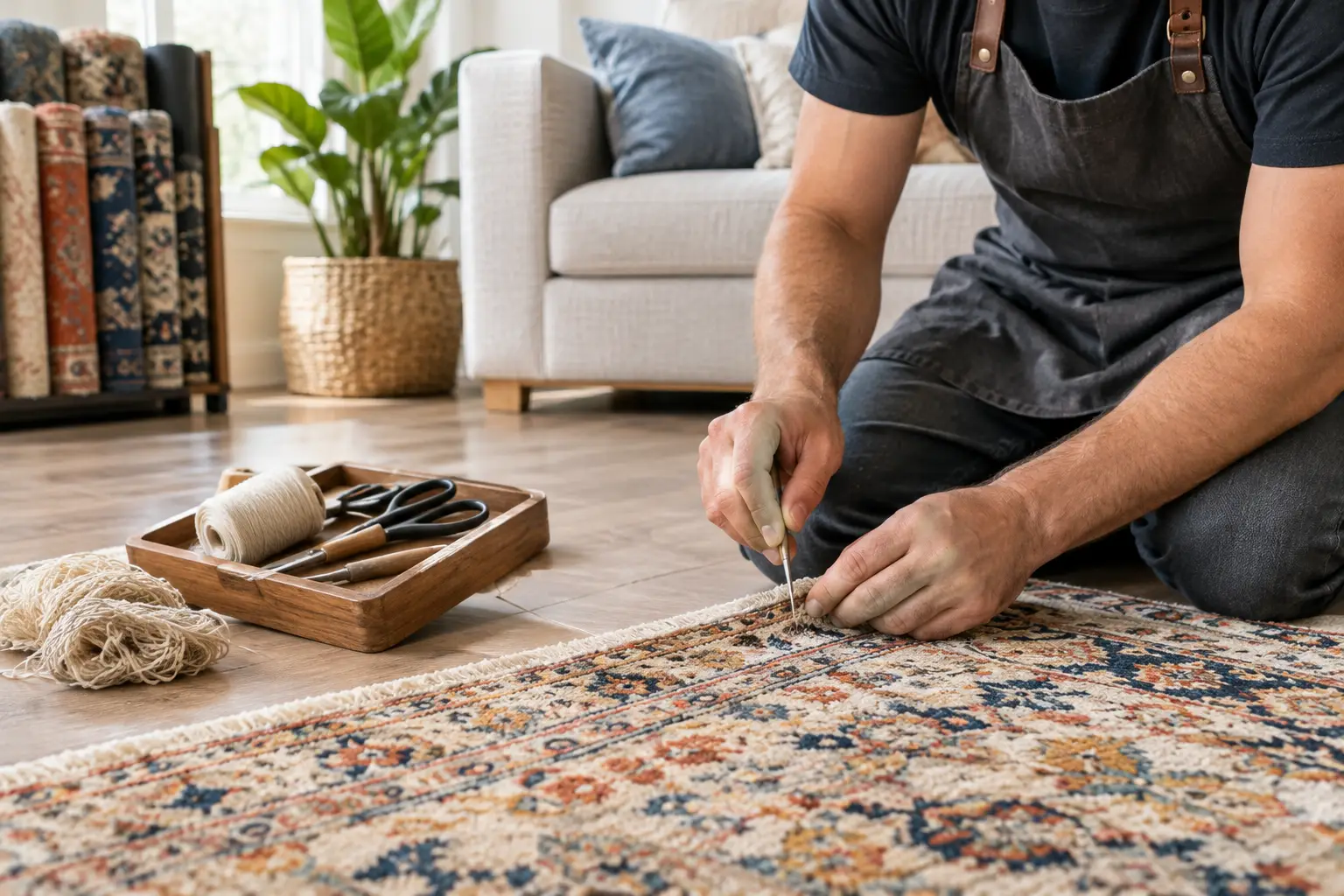
Hand-knotted, vintage, and heirloom rugs deserve special attention. Their dyes, fringe, foundation, and natural fibers may respond poorly to aggressive spot treatment. Proper rug cleaning evaluates the entire piece rather than simply treating the visible spot, which is particularly valuable when odor has migrated below the pile.
For homeowners in Canton, Woodstock, Acworth, Kennesaw, and Marietta, professional rug care can also be a practical reset for a rug that is otherwise too beautiful to replace. Home Rug Gallery can help assess the rug’s material and condition, so the care plan supports both freshness and long-term preservation.
Do Not Forget the Rug Pad and Floor
A lingering smell after careful rug cleaning often points to the layers underneath. If the rug pad absorbed urine, it may need separate cleaning or replacement. This is especially common with thick felt pads, which are excellent for comfort and protection but can retain moisture.
Inspect hardwood, tile, and other hard surfaces beneath the rug once it is lifted. Clean and dry the floor according to its finish, then allow it to air out before placing the rug back down. If a pet returns to the same location, use a pet-safe deterrent strategy and consider whether the area is tied to a routine, stressor, or access issue.
Keeping a Fresh Rug in a Pet-Friendly Home
Living with pets does not mean compromising on a polished room. It means choosing materials and habits that support real life. Low- to medium-pile rugs, subtle pattern, and heathered color variation can be especially forgiving in busy family spaces. A quality rug pad adds comfort and helps prevent slipping, while also making it easier to assess what has reached the floor during an accident.
Vacuum regularly, address accidents promptly, and rotate rugs when appropriate so traffic and sunlight wear evenly. If you are selecting a new rug for a room where pets spend the most time, seeing fiber, texture, and color in person makes those practical decisions far easier. The right rug should feel effortlessly styled, but it should also be made for the way your household actually lives.
A pet-friendly home can still feel deeply personal, comfortable, and beautifully composed. With prompt care and the right level of cleaning for the rug in front of you, freshness and lasting style can coexist.