


How to Remove Pet Odors From Rugs Safely
Learn how to remove pet odors from rugs without harming color or fibers, plus when professional washing is the smarter choice for a fresh home that lasts.
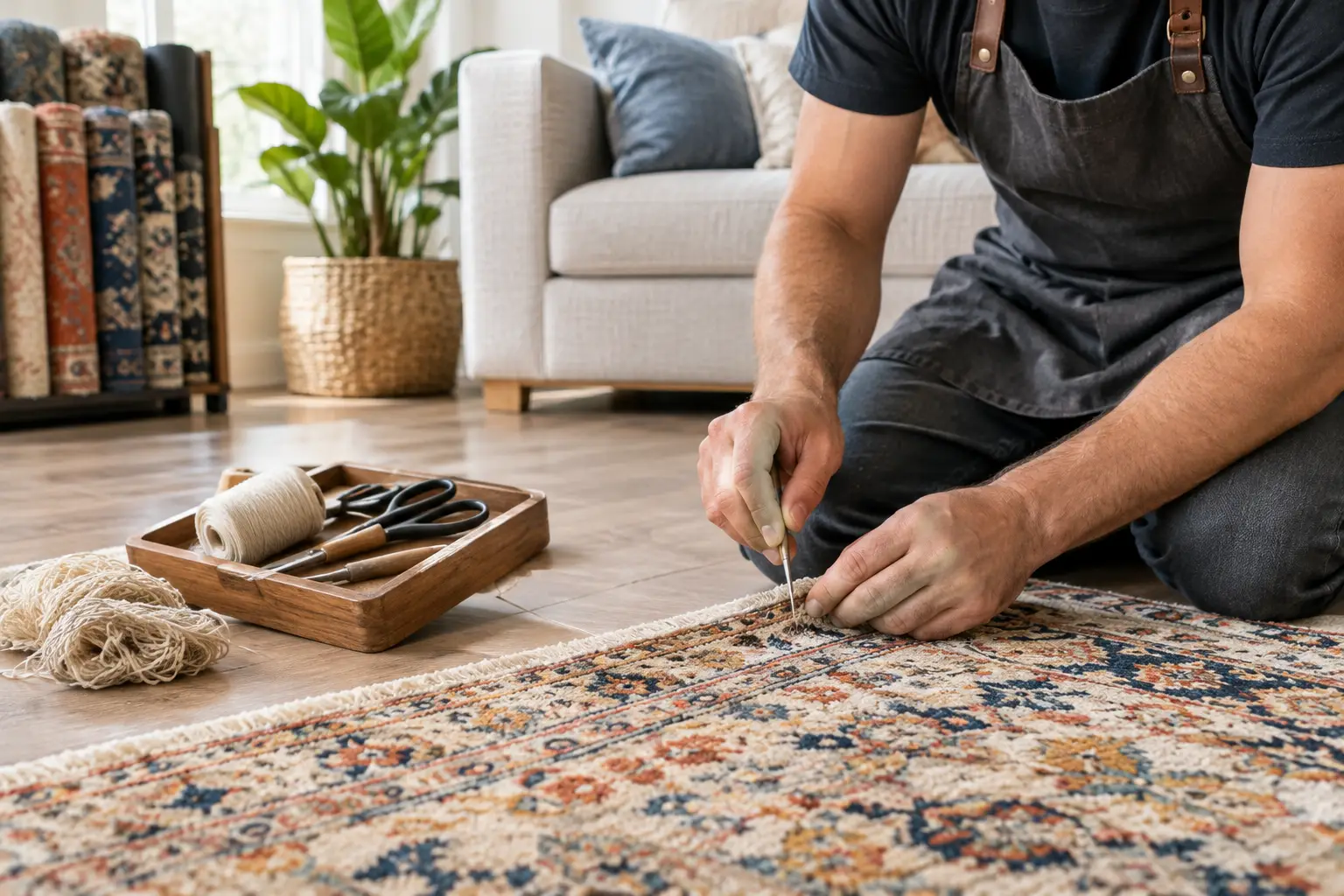
A rug can still anchor a room beautifully even when the fringe has started to fray, thin out, or disappear at the edges. If you have been wondering, can rug fringe be repaired, the short answer is yes – often very successfully. The better question is what kind of repair your rug actually needs, because fringe damage can be cosmetic, structural, or somewhere in between.
That distinction matters more than most homeowners realize. Fringe is not always just decorative trim. On many rugs, especially hand-knotted and handwoven pieces, the fringe is part of the rug’s foundation. When it begins to unravel, the issue can move from a slightly worn look to actual edge instability.
Not every rug should be repaired the same way, and not every fringe issue calls for a full restoration. In many cases, rug fringe can absolutely be repaired, but the right method depends on how the rug was made, how much of the fringe is missing, and whether the underlying foundation has been compromised.
On hand-knotted rugs, fringe is often the exposed warp foundation of the rug itself. That means worn fringe may signal wear to the structure, not just the finish. On machine-made rugs, fringe is sometimes sewn on as an added detail. If that type of fringe is damaged, the repair may be simpler because it is not holding the rug together.
This is why two rugs with similar-looking fringe damage can need completely different solutions. A lightly frayed end may only need minor stabilization and tidying. A rug with missing fringe, unraveling knots, or exposed foundation may need more involved repair to prevent further loss.
Fringe usually wears down for practical reasons, not mysterious ones. Foot traffic is the obvious culprit, especially in entryways, living rooms, and under dining tables where chairs constantly catch the ends. Vacuuming is another common cause. A beater bar or aggressive suction can pull fringe strands until they snap, tangle, or detach.
Pets and moisture can also play a part. Dogs and cats sometimes chew fringe, treating it like a toy. Moisture from mopping, spills, or damp floors can weaken fibers over time, particularly if the rug does not dry properly. And age matters. Older rugs often show fringe wear simply because years of use have taken a toll on the foundation.
Sunlight can contribute too, especially in bright rooms where one end of the rug takes daily exposure. Fibers become brittle, and what once looked soft and airy starts to look sparse and uneven.
When people ask can rug fringe be repaired, they are often picturing one thing: adding new fringe to the edge. Sometimes that is the answer, but often the process starts with something more foundational.
If the edge of the rug is beginning to open up, the first step is usually securing the end so it does not continue to unravel. That may involve reweaving, overcasting, or binding the edge before any fringe work is done. This is especially important on rugs where the fringe is tied directly into the structure.
Without stabilization, replacing fringe alone can make the rug look better for a while, but it will not solve the actual problem.
If enough original fringe remains, damaged strands can sometimes be repaired and trimmed so the end looks neat and consistent again. If the fringe is mostly gone or too deteriorated to work with, new fringe may be added in a way that suits the rug’s style and construction.
A thoughtful repair aims to make the fringe feel appropriate to the rug, not artificially perfect. On an older or vintage piece, a subtle, balanced finish usually looks far better than a bright, overly crisp fringe that feels disconnected from the rug’s age and character.
In some cases, cleaning is part of the process. Fringe tends to collect darkening from dust, oils, and floor contact, so homeowners sometimes think the fringe is ruined when it is actually deeply soiled. Cleaning can reveal that the fibers are still usable.
Other times, cleaning happens after the repair so the finished result feels cohesive. The order depends on the rug’s condition.
Most fringe damage is repairable, but that does not mean every rug needs a full fringe restoration. The right decision depends on the rug’s value to you, both aesthetically and practically.
If the rug is a meaningful piece in your home, part of a carefully styled room, or a quality rug with years of life left, fringe repair often makes excellent sense. It restores the finished look and helps preserve the rug’s structure. This is especially true for rugs that contribute to a room’s quiet luxury – the kind of detail that makes a space feel complete even when no one can quite explain why.
If the rug is heavily worn across the entire field and the foundation is failing in multiple areas, fringe repair may be only one part of a much larger restoration conversation. In that case, it helps to think beyond the fringe itself and consider the overall condition.
There are also times when homeowners choose a more restrained finish instead of replacing long fringe. Some rugs can be secured and finished with a cleaner edge if that better suits the way the rug is used. This can be a smart choice in busy family spaces where long fringe will keep catching on vacuums, shoes, or pet paws.
A little unevenness is not always urgent, but a few signs suggest it is time to act before the damage spreads. If you see knots loosening at the end of the rug, foundation threads showing, fringe falling out in clumps, or the edge starting to curl and separate, it is best not to wait.
The same goes for rugs that look suddenly shorter on one end than the other. That can mean the fringe has worn away unevenly and the end is becoming vulnerable. Once the foundation starts taking direct wear, repairs tend to become more involved.
Homeowners sometimes put this off because the rug still looks mostly fine from across the room. The trouble is that edge damage rarely stays cosmetic for long in an active home.
Small cleanup tasks, like gently detangling fringe by hand or trimming a few stray strands, may be fine. But actual fringe repair is different from surface grooming. If you cut too aggressively, glue something in place, or stitch through the wrong area, you can affect the rug’s structure and appearance in ways that are difficult to reverse.
This is especially true for hand-knotted and older rugs. What looks like loose fringe may actually be integral warp material. Pulling on it, braiding it tightly, or trimming it flush can create a cleaner look for the moment while shortening the rug’s lifespan.
If the issue is more than a minor tangle, professional evaluation is the safer route. A good repair should protect the rug as much as improve its appearance.
Once fringe has been repaired, a few care habits make a noticeable difference. Vacuum with care and avoid running the vacuum head directly over the fringe whenever possible. Rotate the rug periodically so one end does not absorb all the wear. Keep moisture in check, especially near exterior doors, kitchens, and damp floors.
If pets are attracted to fringe, it helps to address that early rather than hoping they lose interest. And if the rug sits beneath dining chairs or in a heavily traveled space, consider whether the room would function better with a rug placement adjustment or a style with less exposed fringe in the future.
These small decisions protect more than the ends of the rug. They help preserve the whole piece and the room around it.
Fringe is a small detail, but it has a real effect on how finished a rug feels in a space. When it is clean, even, and appropriate to the piece, it softens the transition at the floor and gives the rug a more refined presence. When it is frayed or unraveling, even a beautiful room can feel slightly unsettled.
For homeowners in Canton, Woodstock, Acworth, and Kennesaw who are investing in rooms that feel collected and deeply personal, repairing fringe is often less about perfection and more about preserving the integrity of something you already love. And that is usually the best place to start – not with whether the fringe is damaged, but with whether the rug still deserves its place in your home.
Learn how to remove pet odors from rugs without harming color or fibers, plus when professional washing is the smarter choice for a fresh home that lasts.
Use this Kennesaw rug repair guide to spot damage early, choose the right restoration, and protect the color, texture, and comfort of your favorite rug.

Marietta rug restoration can preserve color, texture, and history. Learn when repair makes sense and how thoughtful care protects a cherished rug at home.

Learn how to protect rugs from sun fading with thoughtful window treatments, rotation, cleaning, and placement tips that preserve color and comfort daily.
From cozy area rugs to statement-making wall décor, our curated categories make it easy to explore what speaks to your space. Whether you’re refreshing a single corner or reimagining your whole home, start here and discover pieces that bring it all together.