


How to Remove Pet Odors From Rugs Safely
Learn how to remove pet odors from rugs without harming color or fibers, plus when professional washing is the smarter choice for a fresh home that lasts.
That bright patch of afternoon sun may make a room feel warm and beautifully lived in, but it can also leave a quiet mark on your flooring over time. If you have ever wondered, can sunlight damage area rugs, the short answer is yes. Sun exposure can fade color, dry out certain fibers, and create uneven aging that becomes hard to ignore once furniture shifts or the seasons change.
For homeowners who want rooms to feel polished and effortless, this matters more than it may seem. A rug often anchors the entire space. When one section looks washed out or brittle while the rest still feels rich and full, the whole room can lose some of its balance.
Sunlight affects rugs in two main ways: it changes their color, and it can weaken their fibers. The most visible issue is fading. Strong natural light, especially from windows with direct sun, gradually breaks down dyes. Reds, blues, and deeper saturated tones often show it first, though lighter rugs are not immune. Sometimes the change is subtle at first, then one day a moved coffee table reveals a much deeper original color underneath.
The second issue is fiber stress. Not every rug reacts the same way, but prolonged UV exposure can dry out natural materials and make some fibers feel more fragile over time. In a busy household, that means the sun-damaged section may start to show wear faster than the rest of the rug.
This is why sun damage rarely looks like one dramatic event. It is usually gradual. A room still looks beautiful day to day, until the fading becomes uneven enough that the rug no longer feels cohesive with the surrounding décor.
Absolutely. South-facing and west-facing rooms tend to be the biggest concern because they often receive stronger direct light for longer stretches of the day. Sunrooms, open living areas with large windows, and breakfast spaces can be especially hard on rugs because the light is both frequent and intense.
That does not mean every sunny room is a problem. It depends on how the light moves, whether window coverings are used, and where the rug sits in relation to the brightest areas. A rug placed a few feet away from direct exposure may age much more gracefully than one that catches the same sharp beam every afternoon.
Season also plays a role. Many homeowners notice damage slowly building through summer, when daylight is strongest and rooms stay brighter longer. In North Georgia homes with generous natural light, this is often part of what makes a room feel airy and inviting, but it is also what makes thoughtful rug placement so important.
Material makes a real difference, and this is where the answer becomes more nuanced than a simple yes or no. Some rugs are naturally more resilient, while others are more sensitive to prolonged exposure.
Wool rugs tend to perform well overall, but they can still fade in direct sunlight, particularly if they feature rich or hand-dyed color. Silk and viscose are usually more delicate. They can lose color and luster faster, and the texture may shift in areas that get repeated sun. Cotton rugs may also fade noticeably, especially in lighter-weight constructions.
Synthetic fibers like polypropylene and polyester are often chosen for durability, and many hold up better in active homes. Even so, “better” does not mean immune. Extended exposure can still affect the color, and lower-quality synthetic rugs may show dulling over time.
Construction matters too. Hand-knotted rugs, flatweaves, tufted pieces, and machine-made rugs can all respond differently depending on fiber quality, dye method, and finish. That is why two rugs in the same room may age at very different rates.
Most people notice fading only after it becomes obvious, but there are earlier signs worth watching for. A rug may start looking slightly flatter in one section, or the color may appear less dimensional where the sun hits most often. Sometimes homeowners assume the rug simply needs cleaning, when the bigger issue is that the original tone has softened under UV exposure.
Texture changes can be another clue. Fibers may begin to feel drier or less supple in one area. Patterns can also lose definition. If your rug has a detailed border or tonal variation, the sunniest sections may start to look less crisp than the protected ones.
An easy way to check is to lift a corner under furniture or compare the edge hidden beneath a sofa to the exposed field of the rug. If there is a noticeable shift, sunlight is likely part of the story.
The good news is that protecting a rug does not have to mean making a room feel dark or closed off. In most homes, the best approach is a layered one that preserves the look of the space while reducing concentrated exposure.
Window treatments are one of the simplest solutions. Sheer drapery, woven shades, or light-filtering treatments can soften direct rays without taking away the brightness that makes a room feel welcoming. If a space gets harsh late-day sun, even partial coverage during those peak hours can help.
Rug rotation is another smart habit. Turning the rug every few months helps spread wear and light exposure more evenly, especially in living rooms and bedrooms where the furniture layout allows it. This is one of the easiest ways to avoid that telltale shadow line from a coffee table or sectional.
Furniture placement can also work in your favor. If a rug sits directly in a window path, adjusting the layout slightly may reduce the most intense exposure. In some rooms, moving the rug just a few inches changes how the light lands across the surface.
And if you are selecting a rug for a particularly sunny space, choose with that room in mind. Certain colors, fibers, and patterns are more forgiving than others. A softly tonal design can disguise minor fading better than a high-contrast pattern, while some performance-minded constructions are simply better suited to bright everyday rooms.
If your rug already shows sun damage, what happens next depends on the material and the severity. Mild unevenness may become less noticeable after cleaning, rotating, or restyling the room, but cleaning alone will not reverse true fading. Once dyes have broken down, the color change is usually permanent.
That said, permanent does not always mean hopeless. Some rugs can benefit from professional evaluation, especially if the piece has quality construction or sentimental value. In certain cases, restoration may help improve the overall appearance, though results vary depending on fiber, dye type, and the extent of damage.
For many homeowners, the better question is not whether the rug can be made perfectly new again, but whether it can still feel intentional and beautiful in the room. Sometimes a simple shift in placement, layered furnishings, or a fresh styling approach can make a faded area much less distracting.
If your home is filled with natural light, you do not need to avoid area rugs. You simply need to choose thoughtfully. Rooms with strong sunlight often look especially beautiful with rugs because the texture softens hard flooring and adds depth to bright, open interiors.
Start by thinking about how the room actually lives. Is it a formal sitting area, a family room with all-day use, or a breakfast space that catches the sun every morning? The right rug for each setting may be different. A delicate fiber with a lustrous finish can be stunning, but it may not be the best long-term fit for a heavily sunlit everyday room.
This is where seeing rugs in person can make a meaningful difference. Color nuance, pile, and material are much easier to judge when you can compare options side by side and think about how they will perform in your actual home. At Home Rug Gallery, that conversation often starts not with trend alone, but with how a room feels, how the light moves, and how to create a look that stays beautifully grounded over time.
Sunlight is part of what gives a home warmth and life. The goal is not to fight it, but to work with it so your rug continues to feel like a thoughtful part of the room, not the part that faded first.
Learn how to remove pet odors from rugs without harming color or fibers, plus when professional washing is the smarter choice for a fresh home that lasts.
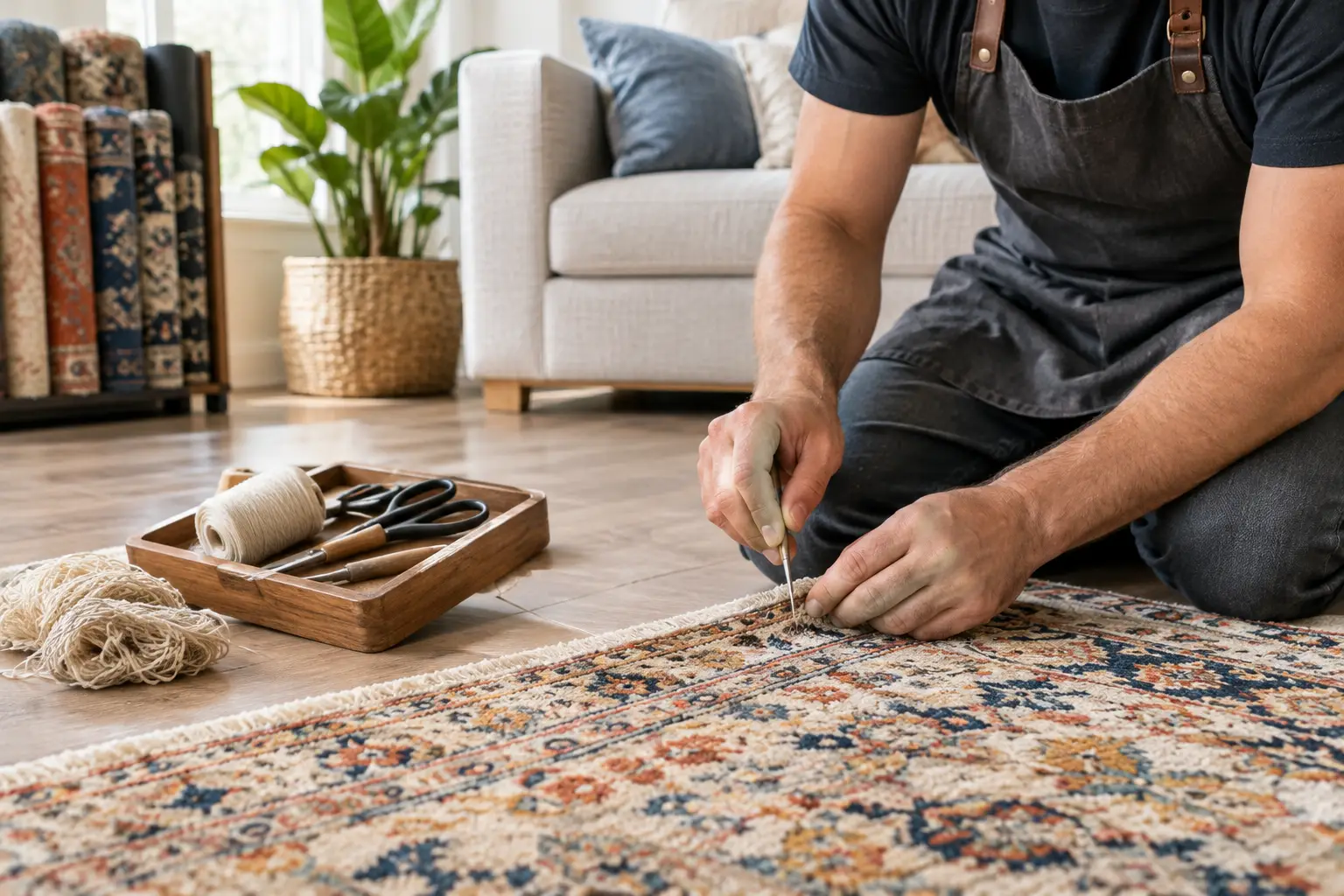
Use this Kennesaw rug repair guide to spot damage early, choose the right restoration, and protect the color, texture, and comfort of your favorite rug.
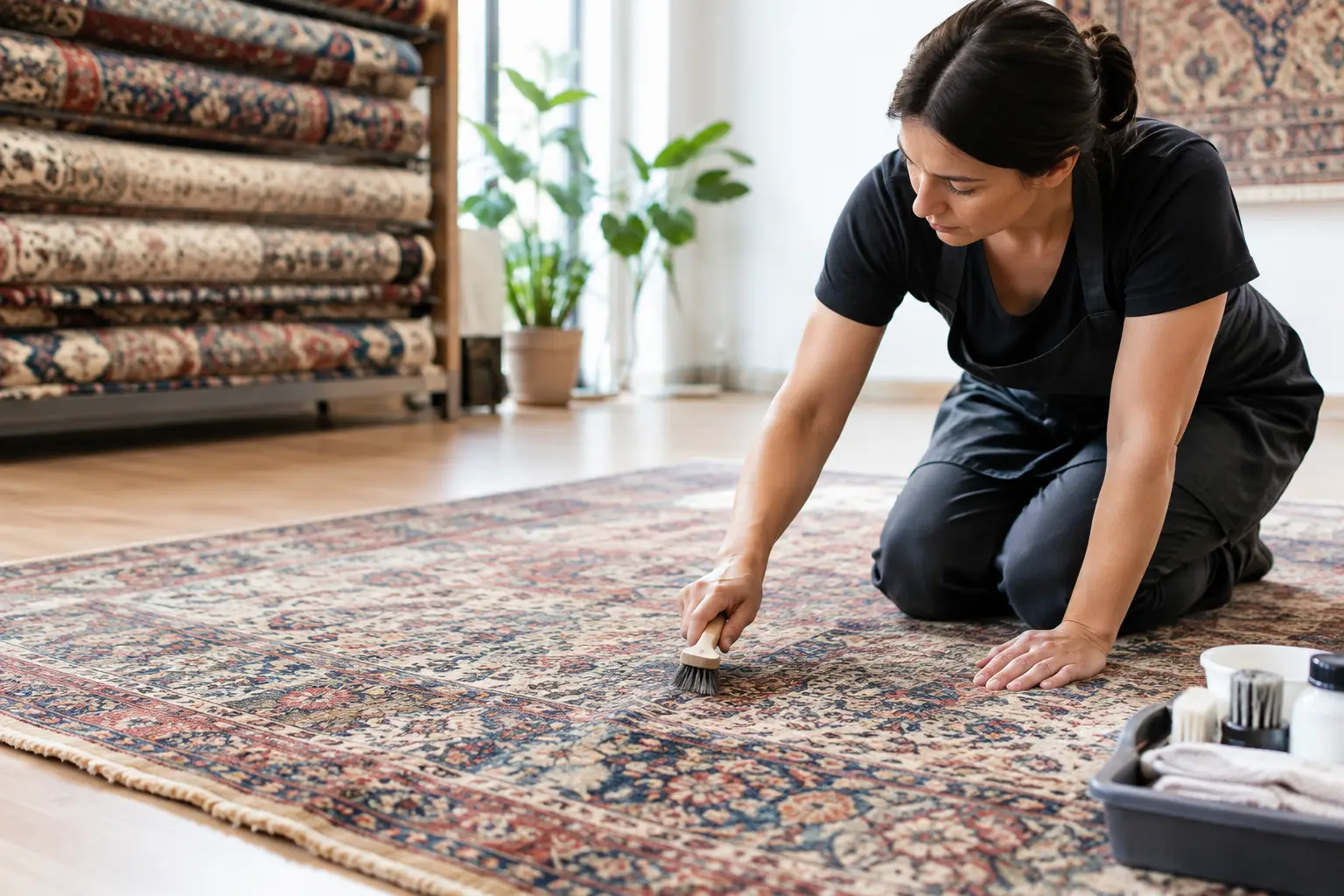
Marietta rug restoration can preserve color, texture, and history. Learn when repair makes sense and how thoughtful care protects a cherished rug at home.
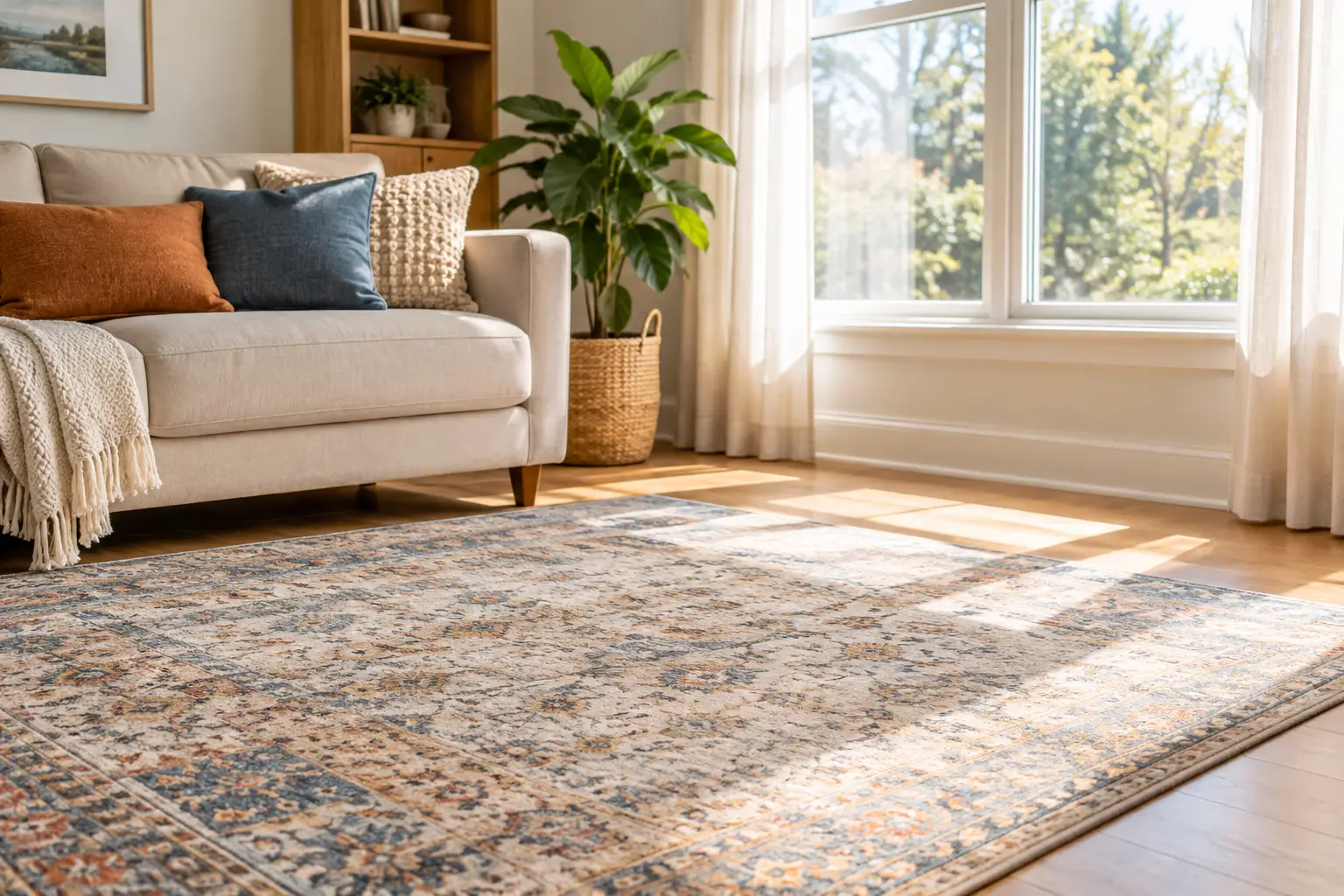
Learn how to protect rugs from sun fading with thoughtful window treatments, rotation, cleaning, and placement tips that preserve color and comfort daily.
From cozy area rugs to statement-making wall décor, our curated categories make it easy to explore what speaks to your space. Whether you’re refreshing a single corner or reimagining your whole home, start here and discover pieces that bring it all together.