


How to Remove Pet Odors From Rugs Safely
Learn how to remove pet odors from rugs without harming color or fibers, plus when professional washing is the smarter choice for a fresh home that lasts.
A staircase is often the first architectural feature guests notice, yet it has to stand up to far more than a first impression. A thoughtful custom stair runner installation example shows how one tailored textile can soften hard surfaces, define the entry, and make a daily path through the home feel considered. The result is not simply a covered stair. It is a practical design decision that brings color, comfort, and quiet luxury to a highly used space.
For homeowners refining an entryway, hall, or upstairs landing, the best runner begins with the staircase itself. Its width, construction, light exposure, household traffic, and view from nearby rooms all shape the right choice.
Imagine a painted wood staircase connecting a light-filled foyer to a second-floor hall. The treads are 42 inches wide, the balusters are crisp white, and warm oak floors carry through the adjoining rooms. The homeowners want more visual depth in the entry but do not want a runner that feels overly formal or too precious for children, pets, and everyday comings and goings.
A custom wool-blend runner in a softly patterned taupe and ivory is selected. The small-scale pattern has enough movement to disguise the occasional footprint while keeping the staircase calm from a distance. A narrow woven border gives the piece structure without introducing a heavy contrast line. Instead of trying to match every finish in the foyer, the runner picks up the warmth of the oak and the softer neutral tones found in the living room textiles.
The finished width is 30 inches. That leaves approximately six inches of painted stair visible on each side, creating an intentional framed effect. This proportion matters: a runner that is too narrow can look tentative, while one that stretches too close to the edges may make a stair feel crowded. There is no universal ideal width, but balanced visible borders usually make a staircase look more tailored.
Stair runners are measured by the path they travel, rather than by the floor space they cover. Each tread and riser contributes to the total length, as do the landing, turns, and any transition into an upper hall. A straight staircase is relatively simple. A winder stair, curved stair, or stair with an intermediate landing requires more planning and more material.
In this example, the installer measures each tread from the back of the riser to the front edge, then measures each riser from tread to tread. Those dimensions are multiplied by the number of steps, with added length for the landing and a small allowance for fitting and finishing. Measuring only the diagonal distance from top to bottom is a common mistake because it ignores the material needed to wrap the stair profile.
Width deserves equal attention. The installer checks for slight changes from one stair to the next, which can occur in older homes or handmade stair construction. The runner is then centered according to the visible stair edges, not solely by a wall or railing that may be slightly out of square.
The pattern is one of the details that separates a polished installation from a merely functional one. With a stripe, border, or repeating motif, the installer determines where the design will begin at the bottom and how it will fall across each tread. In the example, the subtle border remains parallel to the stair edges, and the central pattern is centered on the run of the stair.
A dramatic oversized pattern can be beautiful, but it may be interrupted by the repeated folds at each tread and riser. Smaller geometric designs, tailored textures, and understated motifs tend to read more consistently on stairs. That does not mean bold color is off the table. It simply needs enough visual discipline to look intentional from both the foyer and the second-floor landing.
Before the runner is installed, the staircase is cleaned and checked for loose treads, protruding fasteners, or uneven surfaces. A runner can reduce the sound of footsteps and improve underfoot comfort, but it should never be used to disguise a stair that needs repair.
A quality pad is then fitted beneath the runner. Padding adds softness, helps the runner hold its shape, and can reduce wear where feet naturally land. The appropriate pad depends on the runner construction and the staircase. Too much bulk can make the runner look puffy at the edges, while too little may not provide the desired cushioning or support.
The runner is installed from the bottom upward in this example. It is carefully centered, secured beneath the nose of each tread, and pulled evenly across every riser. The goal is a smooth, firm finish without ripples, slack, or a skewed pattern line. The runner is shaped tightly into the angle where the tread meets the riser, often called the waterfall or upholstered approach depending on how the material is carried over the stair edge.
A waterfall installation allows the runner to fall straight from the front of one tread to the back of the next. It has a clean, contemporary look and works especially well on simple, modern stairs. An upholstered installation follows the contour beneath the stair nose before continuing down the riser, creating a more fitted, traditional appearance. Neither is automatically better. The choice depends on the architecture of the home, the runner material, and the look the homeowner prefers.
At the top, the runner transitions neatly onto the landing or ends at the final riser, depending on the floor plan. If the staircase opens into a hallway, continuing the same textile onto the landing can create a particularly cohesive visual line. In a more compact entry, ending cleanly at the top step may preserve a lighter, less covered feel.
A stair runner must perform as well as it looks. Wool is often a natural fit because it has a pleasing hand, dimensional texture, and natural resilience. Its fibers can help conceal minor soil between cleanings, making it well suited to stairs that see regular use. A wool blend can offer a similar tailored appearance with additional performance characteristics, depending on the construction.
Low-profile woven runners are another strong option for a crisp, tailored effect. They tend to sit neatly on the steps and work well when the homeowner wants the painted or stained wood edges to remain part of the design. Plush, high-pile styles can be inviting underfoot, but they may be less practical for narrow stair details or homes where the runner receives constant traffic.
Color should be evaluated in person whenever possible. A creamy runner can look warm and sophisticated against charcoal floors but unexpectedly cool beside honey-toned oak. A blue-gray may appear serene in a showroom and shift greener in a sunlit entry. Seeing materials alongside flooring, paint samples, and nearby décor makes the final choice far more confident. Home Rug Gallery can help homeowners compare texture, color, and custom possibilities in a way a small online image rarely can.
The best installations leave room for the staircase to remain part of the design. In this custom stair runner installation example, the exposed painted borders create contrast with the neutral textile, while the white balusters keep the entire composition fresh and open. The runner does not compete with the architecture. It gives it a stronger sense of rhythm.
Finishing choices also influence the final look. Bound edges create a clean outline and can introduce a subtle accent color. Serged edges offer a softer, more textural finish. A border woven into the runner may provide enough definition on its own, making additional contrast unnecessary. When the surrounding rooms already include strong tile, bold wallpaper, or statement lighting, a quieter runner is often the smarter choice.
Care is part of the design plan, especially on stairs. Regular vacuuming with an appropriate setting helps lift dry soil before it settles into the fibers. Address spills promptly by blotting rather than rubbing, and schedule professional cleaning when the runner begins to look dull or traffic marks become visible. Rotating is not an option on a stair runner as it is with an area rug, so material quality and ongoing care carry extra weight.
A custom runner earns its place when it makes the staircase feel more welcoming every time the household moves through it. Choose a pattern you will still enjoy from the bottom step, the top landing, and the rooms that surround it, then let careful measuring and skilled fitting give that choice the finish it deserves.
Learn how to remove pet odors from rugs without harming color or fibers, plus when professional washing is the smarter choice for a fresh home that lasts.
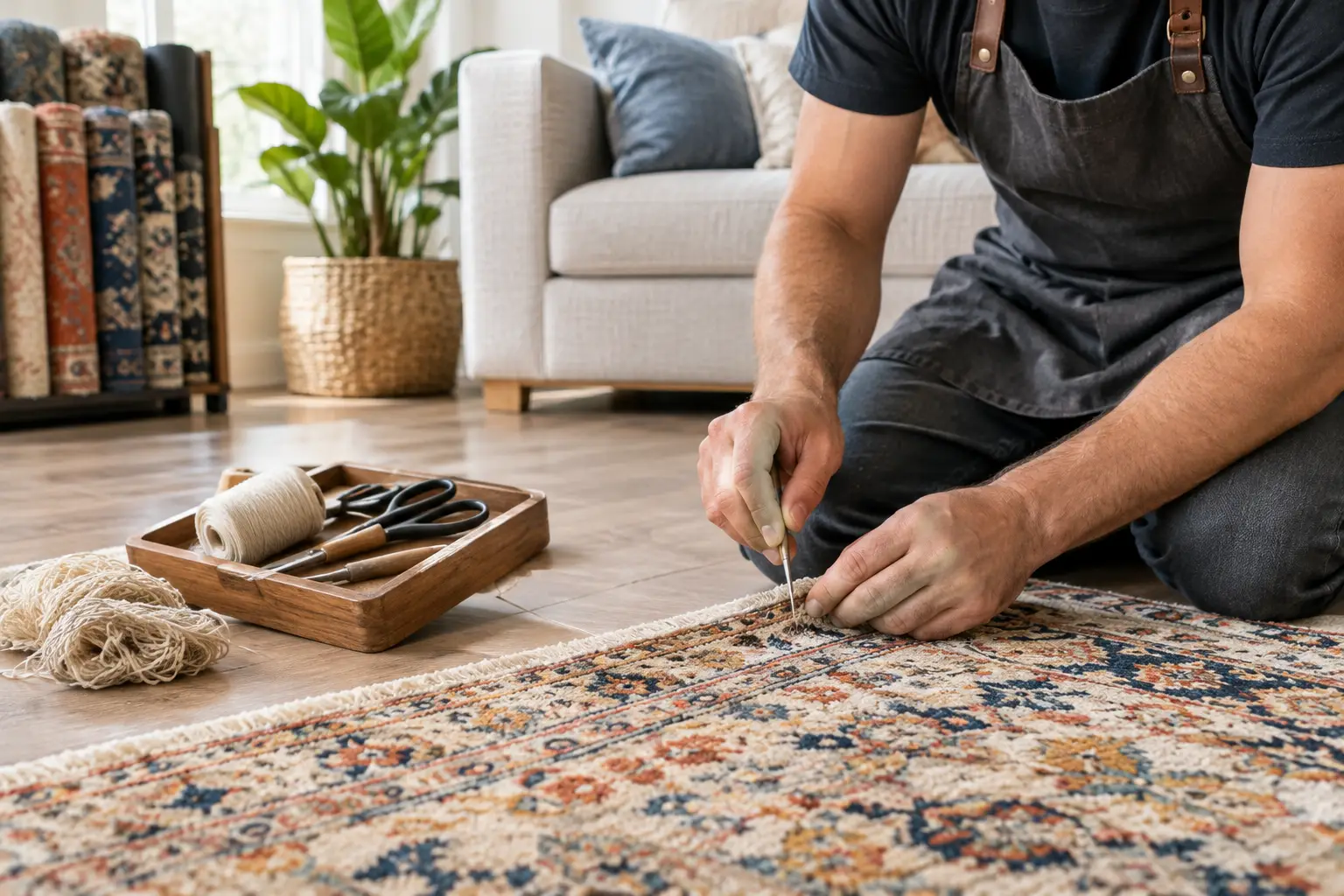
Use this Kennesaw rug repair guide to spot damage early, choose the right restoration, and protect the color, texture, and comfort of your favorite rug.
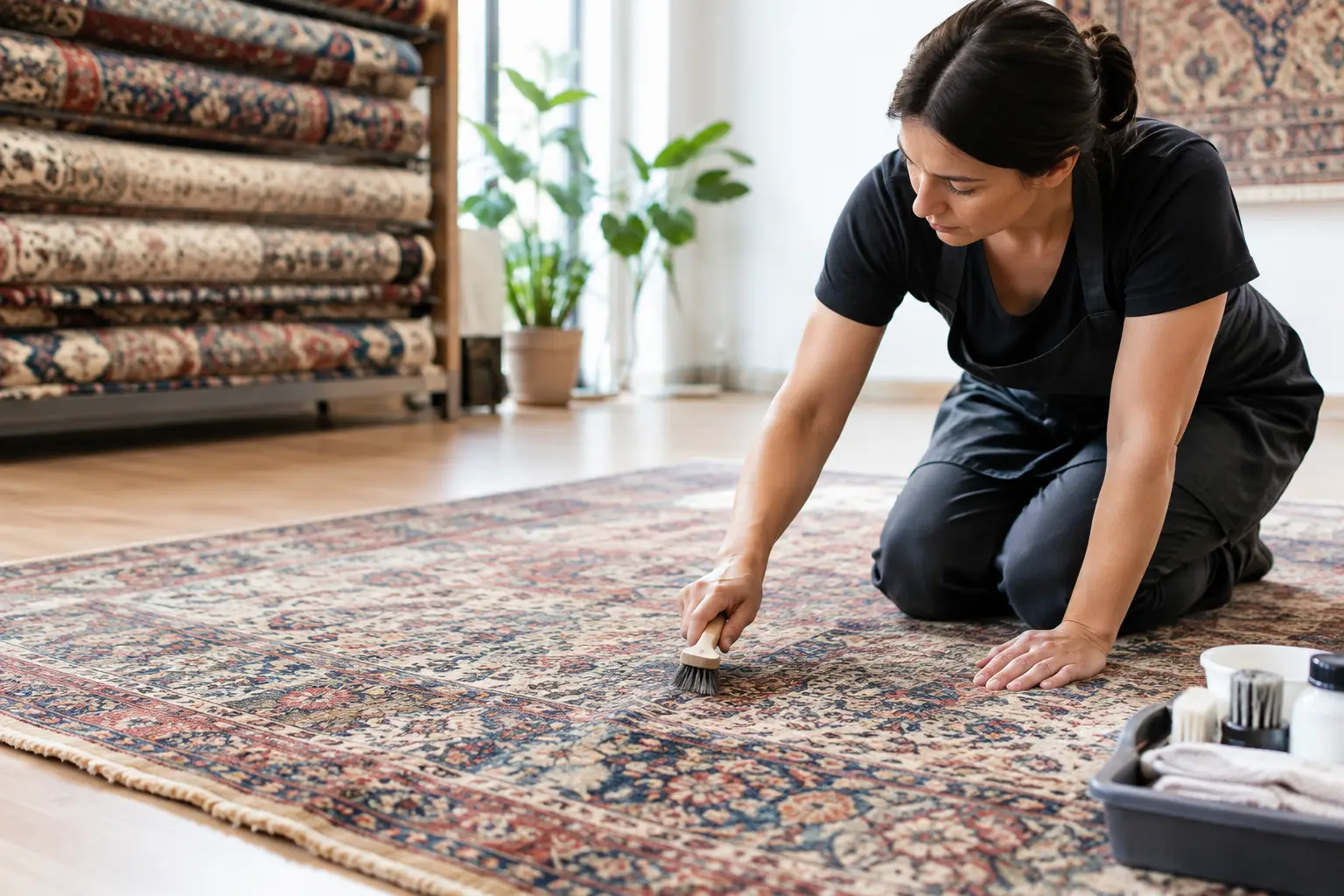
Marietta rug restoration can preserve color, texture, and history. Learn when repair makes sense and how thoughtful care protects a cherished rug at home.
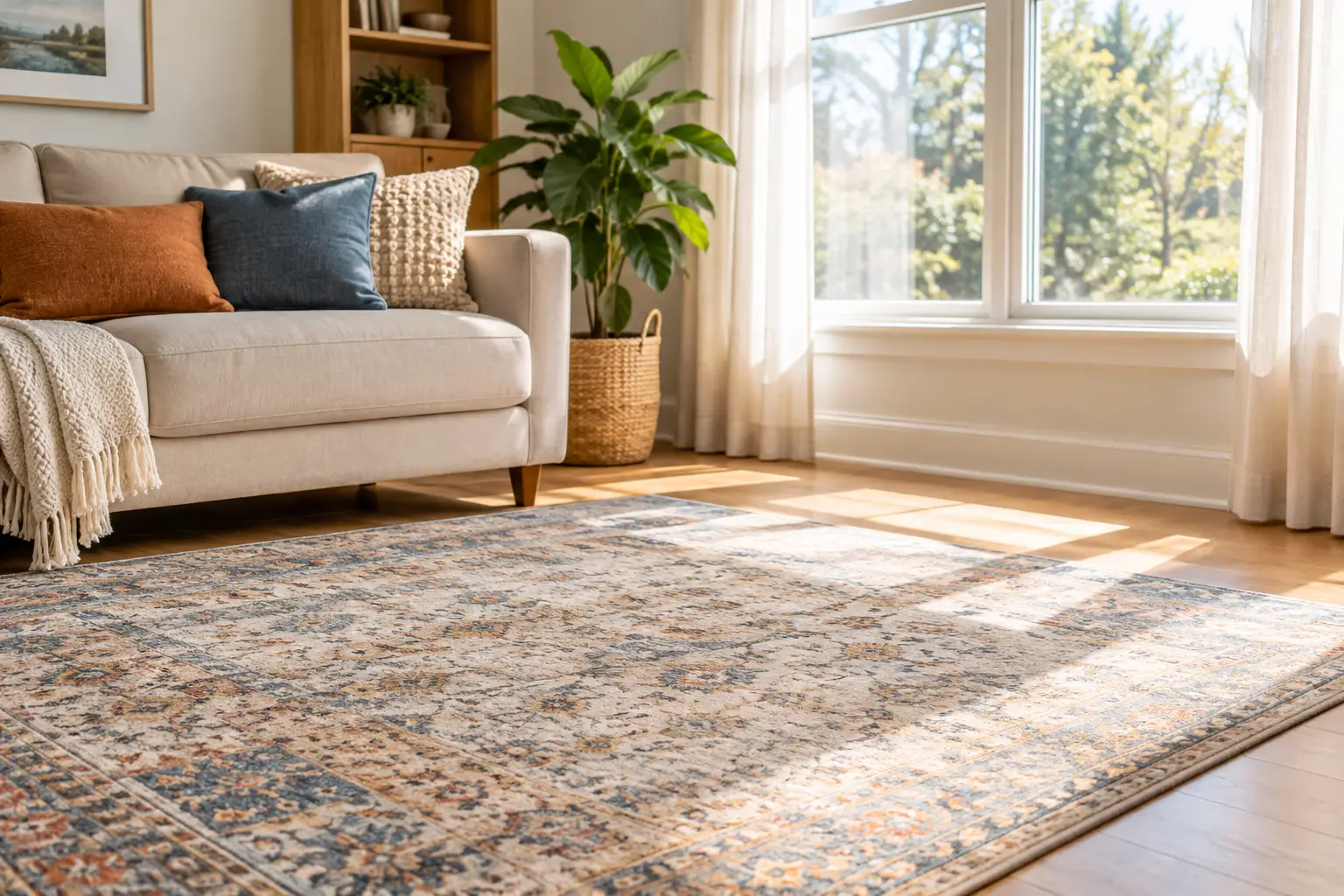
Learn how to protect rugs from sun fading with thoughtful window treatments, rotation, cleaning, and placement tips that preserve color and comfort daily.
From cozy area rugs to statement-making wall décor, our curated categories make it easy to explore what speaks to your space. Whether you’re refreshing a single corner or reimagining your whole home, start here and discover pieces that bring it all together.