


How to Remove Pet Odors From Rugs Safely
Learn how to remove pet odors from rugs without harming color or fibers, plus when professional washing is the smarter choice for a fresh home that lasts.
A well-designed room rarely comes from buying everything at once. It comes from noticing how a rug softens a sofa, how a lamp changes the mood after sunset, and how one pillow can repeat a color just enough to make the whole space feel intentional. This guide to choosing coordinated home accents is about creating that sense of connection without making your home feel matched, predictable, or overly styled.
The goal is not perfection. It is a room that feels comfortable the moment you walk in, reflects the people who live there, and has enough visual consistency to feel settled. Whether you are refreshing a living room, furnishing a new home, or finally giving a favorite rug the supporting pieces it deserves, a few thoughtful decisions can make a meaningful difference.
Every cohesive room needs a starting point. For many homes, that anchor is the area rug because it occupies a large visual footprint and establishes color, scale, and personality from the floor up. A patterned rug may suggest a quiet palette of clay, ivory, blue, or olive. A textural neutral rug may leave more room for expressive artwork, pillows, and lighting.
If you already own a rug you love, bring its colors and texture into the rest of the room in subtle ways. You do not need to repeat every shade. Choose two or three notes from the rug to guide the accents around it. A warm beige can reappear in a throw blanket, while a muted green might show up in a ceramic vase or a pair of pillows.
When the rug is still being selected, think beyond its individual beauty. Consider the upholstery, flooring, wall color, and natural light already in the room. A rug should connect those elements, not compete with all of them. This is one reason seeing rugs and accents together in a showroom can be so useful: undertones and textures are easier to judge in person than on a screen.
Coordinated does not mean identical. In fact, buying the same shade of beige, gray, or navy for every surface can make a room feel flat. A more polished approach is to build a color story with a dominant neutral, a supporting color, and one or two smaller accent tones.
For example, a warm living room may begin with ivory upholstery and a sand-toned rug. You might layer in caramel leather, muted sage pillows, and aged brass lighting. The pieces belong together because they share a warm, relaxed undertone, even though none of them are exact matches.
Cooler palettes can feel equally inviting when they are balanced with texture. A room with soft gray-blue walls, a charcoal rug, and white upholstery may benefit from natural wood, woven fibers, or a warm metal finish. The contrast keeps the space from feeling stark.
Pay attention to undertones, especially with neutrals. Some whites lean creamy, some grays lean blue, and some beiges carry a hint of pink, yellow, or green. These differences are often what make a collection of individually attractive pieces feel slightly off together. If you are uncertain, compare samples or bring a pillow cover, paint swatch, or photo of your flooring while you shop.
A room with one color family can still feel rich and layered. Texture is what gives it dimension. Pair a low-profile wool rug with a nubby throw, smooth ceramic accessories, linen pillows, or a softly woven pouf. The materials do not have to be expensive or formal to feel considered. They simply need to offer a mix of surfaces that catch the eye differently.
Shape matters, too. If your room has a large, square sectional and a rectangular rug, add a round side table, curved lamp base, or cylindrical vase to soften the geometry. If the furniture is already curvy and relaxed, a clean-lined coffee table or tailored pillow can provide welcome structure.
There is a practical side to this choice. Highly textured accents bring warmth and tactile appeal, but they may not be ideal in every household. Families with young children or pets may prefer washable throws, durable pillow fabrics, and accessories that are easy to move and clean. A beautiful room should support daily life, not create another set of rules to manage.
Pillows and throws are often the easiest way to make a room feel finished, but they work best when they are treated as a composition rather than a collection of isolated purchases. Start by repeating a color or texture already present in the rug, artwork, or upholstery. Then introduce one contrasting pattern or material to keep the arrangement from becoming too uniform.
On a neutral sofa, a mix of solid linen, subtle stripe, and small-scale pattern often feels more timeless than several pillows in the same print. Varying the size and shape adds depth as well. A larger square pillow can establish the base, while a lumbar pillow brings a tailored layer in front.
Avoid choosing every accent from the same collection. Matching pillow sets and identical throws can make a room look staged rather than personal. Instead, look for pieces that share a mood: relaxed and natural, tailored and classic, collected and colorful, or softly modern. That shared mood is more enduring than a perfect color match.
Lighting is often the missing ingredient in a room that looks good during the day but feels unfinished at night. A table lamp, floor lamp, or decorative fixture can reinforce your overall style while making the space more useful for reading, entertaining, or winding down.
Consider the finish as part of the accent story. A brass lamp can echo warm wood furniture and caramel tones in a rug. Matte black can add definition in a room with light upholstery and natural textures. Ceramic bases offer an easy opportunity to repeat a color from your pillows or artwork without overwhelming the room.
Scale is just as important as finish. A small lamp on a large console tends to disappear, while an oversized fixture can crowd a petite side table. Before choosing, consider the height of nearby furniture and where the light will land. In a living room, lamps should create a comfortable glow at seated level rather than shine directly into someone’s eyes.
Accessories bring personality into a room, but too many small objects can dilute the impact of the pieces you truly love. Rather than filling every surface, create a few intentional moments: a sculptural bowl on a coffee table, a stack of books with a small object on a shelf, or a vase that picks up a tone from the rug.
Grouping accessories in threes can be helpful when arranging a console or coffee table, especially when the pieces vary in height and shape. But this is a guideline, not a formula. A single statement piece may be all a narrow entry table needs.
Leave breathing room around meaningful items. A room feels more elevated when the eye has a place to rest. This is especially true in homes where family photos, travel finds, heirlooms, and children’s artwork are part of the décor. Those personal touches are often what make a coordinated room feel deeply personal rather than like a display.
The same principles apply throughout the home, but each room has different needs. In a living room, begin with the rug and seating because they define the largest visual areas. In a bedroom, start with bedding, then use the rug, bedside lighting, and a throw to create a restful layered look. In an entry, focus on durability and a clear first impression: a runner, a well-scaled lamp or mirror, and one or two useful decorative pieces are often enough.
For open-concept homes, repeat a few elements from one area to the next without making every room identical. You might carry a warm wood tone from the dining area into the living room, repeat black metal in lighting and frames, or use variations of the same blue-green accent color. This creates flow while allowing each space to have its own identity.
At Home Rug Gallery, homeowners can compare rugs, pillows, lighting, poufs, and decorative layers side by side, making it easier to see which combinations feel balanced in real life. That hands-on process is particularly valuable when you are working with existing furniture or trying to bridge two styles in the same room.
A beautifully coordinated home is not built by following every design rule. It comes from choosing pieces that work hard, feel good to live with, and tell the same quiet story from one corner of the room to the next. Let the rug ground the space, let the accents add character, and leave room for your home to keep evolving with you.
Learn how to remove pet odors from rugs without harming color or fibers, plus when professional washing is the smarter choice for a fresh home that lasts.
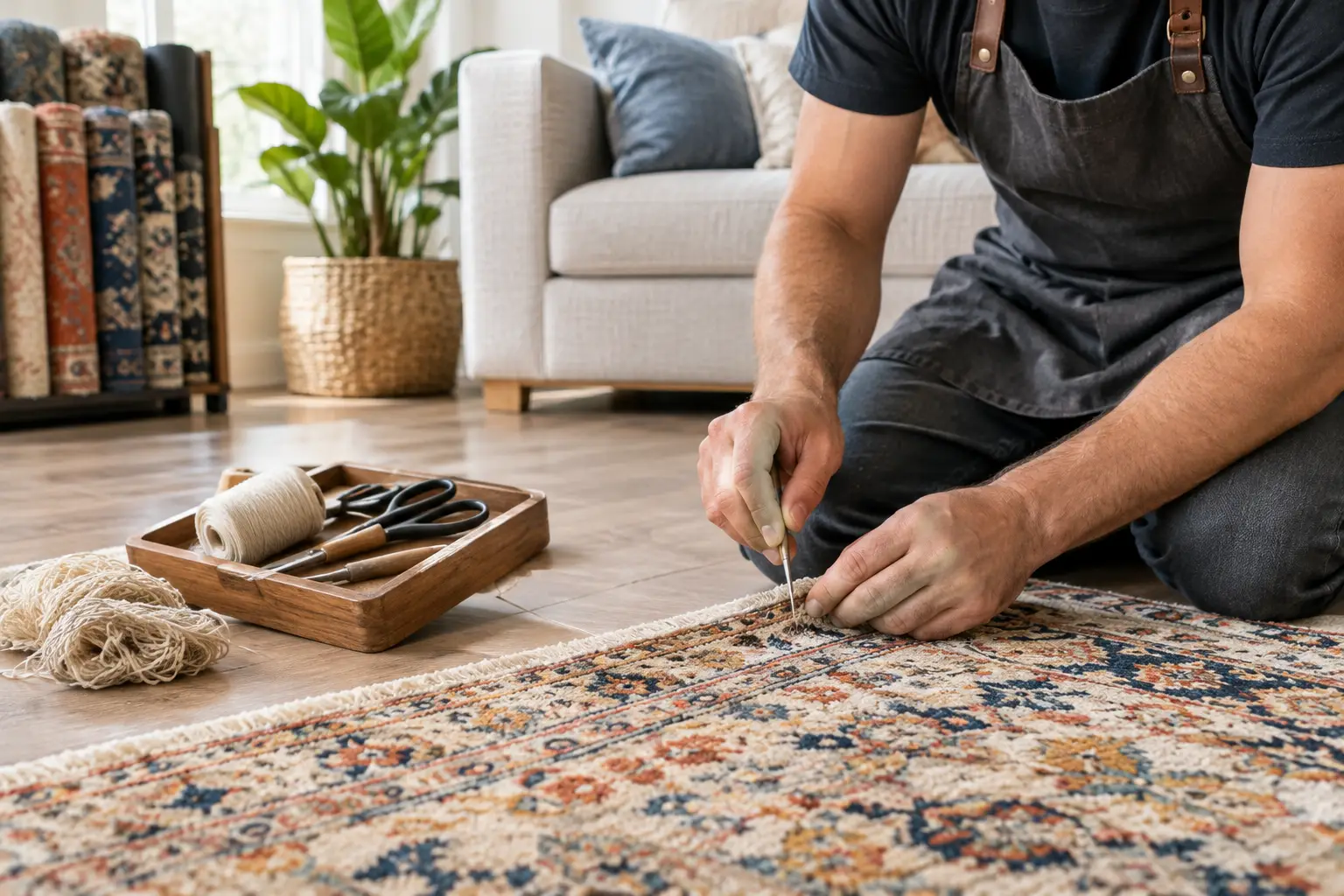
Use this Kennesaw rug repair guide to spot damage early, choose the right restoration, and protect the color, texture, and comfort of your favorite rug.

Marietta rug restoration can preserve color, texture, and history. Learn when repair makes sense and how thoughtful care protects a cherished rug at home.
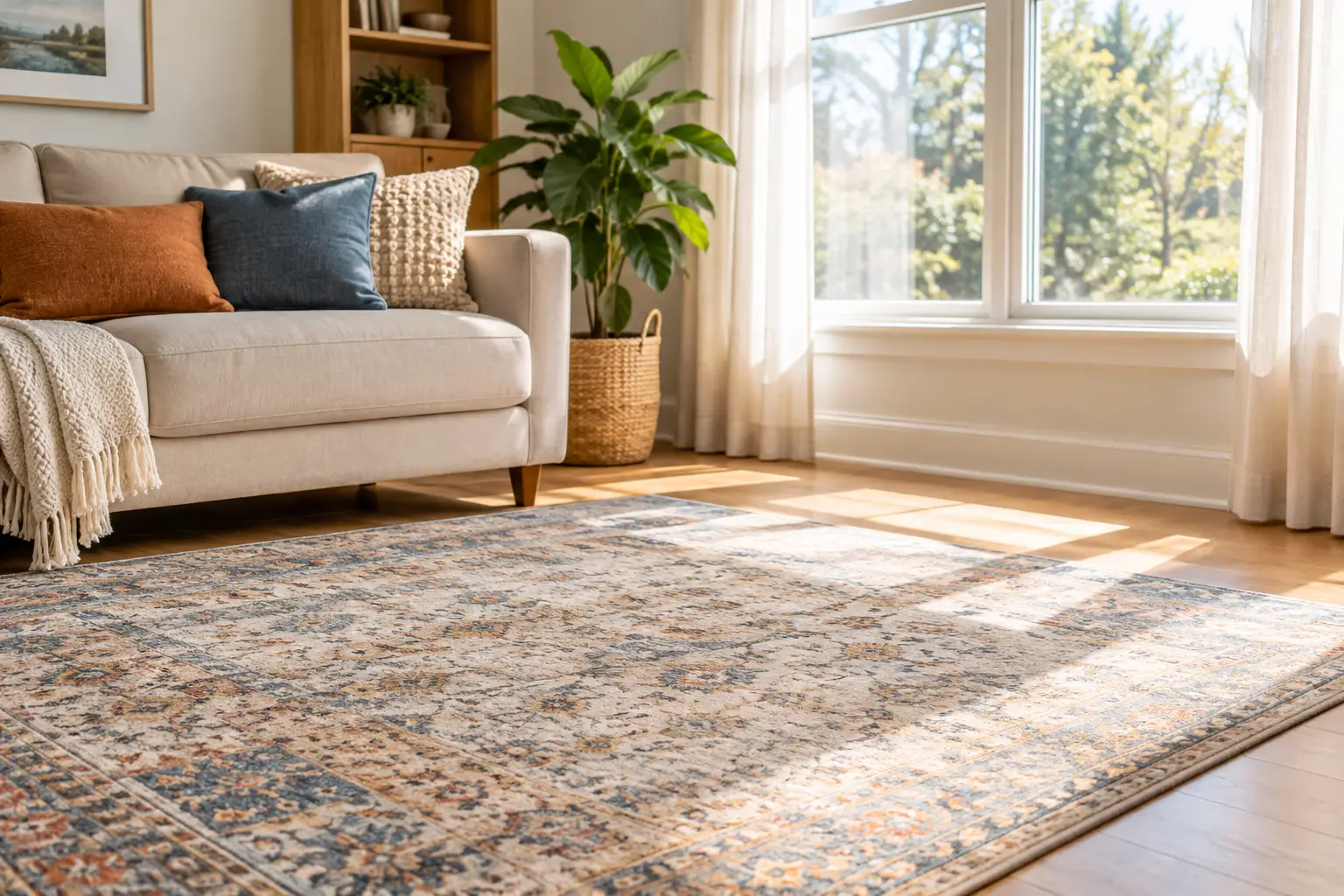
Learn how to protect rugs from sun fading with thoughtful window treatments, rotation, cleaning, and placement tips that preserve color and comfort daily.
From cozy area rugs to statement-making wall décor, our curated categories make it easy to explore what speaks to your space. Whether you’re refreshing a single corner or reimagining your whole home, start here and discover pieces that bring it all together.