That morning light can be unforgiving. One glance across your living room and suddenly the rug you love looks a little less layered and a little more lived in. If you have been wondering how to clean an area rug without dulling the color, flattening the pile, or making a stain worse, the good news is that most rugs respond well to the right approach. The key is treating the rug you have, not the rug-cleaning shortcut you saw somewhere else.
A beautiful rug does a lot of work in a room. It softens hard surfaces, anchors furniture, and brings color and texture together in a way that feels effortless when it is done well. It also collects dust, pet hair, food crumbs, and daily wear. Cleaning it properly is less about one dramatic deep clean and more about protecting the look, feel, and longevity of a piece that helps define your home.
How to clean an area rug starts with the fiber
Before you reach for any cleaner, identify what the rug is made of. This step matters more than people expect. Wool, cotton, jute, sisal, viscose, polyester, polypropylene, and blended fibers all handle moisture, agitation, and cleaning products differently.
Wool rugs are durable but can be sensitive to harsh chemicals and over-wetting. Natural fiber rugs like jute and sisal can stain easily and may warp or brown when soaked. Synthetic rugs are often more forgiving, but even those can hold onto oily residue if too much soap is used. Viscose deserves extra caution because it can shed, discolor, or lose its texture with aggressive cleaning.
If the care tag is still attached, start there. If not, a quick colorfastness test is worth the extra minute. Dab a small hidden spot with a white cloth and a little water mixed with mild detergent. If color transfers, pause and avoid any broad wet cleaning.
Start with dry soil before any spot cleaning
One of the biggest mistakes homeowners make is going straight to stain treatment while leaving grit buried in the pile. Dirt acts like sandpaper. Every step across the rug presses it deeper, wearing down fibers and muting the finish.
Vacuum slowly and thoroughly, moving in the direction of the pile when possible. For low-pile and synthetic rugs, a standard vacuum works well. For wool or high-pile rugs, reduce the beater bar setting or turn it off if your machine allows. Too much agitation can pull fibers and make a refined rug look tired before its time.
Don’t forget the back of the rug if it is practical to lift. Dust settles there too, especially in larger family rooms and entry-adjacent spaces. A few careful passes can make a noticeable difference in freshness.
How to clean an area rug stains without spreading them
Spills happen fast, but the first response matters more than the cleaner itself. Blot, don’t scrub. Scrubbing pushes the stain deeper and roughs up the fibers, which can leave a texture change long after the spot is gone.
Use a clean white cloth or paper towel to absorb as much of the spill as possible. Work from the outside edge toward the center so the stain does not expand. After blotting, apply a small amount of mild dish soap diluted in cool water, or use a rug-safe cleaning solution appropriate for the fiber. Blot again with a fresh cloth, then follow with plain water to remove residue.
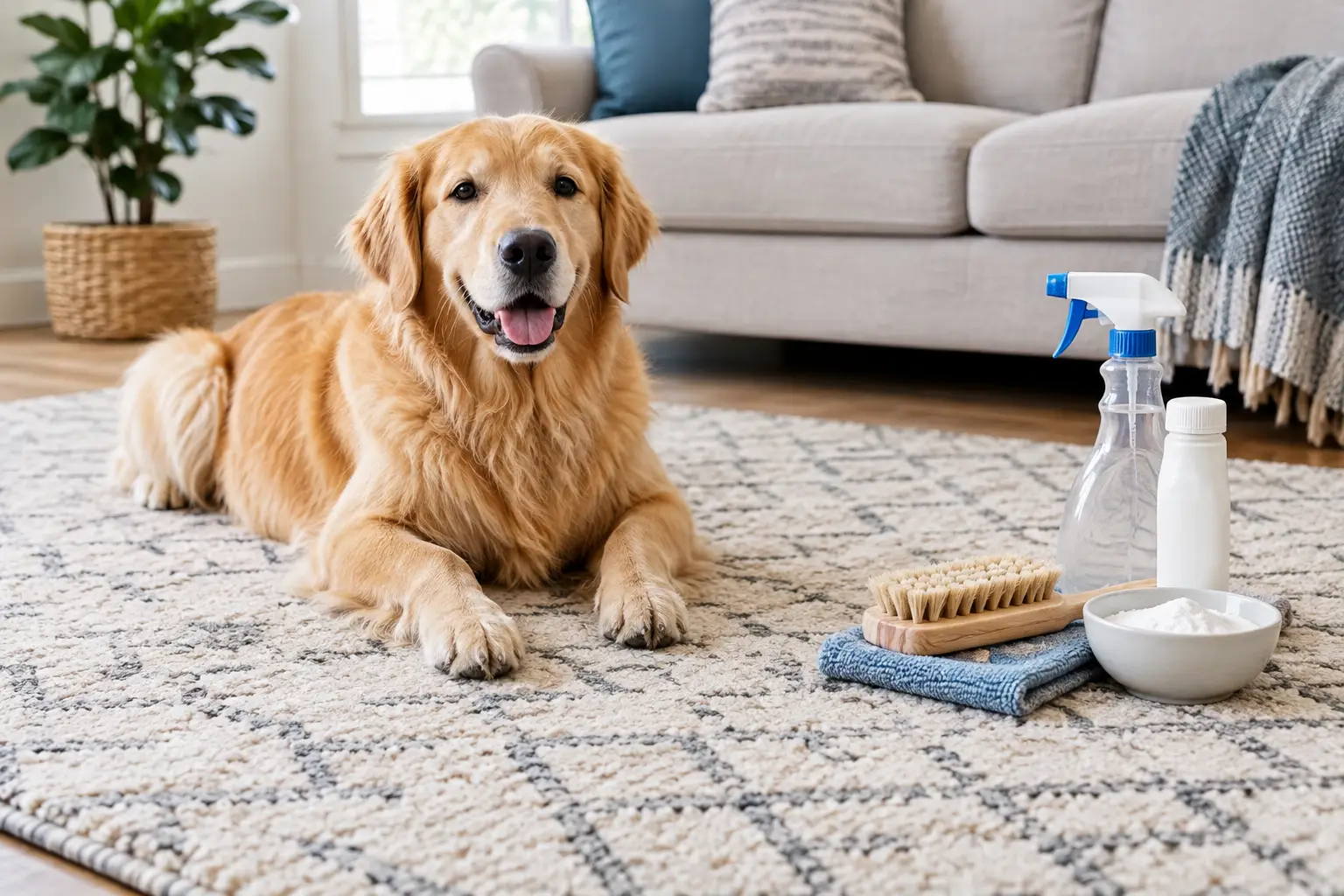
For pet accidents, odor control matters as much as appearance. After blotting and cleaning, use an enzyme-based cleaner if the rug fiber allows it. These are often more effective than fragrance-heavy products, which can mask the smell without fully removing it. Still, enzyme cleaners are not universal. On delicate, handwoven, or natural fiber rugs, a professional evaluation is often the safer choice.
Red wine, coffee, and food-based stains can be stubborn, but adding more product rarely solves the problem. Too much cleaner leaves a ring or sticky finish that attracts even more dirt. Gentle repetition usually works better than force.
When a full wash makes sense and when it doesn’t
Not every rug should be washed at home. Small, lightweight synthetic or cotton rugs may handle a controlled wash well, especially if the manufacturer allows it. But larger rugs, heirloom pieces, hand-knotted wool rugs, and natural fiber styles usually need a more careful process.
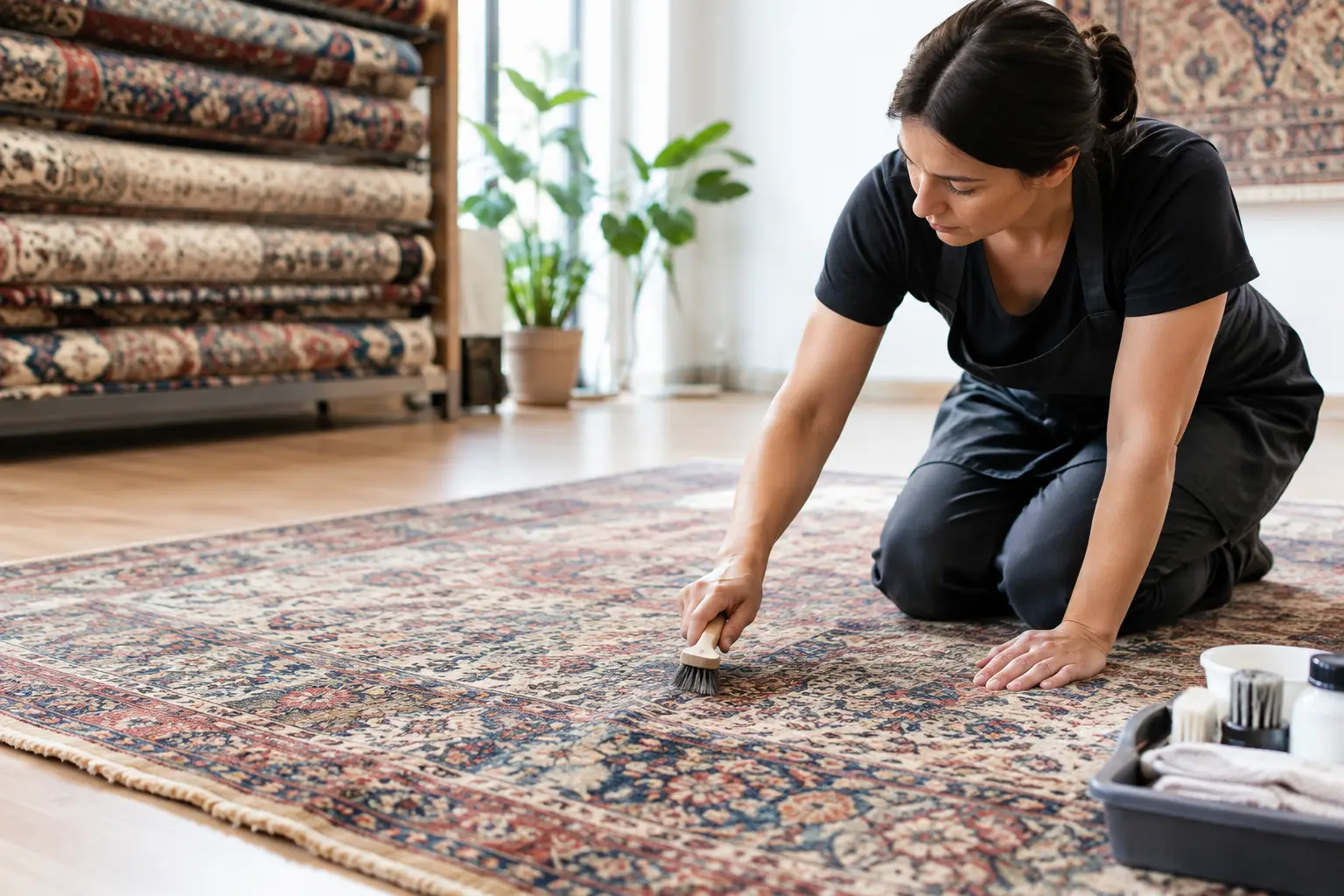
If your rug can be safely wet cleaned, take it outdoors or to a clean hard surface. Vacuum first, then lightly wet the rug with cool water. Apply a small amount of mild detergent and work it in with a soft brush or sponge. Keep your motions gentle and even. Rinse thoroughly until the water runs clear.
Drying is where many rugs are damaged. A rug that stays damp too long can develop mildew, odor, or backing issues. After rinsing, press out excess water with towels and allow the rug to dry completely in a well-ventilated area. Avoid direct high heat, which can shrink fibers or alter texture. Flip it as needed so both sides dry evenly.
For jute, sisal, viscose, antique rugs, and anything with unstable dyes, skip the wash-at-home method. These materials often look deceptively sturdy, but the wrong cleaning method can leave water marks, distortion, or permanent color loss.
Odor, shedding, and dullness need different solutions
Sometimes a rug does not look stained, but it still feels off. Maybe it smells musty, sheds more than usual, or has lost that polished finish that made the room feel complete.
Odor often points to trapped moisture, pet residue, or buildup from prior cleaning products. Sprinkling baking soda can help with mild surface odors on some rugs. Let it sit briefly, then vacuum thoroughly. But if the odor returns quickly, the issue is likely deeper than the surface.
Shedding can be normal, especially with newer wool rugs, but aggressive vacuuming and harsh scrubbing can make it worse. Dullness is often a mix of embedded soil and soap residue. In both cases, a gentle professional cleaning can restore clarity and texture more effectively than repeated DIY efforts.
Know when professional rug cleaning is worth it
There is a point where home care stops being practical. If the rug is valuable, delicate, heavily stained, or carrying persistent odors, professional cleaning is often the better investment. This is especially true for rugs that are central to a room’s design. A statement rug with rich pattern and texture can set the tone for the entire space, and it deserves care that protects both its structure and its finish.
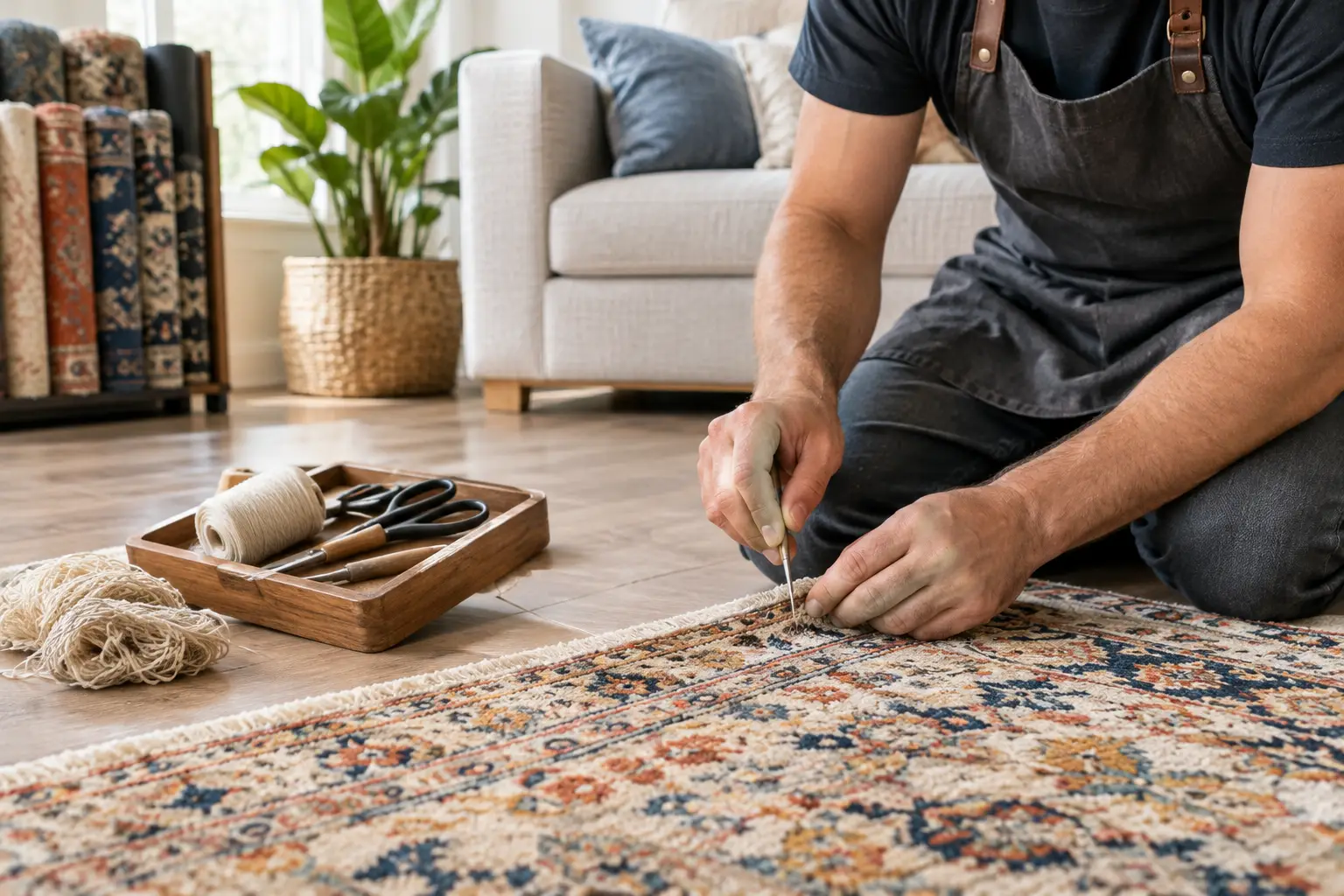
Professional rug cleaning is not just about stronger products. It is about using the right method for the rug’s construction, dyes, and fiber content. That might mean dust removal, controlled washing, fringe care, odor treatment, or drying processes that prevent browning and distortion.
For homeowners in Woodstock who want their rugs to keep pace with beautifully lived-in rooms, having a trusted local resource matters. Home Rug Gallery helps clients care for rugs not just as floor coverings, but as part of the overall home story.
Everyday habits that keep rugs cleaner longer
A rug stays attractive longer when routine care is built into the room, not saved for a problem. Vacuuming regularly helps, but so does rotating the rug every few months so wear is more even. This is especially helpful in spaces with strong natural light or one heavily used walkway.
A quality rug pad can also make a quiet difference. It reduces friction, improves airflow, and helps the rug hold its shape. If you have pets or children, catching spills quickly and keeping outdoor shoes at the door can extend the fresh look of the rug more than any annual deep clean.
If your rug sits under a dining table, expect more spot cleaning. If it grounds a formal sitting room, the concern may be gradual dust and fading instead. Good care always depends on placement, fiber, and how the room is actually used.
Cleaning a rug well is really about preserving the atmosphere it creates. The right rug adds warmth, definition, and a sense of intention to a space. Treat it with the same care you give the rest of your home, and it will keep returning the favor.