


How to Remove Pet Odors From Rugs Safely
Learn how to remove pet odors from rugs without harming color or fibers, plus when professional washing is the smarter choice for a fresh home that lasts.
A living room rarely feels off because of one big mistake. More often, it is a series of small disconnects – a rug that is too small, lighting that fights the mood, accent pieces that look lovely on their own but never quite relate to one another. If you are wondering how to create a cohesive living room design, the answer is less about matching everything and more about giving the room a clear point of view.
A cohesive room feels settled. It welcomes people in, supports everyday life, and reflects your style in a way that feels intentional rather than accidental. That sense of ease usually comes from a few foundational decisions made well, then repeated with restraint across the space.
In most living rooms, the rug does more than soften the floor. It establishes the visual footprint of the seating area, introduces color and pattern, and quietly tells every other piece where it belongs. When the rug is right, the room begins to make sense. When it is too small, too busy, or disconnected from the furnishings, even beautiful furniture can feel like it is floating.
This is why learning how to create a cohesive living room design often starts from the ground up. Choose a rug that fits the seating arrangement properly, not just the open floor. In many rooms, at least the front legs of the sofa and chairs should rest on the rug. That single choice creates instant unity.
Style matters too, but so does function. A high-traffic family room may need a different fiber and pattern than a formal sitting space. If you love a light, airy palette but have pets or children, that does not mean abandoning the look. It means choosing materials and visual texture with real life in mind.
Many living rooms feel disjointed because too many colors are competing for attention. A cohesive space usually has a defined palette with enough variation to stay interesting. That might mean warm neutrals with layered ivory, sand, camel, and walnut, or it could mean soft blues and greens anchored by natural wood and brass.
The key is repetition. If a color appears in the rug, let it show up again in a pillow, a piece of art, or the trim on a lamp shade. That repetition helps the eye move through the room without stopping at every object. The space starts to read as one complete composition.
This does not mean every item must be perfectly coordinated. In fact, rooms with some contrast often feel more sophisticated. The trade-off is balance. A dramatic accent chair can be beautiful, but it should still relate to the room through tone, shape, or material. Cohesion is not sameness. It is connection.
A neutral living room can feel elegant and deeply calming, but only if it has dimension. If everything is beige in exactly the same way, the room may feel flat instead of refined. Bring in contrast through texture, undertones, and a few darker elements that anchor the space.
Think boucle beside linen, wood against metal, matte ceramic near soft velvet. Even a quiet palette benefits from visual rhythm.
A cohesive design is not only about what you buy. It is also about where things live. Furniture that is spaced too far apart can make a room feel disconnected, while an arrangement that is too tight can feel heavy and uncomfortable.
Start by deciding how the room is meant to function. Is it primarily for conversation, family movie nights, entertaining, or a little of everything? The layout should support that purpose first. A room can be stylish, but if people cannot comfortably use it, the design will never feel complete.
Aim to create a clear seating zone with pieces that relate to each other in scale. If the sofa is substantial and low, tiny side chairs may look like an afterthought. If your coffee table is oversized, make sure there is enough visual weight elsewhere to support it. Proportion is one of the quietest ways to make a room feel pulled together.
One of the fastest ways to make a living room feel thoughtfully layered is to vary texture. This is especially important when the color palette is restrained. Rugs, pillows, throws, poufs, wood finishes, glass, and lighting all contribute to the atmosphere of the room.
Texture is where comfort and polish meet. A wool rug underfoot, a soft throw draped over an armchair, and a woven or embroidered pillow can make a room feel warm and personal. At the same time, cleaner surfaces like polished stone, sleek metal, or smooth ceramic keep the space from feeling overly casual.
It helps to think in terms of contrast. If your sofa fabric is smooth, add pillows with visible weave or fringe. If your rug carries a detailed pattern, consider quieter upholstery so the room does not feel visually crowded. The goal is a balanced mix that feels collected and effortless.
Lighting is often treated as an afterthought, yet it has a major effect on whether a room feels cohesive. A single overhead fixture rarely does enough on its own. Living rooms tend to feel more complete when lighting is layered across the space.
Table lamps, floor lamps, and accent lighting create softness and depth. They also help connect different areas of the room, especially in open layouts. A reading corner, console, or side table becomes part of the overall design when it is intentionally lit.
Style matters here too. If your room leans classic, sculptural modern lamps may still work, but they need a reason to be there. Maybe they echo a shape in the artwork or bring tension to an otherwise traditional space. That kind of contrast can be striking. Random contrast usually just feels random.
Accessories should complete the room, not compete with it. This is where many living rooms lose their clarity. Decorative objects are easy to add one by one, but without editing, they can create visual noise.
Choose accessories that support the room’s story. A few well-placed pillows, a throw blanket, meaningful objects, and art that speaks to the palette can do more than shelves crowded with unrelated pieces. Negative space matters. It gives the eye a place to rest and allows the strongest elements to stand out.
If you are styling a coffee table or console, vary height and shape, but keep the overall feeling consistent with the room. Organic, earthy pieces tend to suit relaxed interiors. More tailored accessories can sharpen a formal look. Both can work beautifully. It depends on the mood you want to create.
A cohesive room should not feel staged beyond recognition. Family photographs, travel finds, heirlooms, and collected objects can absolutely belong in a polished living room. The difference is in how they are integrated.
When personal items share a common palette, framing style, or placement logic, they feel intentional. The room stays deeply personal without becoming visually scattered.
If you are stuck between options, ask a simpler question than Which one do I like more? Ask Which one supports the room I am trying to create? That shift is often what separates impulse purchases from a room that feels beautifully resolved.
Maybe your ideal living room is quiet luxury with soft texture and sculptural shapes. Maybe it is classic and welcoming with layered pattern and warm wood tones. Maybe it is airy, relaxed, and meant for real family life. Once that feeling is clear, decisions become easier.
This is also where in-person shopping can make a difference. Seeing rugs, lighting, pillows, and accents together allows you to compare tone, scale, and texture in a way screens cannot fully capture. For homeowners in Canton, Woodstock, Acworth, and Kennesaw, that hands-on process often makes the difference between guessing and choosing with confidence.
Not every living room comes together in one weekend, and that is often a good thing. Rooms with staying power usually evolve. You may begin with the rug and sofa, then add lighting, pillows, and finishing pieces as the room reveals what it needs.
Give yourself permission to pause between major decisions. A cohesive space is rarely built by rushing to fill every corner. It comes from choosing pieces that relate to one another in scale, color, texture, and mood, then leaving enough room for the design to breathe.
The most memorable living rooms do not feel overly decorated. They feel considered, comfortable, and true to the people who live there. Start with a strong foundation, layer with intention, and let the room become a reflection of your life rather than a collection of separate items.
Learn how to remove pet odors from rugs without harming color or fibers, plus when professional washing is the smarter choice for a fresh home that lasts.
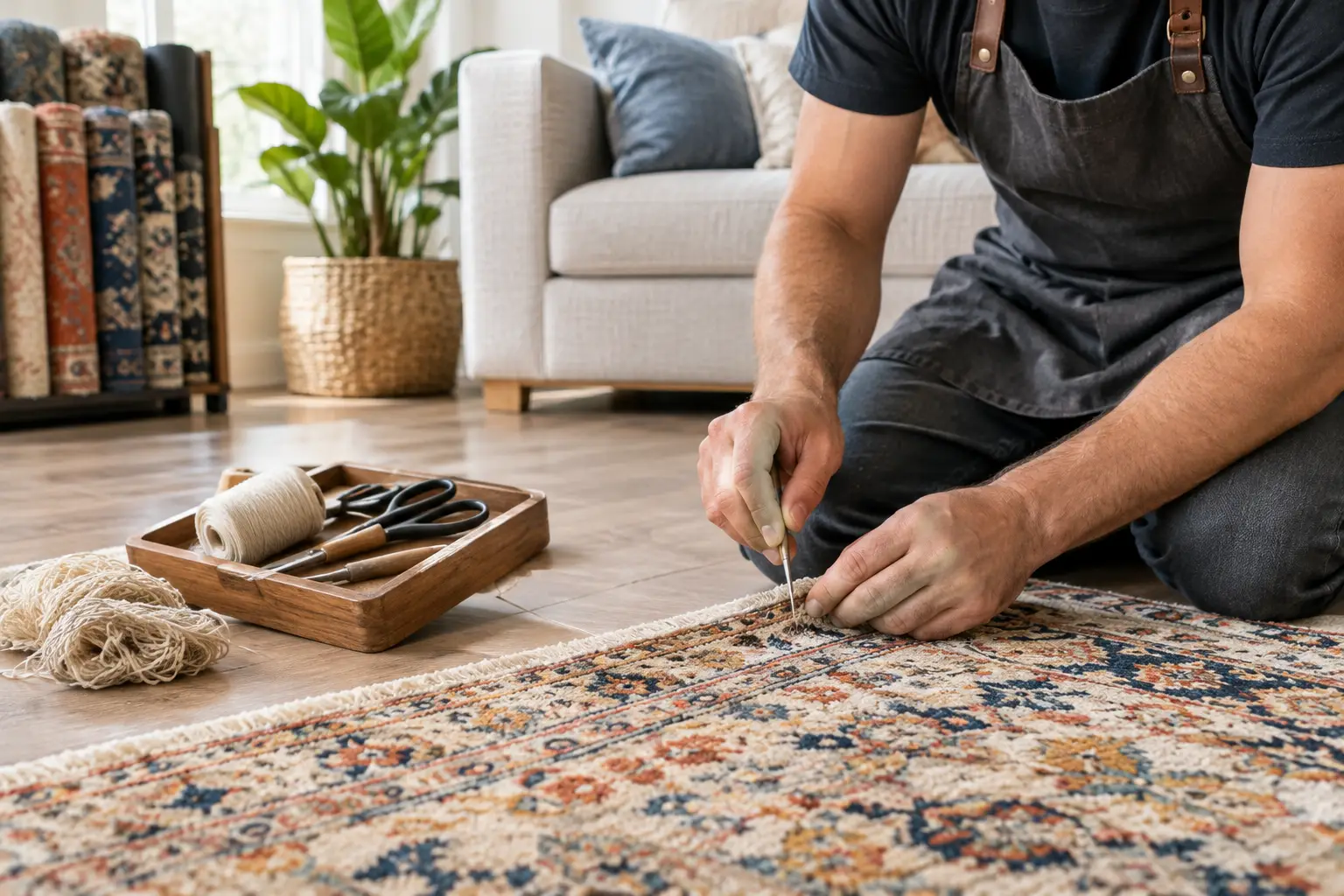
Use this Kennesaw rug repair guide to spot damage early, choose the right restoration, and protect the color, texture, and comfort of your favorite rug.

Marietta rug restoration can preserve color, texture, and history. Learn when repair makes sense and how thoughtful care protects a cherished rug at home.
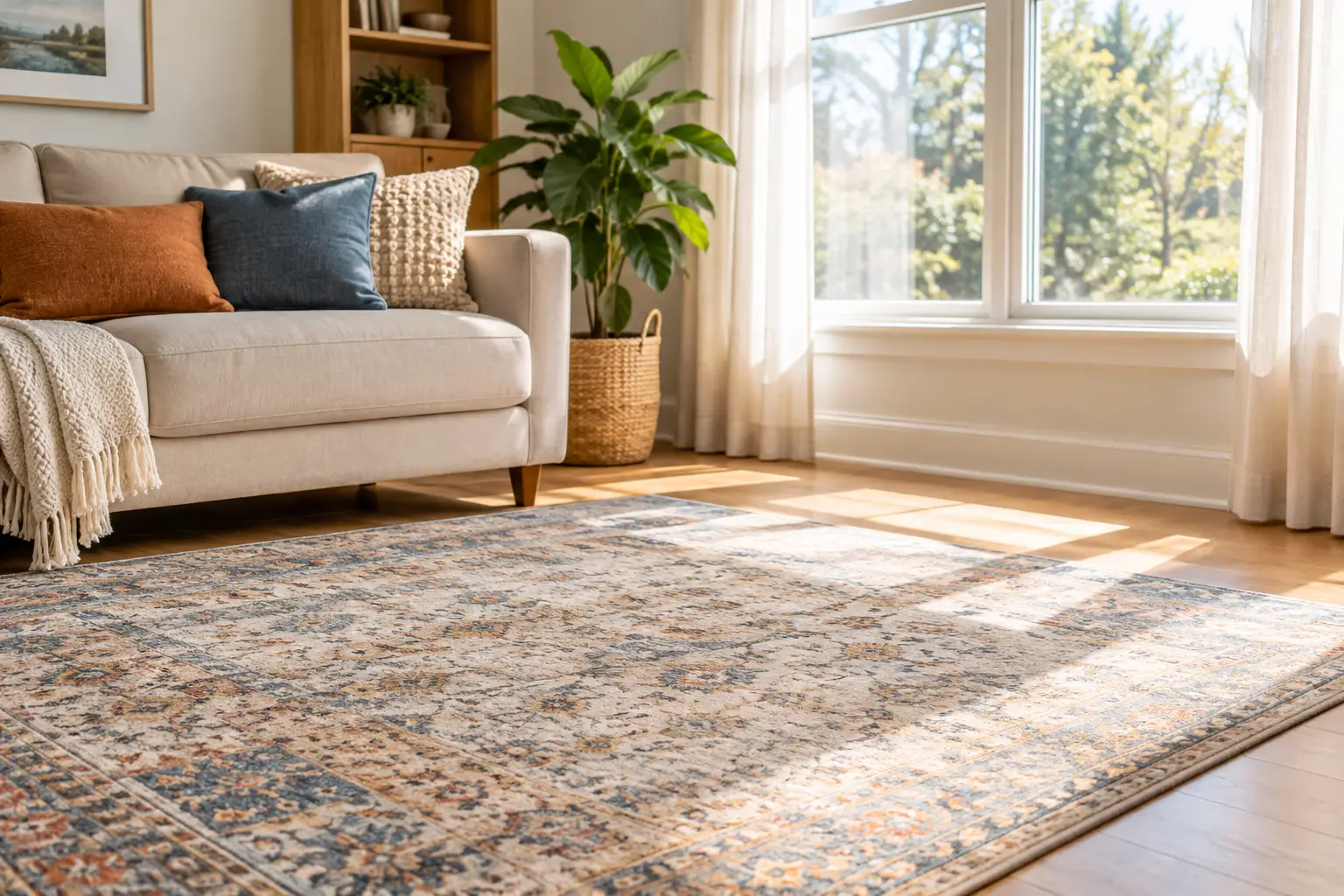
Learn how to protect rugs from sun fading with thoughtful window treatments, rotation, cleaning, and placement tips that preserve color and comfort daily.
From cozy area rugs to statement-making wall décor, our curated categories make it easy to explore what speaks to your space. Whether you’re refreshing a single corner or reimagining your whole home, start here and discover pieces that bring it all together.