

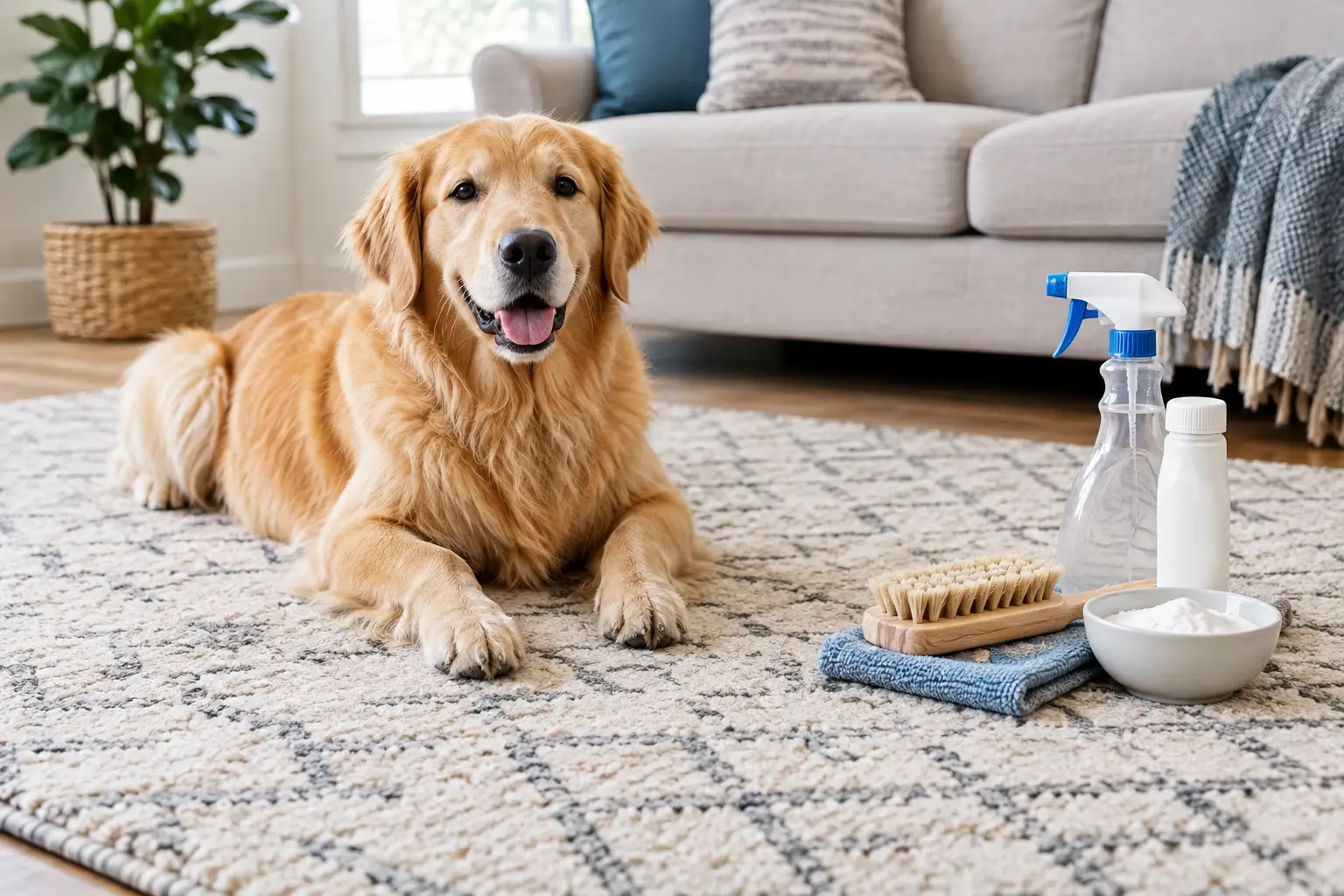
How to Remove Pet Odors From Rugs Safely
Learn how to remove pet odors from rugs without harming color or fibers, plus when professional washing is the smarter choice for a fresh home that lasts.
A curled rug corner can make an otherwise polished room feel unfinished. It catches the eye, creates a trip hazard, and interrupts the relaxed, grounded look an area rug is meant to bring to a space. Learning how to fix rug curling starts with understanding why the rug is lifting, then choosing a method that respects its fibers, backing, and construction.
The good news is that many curled edges respond well to patient, low-risk care. The key is resisting the temptation to force them flat with aggressive heat, excessive weight, or adhesives that may damage the rug later.
Most curling happens because a rug has developed a “memory.” Rugs are often rolled tightly for shipping, storage, or moving, and the fibers and backing can hold that curve once the rug is unrolled. Corners are especially likely to lift because they have less weight holding them in place.
Humidity and temperature changes can play a role, too. Natural-fiber rugs such as wool, jute, and cotton respond to the environment more than synthetic materials do. A rug that lies flat in one season may begin to ripple or curl when indoor conditions change. Foot traffic, furniture placement, vacuuming, and a rug pad that does not fit properly can also cause a formerly flat rug to shift over time.
Before trying a fix, take a closer look at the rug. A recently purchased machine-made rug with slightly upturned corners needs different care than a hand-knotted heirloom rug, a delicate antique textile, or a rug with a cracked backing. When a curl is paired with fraying, loose binding, buckling, or a damaged edge, it may be a repair issue rather than a simple flattening issue.
For mild corner curl, start with the least invasive approach: reverse the rug’s curve and give it time. Roll the affected corner or edge backward, in the opposite direction of the curl, without creating a hard crease. Leave it in that position for several hours, or overnight if the rug’s material allows. Then unroll it and let it rest flat.
If the corner still lifts, place clean, evenly distributed weight over it. Stacks of books, a folded towel with a flat board on top, or a low, stable piece of furniture can work well. Keep the weight on the rug for 24 to 48 hours, checking periodically to make sure it is not creating an impression in the pile.
This method works particularly well for rugs that were recently unrolled. It is slow, but it is also kind to the rug. Avoid placing a narrow, heavy object directly on a textured or high-pile surface, since concentrated pressure can crush fibers or leave a visible line.
Gentle warmth can help some rugs relax, especially when curling is related to storage. A warm room and indirect sunlight for a short period may soften the fibers enough for the rug to settle under light weight. Keep the rug away from prolonged direct sun, which can fade color and dry out natural fibers.
A hair dryer on a low, warm setting can sometimes help with a stubborn synthetic rug corner, but it should never be held close to the backing or used on high heat. Move it continuously and test a small, inconspicuous area first. Heat can warp latex backing, melt synthetic fibers, weaken adhesives, and affect the finish of certain handmade rugs.
Steam is best left out of most at-home rug curling fixes. Moisture can cause dyes to bleed, encourage mildew if the rug does not dry completely, and distort natural materials. If a rug is valuable, vintage, wool, silk, or handwoven, skip heat and moisture altogether until a rug professional has assessed it.
A quality rug pad does more than add cushioning. It helps the rug stay anchored, protects the floor underneath, and creates a more stable surface that discourages corners from drifting upward. If a rug continues to curl after being weighted, the pad may be part of the problem.
The pad should sit just inside the rug’s edges, generally leaving a small border so it remains hidden. A pad that is too small may not support the corners. One that is too thick, worn, wrinkled, or incompatible with the flooring can make the rug feel unstable instead of secure.
For rugs on hardwood, tile, or luxury vinyl, use a pad designed for that specific floor type. The wrong material can leave residue, react with finishes, or allow the rug to slide. On carpet, a firmer pad helps prevent bunching and shifting. The right foundation makes a room feel more considered underfoot while helping the rug maintain its shape.
Rug tape and corner grips can be useful for a lightweight rug that keeps lifting in a low-profile area, such as an entry, hallway, kitchen, or home office. They are most effective after the rug has been flattened with reverse rolling or weight. Think of them as a way to hold a corrected corner in place, not as a shortcut for a severely warped rug.
Choose products specifically made for area rugs and your flooring type. Test any adhesive product in an inconspicuous area first, and do not use permanent glue on a rug you may want to clean, rotate, repair, or move later. Adhesives can discolor backing, pull fibers, and leave residue on flooring.
Corner grips are usually a better choice than tape for homeowners who want a removable option. Still, they are not ideal for every rug. Delicate antique rugs, hand-knotted pieces, and rugs with fragile backing deserve a more conservative approach.
A synthetic polypropylene or polyester rug can often tolerate reverse rolling, gentle warmth, and a proper pad. These rugs are typically resilient, though their backing may be sensitive to heat.
Wool rugs should be handled with more patience. Weight, reverse rolling, and a well-fitted pad are generally safer than direct heat. Wool has natural resilience, but improper moisture or heat can change its texture and affect the way it wears.
Jute, sisal, seagrass, and other natural-fiber rugs require especially careful handling. Their woven structure can become distorted, brittle, or uneven when exposed to moisture. Keep these rugs dry and use light, even pressure rather than steaming or wetting the fibers.
For viscose, silk, vintage, hand-knotted, or heirloom rugs, avoid DIY adhesive and heat treatments. A lifted corner may be related to the foundation, edge binding, or a change in tension across the rug. Those details affect both the rug’s appearance and its long-term value.
A corner that returns to its curled position again and again may be signaling a deeper issue. Watch for cracked or peeling backing, waves across the body of the rug, uneven edges, loose fringe, unraveling binding, or a rug that no longer lies square. These are signs that simple weight may not solve the problem.
Professional rug repair and restoration can address issues that at-home methods cannot, including edge repair, backing concerns, fringe work, and structural irregularities. For homeowners in Canton and surrounding North Georgia communities, Home Rug Gallery can help evaluate whether a rug needs simple care guidance or more specialized attention.
Once the rug is flat, rotate it periodically so traffic and sunlight are distributed more evenly. Vacuum with care, particularly around fringe and edges, and avoid repeatedly pushing a vacuum head into a lifted corner. If furniture is moved often, check that legs are not catching the rug edge and pulling it out of position.
When storing a rug, roll it with the pile facing inward and keep it in a clean, dry setting. Avoid folding it whenever possible. A properly sized pad, routine care, and thoughtful placement will do more for a rug’s shape than any quick fix.
A rug should feel effortless in a room: soft underfoot, visually grounding, and naturally at home with the furnishings around it. Giving a curled edge the right kind of care preserves that feeling while protecting the piece you chose to make your home more personal.
Learn how to remove pet odors from rugs without harming color or fibers, plus when professional washing is the smarter choice for a fresh home that lasts.
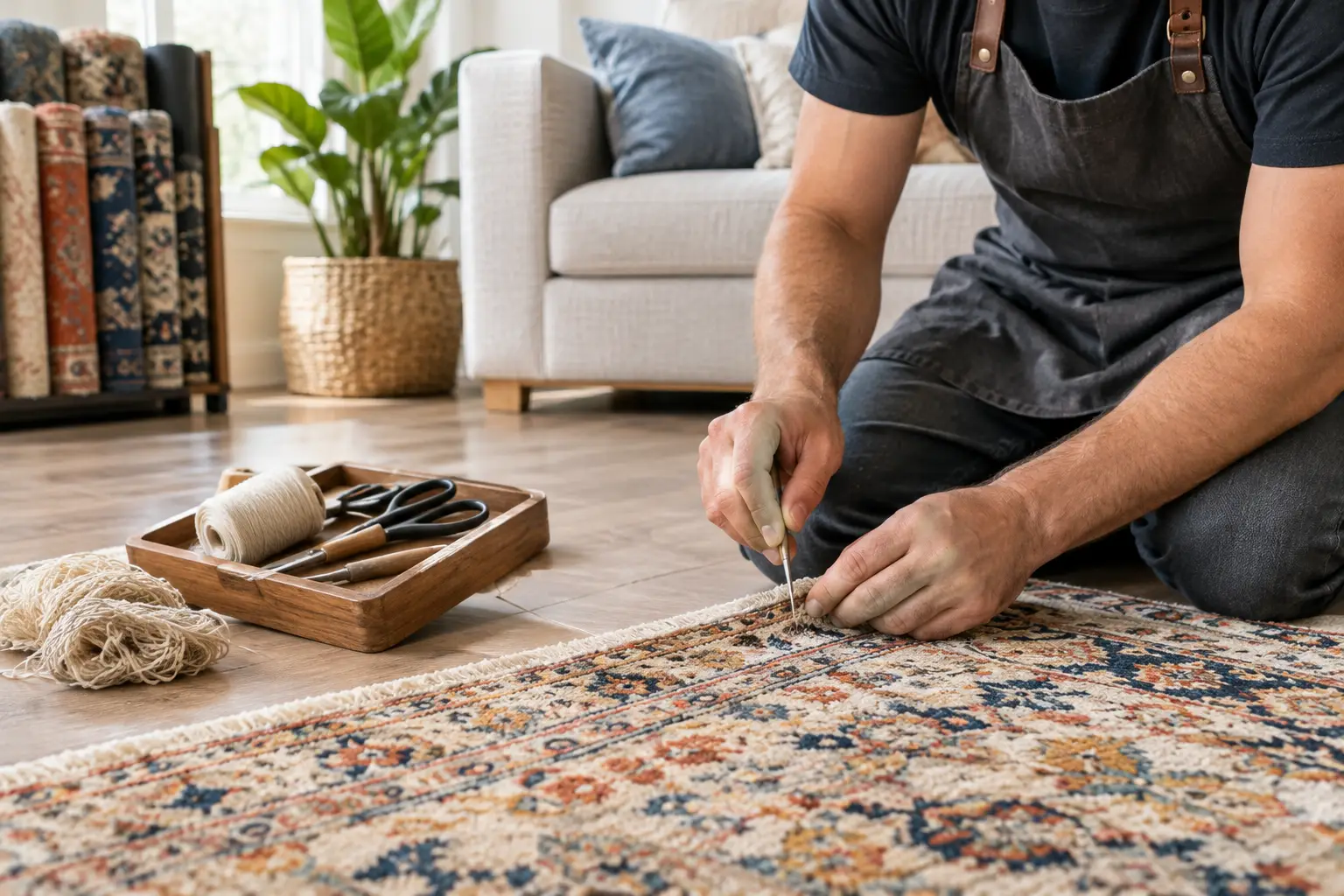
Use this Kennesaw rug repair guide to spot damage early, choose the right restoration, and protect the color, texture, and comfort of your favorite rug.
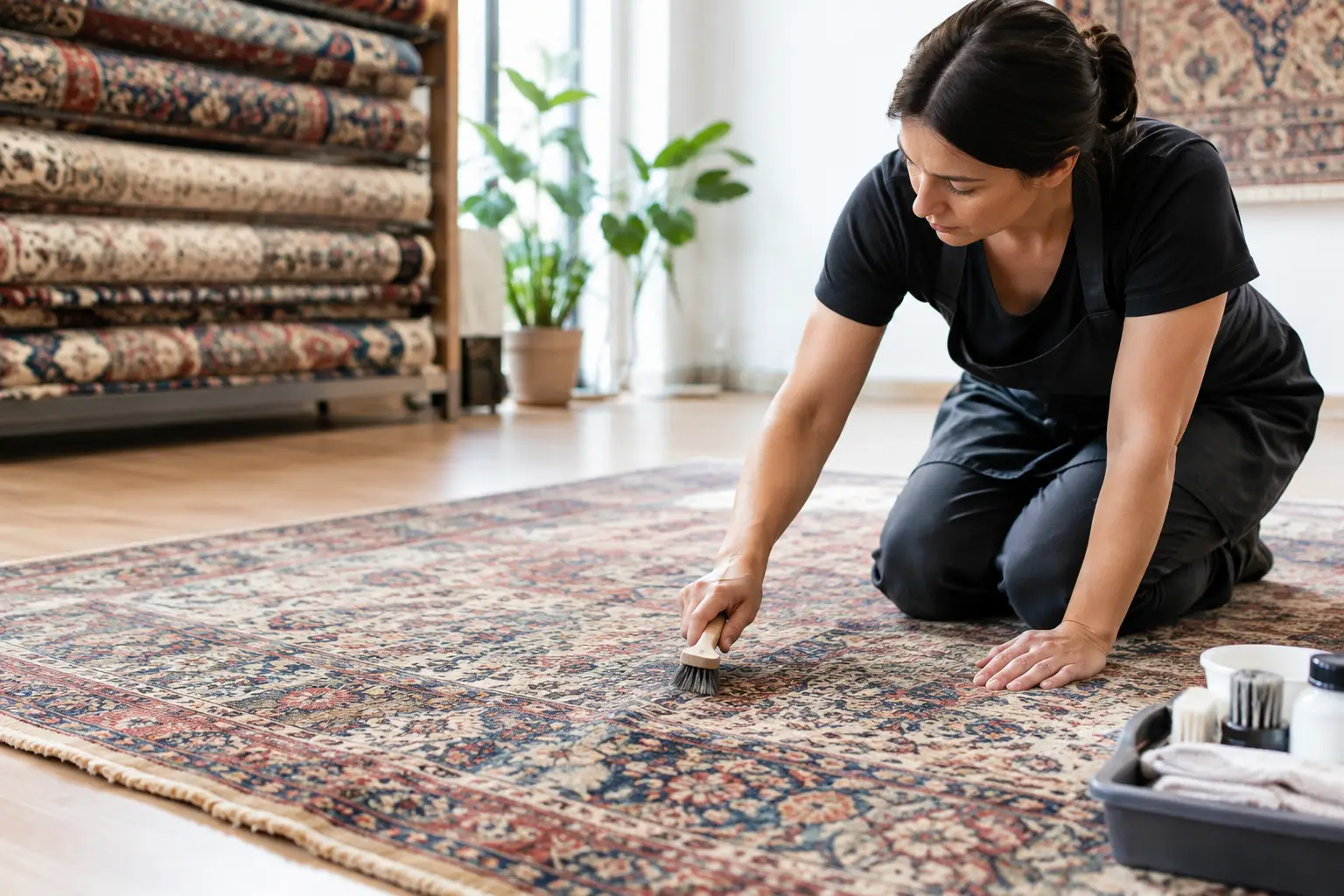
Marietta rug restoration can preserve color, texture, and history. Learn when repair makes sense and how thoughtful care protects a cherished rug at home.
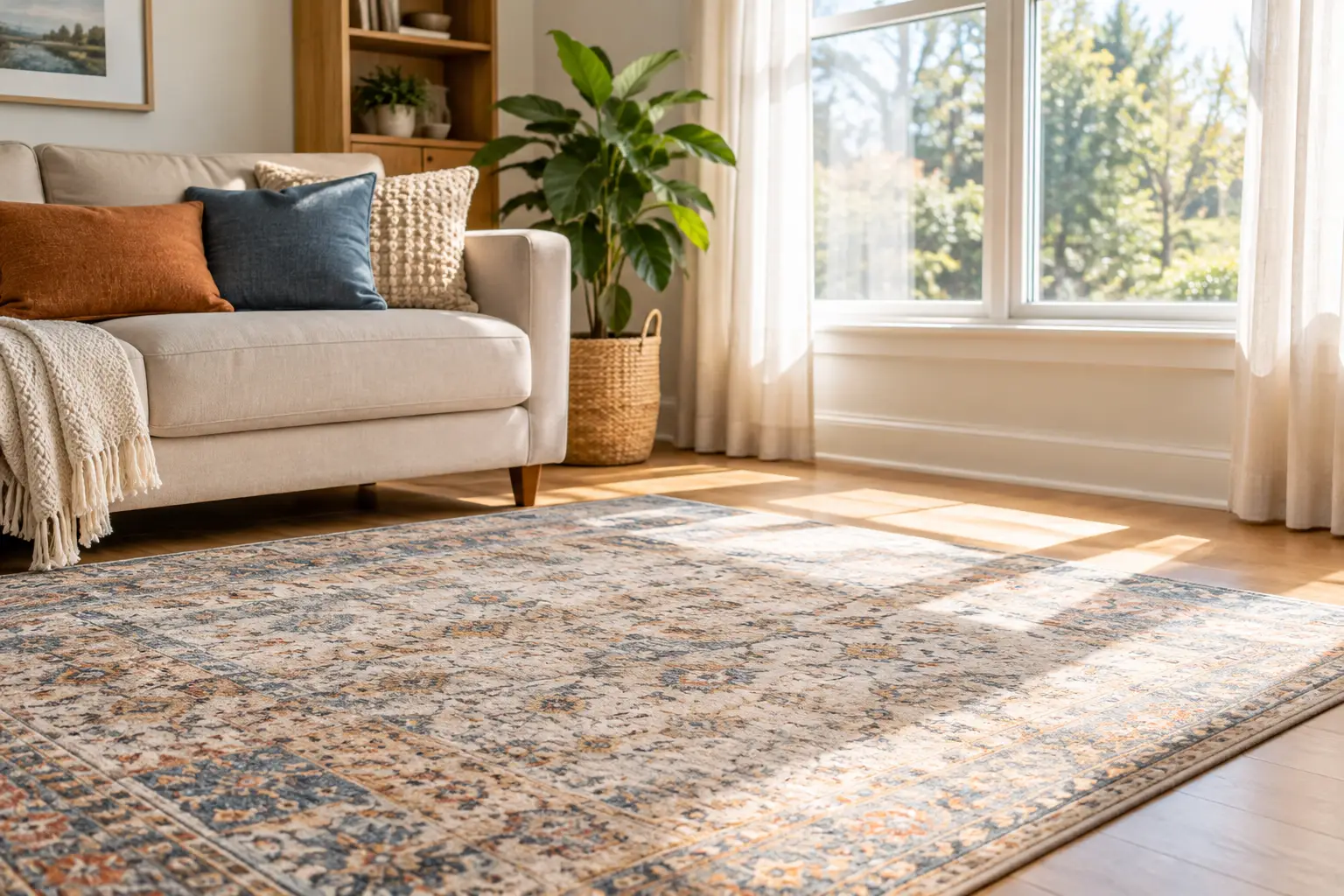
Learn how to protect rugs from sun fading with thoughtful window treatments, rotation, cleaning, and placement tips that preserve color and comfort daily.
From cozy area rugs to statement-making wall décor, our curated categories make it easy to explore what speaks to your space. Whether you’re refreshing a single corner or reimagining your whole home, start here and discover pieces that bring it all together.