


How to Remove Pet Odors From Rugs Safely
Learn how to remove pet odors from rugs without harming color or fibers, plus when professional washing is the smarter choice for a fresh home that lasts.
A living room can feel almost finished and still miss the mark. The sofa is right, the coffee table works, the lighting is warm, but the room still feels flat. That is often where knowing how to layer living room rugs makes the difference. A thoughtfully layered rug arrangement adds depth, softness, and a more collected look that feels intentional rather than overly matched.
Layering rugs is one of those design choices that looks effortless when it is done well. It can make a large room feel grounded, bring warmth to hardwood floors, soften a formal seating area, or give an older rug a fresh context. It also comes with a little strategy. The right combination depends on your room size, furniture layout, traffic level, and the mood you want the space to carry.
A single rug often has one job – define the seating area. Layered rugs can do more than that. They bring in contrast, texture, and shape, which helps a living room feel richer and more finished. In rooms that lean neutral, layering is a quiet way to add interest without introducing visual clutter. In rooms with personality already built in, it can help connect different colors and materials so the space feels cohesive.
There is also a practical side. A larger foundational rug can anchor the room, while a smaller top rug adds character and can be switched seasonally or as your style evolves. If you have a rug you love but it is slightly undersized for the room, layering can help it feel more at home. The same is true for vintage or heirloom pieces that deserve to be seen but need a broader base underneath.
The easiest mistake is choosing two rugs that compete for attention. Layering works best when one rug leads and the other supports it. Usually, the bottom rug is simpler and larger, while the top rug brings more personality through pattern, color, or texture.
A natural fiber rug is often a strong starting point. Jute, sisal, and other flatwoven foundations offer visual calm and a tailored look. They create enough texture to feel interesting, but they do not overpower the room. On top of that, you might place a softer wool rug, a vintage-inspired patterned rug, or a plush accent rug that introduces warmth and detail.
If both rugs have bold patterns, the room can start to feel fragmented. That does not mean you can never pair pattern with pattern. It just means scale matters. A subtle linear weave on the bottom and a more expressive motif on top can feel layered and elegant. Two dense, high-contrast patterns in similar scale tend to fight each other.
Color should feel connected, even if the rugs are not a perfect match. Pulling one or two tones from the top rug into the base layer, furniture, or pillows helps the arrangement feel deliberate. This is where seeing rugs in person can be especially helpful, because undertones and texture are much easier to judge in a showroom than on a screen.
Before style comes scale. The bottom rug should be large enough to anchor the main seating area. In most living rooms, that means the front legs of the sofa and chairs sit on the base rug at minimum. If the bottom layer is too small, the entire arrangement can feel disconnected.
The top rug should sit comfortably within that footprint, leaving a visible border of the base rug around it. That border is what makes the layering clear. Too little contrast in size and it can look accidental. Too much and the top rug may feel like a floating accent rather than part of the room.
A good visual balance often comes from leaving anywhere from 8 to 18 inches of the base rug exposed, depending on the room and rug shapes. Smaller living rooms usually look best with a narrower reveal. Larger rooms can carry more breathing room between layers.
If your furniture arrangement is especially tailored, center the top rug under the coffee table and align it with the seating area. If your room is more relaxed and collected, a slightly off-center placement can feel natural, especially with a vintage rug layered over a larger neutral base.
Some pairings are simply easier to live with. A flatwoven natural rug under a wool patterned rug is a classic for good reason. It balances texture with comfort and gives the room a sense of quiet luxury without feeling too formal.
A large neutral rug under a smaller antique-style rug is another favorite. This approach works especially well if you have a beautiful rug that is not large enough to fill the room on its own. The larger neutral layer gives it scale, while the smaller patterned rug adds soul.
For a softer, more relaxed living room, a low-pile base with a plush top layer can create inviting contrast. This can feel especially appealing in family spaces where comfort matters as much as style. The trade-off is maintenance. Higher-pile rugs can show wear more quickly in heavy-traffic areas, so they may be better suited to living rooms that are used for gathering rather than constant foot traffic.
Shape can help too. Most layered living room arrangements use two rectangles, but a smaller hide or rounded accent rug over a rectangular base can add movement. This works best in rooms that need a less formal edge. In more traditional spaces, keeping both rugs rectangular usually feels cleaner.
Furniture placement should guide the rugs, not the other way around. In a typical living room, the rug layers should support the conversation area. That means the arrangement usually sits under the coffee table and reaches at least to the front legs of the surrounding seating.
If your living room is open concept, layered rugs can help define one zone from another. A larger base rug establishes the footprint, while the top rug adds intimacy to the seating area itself. This can make a large space feel more composed.
If you have a sectional, keep the layered rugs centered with the main seating direction. If the top rug is too small or placed off axis, it can make the room feel visually tilted. In a more symmetrical room with two chairs facing a sofa, centered layering often looks the most polished.
Coffee tables matter here too. A substantial table can visually hold a patterned top rug. A lighter, open-base coffee table may benefit from a rug with more texture so the area does not feel sparse.
Layering is not just about looks. Texture changes how a room feels underfoot and how it performs over time. A flatwoven base is often practical because it sits neatly under furniture and handles daily use well. A wool top rug adds softness and resilience, making it a strong choice for many living rooms.
Natural fiber rugs bring beautiful texture, but they can feel more casual and may be less forgiving in certain households. Plush rugs feel luxurious, though they can hold onto debris more easily. If your living room sees daily family use, pets, or frequent entertaining, a lower-profile top rug may be the easier long-term choice.
This is where personal lifestyle should lead. A formal sitting room can carry more delicate texture. A main family room usually benefits from durability first, then softness and pattern layered in thoughtfully.
The most common issue is poor proportion. If the rugs are too similar in size, the result looks like one rug slipped out of place. If the top rug is too tiny, it can feel disconnected from the furniture grouping.
Another mistake is ignoring thickness. Two very thick rugs stacked together can create awkward height, especially near furniture legs and walkways. It can also affect how the coffee table sits. Pairing one flatter rug with one softer rug usually gives a better result.
Color balance matters just as much. If both rugs introduce unrelated tones, the room can start to feel unsettled. Repeating a color from one rug elsewhere in the room helps create continuity. Pillows, throws, and surrounding décor can quietly tie everything together.
Finally, do not force layering just because it is on trend. Some rooms truly need the simplicity of a single beautiful rug. Layering works best when it solves a problem or adds something meaningful – more softness, better scale, stronger texture, or a more personal point of view.
A well-layered living room rarely looks overdone. It looks settled, comfortable, and deeply considered. If you are experimenting with how to layer living room rugs, trust your eye, but also pay attention to proportion, texture, and daily use. The most beautiful rooms are not just styled well. They feel good to live in every day.
Learn how to remove pet odors from rugs without harming color or fibers, plus when professional washing is the smarter choice for a fresh home that lasts.
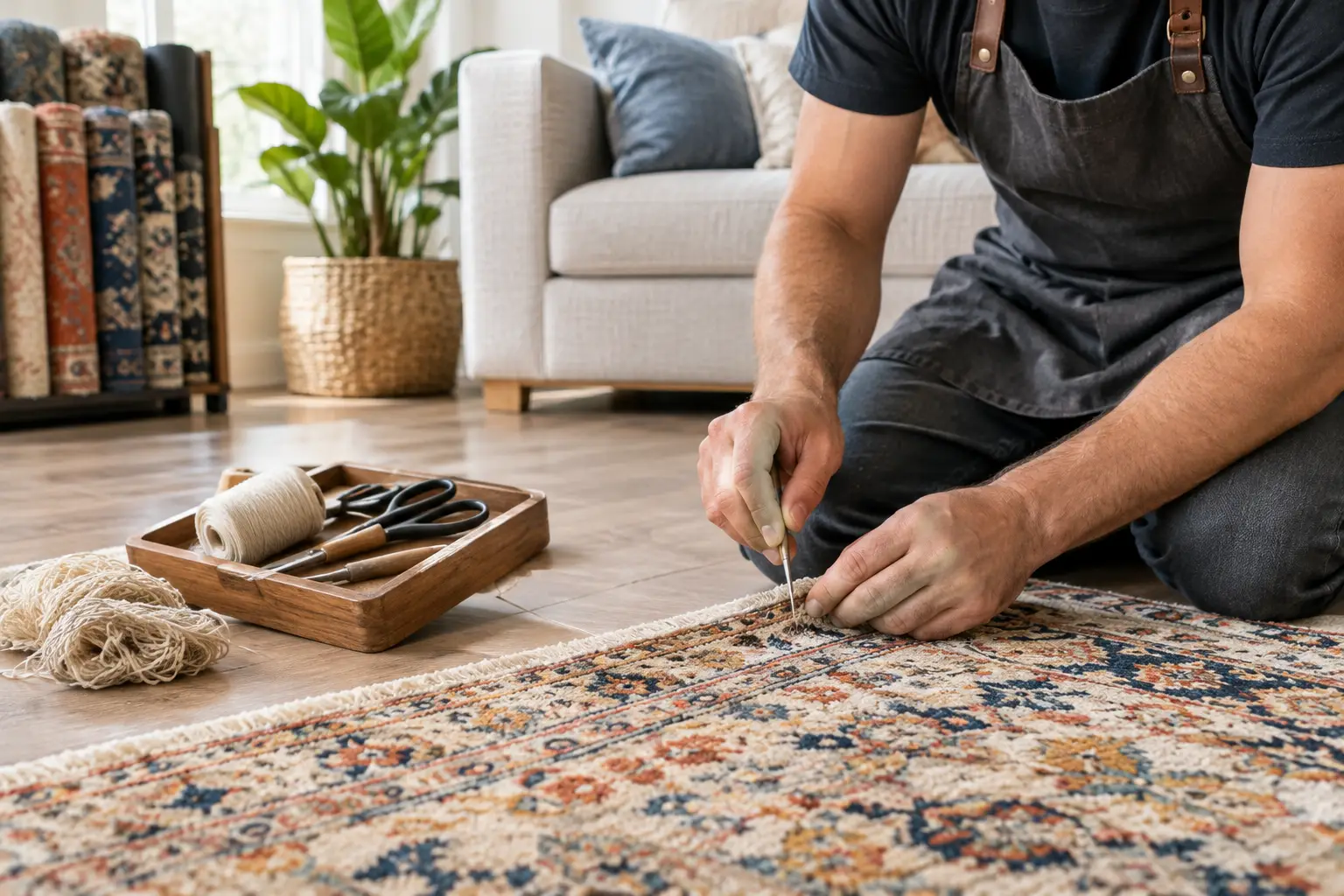
Use this Kennesaw rug repair guide to spot damage early, choose the right restoration, and protect the color, texture, and comfort of your favorite rug.
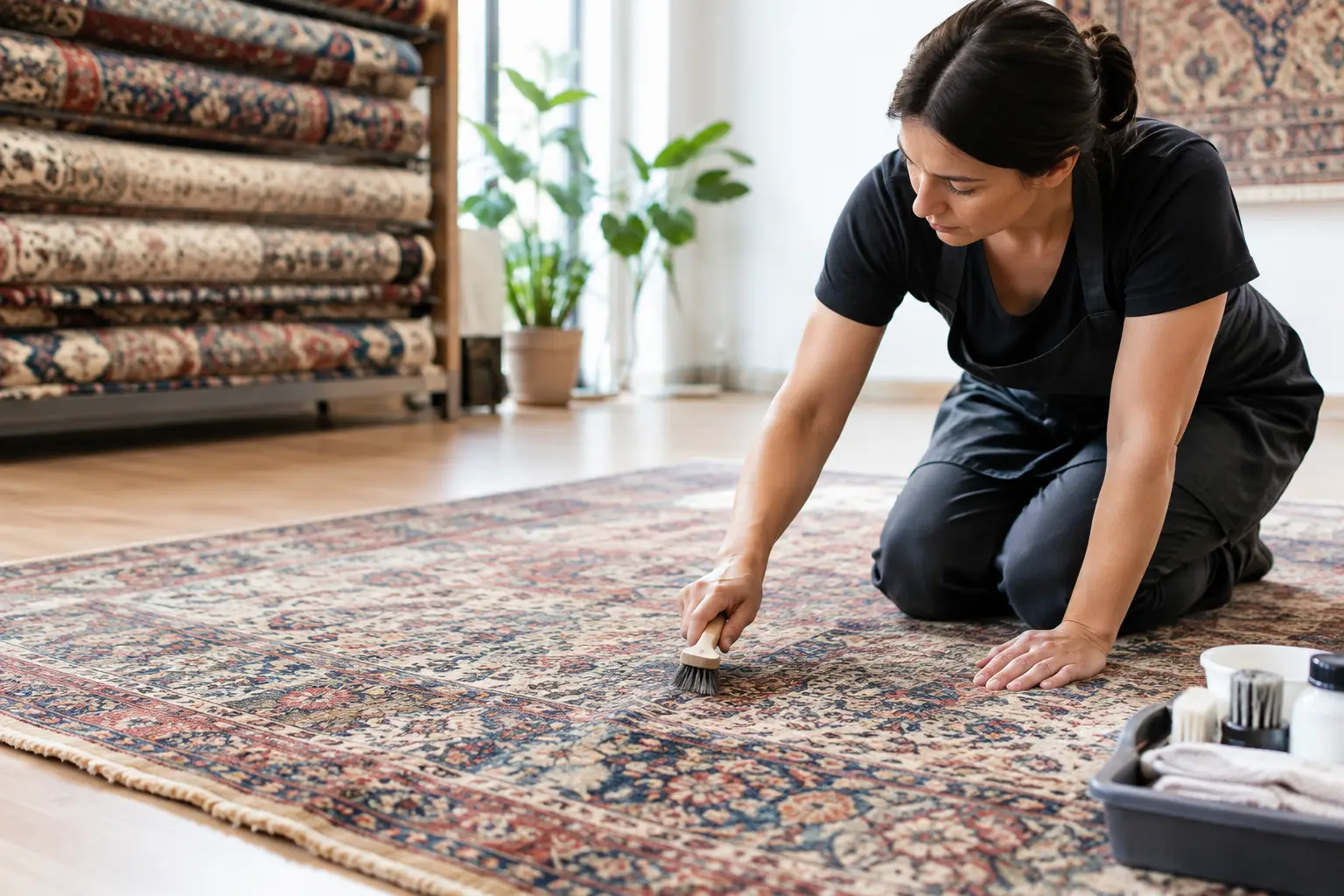
Marietta rug restoration can preserve color, texture, and history. Learn when repair makes sense and how thoughtful care protects a cherished rug at home.
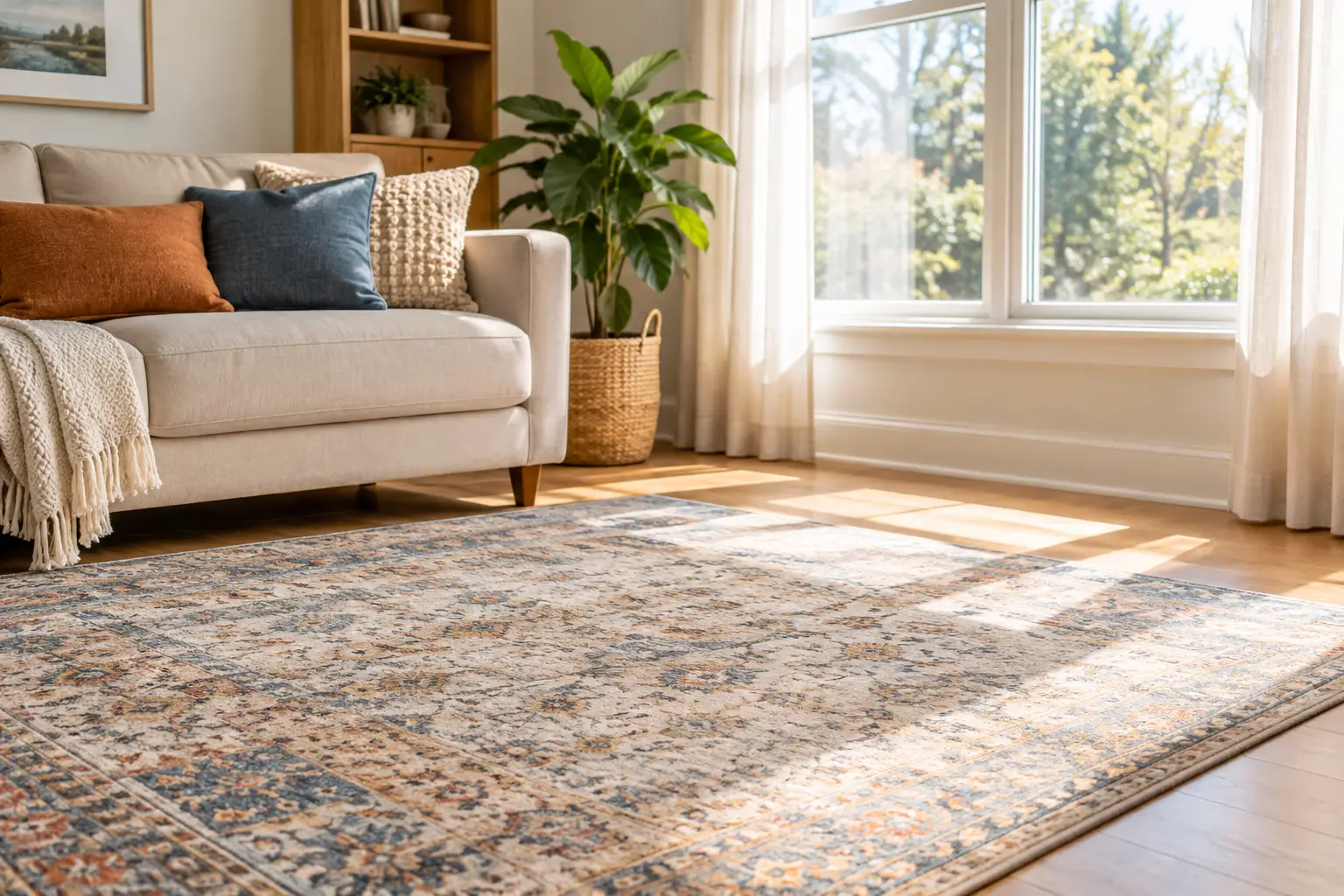
Learn how to protect rugs from sun fading with thoughtful window treatments, rotation, cleaning, and placement tips that preserve color and comfort daily.
From cozy area rugs to statement-making wall décor, our curated categories make it easy to explore what speaks to your space. Whether you’re refreshing a single corner or reimagining your whole home, start here and discover pieces that bring it all together.