


How to Remove Pet Odors From Rugs Safely
Learn how to remove pet odors from rugs without harming color or fibers, plus when professional washing is the smarter choice for a fresh home that lasts.
The foyer sets the tone before anyone reaches the living room. It is the first pause, the first impression, and often the place where shoes, keys, bags, and daily traffic all meet at once. If you are wondering how to style a foyer rug, the goal is not simply to fill floor space. It is to create an entry that feels welcoming, intentional, and easy to live with.
A well-styled foyer rug does two jobs at the same time. It adds warmth and personality, but it also helps the space function better. That balance matters because an entryway is rarely just decorative. It has to handle movement, dirt, and repetition without losing its visual appeal.
The best foyer rugs look as though they belong to the home. That means the size, shape, and placement should respond to the architecture first. A narrow rectangular entry usually calls for a runner or a slim rectangular rug, while a more open foyer may feel better with a larger statement rug that anchors the space.
One of the most common mistakes is choosing a rug that is too small. In a foyer, a rug that looks undersized can make the whole area feel disconnected. You want enough rug to feel intentional, but not so much that it crowds the perimeter of the room or interferes with the front door. In most homes, leaving a clean border of flooring around the rug helps the entry feel tailored and balanced.
Shape matters more than many homeowners expect. If your foyer has a curved staircase, an arched doorway, or a round entry table, a round or softly shaped rug can echo those lines beautifully. If the space is more linear and structured, a rectangular rug often reinforces that clean architecture. Neither is more stylish on its own. It depends on what the room is already saying.
A foyer rug should feel present, but not heavy-handed. This is where color, pattern, and texture come in. Because entryways are often smaller than living areas, every design choice reads more strongly. A bold rug can be stunning, but in a compact foyer it may dominate the room if everything else is also competing for attention.
If your entry includes a statement light fixture, dramatic wallpaper, or a detailed console, a quieter rug often creates the right balance. Think soft pattern, tonal color, or subtle texture. On the other hand, if the foyer is architecturally simple and the furnishings are restrained, the rug is a wonderful place to add personality.
Visual weight also comes from contrast. A dark rug on light floors feels grounded and tailored. A lighter rug on dark wood can brighten the entire entry and make it feel more open. Neither is universally better. Homes with children, pets, or frequent outdoor traffic may prefer mid-tone palettes and layered pattern because they are more forgiving day to day.
Texture is just as important as color. A flatwoven or low-pile rug usually works well in a foyer because it keeps the space feeling polished and practical. It also tends to handle the push and pull of foot traffic more gracefully. Plush textures can be beautiful, but in an entry they may feel a bit too soft for the function of the room, especially near a swinging front door.
Great styling always considers movement. Before settling on a rug, watch how your household actually uses the foyer. Do people enter and immediately turn toward the stairs? Is there a bench where shoes come off? Does the front door open directly over the rug area? These practical details shape what will feel effortless and what will feel frustrating.
A foyer rug should support the path of travel rather than interrupt it. That often means centering the rug with the entry experience instead of simply centering it in the room. In some homes, those are the same thing. In others, the better placement is slightly shifted to align with a console table, a doorway, or the natural walking line.
This is also where durability deserves a stylish kind of honesty. The prettiest rug in the wrong construction will never feel luxurious if it constantly looks stressed by use. For busy households, an entry rug with pattern variation, a lower profile, and a fiber that handles traffic well tends to be the better long-term choice.
If you want the foyer to feel effortlessly styled, the rug should not be working alone. It should connect with the furniture and finishing touches around it. A rug becomes more convincing when it speaks to the tones in the lighting, the wood of the console, the finish of the mirror frame, or the fabric on a nearby bench.
That does not mean everything needs to match. In fact, a foyer usually feels more elevated when the pieces coordinate rather than mirror one another. A warm rug can soften black metal accents. A cool-toned patterned rug can add freshness to rich wood furniture. What matters is a sense of conversation between the elements.
If your home has an open floor plan, consider the view beyond the foyer as well. The entry rug should feel related to adjoining spaces, especially if you can see into the living room or dining area from the front door. This is where color families and repeating textures help. The rugs do not need to be identical, but they should feel like they belong in the same home.
Layering can work beautifully in a foyer, but it requires restraint. In most entryways, layering is less about piling on and more about creating depth. A larger natural-texture base with a smaller patterned rug on top can soften a formal entry and make it feel more personal. It can also help bridge the gap between architecture that feels grand and daily life that feels relaxed.
The trade-off is maintenance and proportion. In a high-traffic foyer, layered rugs can shift or bunch if they are not chosen carefully. They also require enough space to breathe. In a compact entry, one well-scaled rug usually looks cleaner and more refined.
If you are drawn to layering, keep the contrast clear. Let one rug bring texture and the other bring pattern, or let one stay quiet while the top rug adds character. When both rugs compete, the result tends to feel cluttered rather than curated.
Some of the best design decisions are the ones you barely notice after they are made. Rug pads matter in a foyer because they help reduce shifting and support a more secure feel underfoot. The right pad also helps preserve the rug over time, which is especially useful in an area that sees repeated use.
Maintenance should be part of styling from the beginning. A foyer rug will collect more than compliments. It will also collect dust, debris, and whatever comes in from outside. That reality does not mean the rug has to look utilitarian. It simply means style and care should work together.
This is one reason many homeowners appreciate seeing rugs in person before making a final decision. In a showroom setting, it is easier to compare pile heights, study color variation, and understand how a rug will actually live in an entryway. For households in Canton, Woodstock, Acworth, and Kennesaw, that hands-on perspective often makes the styling process feel far more confident.
A foyer rug is not just a design accessory. It quietly tells people what kind of home they are entering. A soft vintage-inspired pattern can make the space feel collected and welcoming. A tailored geometric can create a cleaner, more modern first impression. A natural woven look can bring in casual warmth and ease.
This is where personal taste should lead. The most beautiful foyers are rarely the ones that follow every rule perfectly. They are the ones that feel aligned with the people who live there. If your home leans classic, let the entry reflect that. If it is more relaxed and organic, your rug can introduce that softness from the first step inside.
When homeowners ask how to style a foyer rug, they are often really asking how to make the entrance feel finished. The answer usually comes down to a thoughtful mix of scale, texture, color, and real-life function. Get those elements working together, and the foyer stops feeling like a pass-through. It starts feeling like an introduction.
Choose a rug that welcomes people in, supports the rhythm of your day, and still feels beautiful when you catch sight of it on an ordinary afternoon. That is when an entry truly feels at home.
Learn how to remove pet odors from rugs without harming color or fibers, plus when professional washing is the smarter choice for a fresh home that lasts.
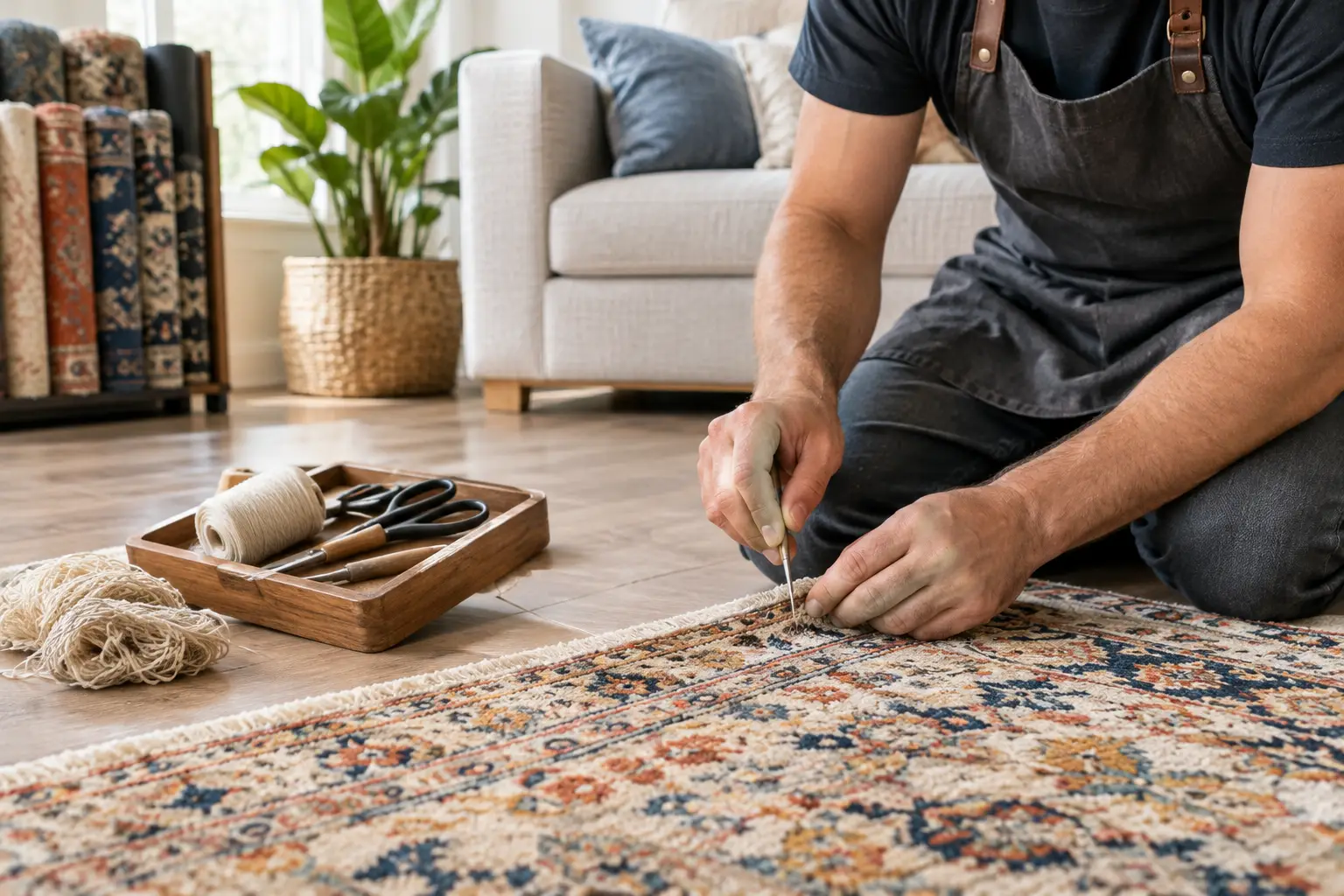
Use this Kennesaw rug repair guide to spot damage early, choose the right restoration, and protect the color, texture, and comfort of your favorite rug.
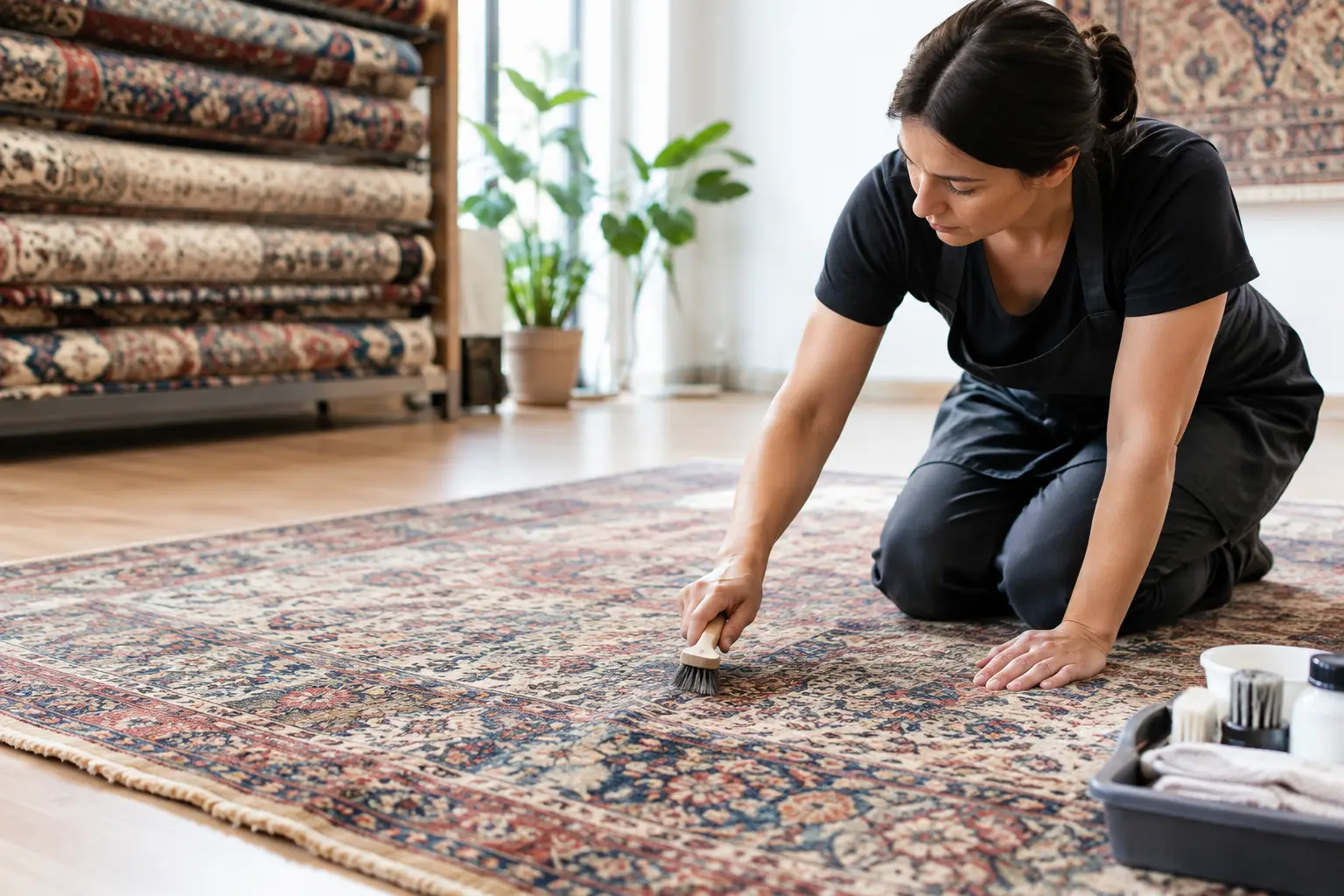
Marietta rug restoration can preserve color, texture, and history. Learn when repair makes sense and how thoughtful care protects a cherished rug at home.
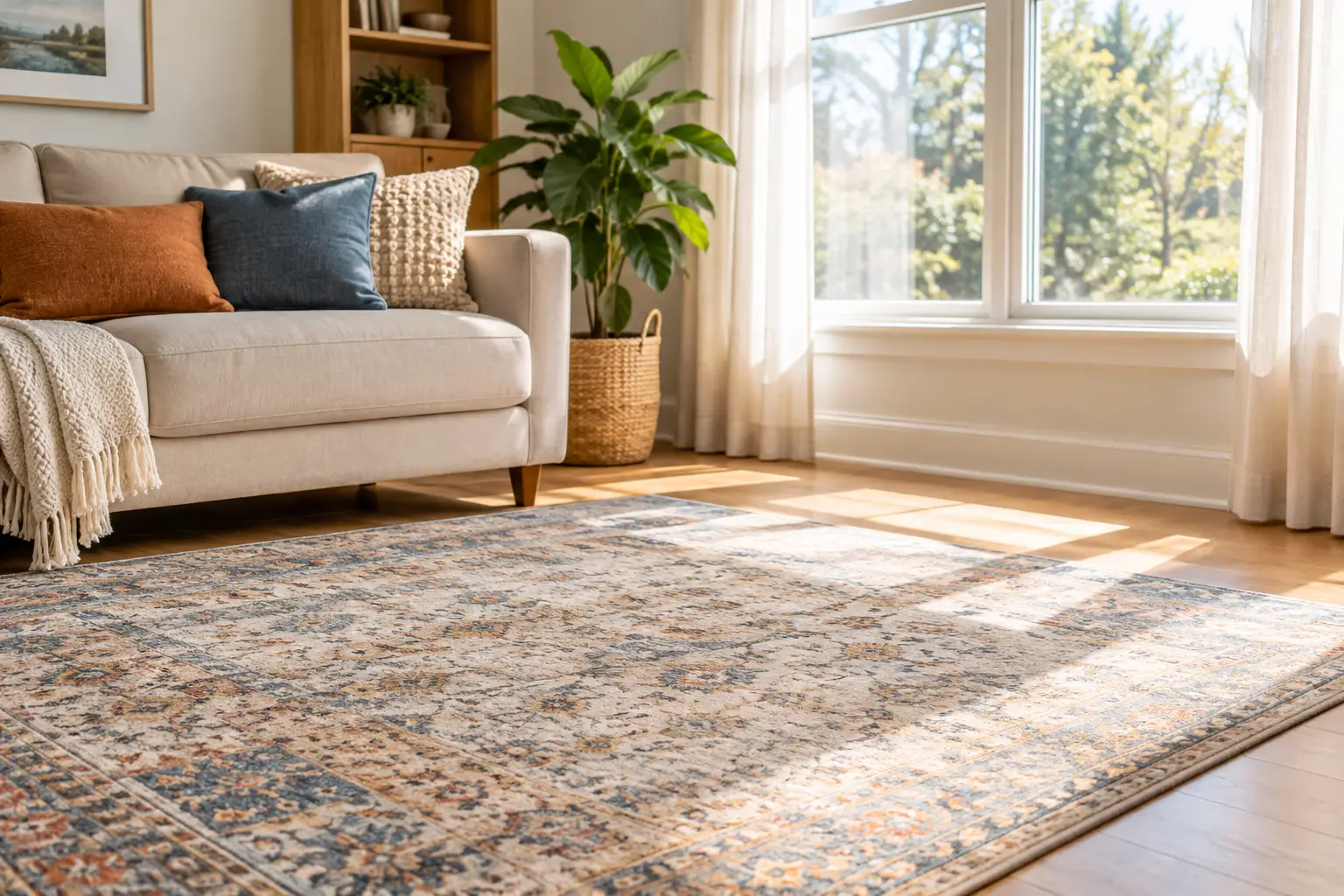
Learn how to protect rugs from sun fading with thoughtful window treatments, rotation, cleaning, and placement tips that preserve color and comfort daily.
From cozy area rugs to statement-making wall décor, our curated categories make it easy to explore what speaks to your space. Whether you’re refreshing a single corner or reimagining your whole home, start here and discover pieces that bring it all together.