


How to Remove Pet Odors From Rugs Safely
Learn how to remove pet odors from rugs without harming color or fibers, plus when professional washing is the smarter choice for a fresh home that lasts.
A well-chosen pillow can make a sofa look finished, soften the tailored lines of a bed, or give an occasional chair the inviting character it was missing. Learning how to style decorative pillows is less about following a rigid formula and more about balancing color, proportion, texture, and comfort. The best arrangements look intentional without feeling too precious to lean against.
Decorative pillows are also one of the most flexible ways to refresh a room. Unlike a new sofa or area rug, they can be changed with the season, adjusted as your style evolves, or used to connect pieces that did not begin as a matching set. A thoughtful mix brings a collected, quietly luxurious feeling to the space while still leaving room for everyday life.
Before choosing pillow covers, look at what is already doing the visual work in the room. Your rug, sofa upholstery, curtains, artwork, and accent chairs create the palette that pillows should support. They do not all need to match, but they should feel as though they belong in the same conversation.
Pull two or three colors from the room and give them different roles. One can be a grounding neutral, such as ivory, charcoal, taupe, or camel. Another can echo an existing color in the rug or artwork. A third may serve as a smaller accent, bringing in muted blue, olive, rust, terracotta, or a deep berry tone. This approach creates cohesion without turning every surface into a color match.
A patterned rug is often the easiest starting point. Choose pillows that repeat one or two subtle colors from its design rather than trying to reproduce every shade. If your rug is more neutral, pillows are an opportunity to introduce warmth, pattern, and personality. In either case, seeing fabrics beside the rug in person makes undertones much easier to judge. A cream that looks right under showroom lighting may read too yellow or too cool once it is beside your flooring and furnishings.
The most polished pillow arrangements use contrast with restraint. Mix solids, patterns, and textures so every pillow has a purpose, but keep the overall palette edited. If every pillow is bold, the arrangement can feel busy. If every pillow is neutral and smooth, it may disappear into the upholstery.
A useful rule is to combine a larger-scale pattern, a smaller-scale pattern or subtle motif, and one or two solids. For example, a living room with a warm neutral sofa might include a botanical print, a narrow stripe, and a soft velvet pillow in a rich coordinating color. The result has dimension because each fabric contributes something different.
Texture is especially valuable in rooms with restrained color. Linen brings an easy, relaxed finish. Velvet adds depth and a more formal note. Woven designs, bouclé, embroidered details, and fringe offer tactile interest that makes a room feel layered. Consider how the material will be used, though. A delicate embroidered pillow may be ideal for a formal sitting room, while a durable woven cover is better suited to a family room where everyone gathers.
Uniform square pillows can work in a clean, tailored setting, but a mix of sizes generally feels more natural. Begin with the largest pillows at the outer edges of a sofa or against the headboard. Layer medium squares in front, then introduce a lumbar pillow or smaller rectangular shape near the center.
For most sofas, 20- to 24-inch square pillows provide enough presence to look substantial. Smaller pieces can get lost on deep seating, especially when paired with a large-scale rug or oversized furniture. On a petite settee, bench, or accent chair, however, a smaller pillow may be the better fit. Scale should always follow the furniture, not just the trend.
Lumbar pillows are particularly useful because they break up a row of squares. On a bed, one long lumbar pillow can create a relaxed, tailored finish over sleeping pillows. On a sofa, it can soften the center of the arrangement and offer real lower-back support. It depends on the look you want: symmetry feels more formal, while varied shapes bring a slightly more collected, casual character.
Pillow placement should support how a piece is used. On a sofa, avoid filling every available inch. A beautiful sofa that no one can sit on comfortably is not truly well styled.
For a standard three-seat sofa, four or five pillows often provide enough visual weight. Try two larger pillows at each end, with one lumbar pillow near the center. If you prefer a more symmetrical look, use matching pairs at either end and allow the center to remain open. For a relaxed, layered arrangement, use coordinating pillows rather than exact duplicates and vary the shapes slightly.
Sectionals benefit from treating each visible corner as a styling moment. Place a larger pillow at the outside arm, then layer a smaller complementary pillow in front of it. The inside corner can hold a lumbar pillow or a single textured accent. This keeps the sectional from looking overfilled while adding softness across its larger footprint.
On an accent chair, one generous pillow is usually enough. Two can work on a wide chair, but choose them carefully so they do not overwhelm the seat. A lumbar pillow is often the most practical choice for reading chairs because it adds both visual interest and comfortable support.
For a bed, start with the proportions of the headboard and mattress. Euro shams establish height against the headboard, standard or king shams add a middle layer, and decorative pillows complete the front. You do not need a complicated stack. Two or three decorative pieces can feel more elegant than a crowded collection that must be removed every night. A pair of squares with a lumbar pillow in front is an enduring combination for a king or queen bed.
Matching every pillow exactly can make a room feel flat, while mixing unrelated prints can make it feel unsettled. The middle ground is to repeat a color, pattern family, or material across the group.
If you have a floral pillow, pair it with a stripe, geometric, or subtle woven design rather than another competing floral of the same scale. If you love a bold statement print, let it lead the grouping and give it quieter companions. A solid velvet, woven neutral, or small-scale pattern allows the focal pillow to stand out.
There is no requirement that decorative pillows match the rug precisely. In fact, a near-match can sometimes look accidental. Instead, look for colors that relate. A blue-gray rug may pair beautifully with navy, faded denim, soft slate, or even a warm cognac accent. The layered variation gives the room depth and makes the design feel deeply personal.
Even a beautiful cover can look underwhelming with a thin insert. Choose inserts that are slightly larger than the cover when appropriate, particularly for square pillows. This creates a fuller, more tailored shape. Quality inserts also help pillows hold their form rather than collapsing after a few uses.
For a softer, relaxed look, down or down-alternative inserts create an inviting drape and make the classic center pinch possible. For a more structured, low-maintenance appearance, firmer inserts can be a better choice. Consider your household’s needs, including allergies, pets, and how often the pillows will be handled.
Do not overlook care. Removable covers are practical in busy living rooms, and durable fabrics are often worth choosing for favorite seats. Rotate and fluff pillows regularly, especially those in sunny windows or high-use family spaces. A thoughtfully styled home should still be easy to live in.
Pillows are ideal for seasonal updates, but a full swap is rarely necessary. Keep a few versatile foundation pillows in neutral linen, soft leather, or a classic woven texture. Then change one or two accent pillows as the room calls for it. Lighter textures and softened colors can brighten spring and summer, while velvet, wool-like weaves, and deeper tones bring warmth in fall and winter.
When you are unsure, bring a photo of your room and a few measurements to the showroom. Comparing pillow fabrics beside rug samples, throws, and other accents can reveal combinations that are difficult to picture online. At Home Rug Gallery, the goal is not simply to add more pillows, but to help each choice make your room feel more complete.
The final test is simple: step back, then sit down. If the pillows add color, softness, and personality while leaving the room comfortable for the people who use it, you have found the right arrangement.
Learn how to remove pet odors from rugs without harming color or fibers, plus when professional washing is the smarter choice for a fresh home that lasts.
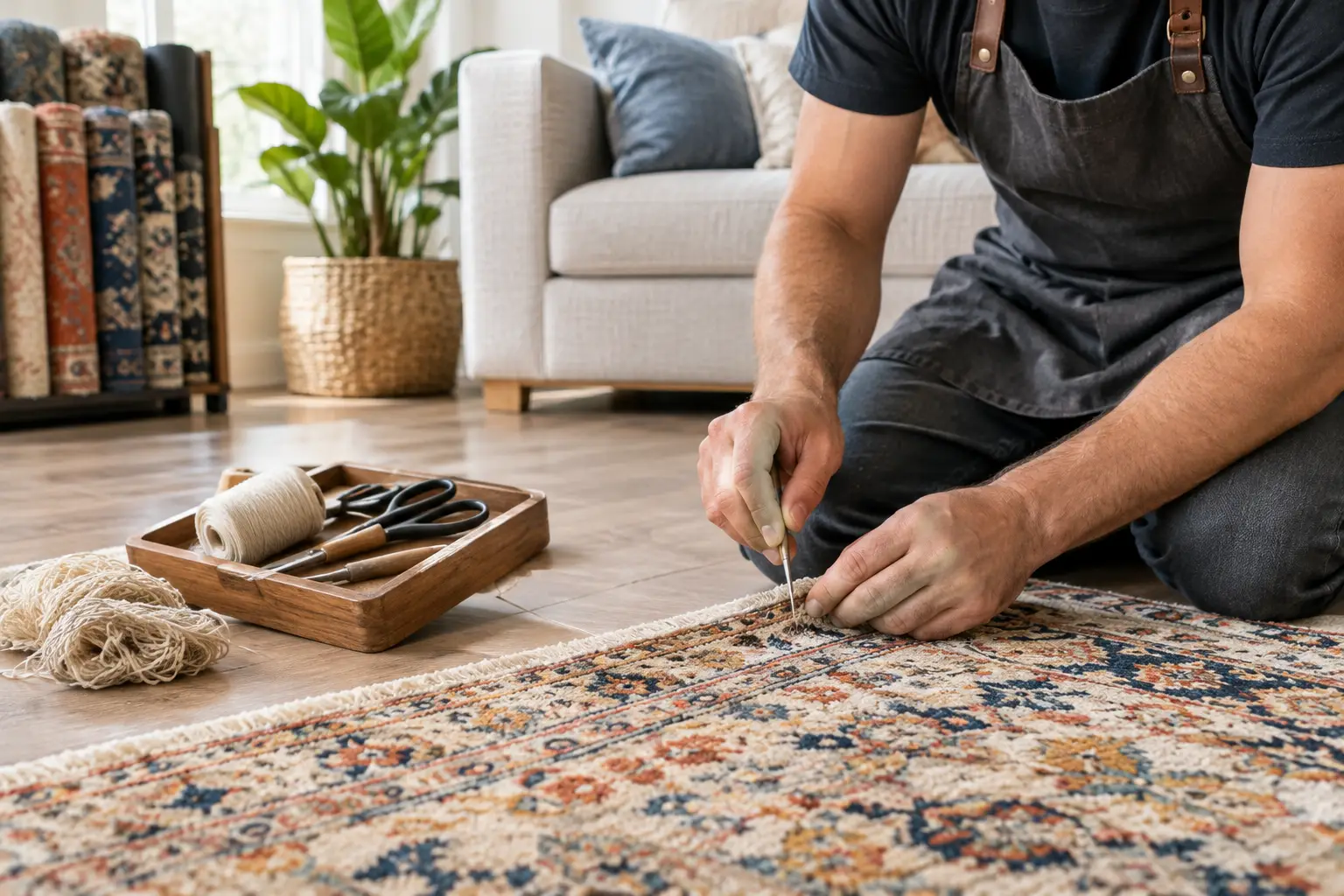
Use this Kennesaw rug repair guide to spot damage early, choose the right restoration, and protect the color, texture, and comfort of your favorite rug.
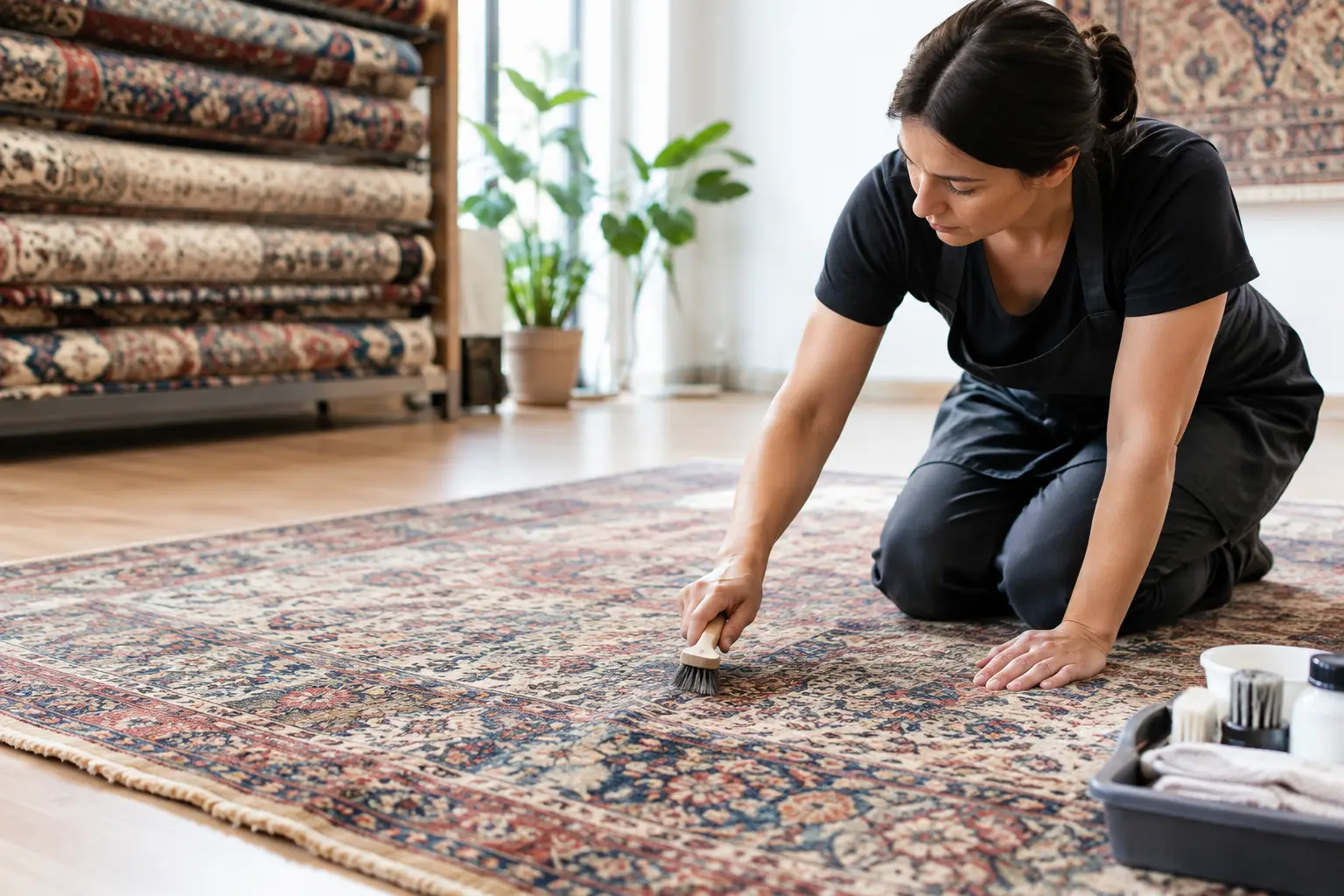
Marietta rug restoration can preserve color, texture, and history. Learn when repair makes sense and how thoughtful care protects a cherished rug at home.
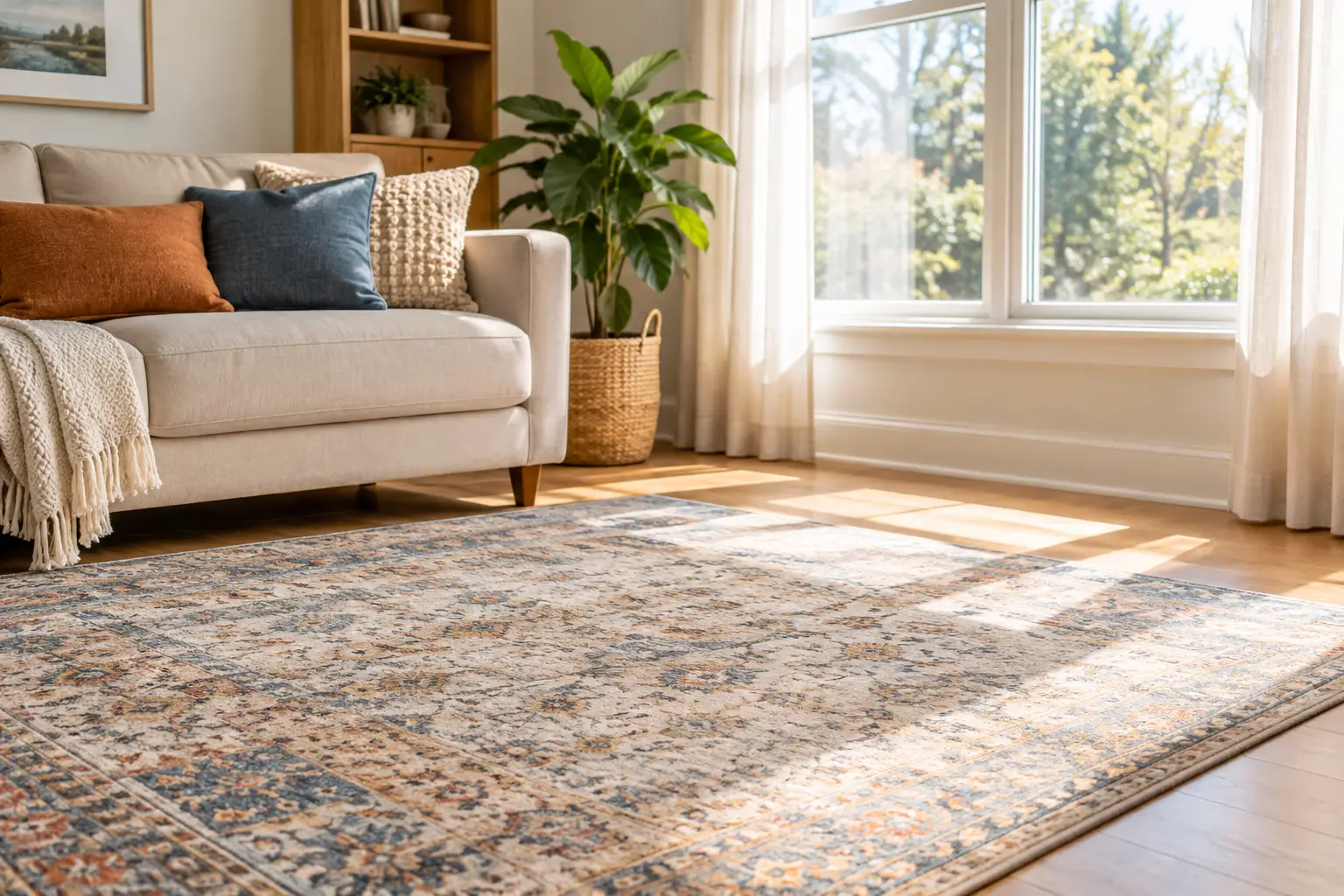
Learn how to protect rugs from sun fading with thoughtful window treatments, rotation, cleaning, and placement tips that preserve color and comfort daily.
From cozy area rugs to statement-making wall décor, our curated categories make it easy to explore what speaks to your space. Whether you’re refreshing a single corner or reimagining your whole home, start here and discover pieces that bring it all together.