A rug can be the element that makes a room feel finished – until a spill, lingering odor, frayed edge, or faded traffic path changes the conversation. Deciding between rug cleaning or replacement is not simply about what looks worn. It is about preserving the comfort, character, and proportion that make your room feel deeply personal.
Rug Cleaning or Replacement: Start With the Rug’s Story
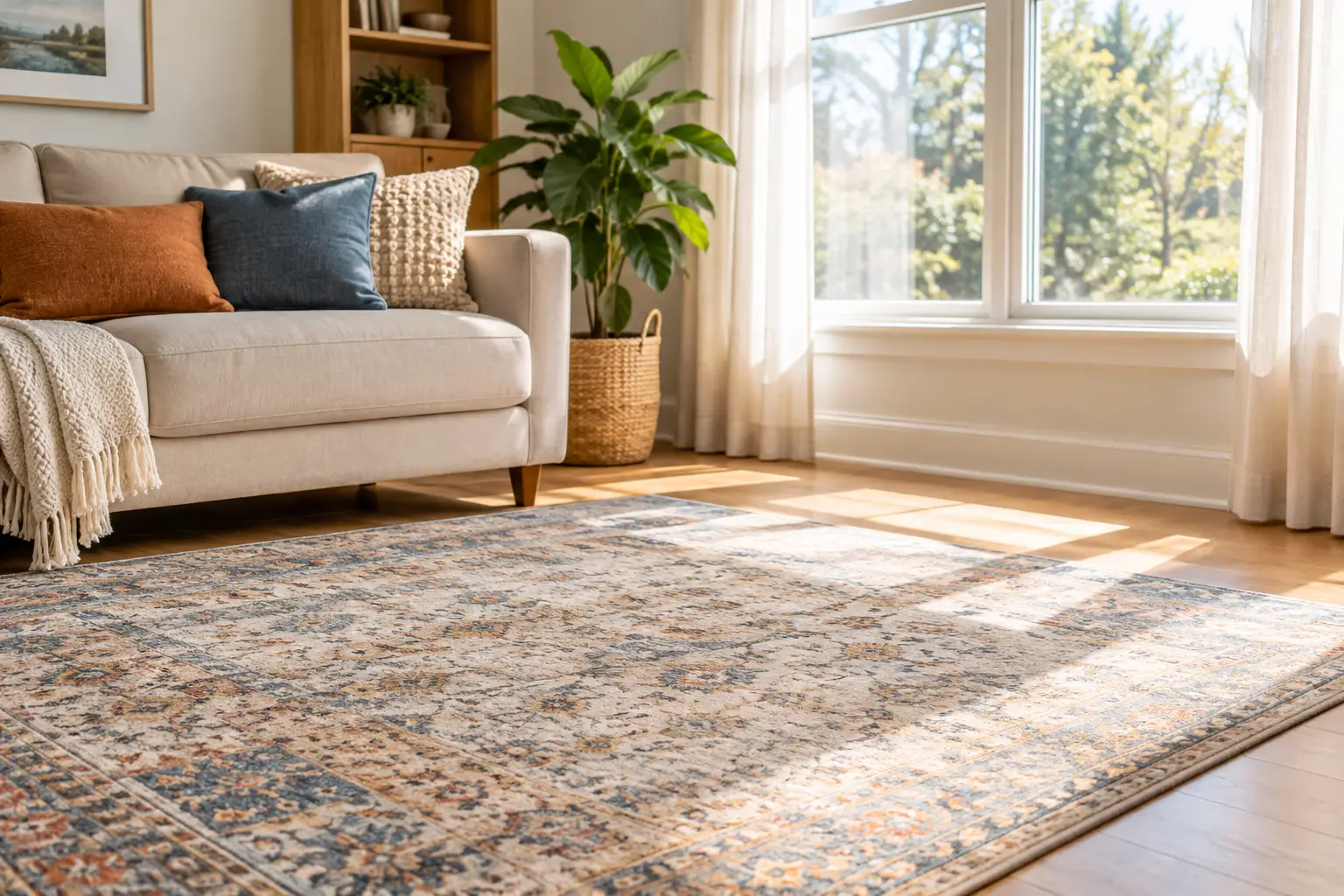
Before making a decision, consider what the rug contributes to the room. A well-sized area rug anchors furniture, softens acoustics, and brings together colors from artwork, upholstery, pillows, and lighting. If the rug is a strong fit for the space and its construction is worth preserving, professional cleaning or restoration may be the more thoughtful choice.
Replacement makes more sense when the rug no longer supports the way you live or the way you want the room to feel. Perhaps the scale is too small, the color feels disconnected from a recent update, or the pile is permanently crushed in the center of a busy family room. A new rug can do more than cover a floor. It can reset the entire direction of a room.
The key is separating a fixable surface issue from a rug that has reached the end of its useful life.
Signs professional cleaning may be the right choice
Many rugs look far more tired than they truly are. Everyday soil settles below the surface of the fibers, where vacuuming cannot fully reach it. This buildup can dull color, flatten texture, and make a room feel less fresh even when it is otherwise beautifully styled.
Cleaning is often worth considering when the rug has a good foundation and the issue is localized or gradual. Food and drink spills, pet accidents, muddy footprints, seasonal pollen, and general foot traffic can all leave visible evidence, but they do not automatically mean a rug is beyond saving. A proper evaluation considers the fiber type, dye stability, construction, age, backing, and condition of the pile before treatment begins.
Odor is another common reason homeowners assume replacement is necessary. In some cases, odor has settled into the rug’s fibers or foundation and requires more than a surface treatment. In others, it signals deeper contamination or damage that makes replacement the wiser choice. The difference is difficult to judge from appearance alone, especially with wool, hand-knotted, vintage, or specialty rugs.
If you still love the rug’s size, palette, and presence in the room, cleaning can be a practical way to preserve a piece that already works with your home.
When repair and restoration add real value
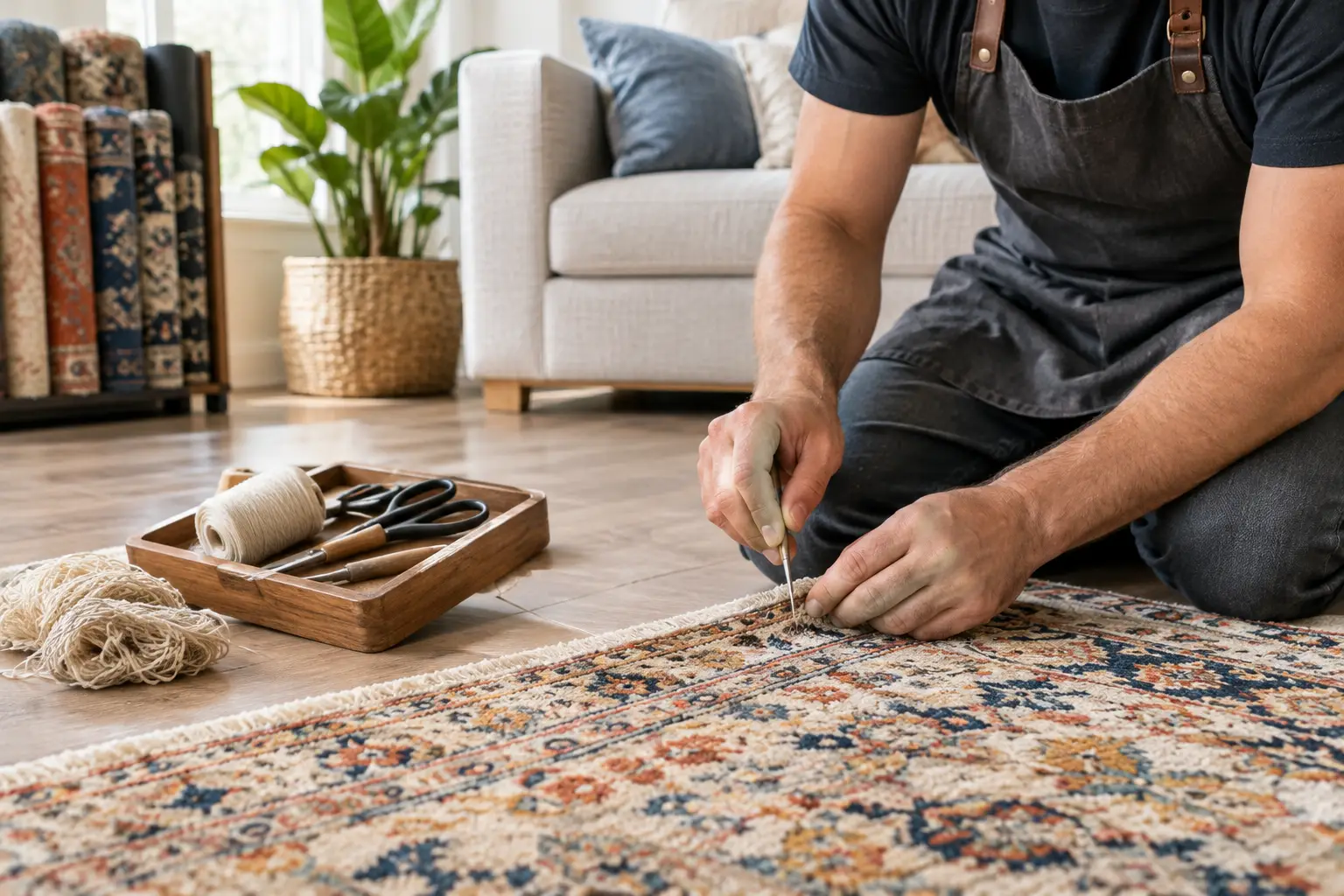
A lifted fringe, loose binding, small hole, or separated edge can make an otherwise beautiful rug feel neglected. These issues may also worsen with continued use, particularly in doorways, under dining chairs, or along the edge of a sofa.
Repair is particularly worthwhile when the rug has quality materials, sentimental value, or a design that would be difficult to replace. A handwoven piece, heirloom rug, or distinctive pattern may deserve restoration even if it needs more attention than an ordinary surface cleaning. Preserving it can keep a meaningful layer of the home intact while allowing it to remain part of daily life.
That said, restoration should serve the rug and the household. A treasured rug may be better placed in a lower-traffic bedroom, office, or sitting area after repair, rather than returned to the busiest spot in the home. Good design is not only about appearance. It is also about choosing the right place for each piece to live well.
When Replacement Is the Better Design Decision
Replacement is often the clearest choice when wear affects both the rug’s appearance and function. Severe fiber loss, a deteriorating backing, extensive dry rot, persistent staining, or repeated damage can make a rug difficult to enjoy and harder to maintain. Even a clean rug may feel visually exhausted when the pile is uneven and the original pattern has disappeared in high-traffic areas.
Sometimes the real issue is not damage at all. It is proportion. A small rug floating under a coffee table can make a generous living room feel disconnected, while an undersized dining rug can leave chair legs catching on the edge every time someone sits down. Choosing a new size may create a more polished result than trying to extend the life of a rug that was never quite right for the room.
Color and texture also matter. A rug that once felt current can begin to compete with newer furnishings or make a space feel heavier than intended. If you are moving toward a lighter, layered look, a warmer neutral, a softer blue, or a more collected version of quiet luxury, replacement gives you the opportunity to choose a foundation that supports that vision.
Consider how the room is used now
A formal living room, a busy family room, a breakfast nook, and a bedroom ask different things of a rug. The right replacement should reflect real life, not just a showroom moment.
For high-traffic spaces, focus on durable construction, a pattern or texture that is forgiving between cleanings, and a pile height that works with everyday movement. Dining rooms benefit from enough coverage to keep chairs on the rug when pulled back. Bedrooms often invite a softer, more tactile choice that creates a welcoming first step in the morning.
Homes with pets or young children do not have to sacrifice style. They simply benefit from considered materials, practical color variation, and a rug that suits the rhythms of the household. Seeing options in person makes it easier to compare weave, softness, color undertones, and scale before bringing one home.
A Simple Way to Make the Decision
Start by asking whether you would choose the same rug again if it were clean and repaired. If the answer is yes, it is worth having the rug assessed for cleaning, repair, or restoration. If the answer is no, replacement may be an opportunity rather than an expense.
Next, look beyond the stain or worn area. Consider whether the rug is correctly sized, whether it connects with the colors already in the room, and whether its texture still suits the space. A rug can be structurally sound and still be the wrong design choice for where your home is headed.
Finally, think about long-term care. A quality rug chosen for the right room can remain beautiful for years with regular vacuuming, prompt attention to spills, suitable padding, and periodic professional care. The goal is not to keep every rug forever. It is to make a choice that feels right for your home, your routines, and the way you want the room to welcome people.
Bring the Room Into the Decision
Photos can be useful, but color is especially difficult to judge on a screen. Natural light, wall color, flooring, and neighboring fabrics all influence whether a rug feels warm, cool, bright, or muted once it is in your home. Bringing a few room photos, paint samples, or fabric swatches into a showroom can make the decision much clearer.
At Home Rug Gallery, homeowners can explore new rugs alongside knowledgeable guidance on rug care, cleaning, repair, and restoration. That combination makes it easier to weigh the practical condition of a current rug against the design potential of something new.
The best choice may be to refresh a piece that already belongs in your story. Or it may be a new rug that gives the room the grounding, softness, and effortless style it has been waiting for.