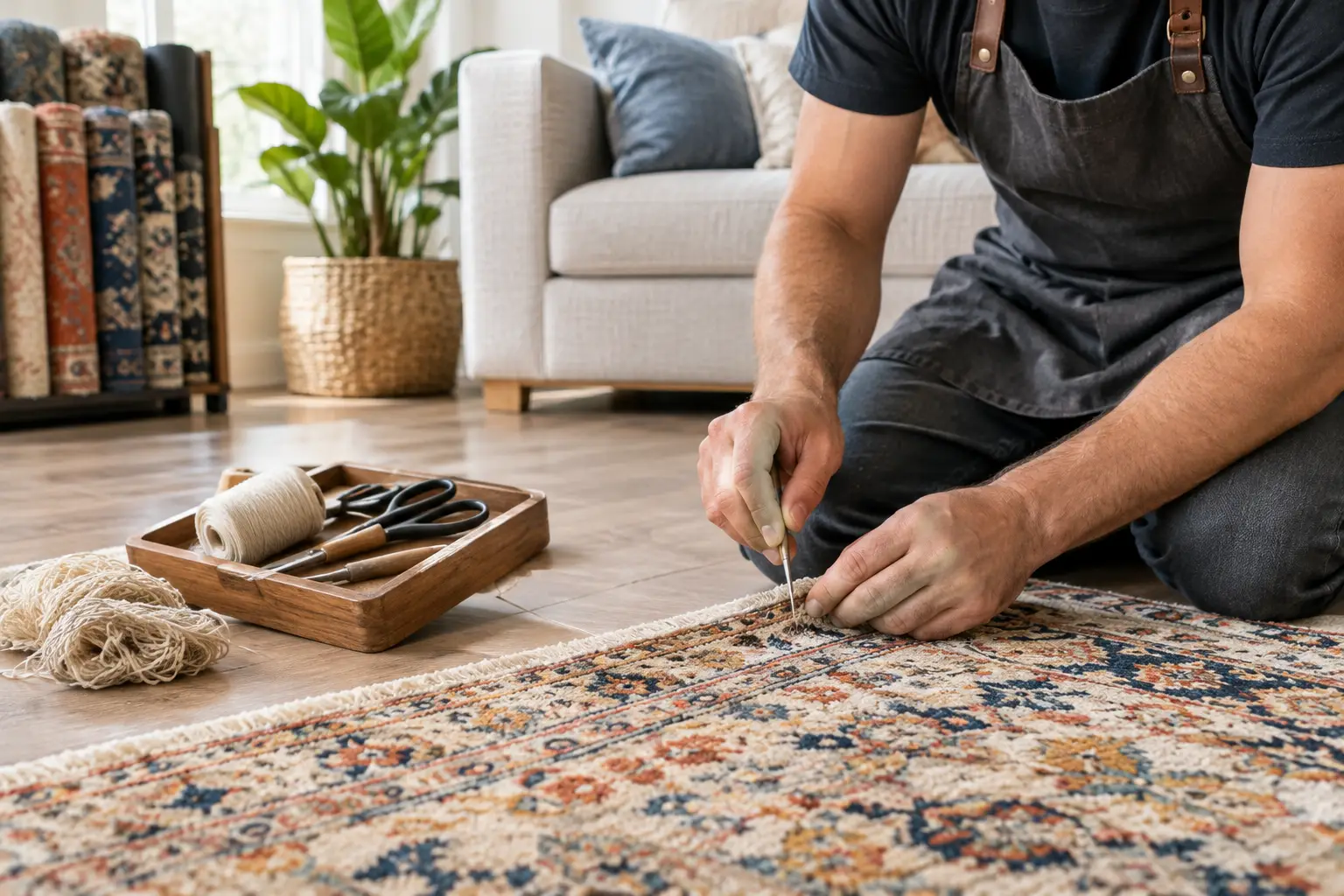
A rug can look nearly perfect across the field yet still feel unfinished when its fringe is worn, tangled, or missing. In a rug fringe repair before after comparison, the change is often striking: what once looked tired at the edge becomes balanced, intentional, and beautifully resolved. More than a cosmetic detail, though, fringe can reveal a great deal about a rug’s construction and the kind of care it needs.
For homeowners who have chosen a rug for its color, texture, and quiet sense of character, damaged fringe can be disappointing. The good news is that thoughtful restoration can preserve the rug you already love while helping it sit more confidently within a polished room.
What Rug Fringe Repair Before After Really Shows
The most compelling before-and-after results do not simply replace a row of loose threads. They restore visual proportion at the rug’s edge and, when the fringe is part of the rug’s original structure, help protect the foundation beneath it.
On many hand-knotted and handwoven rugs, fringe is not an added trim. It is the visible continuation of the rug’s warp threads, which run through the length of the piece and hold its construction together. When those threads become excessively worn, the concern extends beyond appearance. Continued unraveling can eventually compromise the end of the rug itself.
A proper repair addresses the condition of the foundation before considering the finished look. Depending on the rug, that may involve stabilizing the end, carefully reworking damaged areas, and creating an edge that feels appropriate to the rug’s weave, age, and design. The finished fringe should complement the rug rather than call attention to itself.
That is why the “after” photo should be viewed with a discerning eye. A repaired fringe does not always need to look brand new. On an older rug with a soft, collected character, an overly bright or perfectly uniform fringe may feel out of place. The most successful result is one that makes the rug feel complete again while respecting its personality.
Why Fringe Damage Happens
Fringe naturally receives more wear than the center of a rug. It rests at the outermost edge, where it catches vacuum brushes, shoes, pet paws, and the movement of doors. In a busy family room, entry, or bedroom, that exposure adds up quickly.
Vacuuming is one of the most common causes of fringe damage. A rotating beater bar can pull and twist strands until they become frayed or detached. This does not mean a rug should never be vacuumed. It means the fringe should be avoided or cleaned gently with suction only, while the body of the rug receives the more thorough care it needs.
Other damage can develop gradually. Sunlight may fade fringe at a different rate than the rug field. Damp conditions can weaken fibers or leave them discolored. Pets may chew the ends, and furniture legs placed directly on fringe can flatten or break strands. Even well-meaning attempts to trim uneven fringe at home can leave the edge looking blunt and can shorten structural threads that should have been preserved.
The right next step depends on the rug. A machine-made rug with decorative, sewn-on fringe may have different repair options than a hand-knotted wool rug whose fringe forms part of its foundation. Material also matters. Wool, cotton, silk, and synthetic fibers each respond differently to wear, cleaning, and restoration techniques.
The Difference Between a Trim and a Repair
A light trim can improve the appearance of fringe that is simply uneven or tangled, but it is not the same as repair. Trimming removes length. It does not reinforce an unstable edge, replace lost structural threads, or correct damage that has moved into the rug’s end knots.
Repair becomes more appropriate when fringe is missing in sections, the rug’s edge is beginning to unravel, or the base of the fringe shows visible weakness. It is also worth seeking an expert assessment if you see rows of knots coming loose at either end of the rug. Waiting too long can turn a smaller restoration into a more involved project.
There is a design consideration, too. Some homeowners prefer a clean, fringe-free look, especially in streamlined contemporary spaces. In certain cases, a professionally finished bound edge may suit the room and the rug better than recreating fringe. That choice should be made carefully. Removing fringe from a handwoven rug without properly securing the foundation can create a larger problem, while a well-executed finish can offer a tailored alternative.
What to Expect From a Professional Assessment
Before any restoration begins, a rug specialist should look beyond the loose ends. The assessment should consider the rug’s construction, fiber type, age, overall condition, and how the rug is used in your home. A rug under a dining table has different demands than one in a formal sitting room, and a pet-friendly household needs a practical plan for protecting the finished edge.
The specialist may also inspect for related issues, such as side-cord wear, weak corners, moth activity, stains near the fringe, or soil that has settled deep into the fibers. Cleaning and repair often work best as part of the same care plan. Soil can make fibers look dull and can create friction at the edge, while a clean rug gives the restorer a clearer view of its true condition.
At Home Rug Gallery, rug care is approached with both the room and the rug in mind. The goal is not to make every piece look identical. It is to help preserve the details that make your rug feel deeply personal, whether that means maintaining a softly aged vintage look or restoring a more tailored finish for a refreshed interior.
How to Judge Before-and-After Fringe Results
When looking at a completed repair, start with the rug lying flat. The end should appear straight and stable, without rippling, bunching, or an obvious line between the original rug and the restored area. Fringe should have a natural fall rather than looking densely packed, excessively stiff, or unevenly attached.
Next, look at color and texture. New fringe can be slightly different from older fibers, particularly on a rug that has seen years of sunlight and everyday use. A skilled repair considers that difference. The objective is visual harmony, not a distracting patch of bright new material at one end of an otherwise softly finished rug.
Finally, consider whether the result suits the room. A restored fringe can make a traditional rug feel lighter and more refined beneath a coffee table. It can also bring a collected runner back into balance in a hallway or entry. In rooms where every element has been chosen with care, the small details carry real weight.
Protecting Fringe After Repair
Once fringe has been restored, a few simple habits can help it stay beautiful. Vacuum the rug field in the direction of the pile, but keep the vacuum head away from the fringe. If the ends need attention, use gentle suction without a beater bar or lift loose debris by hand.
Avoid placing heavy furniture directly on the fringe, and take care when opening doors over a rug’s edge. If a fringe becomes tangled, resist pulling it apart quickly. A gentle hand combing is often enough for minor tangles, while persistent knots deserve professional attention before fibers break.
Rug pads also deserve consideration. The right pad helps the rug stay in place, cushions the foundation, and reduces the shifting that can create extra wear at its edges. For a rug in a high-traffic area, that added stability supports both comfort underfoot and long-term preservation.
A repaired fringe is a small detail with a meaningful effect. When a favorite rug has the right care, it can continue grounding the room with texture, warmth, and a sense that the home has been thoughtfully lived in – not simply decorated.