A beautiful rug should feel grounded the moment you step onto it. If it shifts underfoot, curls at the corners, or leaves the room feeling slightly unfinished, the missing layer is often the pad beneath it. For homeowners shopping for rug pads Canton GA offers a range of choices, but the best option is not always the thickest or most heavily marketed. It is the one that suits your rug, your flooring, and the way your room is actually lived in.
A quality rug pad is one of those quiet design decisions that changes the experience of a room every day. It can add a more comfortable feel underfoot, protect hardwood from unnecessary abrasion, and help a carefully chosen area rug lie flat and look intentional. Just as importantly, it lets your rug perform the way it was designed to perform.
Why Rug Pads Matter More Than They Seem
An area rug is often the visual anchor of a room. It defines a seating area, softens a bedroom, brings warmth to a dining space, or gives an entryway a finished welcome. But the rug pad is what gives that anchor stability.
Without a pad, a rug can creep across smooth flooring as people walk through the room. That movement is more than a minor annoyance. It can create a tripping concern, cause edges to lift, and add wear where the back of the rug repeatedly rubs against the floor. A pad helps minimize friction between the rug and floor while holding the rug in a more secure position.
Comfort is another meaningful benefit. Even a relatively low-profile rug can feel more substantial with the right cushioning underneath. In a living room where family and guests gather, or beside the bed where bare feet land each morning, that subtle softness makes the room feel more considered and inviting.
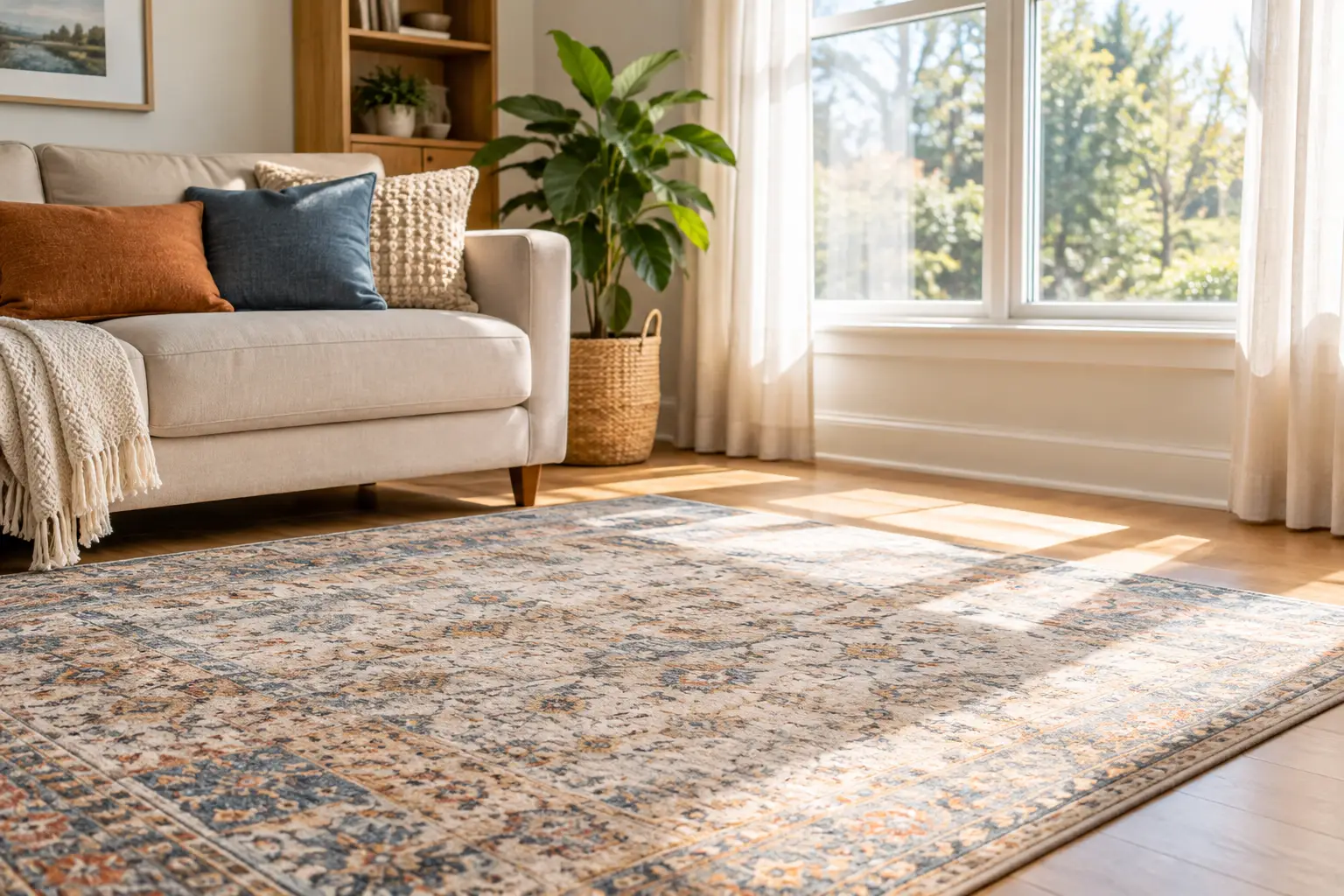
There is also a visual advantage. A good pad helps a rug sit smoothly, reducing ripples and bunching that can distract from a pattern, texture, or beautiful hand-finished edge. The effect is understated but unmistakable: the entire room feels more polished.
Choosing Rug Pads in Canton, GA by Floor Type
The right pad begins with the surface below it. North Georgia homes often blend hardwood, luxury vinyl, tile, and carpet from room to room, so one universal pad is rarely the best answer for the entire house.
Hardwood and finished wood floors
For hardwood floors, choose a pad specifically made to be safe for finished wood. The key consideration is avoiding materials or coatings that may react with a floor finish over time. A felt-and-rubber combination is often a thoughtful choice because it brings both cushioning and grip, provided it is labeled for use on hardwood.
Thickness depends on the room. A low-profile option may be preferable beneath doors or in a dining room, while a den or bedroom can often accommodate a more cushioned feel. The goal is support, not a pillow-like layer that makes furniture feel unstable.
Tile, stone, and luxury vinyl
Hard surfaces benefit from a pad that provides reliable grip as well as a little insulation from the firmness beneath. In kitchens, hallways, and entryways, a thinner non-slip pad may make the most sense because it keeps the rug close to the floor and reduces the chance of a raised edge.
For living spaces, a cushioned felt-and-rubber pad can make tile or luxury vinyl feel warmer and more comfortable. As with wood floors, confirm that the pad is appropriate for your specific flooring material, especially if the floor has a protective finish or manufacturer care requirements.
Wall-to-wall carpet
A rug on top of carpet needs a different kind of support. Standard non-slip pads designed for hard floors can grip too aggressively or create an uneven feel. A carpet-to-carpet pad helps keep the area rug from shifting while allowing it to rest smoothly over the existing carpet.
This is especially useful when layering a smaller statement rug over neutral carpet in a bedroom, sitting room, or home office. The layered look can feel deeply personal and quietly luxurious, but it needs the right foundation to stay tidy.
Match the Pad to the Room’s Real Life
A rug pad should support the way a space functions, not simply disappear underneath a rug. Consider traffic, furniture, door clearance, and who uses the room most often.
In a busy entryway, stability is the priority. Choose a lower-profile pad that holds the rug securely and keeps doors moving freely. In a dining room, a dense, thinner pad usually works well beneath chairs, helping the rug stay even as chairs are pulled in and out.
Living rooms invite a bit more softness. A felt-forward pad can give an area rug a richer feel underfoot and create a more comfortable place for children to play or for family to relax during a movie night. If the room includes a heavy coffee table or sectional, select a pad with enough density to support the rug without creating a spongy surface beneath the furniture.
Bedrooms are often where comfort matters most. A plush, supportive pad beneath a large area rug can transform the first step of the day. Still, check the clearance under closet, bedroom, and bathroom doors before choosing a thicker option.
For runners in hallways, kitchens, or beside the bed, secure grip deserves special attention. Long, narrow rugs can shift more noticeably than larger pieces, particularly on smooth flooring. A properly sized non-slip pad helps the runner remain straight and settled.
Size and Placement Make a Difference
Your pad should be slightly smaller than the rug, usually by about one inch on each side. That keeps the pad hidden while allowing the rug’s edges to taper naturally to the floor. A pad that extends beyond the rug can show at the edges, collect dust, and interrupt the clean line of the room.
Avoid folding a pad to make it fit. Folds create uneven spots that can affect how the rug wears and feels underfoot. If a pad is too large, trim it carefully to size. If the rug is an unusual shape, such as a round, oval, or custom-cut design, the pad should follow that shape closely for consistent support.
Placement matters just as much. Center the pad beneath the rug before arranging furniture, then smooth the rug outward from the middle. This simple step helps prevent the bunching that can happen when a heavy sofa, bed, or dining table is placed on top before the rug is fully settled.
Do Not Let a Pad Hide a Rug Problem
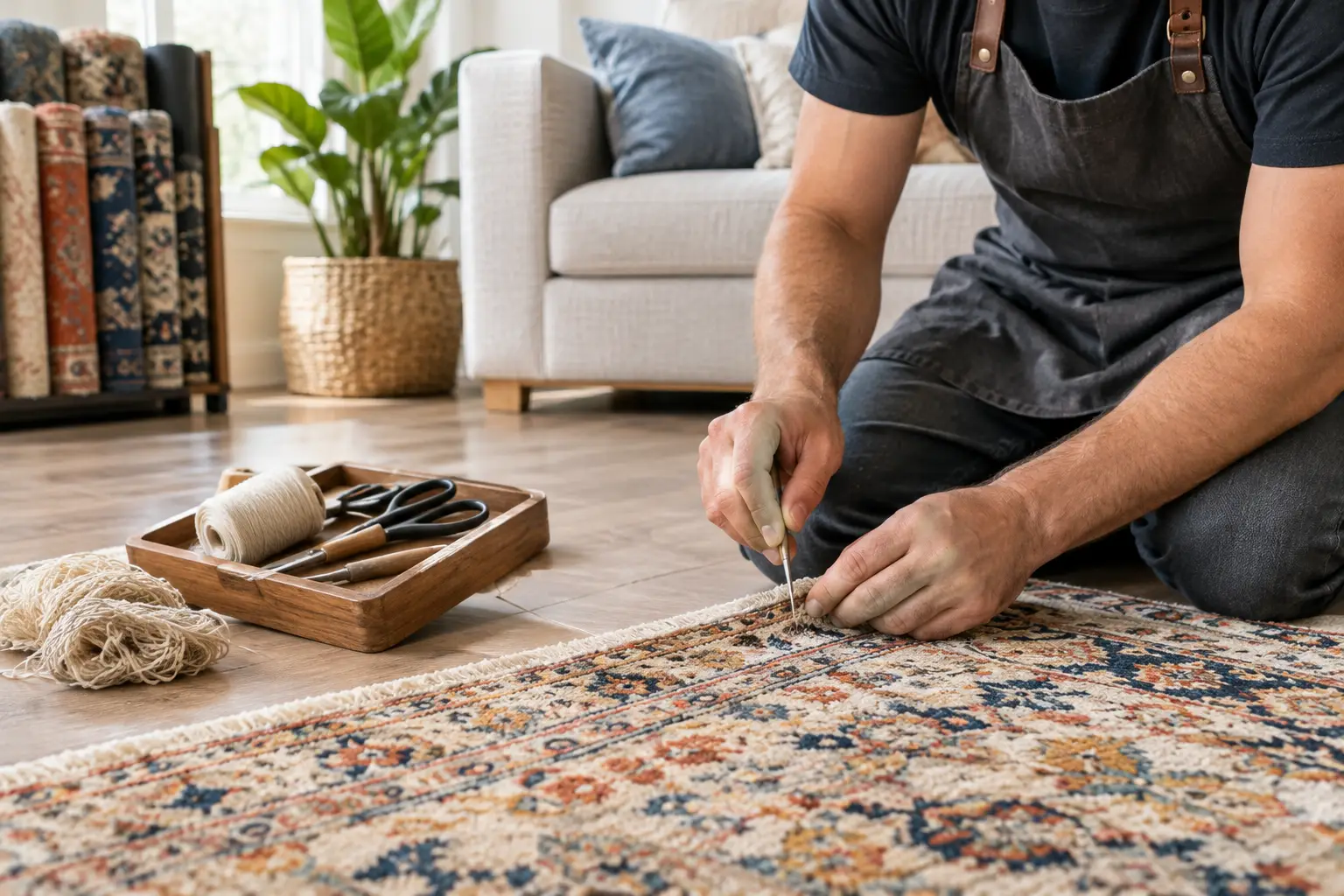
A rug pad can improve comfort and stability, but it cannot repair a rug that has structural damage. If you notice fraying edges, a separating binding, deep creases, weakened backing, or persistent curling corners, the rug may need professional attention rather than a new pad alone.
This distinction can preserve a piece you love. A cherished heirloom, a hand-knotted rug, or a favorite room-defining design deserves care that addresses the actual condition of the textile. At Home Rug Gallery, thoughtful rug care, cleaning, and restoration guidance can help homeowners make decisions that protect both their floors and their rugs.
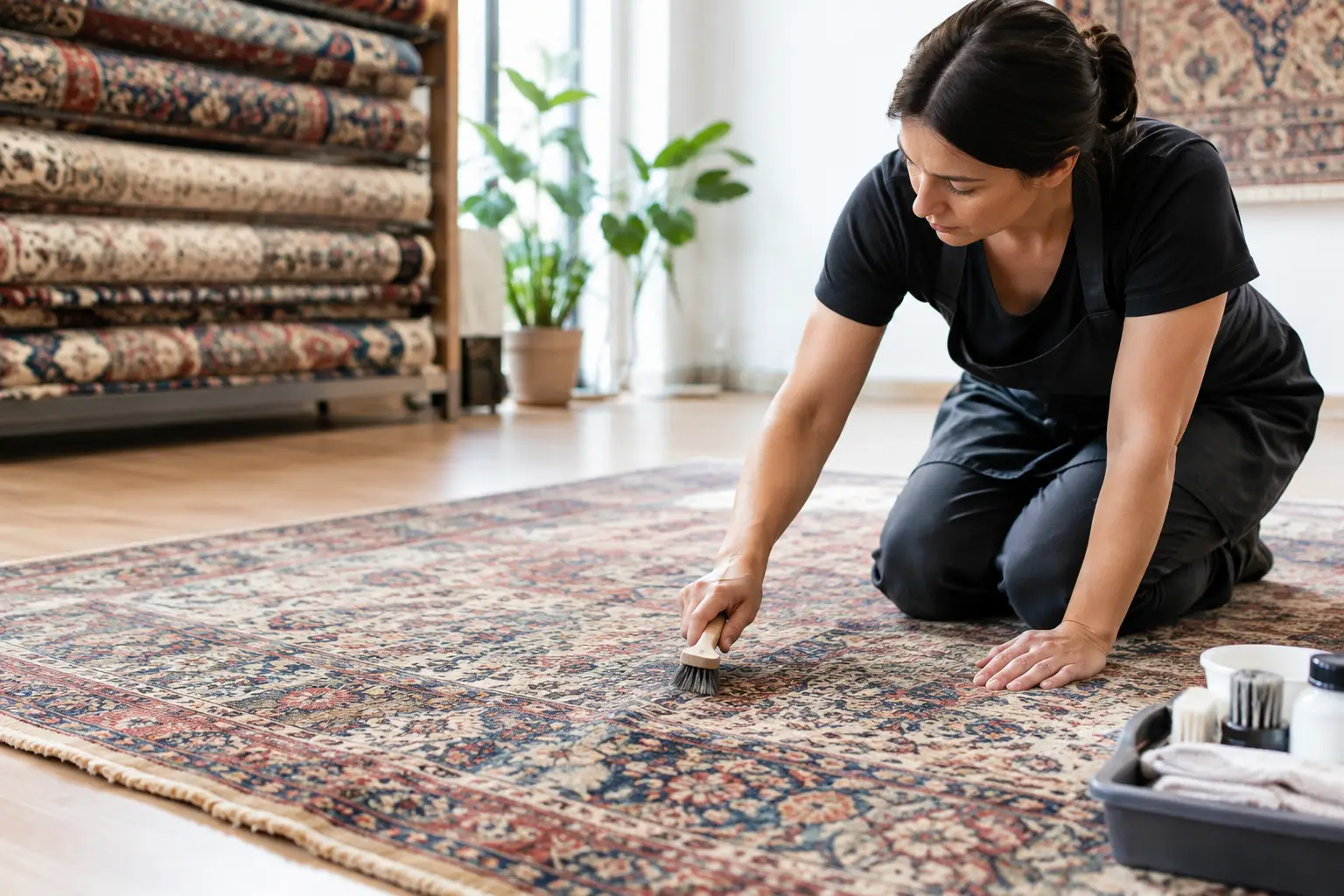
Regular cleaning also matters. Dust and grit can settle through a rug and into the pad, where they may gradually create abrasion beneath the fibers. Vacuum the rug according to its construction, lift it occasionally to check the floor underneath, and replace a pad when it has lost its grip, density, or clean surface.
A Better Foundation for a Beautiful Room
The best rug pad is rarely the part of the room anyone notices first. That is precisely the point. It lets the colors, texture, and scale of your rug take center stage while creating the comfort, stability, and protection that make a room easier to enjoy.
When you can see and feel rugs and pads together in person, the choice becomes clearer. A few minutes spent considering floor type, room use, and proportion can give your favorite rug the support it needs to look effortlessly styled for years to come.