A rug can make a room feel thoughtfully finished, or quietly throw off the entire arrangement. The difference often comes down to details that are difficult to judge from a screen: the true undertone of a color, the softness underfoot, the way a weave catches afternoon light, and whether the scale feels right once it is placed among your furnishings. That is why rug shopping in Canton, GA: what to look for begins with more than finding a pattern you love. It begins with understanding how a rug will live in your home.
Start With the Room, Not the Rug
It is easy to fall for a beautiful design before considering where it will go. A rug should support the way a room functions while bringing its furniture, finishes, and personality together. Before you shop, take a few measurements and think about traffic, sunlight, pets, children, and how the room is used day to day.
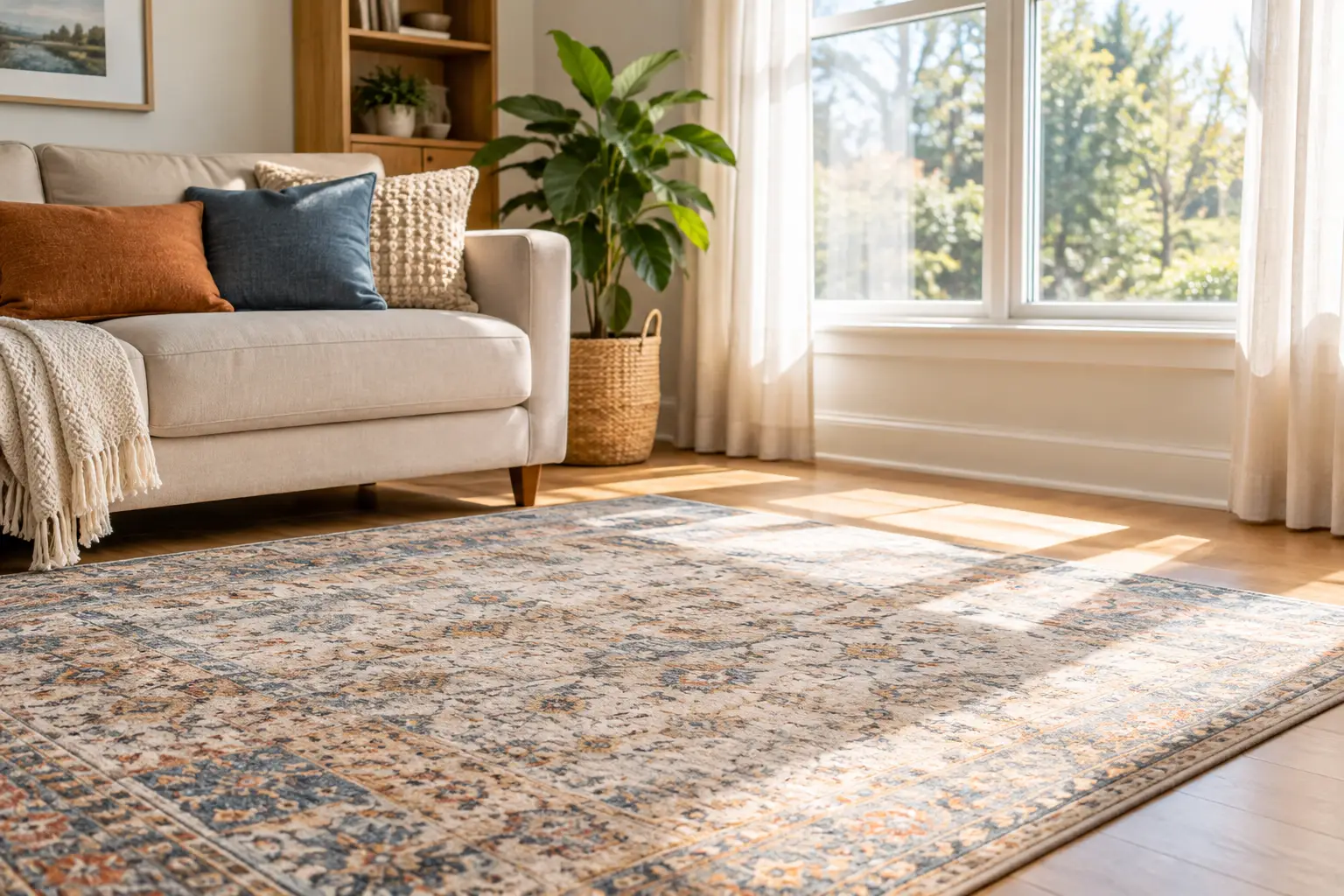
In a living room, the rug should usually create a shared foundation for the seating area. Ideally, the front legs of sofas and chairs rest on the rug, giving the furniture a connected, intentional feel. A small rug floating in the center can make even lovely furnishings seem disconnected. If your room allows, a larger size often creates a calmer, more polished result.
Dining rooms need a rug that accommodates chairs when they are pulled away from the table. Measure beyond the table on every side so chair legs remain on the rug during meals. In bedrooms, consider the first place your feet land in the morning. A generously sized rug beneath the bed adds warmth and a sense of quiet luxury, while runners on either side can be a smart choice for more compact rooms.
Measure With Furniture Placement in Mind
Tape is one of the most useful planning tools available. Use painter’s tape to outline a possible rug size on the floor, then stand back and look at the proportions. Walk around the marked area and notice where doors swing, pathways pass, and furniture will sit.
This step is especially helpful in open-concept homes, where a rug can define a conversation area without closing it off. The right dimensions create visual order. The wrong ones can make a room feel fragmented, no matter how beautiful the rug itself may be.
Choose Materials for Real Life
The fiber you choose affects comfort, durability, maintenance, and the overall character of the room. There is no single best material. The best choice depends on the setting and how much care you want the rug to require.
Wool remains a favorite for living rooms, bedrooms, and other spaces where softness and lasting beauty matter. It has a naturally substantial feel, offers excellent resilience, and brings depth to both solid and patterned designs. Wool can be a particularly strong choice for homes seeking a refined, layered interior that still feels inviting.
Synthetic fibers can be practical in busy family rooms, entryways, and spaces where spills are more likely. Many offer appealing texture and pattern options with easier everyday care. Natural-fiber rugs, such as those with a woven, organic appearance, bring warmth and relaxed texture to a room. They can be especially effective in casual spaces, though they may feel firmer underfoot and require more thoughtful placement around moisture.
Consider the pile as well. A low-pile rug is easier to navigate with dining chairs, doors, and vacuum cleaners. It can also be a practical choice in high-traffic areas. A higher pile feels more plush and comforting in a bedroom or lounge area, but it may show impressions from furniture and need more frequent attention. The goal is not simply softness. It is choosing a surface that suits the rhythm of the room.
Look at Color in Your Home’s Light
Color is one of the biggest reasons to see rugs in person. A beige that looks warm in a showroom may reveal a cool gray cast near your floors. A blue may read serene in morning light and much deeper after sunset. Even neutral rugs are rarely just neutral.
Bring photos of your room, along with fabric samples, paint swatches, or a pillow cover if you have them. These references help you compare the rug against the colors already present in your home. Pay attention to the less obvious elements too: wood tones, fireplace stone, window treatments, and the metal finishes on lighting or hardware.
A rug does not need to match everything exactly. In fact, exact matching can make a room feel flat. Look instead for a color that relates to the room’s existing palette. A patterned rug may pick up several tones already in the space, while a tonal rug can soften a room with bolder artwork or upholstery.
Understand Undertones Before You Commit
Warm and cool undertones are often what separate a cohesive room from one that feels slightly unsettled. Warm whites, camel, rust, olive, and honey-toned woods tend to sit comfortably together. Cooler grays, charcoal, crisp white, blue, and silver finishes often create a different mood. Of course, thoughtfully mixing these families can produce a collected look, but it should feel intentional.
If you are updating a room rather than starting from scratch, let the rug bridge old and new pieces. A traditional wood dining table can feel current with a contemporary rug that repeats its warmth. A modern sofa can feel more personal when grounded by a rug with subtle vintage-inspired character.
Rug Shopping in Canton, GA: What to Look for in Pattern and Texture
Pattern brings movement and personality, but scale matters as much as style. In a room with patterned drapery, printed pillows, or detailed wallpaper, a quieter rug may give the eye a place to rest. In a room built around solid upholstery and simple finishes, the rug can carry more of the visual story.
Large-scale patterns generally read as more open and modern, particularly in spacious rooms. Smaller, intricate motifs can add richness and a collected feel, though they may appear busier in a compact space. If a rug has a strong border, make sure it will remain visible rather than disappearing beneath major furniture.
Texture deserves the same attention. A hand-finished surface, a subtle high-low design, or a woven variation can add dimension without adding another color. These details are often what make a room feel elevated rather than overly decorated. They also make a rug more enjoyable to live with, especially in rooms where comfort matters most.
Think Beyond the Purchase
A rug is part of the home for years, not just for the day it arrives. Before choosing, consider how it will be cleaned, where it will be placed, and whether a rug pad is appropriate. A quality pad can improve comfort, help the rug lie properly, reduce shifting, and offer an extra layer of protection for the floor beneath.
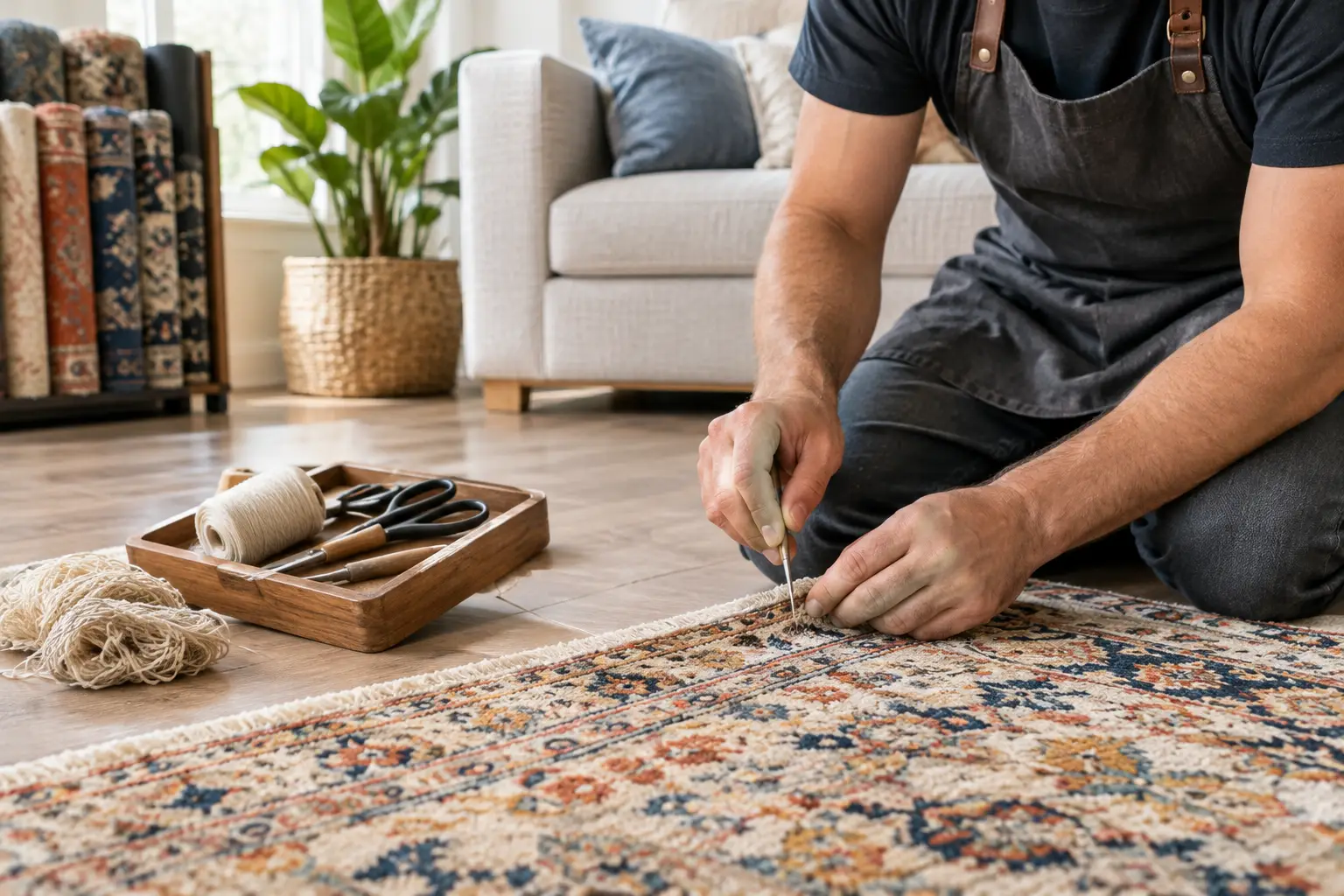
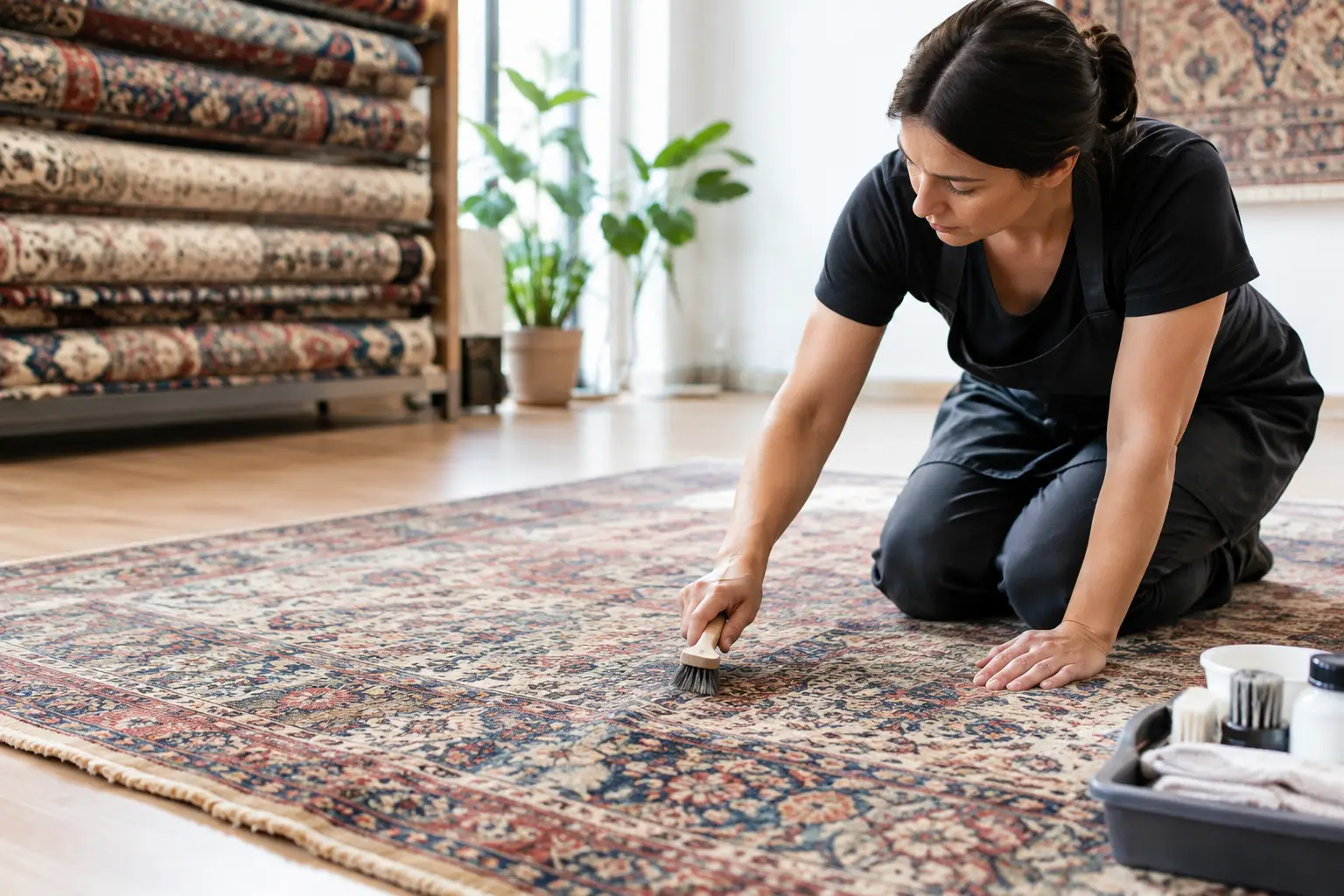
Regular care protects both appearance and longevity. Vacuum according to the rug’s construction, address spills promptly, and rotate the rug periodically in sun-filled spaces to encourage more even wear. For rugs with sentimental value, intricate construction, or damage that needs expert attention, professional cleaning and repair can preserve pieces that might otherwise be set aside too soon.
Shopping in a local showroom gives you the advantage of comparing fibers, colors, and constructions side by side. At Home Rug Gallery, that hands-on experience can also help you consider how a rug will coordinate with lighting, pillows, throws, and the smaller finishing layers that make a room feel deeply personal.
The right rug should do more than fill open floor space. It should make the room feel more like yours – comfortable enough for everyday life, beautiful enough to notice, and lasting enough to become part of the memories made there.