A room can have beautiful furniture and still feel slightly unfinished until the right rug brings everything into relationship. For homeowners searching for a rug store Marietta GA, the most satisfying choice is rarely the first pattern that catches the eye. It is the piece that gives the room proportion, warmth, and a sense of intention while standing up to the way your household actually lives.
That is why seeing rugs in person matters. Color shifts under real light, texture changes the mood of a room, and a size that looks generous online can feel unexpectedly small beneath a sofa. A thoughtfully chosen rug does more than cover the floor. It creates the foundation for a home that feels collected, comfortable, and deeply personal.
What to Look for at a Rug Store in Marietta GA
A strong rug selection begins with options, but it should not end there. The best showroom experience helps you narrow choices with confidence, whether you are refreshing one room or establishing a cohesive look throughout the home. You should be able to compare fibers, study pile height, and see how different colors behave side by side rather than making a decision from a tiny screen image.
Start with the room’s purpose. A formal sitting room may welcome a more detailed pattern or a softer wool texture that supports a quiet-luxury look. A family room needs a rug that still feels inviting after movie nights, pets, and everyday foot traffic. In a dining room, the priority is often a low-profile construction that allows chairs to move easily while keeping the table visually anchored.
The right choice is not always the most delicate or the most dramatic. It is the one that brings together your practical needs and the atmosphere you want to create.
Begin With Size, Not Pattern
Rug size is one of the decisions that has the biggest visual impact. A rug that is too small can make a generous room feel disconnected, even when every other piece is beautifully chosen. Before you shop, measure the seating area, dining area, or bed zone you want the rug to define.
In a living room, a rug should usually allow the front legs of the sofa and chairs to rest on it. This creates a unified conversation area instead of leaving each piece to float on its own. In larger rooms, placing all furniture legs on the rug can feel especially polished, provided there is a comfortable border of visible flooring around the edges.
For a dining room, choose a size that extends beyond the table far enough for chairs to remain on the rug when pulled out. In bedrooms, the rug should offer a soft landing beside the bed, not simply disappear beneath it. A large rug placed under the lower portion of the bed works beautifully, while runners on either side can be a smart alternative for rooms with an unusual layout.
Painter’s tape is a useful planning tool. Mark the proposed dimensions on the floor, then walk around the outline. This quick exercise often makes the right scale clear before you ever begin comparing colors.
Let Color Support the Room
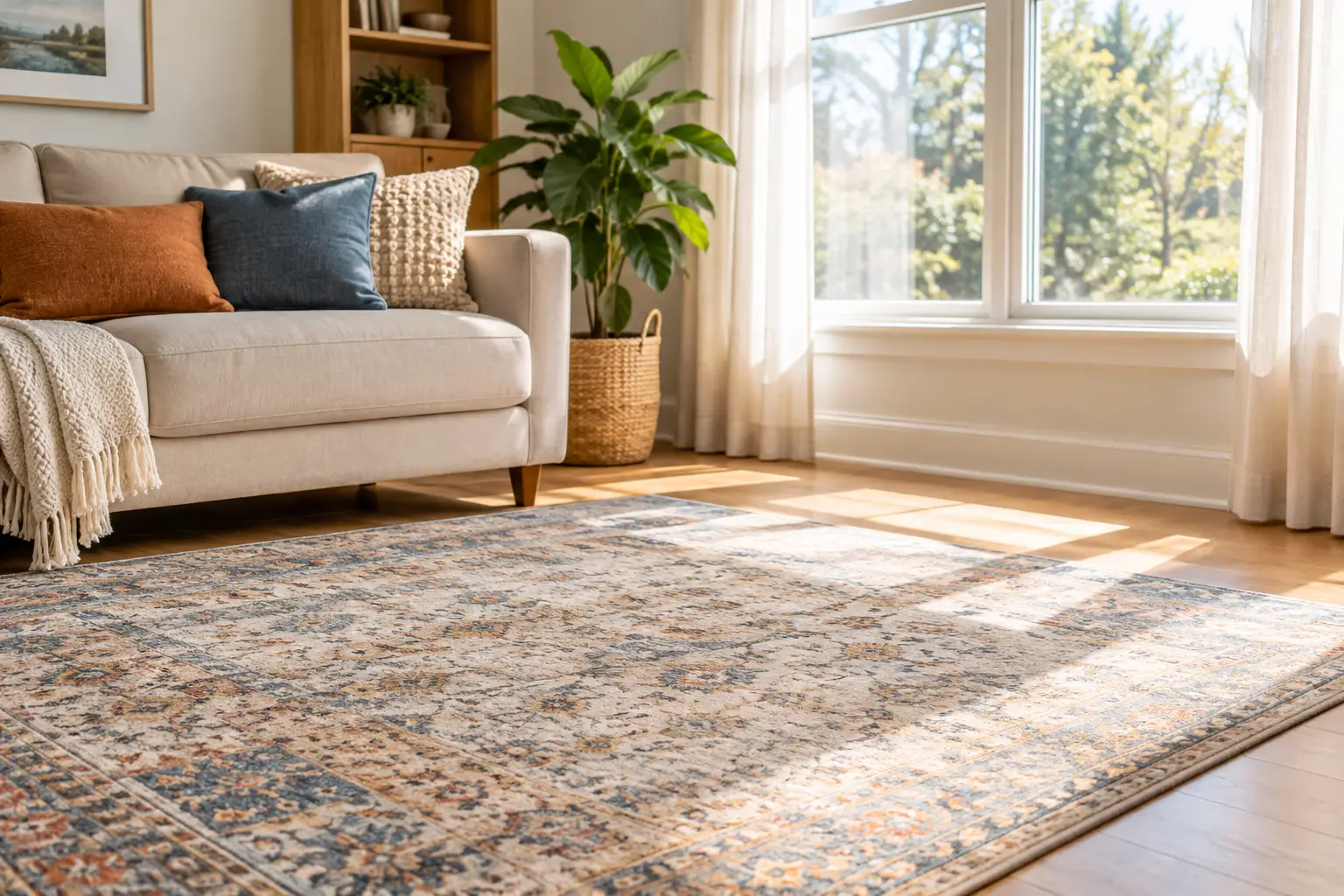
A rug can be the starting point for a room, or it can be the element that quietly pulls an existing space together. If your upholstery, art, and window treatments are already in place, look for a rug that repeats one or two of their tones without matching every color exactly. That layered approach feels more natural and lasts longer than a perfectly coordinated set.
For rooms with neutral furnishings, a patterned rug can introduce personality without asking you to replace larger pieces. Muted terracottas, soft blues, mossy greens, warm ivory, and tonal charcoal can add depth while remaining flexible enough for future updates. If your room already has a statement sofa, bold wallpaper, or expressive art, a tonal rug may give the eye a place to rest.
Consider the undertone of the room as carefully as the dominant color. A cool gray floor and a creamy, warm-beige rug may be beautiful together, but they need another bridge in the space, such as wood accents, pillows, or art. This is where comparing samples in person is particularly helpful.
Texture Changes More Than You Expect
Texture is often the difference between a room that looks finished and one that feels genuinely inviting. A handwoven construction, subtle raised motif, or softly varied yarn can add dimension even in a neutral palette. These details are especially valuable in homes that favor clean lines and restrained color, where texture carries much of the visual interest.
Pile height affects both appearance and daily function. Plush rugs feel wonderful in bedrooms and lower-traffic areas, but they may not be the easiest fit for a dining space or a busy entry. Flatweaves and lower-profile rugs offer a tailored look and tend to work well where doors, chairs, and frequent movement are part of the equation.
Fiber is another practical consideration. Wool is valued for its natural resilience, softness, and richness of color. Synthetic options can be an appealing choice for active households that want easygoing performance and a wide range of looks. Natural fibers bring organic texture and a relaxed, collected character, though they can be less forgiving in areas prone to spills. There is no universal best material. The better question is where the rug will live and what you need it to handle.
Why a Showroom Visit Makes the Decision Easier
A rug is a tactile purchase. You can feel whether a pile has the softness you want, notice the subtle variation in a woven ground, and see whether a pattern reads calm or busy from across the room. Those are difficult details to judge from a product photo.
Bring a few simple references when you visit: photos of the room in daylight, measurements, a paint swatch if available, and fabric or pillow samples when possible. These small details turn a showroom conversation into practical design guidance. They also make it easier to identify the rug that coordinates with your home rather than merely looking appealing on its own.
At Home Rug Gallery, shoppers can consider rugs alongside pillows, lighting, throws, poufs, and décor that help a room feel intentionally styled. Seeing those elements together is useful when you are looking for a cohesive finish rather than another isolated purchase.
Think Beyond the First Day at Home
The relationship with a rug does not end when it is placed in the room. Regular care protects the texture, color, and structural integrity that made you choose it in the first place. Rotate rugs periodically in high-traffic areas so wear develops more evenly, use an appropriate pad for comfort and stability, and address spills with patience rather than aggressive scrubbing.
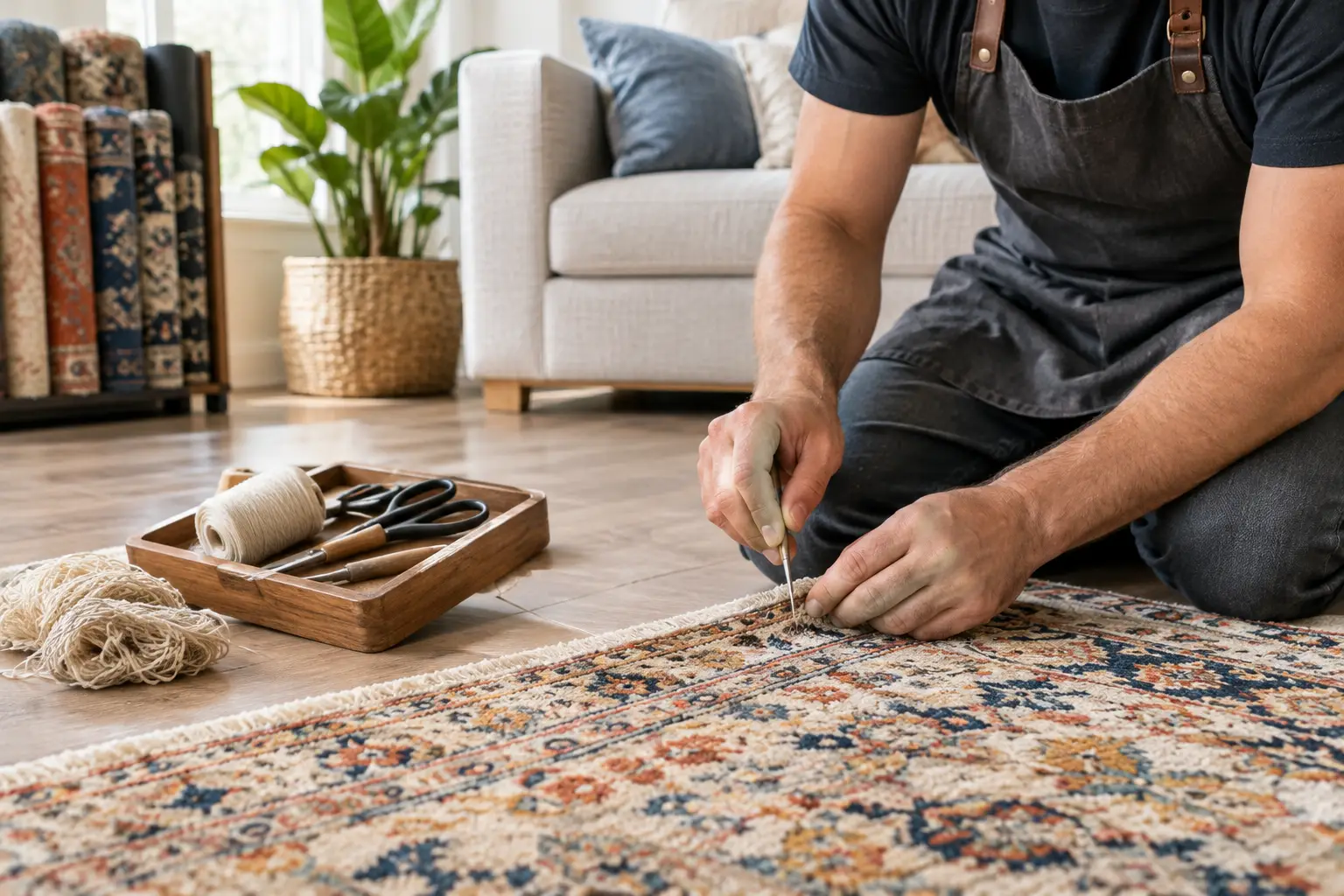
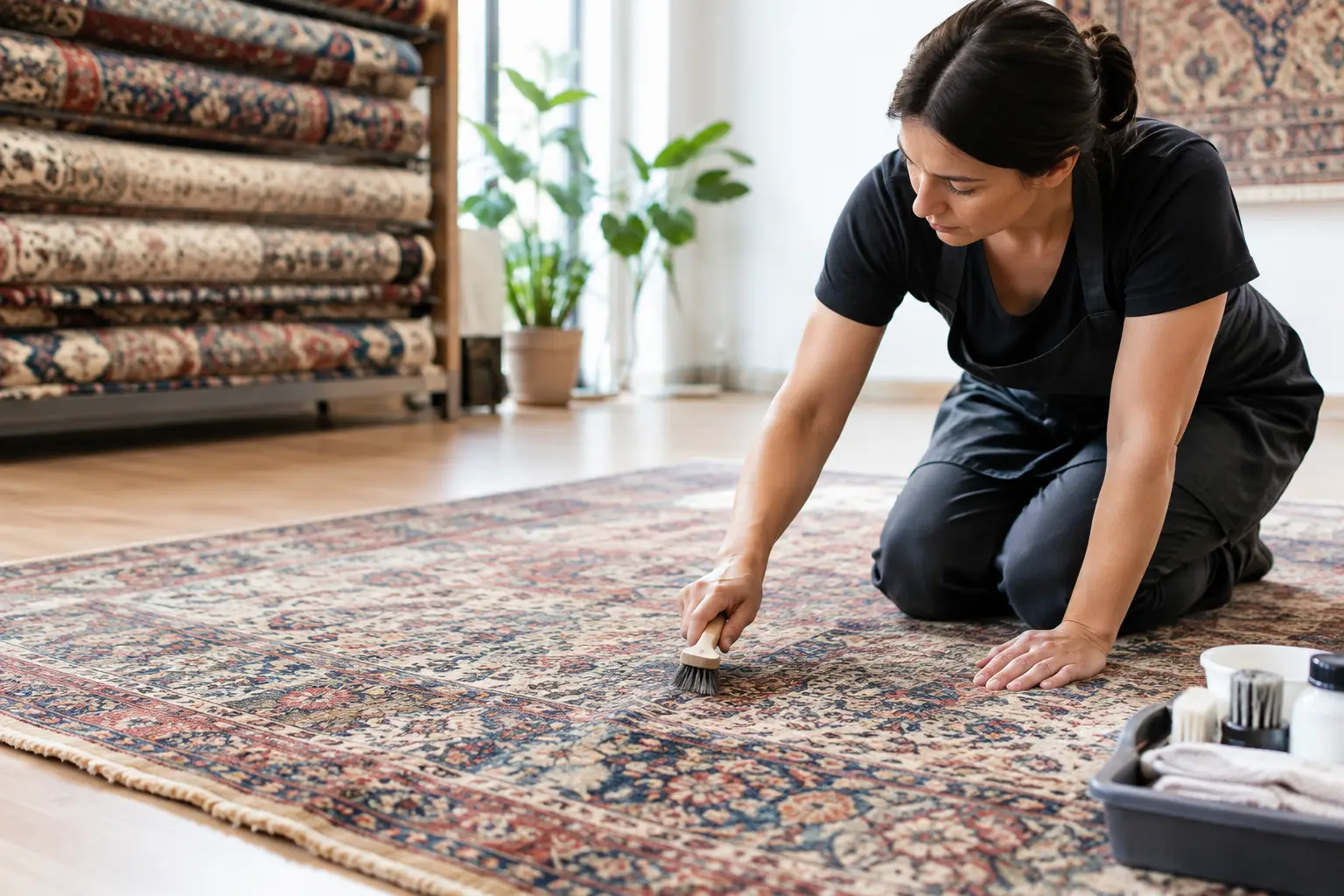
Some rugs need specialized attention, particularly heirloom pieces, hand-knotted rugs, or rugs with fringe, delicate fibers, and structural damage. Professional rug cleaning and repair can help preserve a piece with history or restore one that still has a place in your home. For a room with unusual dimensions or a very specific vision, a custom rug can also provide the scale and character that standard sizes cannot.
A well-chosen rug should make your home easier to enjoy. Take your measurements, trust what feels right underfoot, and give yourself the chance to see the colors and textures in person. The piece that fits your room, your routines, and your point of view will keep rewarding you long after the furniture has been arranged.