


How to Remove Pet Odors From Rugs Safely
Learn how to remove pet odors from rugs without harming color or fibers, plus when professional washing is the smarter choice for a fresh home that lasts.
A bedroom can have beautiful bedding, well-scaled nightstands, and the right lighting, then still feel slightly unfinished. Often, the missing piece is the rug. If you are wondering what size rug under bed makes the room feel balanced rather than crowded, the answer comes down to bed size, room layout, and how much soft landing space you want around the frame.
The right rug does more than fill floor space. It anchors the bed, softens the room visually, and gives the entire layout that quietly polished look people notice right away. Get the scale wrong, though, and even a lovely rug can make the room feel off.
In most bedrooms, the rug should extend beyond the sides and foot of the bed enough to be seen clearly and felt underfoot. As a general rule, you want at least 18 to 24 inches of rug showing on each side of the bed, with even more at the foot if the room allows.
That is why undersized rugs tend to be the most common mistake. A rug that disappears almost entirely under the bed frame does not ground the room. It can look more accidental than intentional.
A good visual starting point is this: the rug should be large enough that when you get out of bed, your feet land on it rather than on bare floor. In a primary bedroom, that extra comfort matters. In a guest room, it also makes the space feel more thoughtfully finished.
For a twin bed, a 5×8 rug can work well, especially in smaller bedrooms, guest rooms, or children’s rooms. It usually looks best placed horizontally under the lower two-thirds of the bed. If the room is narrow, runners on each side can also create a tailored effect without taking up as much floor space.
A 6×9 can work if the room is larger and you want more rug visible around the bed. The key is not overwhelming the room. Twin spaces often benefit from a lighter visual footprint.
A full bed usually pairs well with a 6×9 or 8×10 rug. If the room is compact, a 6×9 tucked under the bottom portion of the bed may be enough. If you want the room to feel more expansive and layered, an 8×10 gives you more presence and a more luxurious proportion.
This is often where homeowners hesitate. A full bed can technically sit on a smaller rug, but if the nightstands are also part of the composition, going up in size usually looks more intentional.
For a queen bed, an 8×10 rug is the most reliable choice in many bedrooms. It gives you enough extension on both sides and at the foot to create a complete look without pushing too close to the walls in an average-size room.
A 6×9 is sometimes used under a queen, but it usually works best only when placed under the lower half to two-thirds of the bed. If you want the rug to anchor the entire bed setup, including nightstands in some layouts, 8×10 is the stronger option.
In a more spacious primary bedroom, a 9×12 can feel especially refined. It offers a generous border of softness and helps the room read as calm, layered, and effortlessly styled.
A king bed generally needs at least an 8×10, though many rooms will look better with a 9×12. Because the bed itself is so substantial, anything too small can seem visually lost.
An 8×10 under a king can work when the rug starts under the lower portion of the bed rather than extending beneath the entire frame and nightstands. If you want a fuller, more grounded presentation, a 9×12 usually gives the room the scale it needs.
This is especially true in larger North Georgia homes where bedrooms often have enough square footage to support a more generous rug size. In those spaces, the larger rug tends to feel more natural, not excessive.
Placement matters almost as much as size. Most bedroom rugs are not centered under the entire room. They are centered under the bed.
One of the most common placements is under the lower two-thirds of the bed. This allows the rug to extend past both sides and the foot, while keeping it clear of the headboard wall. It also avoids the awkward issue of a rug hidden too far under furniture where it cannot really be seen or enjoyed.
Another option is placing the rug fully under the bed and nightstands, but that requires a larger size and enough room around the perimeter. This approach can feel beautifully expansive in a large primary suite.
If you are working with a smaller bedroom, placing the rug under just the lower half of the bed can still look intentional, as long as enough rug remains visible around the edges.
Not every bedroom needs one large rug. In some layouts, especially narrower rooms or spaces with more furniture, runners can be the better solution.
A pair of runners on either side of the bed gives you softness where you need it most and keeps the room from feeling overfilled. This approach works well in guest rooms, secondary bedrooms, and spaces where the bed leaves limited clearance on each side.
Runners can also be a smart choice when you love the look of wood flooring and want to preserve more of it. The room still feels warm and layered, but not overly covered.
A too-small rug usually announces itself right away, even if you cannot explain why the room feels unsettled. If the rug barely peeks out from the foot of the bed or does not extend far enough past the sides, it will not visually support the bed.
Another sign is proportion. If the bed feels like it is sitting on top of a decorative accent rug rather than being anchored by it, the scale is off. Bedrooms generally need more generous rug sizing than people expect.
There is also a comfort factor. If you step out of bed and miss the rug entirely, it is probably not doing enough practical work for the space.
Bed size is only part of the decision. The room itself should guide the final choice.
If your bedroom is tight, a very large rug may leave too little visible flooring around the edges, which can make the room feel boxed in. You generally want a border of floor showing between the rug and the walls. That negative space helps the room breathe.
If the room is large, sizing up often creates a more luxurious, cohesive result. A rug that feels slightly generous usually reads better than one that feels cautious.
Furniture placement matters too. A bench at the foot of the bed, oversized nightstands, or a seating area can all influence what size rug feels balanced. This is where seeing options in person can be especially helpful. In a showroom setting, comparing sizes side by side often makes the right proportion much easier to recognize.
Once you know what size rug under bed is right, material and design shape the final mood. A soft, low-pile rug can feel tailored and easy to maintain. A plusher texture adds warmth and comfort, especially in a primary bedroom.
Pattern affects scale as well. A bold design on a small rug can make the rug feel even smaller beneath a large bed. A quieter pattern or tonal texture often supports that calm, quiet luxury look many homeowners want in a bedroom.
Color matters in a practical way too. Bedrooms tend to benefit from tones that feel restful, but the rug does not need to disappear. It can be the layer that ties together upholstery, bedding, wood tones, and lighting in a way that feels deeply personal.
If you are choosing between two rug sizes for a bedroom, the larger one is often the better choice if your room can handle it. The bigger rug usually creates a more complete and professionally styled look.
That said, bigger is not always better if it forces the rug too close to every wall or crowds surrounding furniture. The best bedroom rug feels intentional, comfortable, and in proportion with the whole room.
If you are standing in your bedroom trying to picture the right fit, start with the bed, then imagine where your feet land each morning and how much of the rug you want to actually see. That is usually where good design begins – not with a formula, but with how you want the room to feel.
Learn how to remove pet odors from rugs without harming color or fibers, plus when professional washing is the smarter choice for a fresh home that lasts.
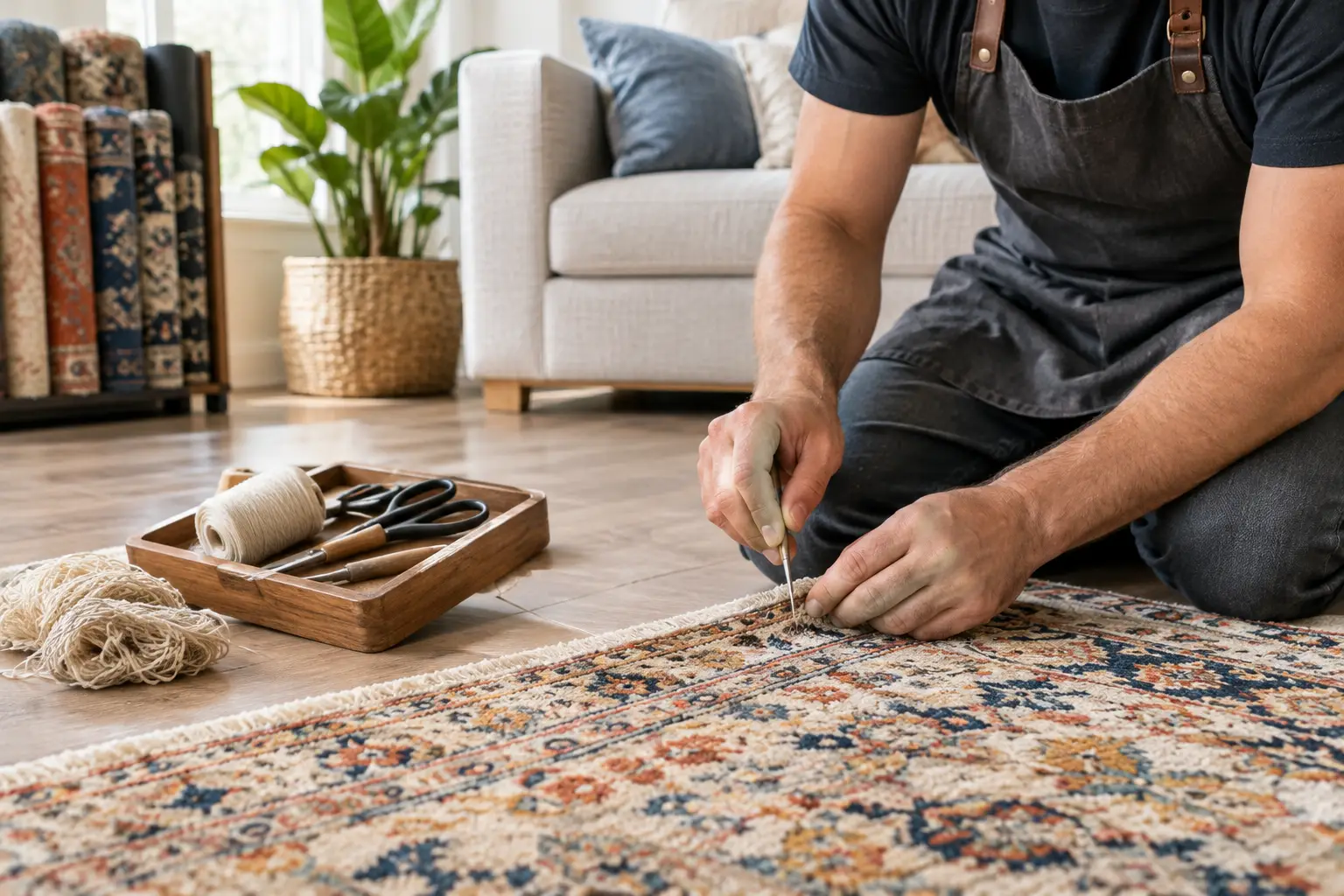
Use this Kennesaw rug repair guide to spot damage early, choose the right restoration, and protect the color, texture, and comfort of your favorite rug.

Marietta rug restoration can preserve color, texture, and history. Learn when repair makes sense and how thoughtful care protects a cherished rug at home.
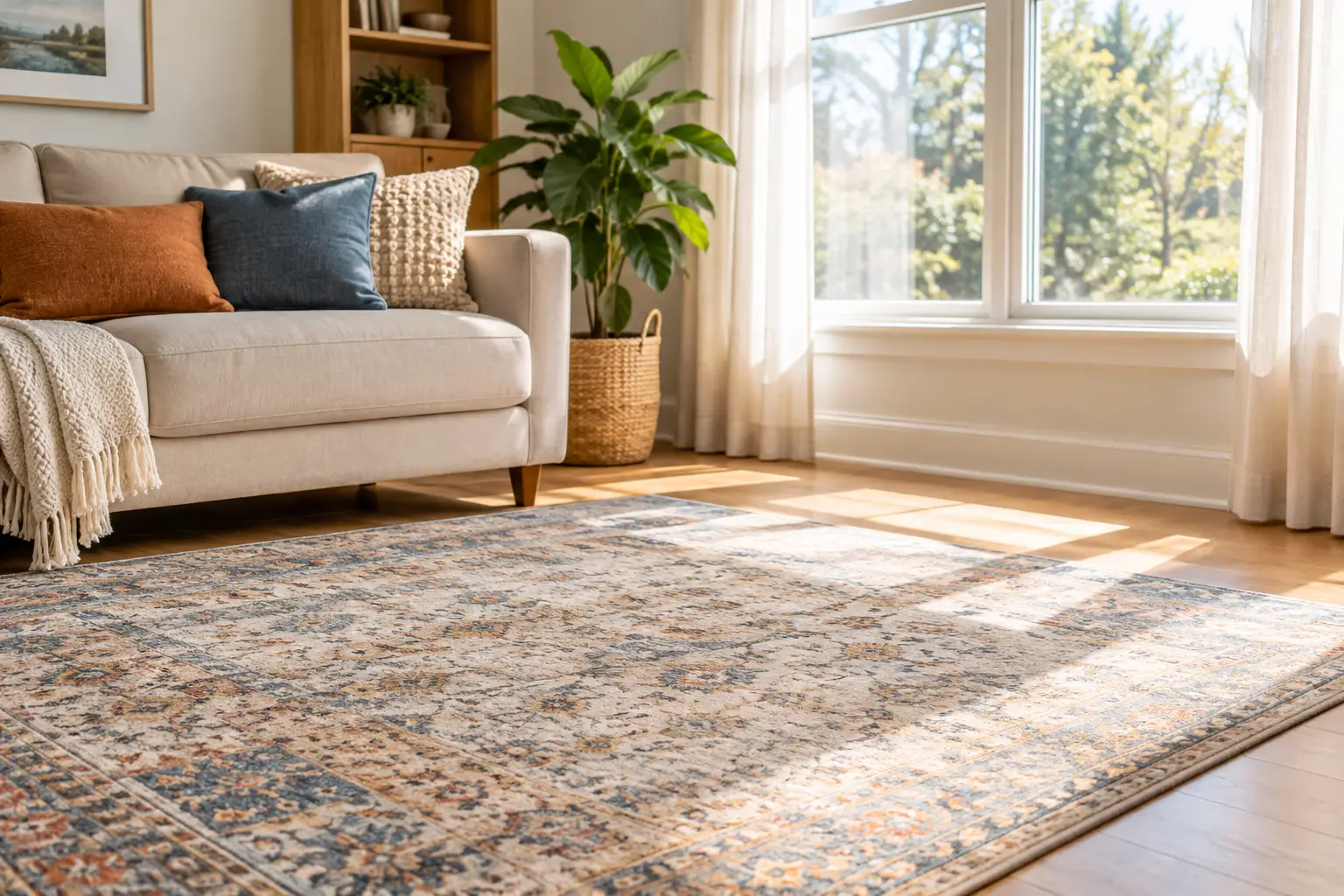
Learn how to protect rugs from sun fading with thoughtful window treatments, rotation, cleaning, and placement tips that preserve color and comfort daily.
From cozy area rugs to statement-making wall décor, our curated categories make it easy to explore what speaks to your space. Whether you’re refreshing a single corner or reimagining your whole home, start here and discover pieces that bring it all together.