

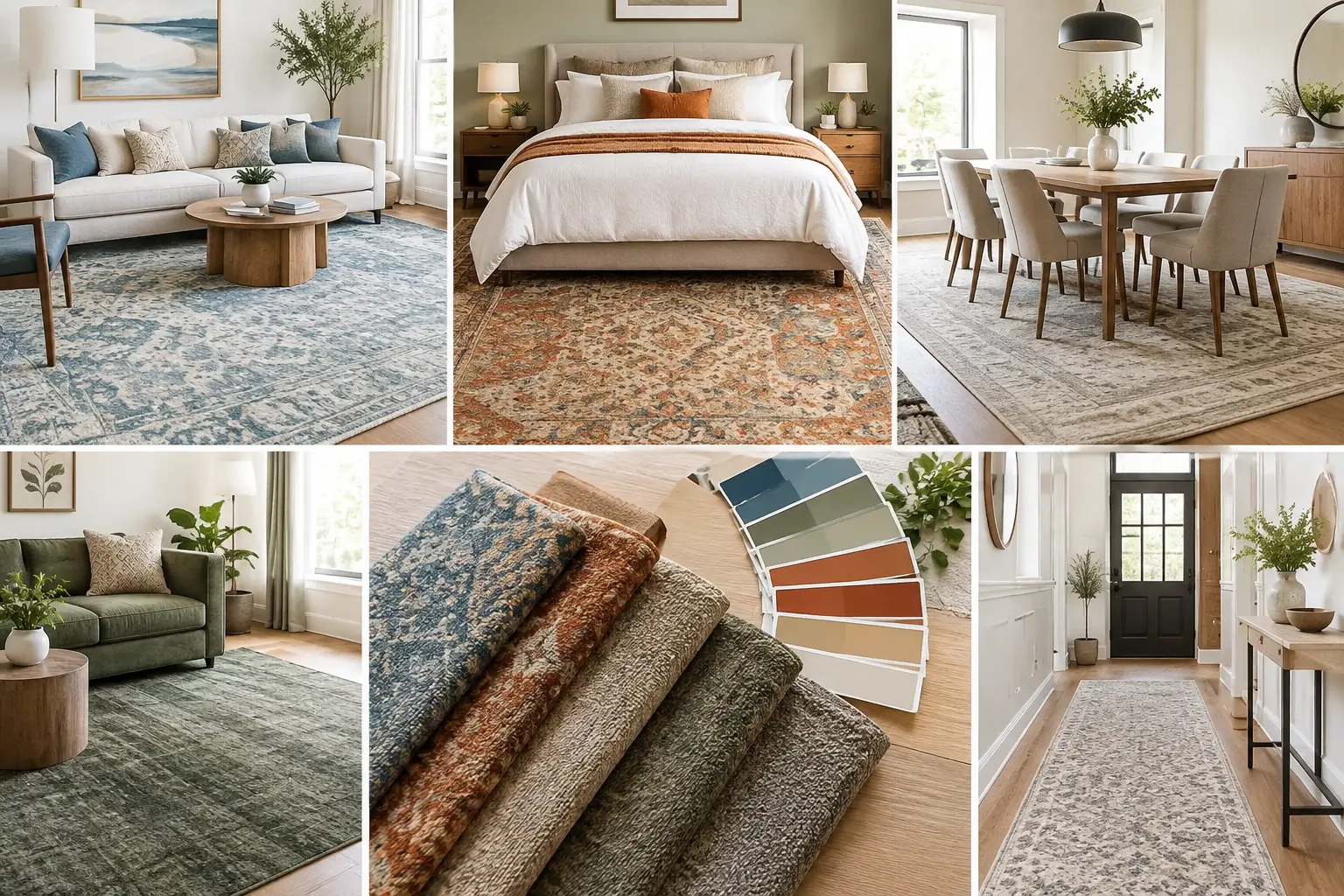
A Guide to Rug Color Matching for Every Room
This guide to rug color matching helps you choose tones, patterns, and textures that make every room feel balanced, personal, and effortlessly styled.
A living room rarely feels finished when the rug is wrong. The sofa may be beautiful, the lighting may be layered just right, and the pillows may feel thoughtfully chosen, but if the rug is too small, too flat, or too disconnected from the room, the space can still feel unsettled. That is why living room rug trends matter most when they help a home feel more grounded, more inviting, and more personal – not simply more current.
The most appealing rugs we are seeing right now are not driven by flash. They are driven by atmosphere. Homeowners want living rooms that feel effortlessly styled, comfortable enough for daily life, and polished enough to reflect a point of view. The best trends support that goal by adding softness, depth, and cohesion without making the room feel overly decorated.
One of the clearest shifts in living room rug trends is a move away from anything too stark or one-note. Instead of rugs that act like a loud statement from across the room, many homeowners are choosing pieces with nuanced color, subtle pattern, and a gently aged or textural finish. These rugs do plenty of visual work, but they do it quietly.
This is where quiet luxury shows up in a very practical way. A rug in a soft taupe, warm sand, muted blue, or faded terracotta can anchor a room without competing with everything else in it. The effect is collected rather than trendy. It also gives you more freedom with accents like pillows, throws, art, and lighting.
Texture is playing a larger role too. Flat weaves still have their place, especially in high-traffic homes, but many living rooms benefit from rugs with a little more touchability. Cut-and-loop construction, carved details, ribbed texture, and hand-finished surfaces add dimension that makes the room feel warmer. In a neutral space, texture often does more than pattern.
Cool grays dominated for years, but living rooms are warming up. That does not mean every home is suddenly filled with bold rust and gold. More often, it means the palette has shifted toward colors that feel natural and relaxed: camel, oatmeal, clay, olive, slate blue, walnut, and soft charcoal.
A rug is often the easiest place to introduce that warmth. If your upholstery is neutral, a rug with layered warm undertones can keep the room from feeling flat. If your furniture already carries color, a quieter rug can connect those pieces without adding more visual noise.
There is a useful trade-off here. Warmer rugs tend to feel more welcoming and forgiving in family living spaces, but they can read heavier if the room has limited natural light. In brighter rooms, those same colors often feel rich and grounding. That is why seeing a rug in person matters. Light changes everything, and so does the finish of the yarn.
Pattern has not disappeared. It has simply become more refined. Traditional motifs remain popular, but they are often softened through distressed effects, low-contrast palettes, or oversized interpretation. Geometric styles are also evolving, with less sharp contrast and more organic movement.
This approach works especially well for homeowners who want a room to feel designed but not overly formal. A patterned rug can disguise everyday wear, bring movement into a seating area, and help bridge classic and modern pieces. The key is scale. In a room with strong furniture silhouettes or busy accent fabrics, a subtle rug pattern usually feels more balanced than a high-contrast one.
Some trends are aesthetic, and some are simply the result of better design decisions. Larger rugs remain one of the smartest shifts in living room styling because they instantly make a room feel more complete.
A rug that floats awkwardly in the center of the room tends to shrink the space visually. A properly scaled rug, by contrast, lets the front legs of the sofa and chairs sit comfortably on the surface, creating a true conversation area. The room looks more intentional because it is.
This is one of the most common places where homeowners compromise online and regret it later. A rug may seem generously sized on a screen, then feel undersized once it arrives. In a showroom, proportions are easier to judge, especially when you are comparing styles and considering how the rug will interact with your furniture layout.
Another reason living room rug trends feel more useful right now is that they recognize how differently people actually live. Some homes need the casual texture of wool, jute blends, or hand-knotted construction. Others need softness underfoot with easier maintenance because kids, pets, and heavy traffic are part of daily life.
Performance-focused rugs have improved considerably in both feel and appearance. They no longer have to look purely utilitarian. Many now offer the softness, pattern detail, and tonal variation homeowners want, while standing up better to spills and wear. That makes them especially appealing in busy family rooms and open-concept spaces.
Natural fibers still bring unmatched character, but they do come with considerations. A chunky woven rug can be beautiful, yet it may be less forgiving under certain furniture or require more attentive care. Wool offers resilience and richness, though it often comes at a higher price point. There is no universal best choice here. The right rug depends on how formal or relaxed your living room is, how much foot traffic it gets, and how much maintenance you want to take on.
The current living room is rarely built around just one hero piece. It is layered through textiles, lighting, occasional furniture, and collected accents. That means the rug has to do more than sit under a coffee table. It has to connect the room.
The strongest rugs right now tend to complement the full design story. A softly patterned rug can echo the movement of drapery. A textured neutral can balance a sculptural sofa. A vintage-inspired design can add soul to newer furnishings. Even a minimal room benefits from a rug that adds depth where the furniture remains restrained.
For homeowners trying to refresh rather than fully redesign, the rug often becomes the pivot point. Change the rug, and suddenly the existing sofa feels fresher, the wall color makes more sense, and the accessories look more intentional. That is one reason a carefully chosen rug can have such a strong return in a living room update.
Trend awareness is helpful, but the better question is whether a rug will still feel right after the trend cycle passes. A well-chosen living room rug should feel current and lasting at the same time.
Start with size, because no color or pattern can fix poor scale. Then consider the room’s mood. Do you want it to feel airy, grounded, tailored, relaxed, formal, or family-friendly? That answer usually narrows the field quickly. After that, pay attention to color temperature, pile height, and how much movement already exists in the room.
If your furniture is clean-lined and quiet, you may want a rug with more visible texture or pattern. If your room already includes varied shapes, bold art, or layered fabrics, a more understated rug may create the calm the space needs. Good design is often about tension and balance, not matching everything perfectly.
This is where an in-person shopping experience offers real value. Touch, scale, and color are difficult to judge digitally, especially for something as foundational as a living room rug. For homeowners in Canton, Woodstock, Acworth, and Kennesaw, seeing options side by side often makes the decision feel much clearer. At Home Rug Gallery, that process is less about chasing a passing look and more about finding the rug that makes your room feel complete.
The most successful living room trends are the ones that make home feel better to live in. Choose the rug that gives your space comfort, cohesion, and a sense of quiet confidence, and the room will tell you the rest.
This guide to rug color matching helps you choose tones, patterns, and textures that make every room feel balanced, personal, and effortlessly styled.

Learn how to remove pet odors from rugs without harming color or fibers, plus when professional washing is the smarter choice for a fresh home that lasts.
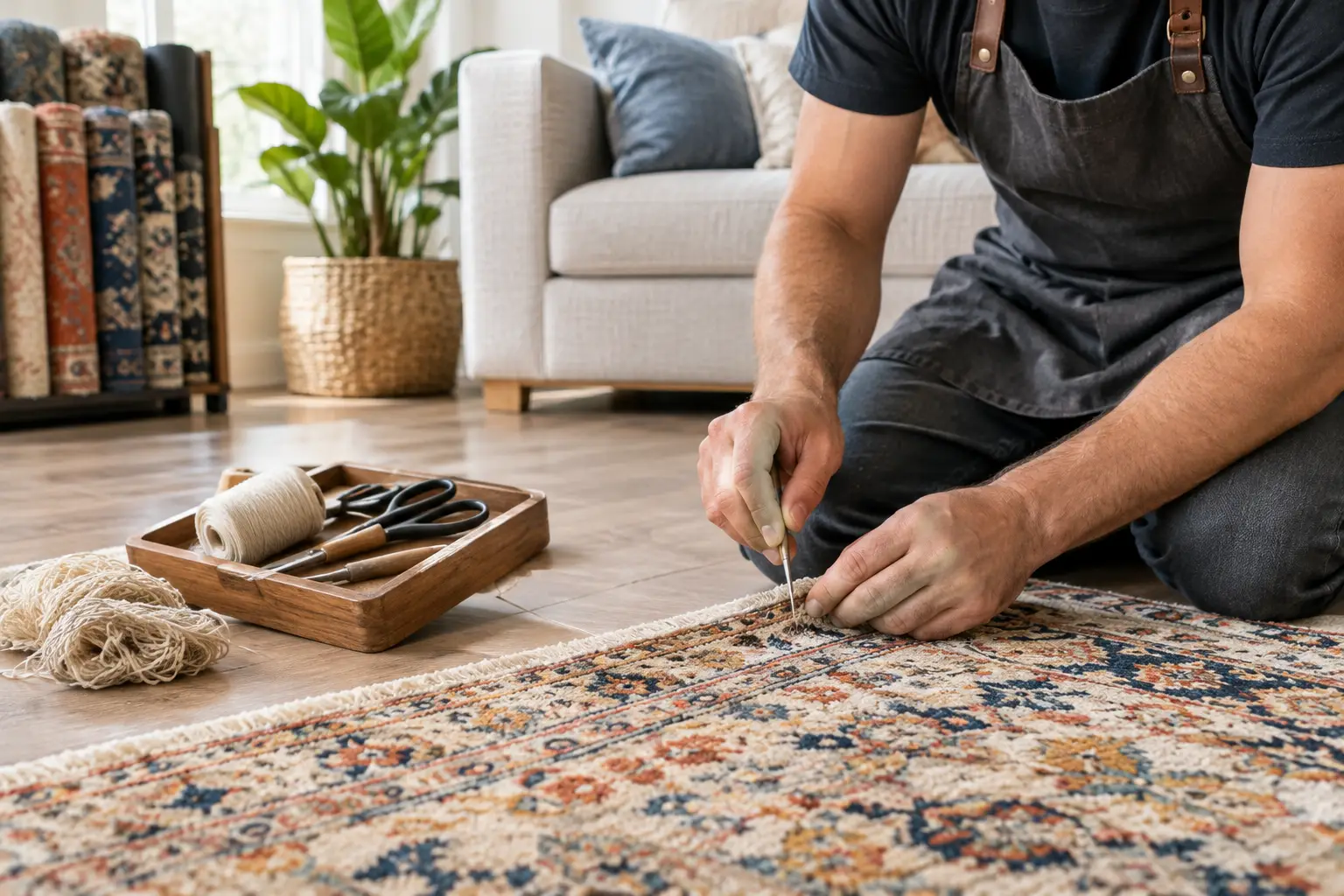
Use this Kennesaw rug repair guide to spot damage early, choose the right restoration, and protect the color, texture, and comfort of your favorite rug.
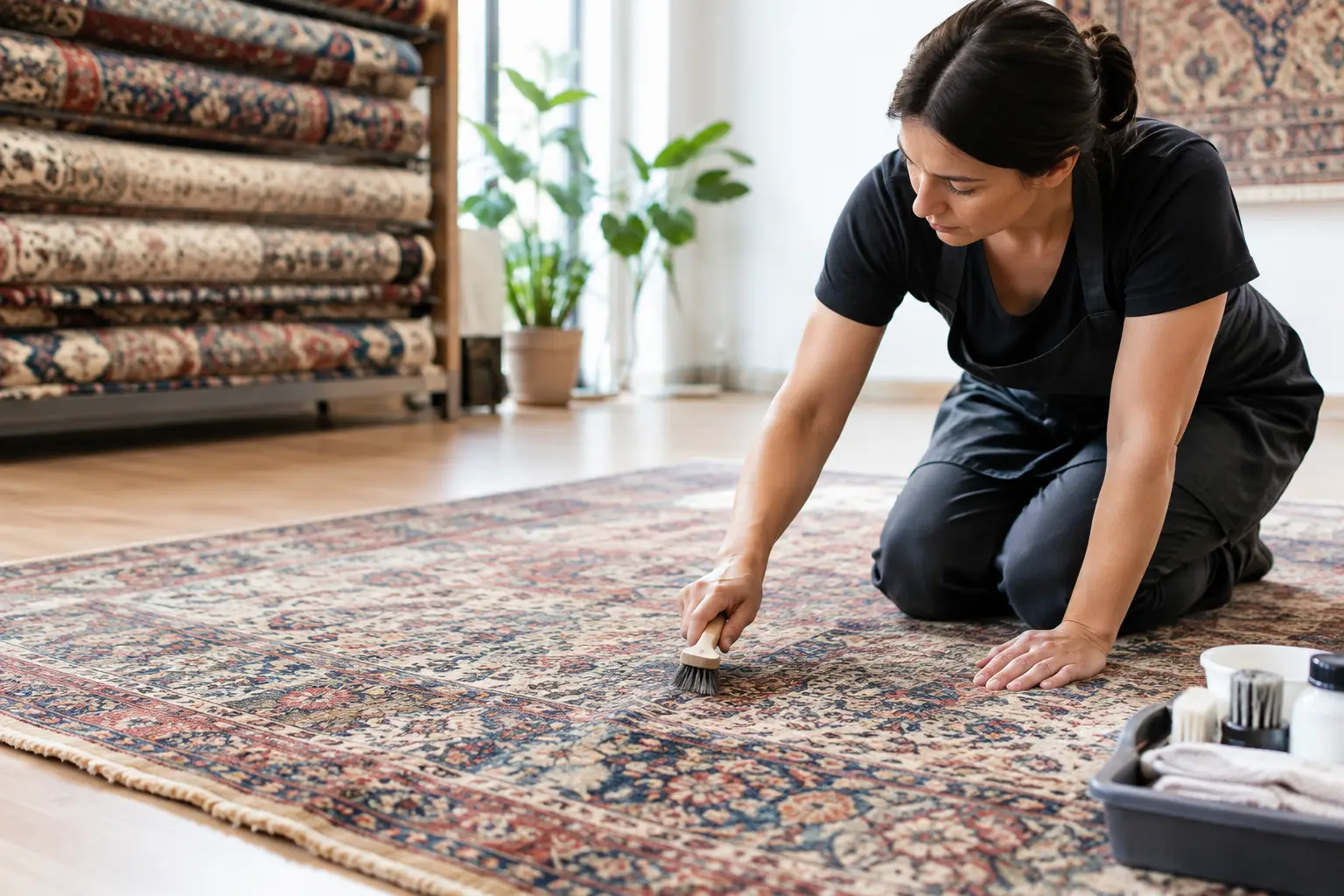
Marietta rug restoration can preserve color, texture, and history. Learn when repair makes sense and how thoughtful care protects a cherished rug at home.
From cozy area rugs to statement-making wall décor, our curated categories make it easy to explore what speaks to your space. Whether you’re refreshing a single corner or reimagining your whole home, start here and discover pieces that bring it all together.