


How to Remove Pet Odors From Rugs Safely
Learn how to remove pet odors from rugs without harming color or fibers, plus when professional washing is the smarter choice for a fresh home that lasts.
A living room can have the right sofa, a beautifully sized rug, and thoughtful accessories, yet still feel flat by evening. That usually comes down to lighting. The best living room accent lighting does more than brighten a corner – it gives the room depth, highlights texture, and makes the entire space feel more intentional.
Accent lighting is often the layer homeowners add last, but it is usually the one that makes a room feel finished. In a well-styled living room, light should not come from a single overhead fixture alone. It should move through the room in quieter ways, drawing attention to the pieces you love and softening the areas meant for relaxing.
The best accent lighting is not always the boldest or the most decorative. It is the lighting that supports the room you already have. In some homes, that means a sculptural table lamp that adds glow beside a chair. In others, it means a pair of wall sconces, a slim floor lamp behind a sectional, or a small lamp on a console that brings warmth to the perimeter of the room.
Good accent lighting creates contrast. It helps a textured rug read richer, makes layered pillows feel more dimensional, and brings out the character in wood finishes, ceramics, and artwork. If your living room feels polished during the day but underwhelming at night, the issue is often not the furniture. It is the lack of layered light.
There is also a practical side to it. Accent lighting can make a larger room feel more intimate, help define zones in an open floor plan, and reduce the harshness that comes from relying on recessed cans alone. That softer, more deliberate glow is what gives a room that collected, quietly luxurious feeling.
Before choosing fixtures, think about how you want the room to feel in the evening. Cozy and cocooning calls for warm pools of light at lower heights. Airy and refined might need fewer lamps, but better placement and cleaner silhouettes. A family living room that sees everything from homework to movie nights may need more flexibility than a formal sitting room.
This is where many homeowners make a common mistake. They shop for a lamp because they like the lamp, not because it solves a lighting need. A beautiful piece still needs to work with the room’s scale, the height of nearby furniture, and the overall visual rhythm of the space.
If your living room already has strong focal points such as a fireplace, statement rug, or large art piece, accent lighting should support them rather than compete with them. If the room feels visually quiet, lighting can provide some of the personality.
Table lamps are often the easiest place to start. They add warmth at eye level, they are easy to move, and they work well on end tables, consoles, and built-ins. A ceramic or textured base can also introduce another material into the room, which helps the space feel more layered. In a room with a substantial sectional, undersized table lamps can disappear, so scale matters.
Floor lamps are especially useful when side tables are limited or when you want to illuminate a reading corner. An arc floor lamp can reach over a seating area beautifully, while a slender shaded floor lamp can quietly fill a dim corner without taking over the room. They are functional, but they also help balance the vertical lines in a living room with low furniture.
Wall sconces bring a more tailored look. They can frame a fireplace, add softness beside built-ins, or free up surface space on side tables. Hardwired sconces tend to feel more integrated, but plug-in versions can still look elevated when thoughtfully placed. They are a strong option if you want accent lighting that feels architectural rather than decorative.
Picture lights and small directional lights are ideal when artwork, shelves, or a textured wall treatment deserve attention. These are subtle choices, but they can change the room dramatically at night. Instead of flooding the whole room with light, they direct the eye and create a more composed atmosphere.
LED strip lighting has its place too, particularly inside shelving or cabinetry. Used sparingly, it can add depth and a soft custom look. Used too aggressively, it can feel cold or overly modern in a traditional living room. This is one of those details where restraint usually gives the better result.
Placement matters as much as the fixture itself. A lamp in the wrong spot will not create the effect you want, even if it is beautiful on its own. In most living rooms, the best accent lighting appears around the edges first, then closer to the center.
A console behind a sofa is one of the easiest places to add glow. The light sits slightly removed from the main seating area, which makes the room feel deeper. A lamp on a side table near a favorite chair creates a natural reading zone and adds comfort without needing much space.
Built-ins are another strong opportunity. Accent lighting there can highlight books, collected objects, framed photos, or decorative bowls. It makes the room feel more personal. Near a fireplace, sconces or a pair of lamps can help the entire wall feel grounded instead of top-heavy.
If your living room opens into a kitchen or dining area, accent lighting can also help visually define the lounge space. This is especially helpful in newer homes where one overhead lighting plan serves several functions but does not add much intimacy.
Living rooms are full of surfaces that respond differently to light. Wool rugs absorb and soften it. Glass and metals reflect it. Linen shades diffuse it. Wood can look richer and warmer under the right bulb temperature, while cooler light can make even beautiful furnishings feel sterile.
That is why bulb choice matters. In most living rooms, a warm white light feels best. It complements natural textures and creates the inviting atmosphere people want at the end of the day. Bright daylight bulbs may sound practical, but they often make a space feel more like a workspace than a retreat.
Lamp shades matter too. A white or cream shade generally casts the most flattering glow. Dark shades can look dramatic, but they reduce output and can make a room feel dim unless you have several other light sources. If your living room includes textured rugs, soft throws, or upholstered seating, a diffused warm light will usually show those materials at their best.
One of the easiest ways to make a living room feel disjointed is to treat every lamp and fixture like a separate decorating moment. The room does not need everything to match, but it should feel related. Finishes, shapes, and shade styles should speak to one another, even if they are not identical.
If your space leans classic, look for lighting with timeless lines and quiet detail. If it is more modern organic, choose forms with clean silhouettes and tactile materials. In transitional rooms, contrast often works well, such as a traditional lamp shape in a more contemporary finish.
Height also affects cohesion. If every light source sits at the same level, the room can feel static. A mix of table lamps, sconces, and floor lamps creates a better visual cadence. This layered approach feels more natural and gives you flexibility throughout the day.
For homeowners trying to pull a room together, it often helps to think about lighting the same way you think about rugs or pillows. It is not just functional. It is part of the room’s composition. At Home Rug Gallery, that coordinated perspective is often what helps a living room move from almost finished to effortlessly styled.
The most decorative fixture is not always the most useful. A striking lamp with an opaque shade may look beautiful on a console but offer very little usable glow. A minimalist floor lamp may provide excellent light but feel too spare for a room that needs softness.
There is also the question of scale. Larger lamps can anchor a room and make it feel intentional, but they need enough surface area and breathing room. Smaller accent lights can be charming, though they may get lost in a living room with high ceilings or substantial furniture.
Then there is wiring and convenience. Plug-in lighting offers flexibility, while hardwired options often look cleaner and more permanent. It depends on whether you are refining an existing room or planning a more complete update.
A living room should feel good at 7 p.m., not just at noon. When accent lighting is chosen well, the room becomes softer, richer, and far more inviting. Colors feel deeper. Textures stand out. The space starts to reflect the kind of comfort that feels both elevated and deeply personal.
If your living room feels close but not quite complete, lighting may be the missing layer. Often, the best changes are not the loudest ones. They are the ones that make the whole room settle into place.
Learn how to remove pet odors from rugs without harming color or fibers, plus when professional washing is the smarter choice for a fresh home that lasts.

Use this Kennesaw rug repair guide to spot damage early, choose the right restoration, and protect the color, texture, and comfort of your favorite rug.

Marietta rug restoration can preserve color, texture, and history. Learn when repair makes sense and how thoughtful care protects a cherished rug at home.
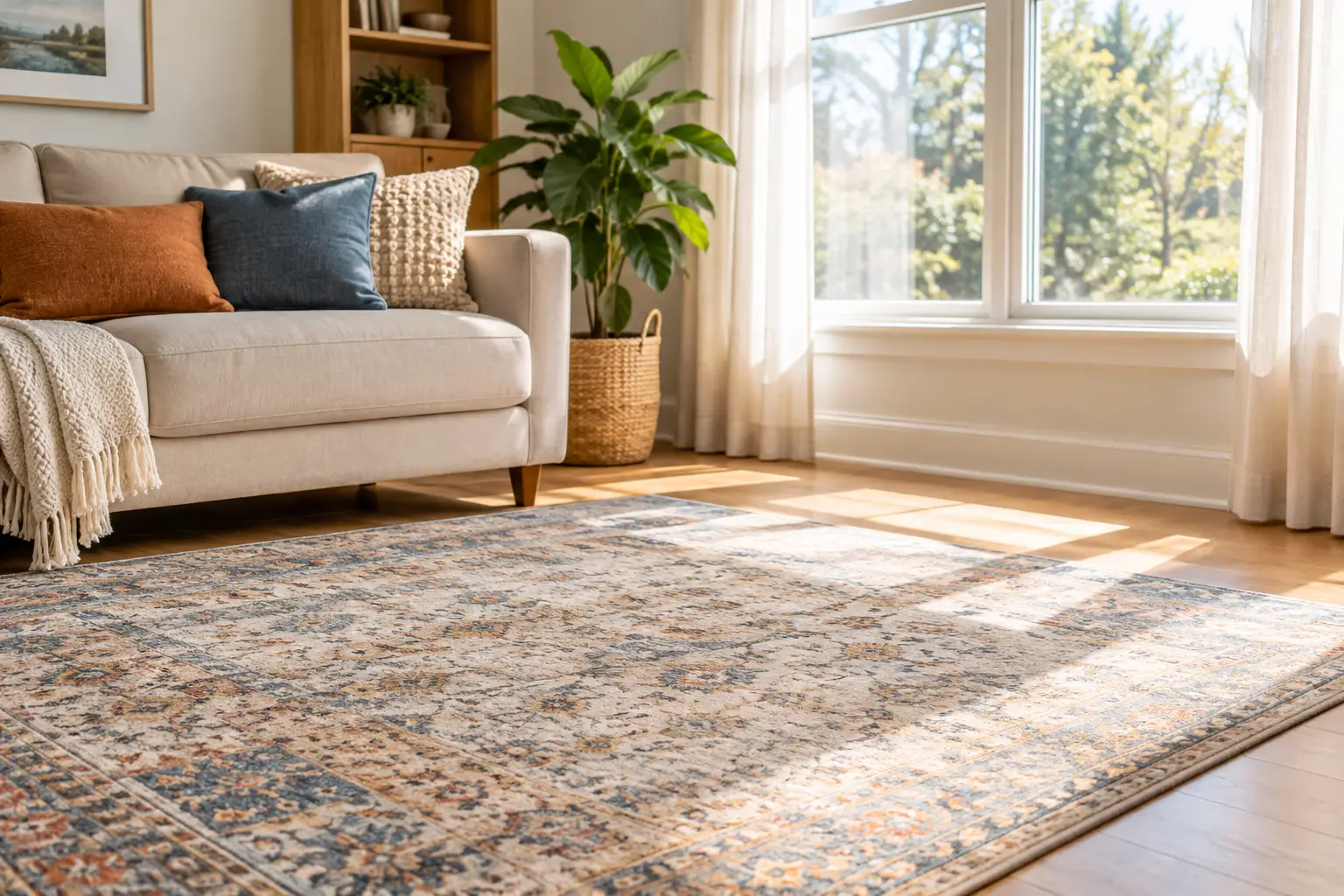
Learn how to protect rugs from sun fading with thoughtful window treatments, rotation, cleaning, and placement tips that preserve color and comfort daily.
From cozy area rugs to statement-making wall décor, our curated categories make it easy to explore what speaks to your space. Whether you’re refreshing a single corner or reimagining your whole home, start here and discover pieces that bring it all together.