A beautiful rug quietly does a great deal of work. It anchors the seating area, softens a room’s acoustics, adds warmth underfoot, and brings the colors of a space into focus. But the very rooms where a rug matters most are often the rooms where it receives the most traffic and sunlight. Knowing how often to rotate area rugs is one of the simplest ways to help a favorite piece age gracefully rather than unevenly.
For most homes, rotating an area rug every six months is a smart starting point. A 180-degree turn redistributes foot traffic, changes where furniture pressure falls, and gives one side of the rug a break from direct sunlight. Yet the right schedule depends on the rug, the room, and the rhythm of life in your home.
How Often to Rotate Area Rugs in Each Room
A twice-yearly rotation works well for many living rooms, bedrooms, and dining rooms. Consider doing it when daylight saving time begins and ends, or at the start of spring and fall. Tying the task to a familiar seasonal routine makes it far easier to remember.
High-traffic spaces deserve more attention. In a busy family room, entryway, hallway, or room where pets regularly nap and play, rotate the rug every three to four months. The goal is not to constantly move furniture. It is to prevent the same walking paths from becoming visibly flatter, duller, or more worn than the rest of the rug.
A guest-room rug or a rug in a low-use formal sitting room may only need rotation once a year. If the room has large windows, though, sun exposure may call for a more frequent turn even when foot traffic is light. Ultraviolet light can gradually soften rich colors, especially along the edge closest to windows or glass doors.
A quick schedule by use
A rug in a low-traffic room can usually be rotated annually. For an everyday bedroom or living room, aim for every six months. In active family spaces and sunny rooms, rotate every three to four months. Entry rugs may need closer monitoring because grit and concentrated traffic can affect them faster than a larger room-size rug.
The schedule is flexible. What matters most is noticing whether one end of the rug is receiving a noticeably different life than the other.
Why Rotation Makes Such a Visible Difference
Area rugs rarely wear evenly on their own. The route from the sofa to the kitchen, the favorite chair by the window, and the path children and pets take through the room all create concentrated pressure. Over time, fibers can compress and surface soil can settle deeper in those areas.
Furniture contributes as well. A coffee table, sofa legs, or dining chairs can leave impressions in the same locations for years. Rotation changes the relationship between the rug and the room, so those pressure points do not keep landing in precisely the same areas.
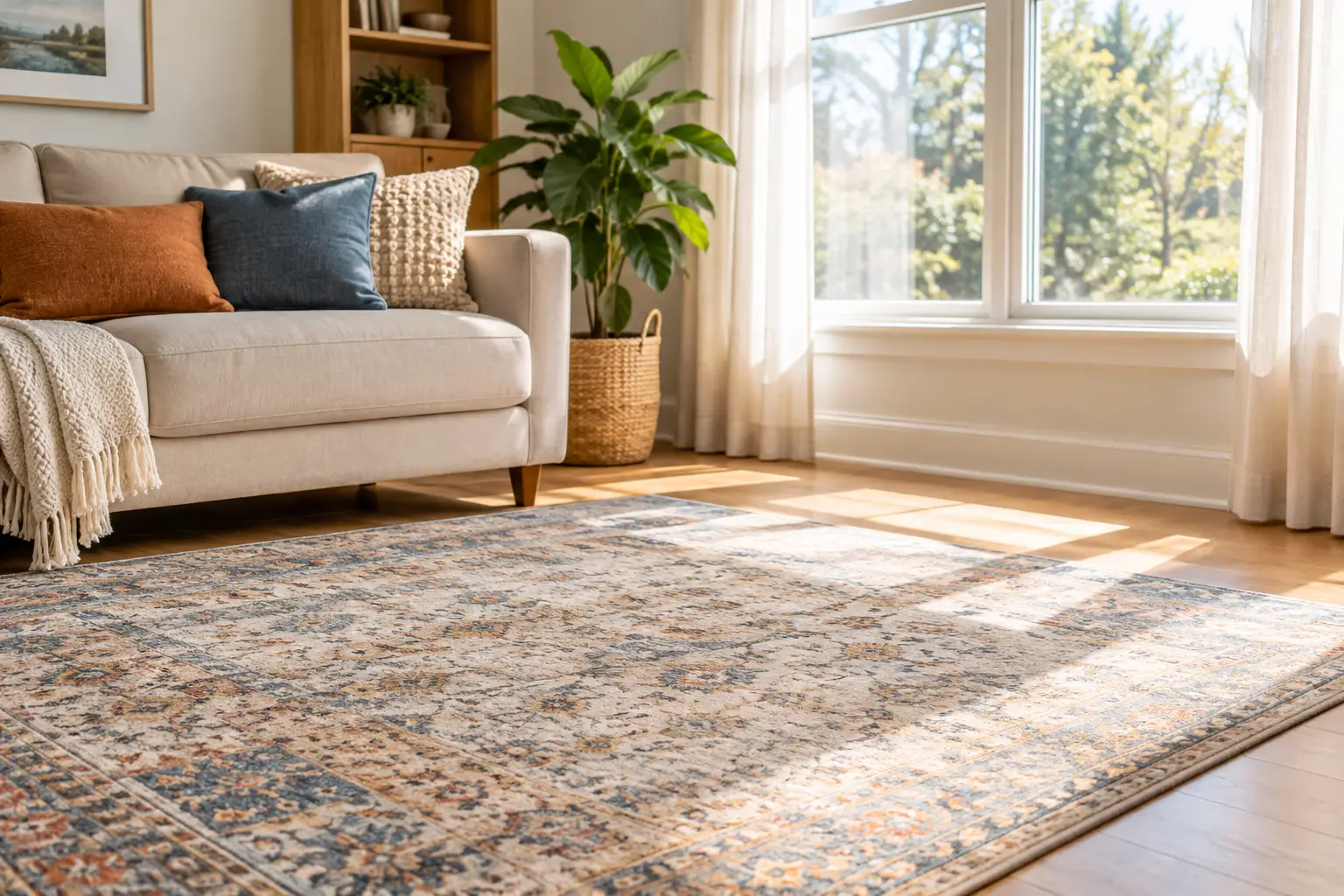
Sunlight is another reason to rotate. A rug may look evenly colored when it is new, but bright North Georgia daylight can affect one side more than the other. Turning the rug periodically helps keep any gradual fading more balanced. It also lets you notice early changes before they become distracting.
Rotation does not stop normal aging, nor should it. A well-loved rug often develops character. The purpose is to make that character feel intentional and even, preserving the overall polish of the room.
Signs Your Rug Needs to Be Turned Sooner
You do not need to wait for the calendar if your rug is signaling that it needs attention. Look for a traffic lane that appears flatter than surrounding areas, colors that seem lighter near a window, or one edge that is visibly more soiled than the other. Fringe that receives frequent foot contact may also start looking more tired on one end.
A rug that has shifted, curled at the corners, or developed a slightly uneven outline may benefit from more than a simple rotation. Check the rug pad and the floor beneath it. A properly sized pad adds cushioning, reduces slippage, and helps minimize the friction that can contribute to uneven wear.
If you are moving furniture for another reason, such as refreshing the layout for a season or adding a new accent chair, it is an ideal time to rotate the rug. Small changes in placement can make a familiar room feel effortlessly styled while giving the rug a more balanced pattern of use.
The Right Way to Rotate an Area Rug
For most rectangular rugs, rotate the piece 180 degrees so the end that was closest to the sofa, bed, or window now faces the opposite direction. This is usually more useful than turning it 90 degrees because it preserves the relationship between the rug’s shape and the furniture layout.
Before moving it, vacuum both the rug and the floor underneath. Fine grit works its way down through the pile, where it can act like an abrasive under foot traffic. If the rug is heavy or large, enlist help rather than pulling it across hardwood or snagging an edge on furniture.
For a smooth reset, follow these four steps:
- Move lightweight furniture and lift heavier pieces when possible rather than dragging them.
- Roll the rug from one end, keeping the roll loose enough to avoid stressing the fibers.
- Inspect the pad for wear, crumbling, moisture, or a poor fit before placing the rug back down.
- Unroll the rug in its new orientation and smooth it from the center outward.
Give the rug a day or two to settle, particularly if it has been under furniture. Minor impressions often relax once the pile has time to breathe. For more persistent dents, gently lifting the fibers with your fingers or a soft brush can help, depending on the rug’s construction.
When a 180-Degree Turn Is Not the Best Choice
Not every rug should be rotated automatically. Directional designs, animal hides, rugs with a distinct high-to-low pile, and pieces intended to be viewed from one particular orientation may not look right after a turn. In those cases, consider adjusting furniture slightly, using window treatments to manage strong light, or changing the rug’s placement within the home when practical.
Dining room rugs also require a little thought. A 180-degree rotation is usually fine if the rug is large enough for chairs to remain fully on it when pulled out. If the dining table is centered over a decorative medallion or a distinctive border, rotating the rug may disrupt the look. Protecting it with routine vacuuming, prompt spill care, and an appropriate pad may be the better strategy.
Antique, hand-knotted, handwoven, or fragile rugs deserve extra care. These pieces can be remarkably durable, but their fibers, dyes, fringe, and existing repairs may need a more tailored approach. If a rug feels delicate, has curling edges, or shows signs of damage, avoid aggressive moving or unnecessary handling. Professional rug care guidance can help you preserve both its beauty and its history.
Rotation Works Best Alongside Regular Rug Care
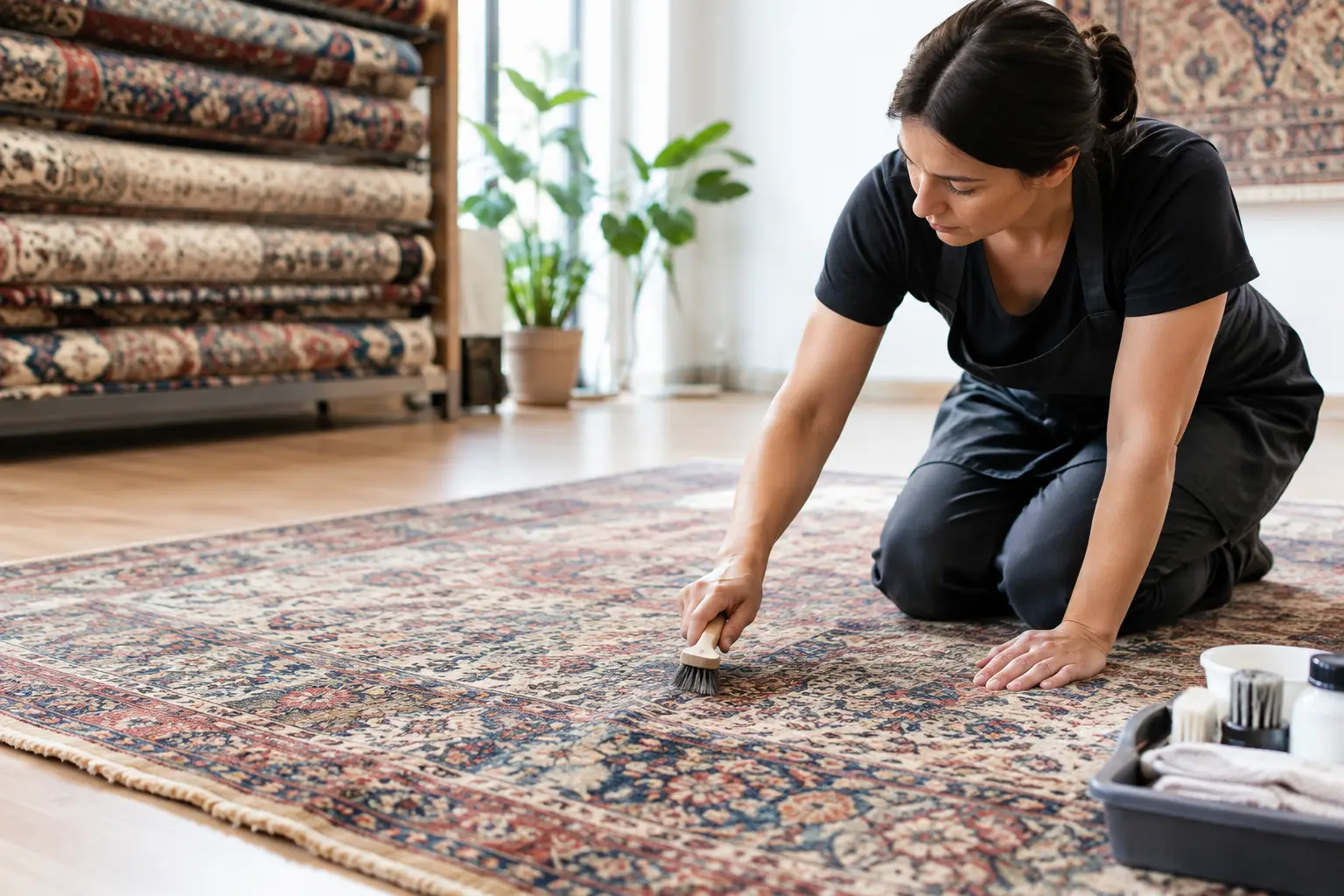
Turning a rug is helpful, but it is only one part of keeping it looking refined. Vacuum regularly at the appropriate setting for the rug’s pile and construction. Address spills promptly by blotting, never rubbing, and avoid saturating the fibers with household cleaners. Periodic professional cleaning removes embedded soil that vacuuming alone cannot reach.
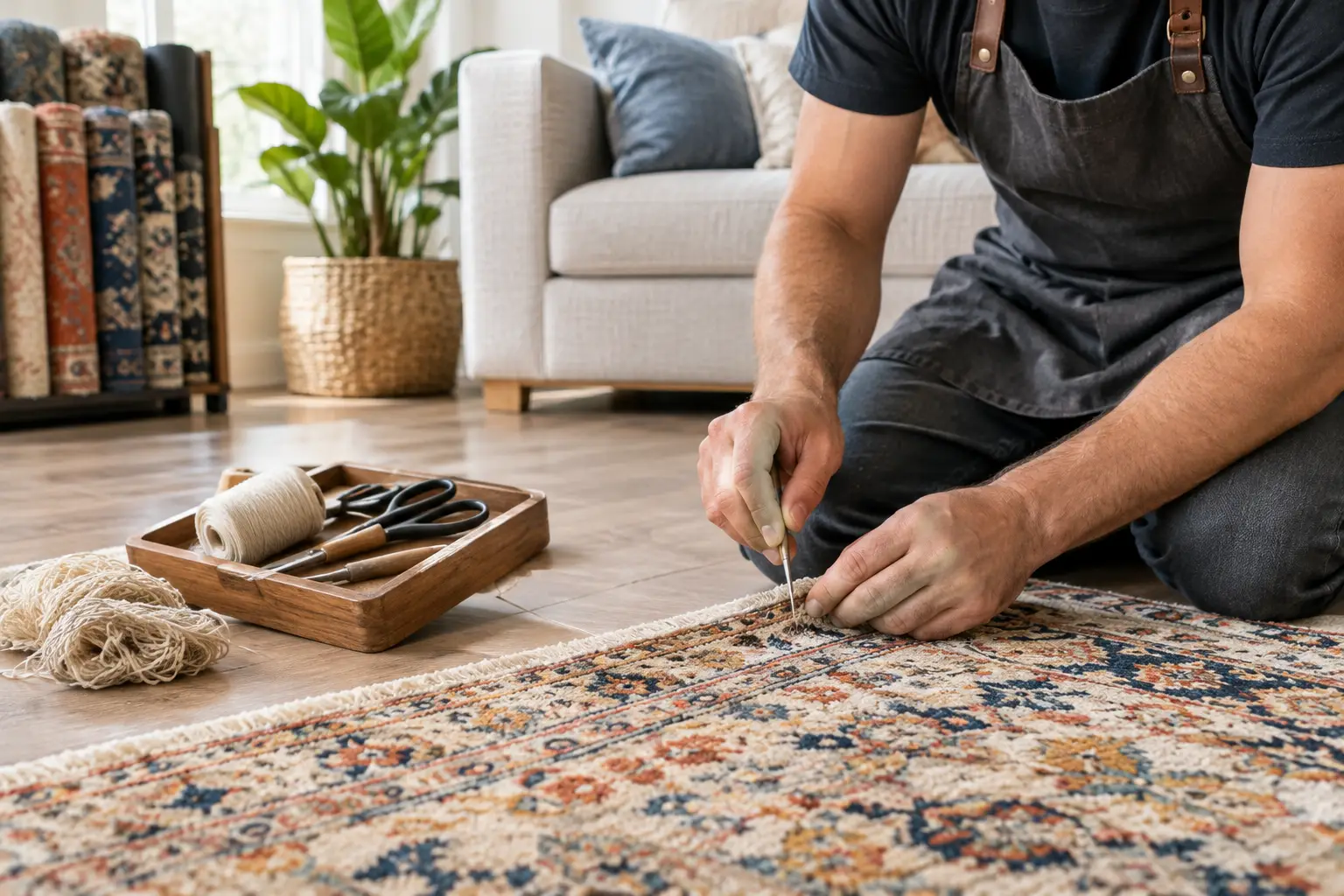
It is also wise to inspect the rug during each rotation. Look at the back for wear, check the fringe and binding, and notice whether any colors have changed. Early attention to a loose edge or small repair can often prevent a more complicated restoration later.
At Home Rug Gallery, we often see how a little consistent care protects the pieces that make a room feel deeply personal. A rug does not need to remain perfect to remain beautiful. It simply needs thoughtful placement, balanced use, and the kind of attention that lets its texture, color, and character stay at home in the room you love.