


How to Remove Pet Odors From Rugs Safely
Learn how to remove pet odors from rugs without harming color or fibers, plus when professional washing is the smarter choice for a fresh home that lasts.
A patterned rug can do more than fill the space beneath your feet. It can establish the room’s energy before a single pillow is placed or a lamp is switched on. Knowing how to decorate around a patterned rug means letting that visual foundation lead the conversation, while giving the rest of the room enough breathing room to feel polished rather than overdone.
The goal is not to match every color or repeat every motif. A beautiful room feels considered because its pieces relate to one another in scale, color, texture, and mood. Whether your rug is a soft vintage-inspired floral, a tailored geometric, or a richly layered traditional design, use it as the starting point for a home that feels deeply personal and effortlessly styled.
Before choosing anything else, look closely at the rug’s overall impression. From across the room, does it read warm or cool? Calm or energetic? Formal or relaxed? A rug with navy, rust, and cream may include many individual colors, but its dominant mood might still be warm, grounded, and classic.
Next, identify three colors within the pattern: one dominant color, one supporting color, and one small accent. The dominant color is usually the best guide for larger items such as upholstery, curtains, or painted furniture. A supporting color can show up in pillows, art, or a throw. The smallest accent is often most effective when used sparingly, perhaps in a vase, a lamp base, or a single lumbar pillow.
This approach keeps the room connected without making it look like every item came from the same set. It also gives you room to evolve the space over time. A rug should anchor your style, not limit it.
The most reliable approach is to choose a quieter base around a bold rug. If the rug carries a lively floral or high-contrast geometric pattern, let the sofa, main chairs, and larger window treatments rest in solids or subtle textures. Cream linen, warm taupe, mushroom, soft gray, camel, muted blue, or charcoal can all act as sophisticated supporting players, depending on the rug’s palette.
That does not mean every surrounding surface must be neutral. A patterned rug often looks even better beside a colored sofa or painted accent chair, especially when the upholstery picks up one of its less obvious tones. The key is restraint. Select one strong upholstered color rather than several competing ones.
For example, a Persian-style rug with faded terracotta, denim blue, and ivory can feel especially refined with an ivory sofa, a dusty blue chair, and warm wood tables. A crisp black-and-ivory geometric rug may invite a camel leather chair, natural woven shades, and a few olive accents. In both cases, the colors echo the rug without trying to duplicate it exactly.
Be mindful of contrast, too. A pale rug can disappear beneath pale furniture if there is no change in texture or outline. Conversely, a dark, densely patterned rug can make dark furniture feel visually heavy. If the values are similar, create distinction with lighter pillows, a wood coffee table, or furniture with visible legs that lets the rug remain part of the composition.
Many homeowners stop at one pattern because they worry the room will become busy. In reality, layered pattern is often what makes a room feel collected and complete. The secret is varying scale.
If the rug has a large, open motif, pair it with a smaller-scale stripe, a tailored check, or a quiet botanical pillow. If the rug is detailed and intricate, choose a larger, simpler pattern elsewhere. A small plaid throw, a wide-striped drapery panel, or an abstract piece of art can all work when the scales are clearly different.
Keep the palette edited as you layer. Patterns do not need to match, but they should share at least one color family or mood. A faded traditional rug can sit beautifully with modern striped pillows if both have softened tones. A bold contemporary rug can coexist with organic ceramic accessories and a handwoven throw because the materials bring warmth to its cleaner lines.
When in doubt, use texture as your second pattern. Bouclé, linen, velvet, woven cane, leather, and natural wood add depth without adding another graphic element. This is especially useful in living rooms where the rug already has a lot to say.
A rug is most successful when its size and placement make the seating area feel connected. In a living room, the front legs of sofas and chairs should generally sit on the rug, creating one unified conversation area. If the room allows, placing all furniture legs on the rug can feel even more generous and tailored.
Once the placement is right, consider the furniture silhouette. A highly ornate rug often benefits from simpler upholstery shapes – a clean-lined sofa, a rounded chair, or a streamlined coffee table. A minimal geometric rug can support more character in the furniture, such as a sculptural chair, turned-leg table, or vintage-inspired cabinet.
There is no rule that says traditional rugs require traditional furniture. Some of the most inviting rooms blend eras with confidence. A timeworn medallion rug beneath a modern sofa adds warmth and quiet luxury. A graphic rug below a classic leather chair makes the room feel fresh rather than predictable. What matters is that the scale feels balanced and the color story remains intentional.
Do not overlook the coffee table. Because it sits directly over the rug, it has a major influence on how much pattern remains visible. Glass or acrylic tables keep the floor open, while wood and upholstered ottomans add softness and weight. In a small room with a detailed rug, a table with open legs often keeps the arrangement from feeling crowded.
A patterned rug creates a strong foundation, but the room still needs vertical interest. Use walls, lighting, window treatments, and accessories to draw the eye upward and around the space.
Artwork should relate to the rug’s mood rather than copy its colors exactly. A calm landscape, textural neutral canvas, or modern abstract can create a welcome pause above a more detailed floor pattern. If the rug is subtle, art can become a bolder focal point. If the rug is dramatic, choose art with a little more visual quiet.
Lighting is another opportunity to balance the room. A patterned rug with traditional character might pair beautifully with a clean ceramic lamp or an understated metal fixture. A contemporary rug can be softened by a warm linen shade, ribbed glass, or a classic silhouette. Layered lighting also makes the rug look richer in the evening, revealing tone and texture that daylight can flatten.
For window treatments, consider how much movement the rug already provides. Solid linen drapes offer softness without competition. A delicate stripe or small-scale print can work if the rug is simpler, but heavy patterned drapes beside a busy floor covering often make a room feel smaller.
The difference between a layered room and a cluttered room is often negative space. A patterned rug needs areas of calm around it: an uncluttered wall, a solid sofa, a simple coffee-table surface, or a few well-chosen accessories instead of many small objects.
Edit decorative accents with the rug’s palette in mind. A stack of books, a ceramic bowl, a throw blanket, and one or two pillows can be enough to carry color through the room. If every shelf, chair, and table receives a patterned accessory, the result can feel more decorated than designed.
This is also where material matters. A deep wool rug may call for smooth wood, linen, aged brass, or matte ceramics. A flatwoven rug with a casual stripe may feel right with rattan, cotton, pale oak, and relaxed upholstery. Repeating a few materials throughout the room creates cohesion even when colors are varied.
A patterned rug often contains the personality homeowners are trying to add elsewhere. Instead of covering that personality with more trends, let it guide your choices. A rug with graceful florals may suggest a room that feels collected and romantic. A graphic diamond pattern may point toward a more tailored, modern setting. A muted antique-inspired design can make a newer home feel immediately more lived in.
If you are comparing options in person, bring photos of the room, fabric swatches, and a few measurements. Seeing color and texture together is especially helpful with patterned rugs, since undertones can shift under different lighting. At Home Rug Gallery, homeowners can compare rugs with pillows, lighting, and décor in a showroom setting, making it easier to see the complete room rather than make one isolated decision.
Your rug does not need to coordinate with everything perfectly to make the room feel complete. It simply needs a few thoughtful echoes and enough calm around it to be appreciated. Choose what supports its color, respect its scale, and leave space for the room to feel like home.
Learn how to remove pet odors from rugs without harming color or fibers, plus when professional washing is the smarter choice for a fresh home that lasts.
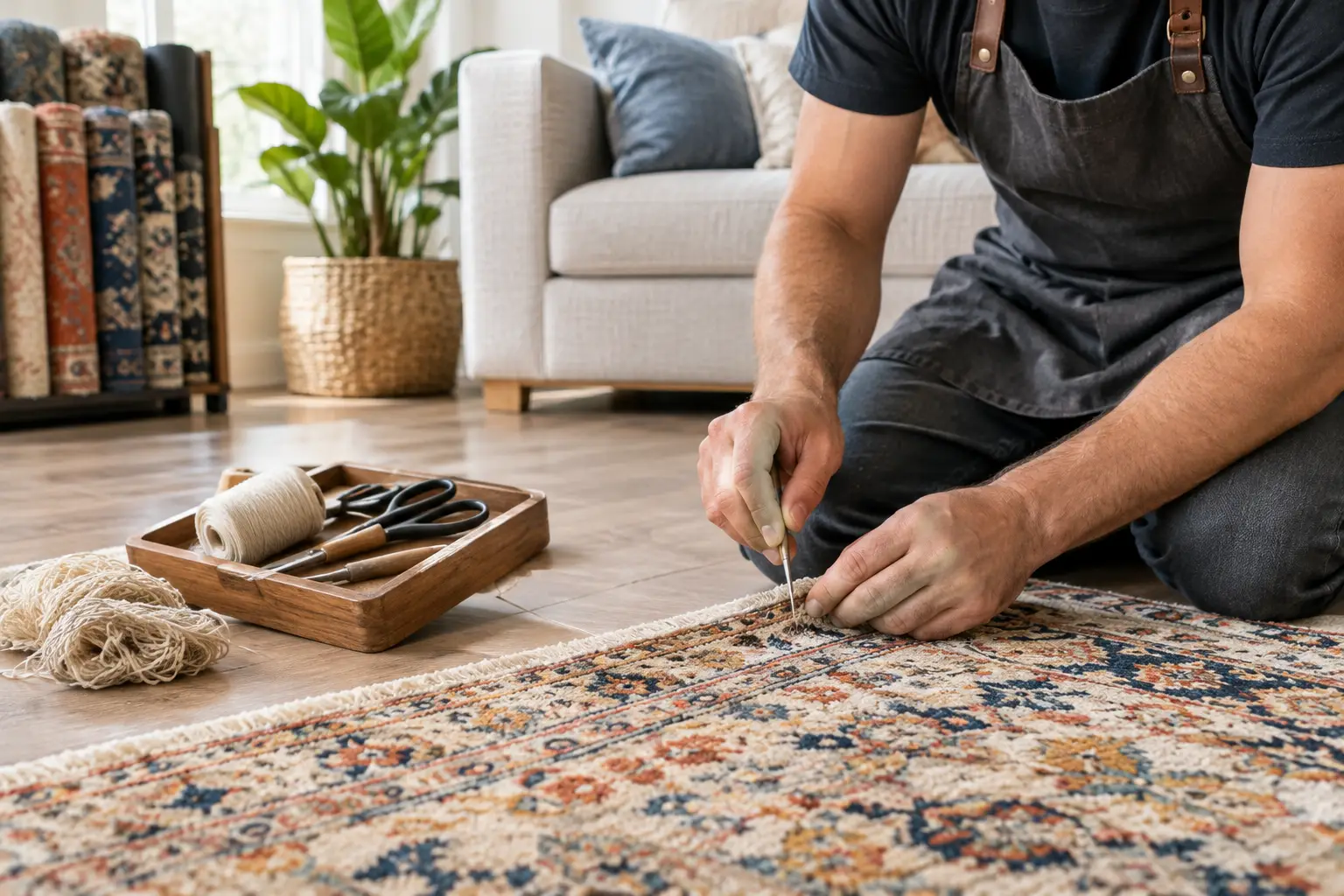
Use this Kennesaw rug repair guide to spot damage early, choose the right restoration, and protect the color, texture, and comfort of your favorite rug.
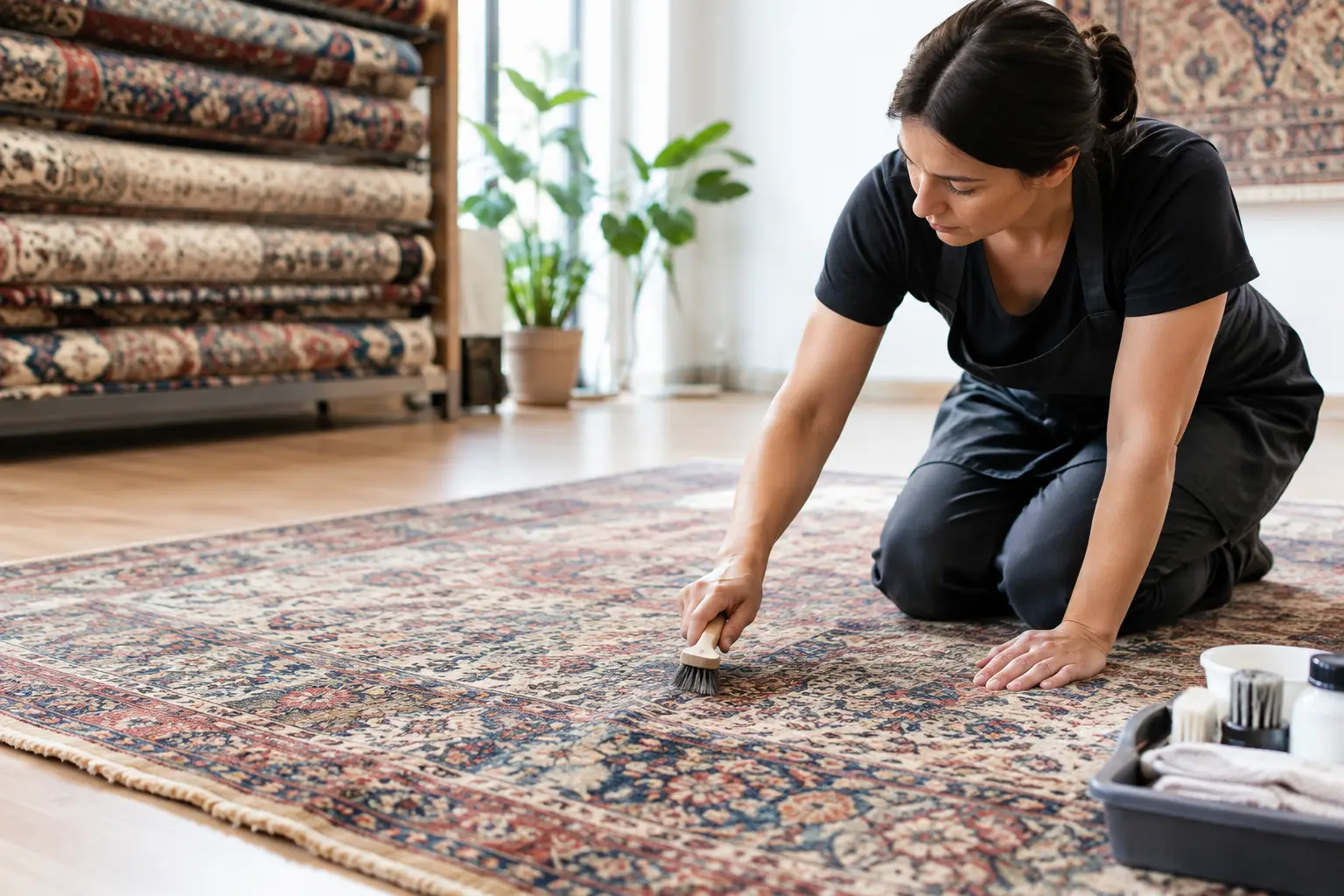
Marietta rug restoration can preserve color, texture, and history. Learn when repair makes sense and how thoughtful care protects a cherished rug at home.
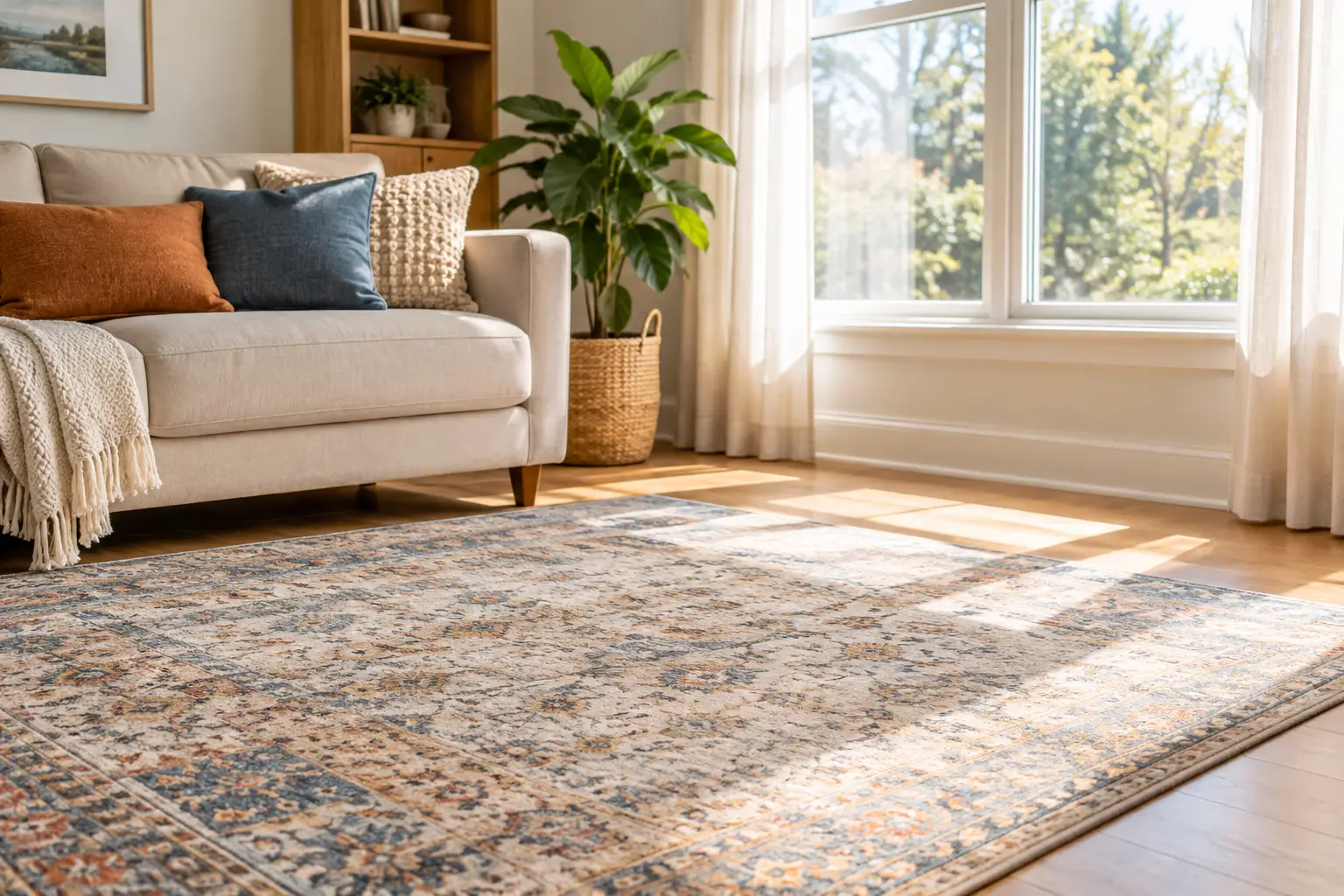
Learn how to protect rugs from sun fading with thoughtful window treatments, rotation, cleaning, and placement tips that preserve color and comfort daily.
From cozy area rugs to statement-making wall décor, our curated categories make it easy to explore what speaks to your space. Whether you’re refreshing a single corner or reimagining your whole home, start here and discover pieces that bring it all together.