

Do Rug Pads Prevent Slipping? What to Know
Do rug pads prevent slipping? Learn how pad material, rug size, flooring, and proper placement work together to keep rooms safe and beautifully styled.
A beautiful area rug should soften a room, define the furniture arrangement, and make everyday living feel more comfortable. It should not shift underfoot when someone crosses the hall with laundry or a child runs through the living room. So, do rug pads prevent slipping? In most cases, yes – provided you choose a pad made for your flooring, use the right size, and start with a rug that is in good condition.
A rug pad is one of those behind-the-scenes details that makes a room feel more finished. It can add cushioning, protect the floor beneath, improve the way a rug lays, and help hold it in place. But not every pad performs the same way, and a thin, generic option is not always the answer for a busy household or a delicate floor.
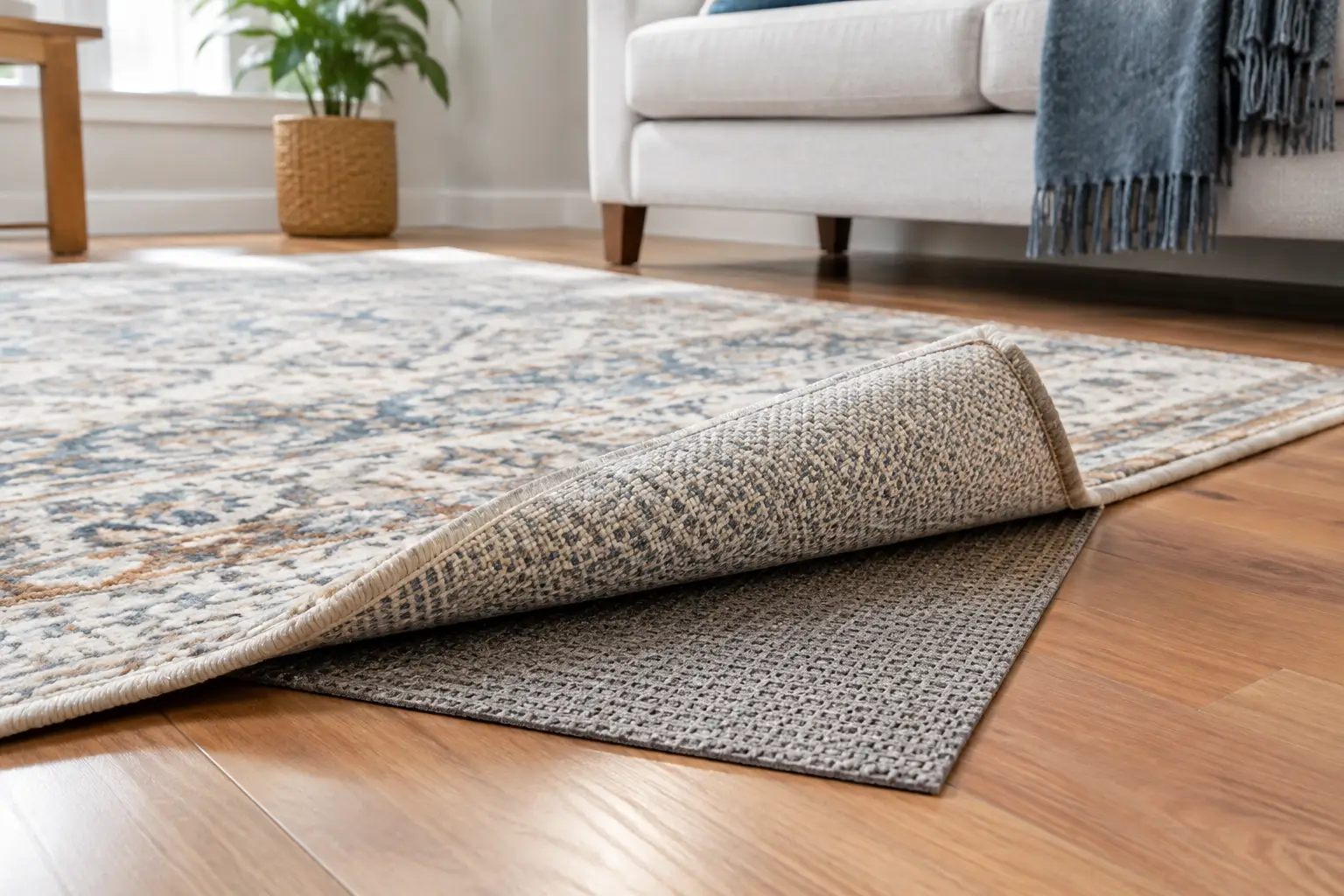
Rug pads create friction between the floor and the rug backing. That friction helps keep the rug from sliding, bunching, or creeping across the room with daily foot traffic. A quality pad also gives the rug a more stable foundation, so its edges are less likely to curl or lift.
The effect depends on the materials involved. A flatwoven rug on polished hardwood has very little natural grip, while a heavy wool rug on carpet may stay relatively still without much help. Smooth surfaces such as hardwood, laminate, luxury vinyl, tile, and stone typically benefit the most from a non-slip pad.
A pad does not adhere your rug permanently to the floor, nor should it. The goal is secure, comfortable placement that still allows you to lift the rug for routine cleaning and floor care. Think of it as a quiet layer of support rather than a visible solution.
The most effective rug pad is not simply the thickest one on the shelf. It needs to suit both the rug and the surface below it.
For hardwood, engineered wood, laminate, and vinyl, look for a pad specifically labeled safe for that floor type. Natural rubber pads are often a strong choice because they grip well without relying on adhesives. Felt-and-rubber pads offer an especially appealing balance for living rooms and bedrooms: the rubber side helps prevent slipping, while the felt adds a cushioned, more luxurious feel underfoot.
Avoid pads that can discolor, stain, or react with a floor finish. This matters most with older hardwood floors, newly refinished surfaces, and some vinyl products. If you are unsure, check the flooring manufacturer’s guidance and test the pad in a discreet spot before placing it throughout a room.
Hard, smooth floors make a room feel clean and tailored, but they offer little traction for a rug. A non-slip rubber-backed pad is generally useful here, particularly in entryways, kitchens, hallways, and other high-traffic spaces. Choose a pad with enough density to keep the rug grounded, but not so much thickness that it creates an awkward transition at a doorway.
Rugs can slide on carpet, too, especially low-pile carpet. In this case, you need a pad designed to grip carpet fibers rather than a typical hard-floor pad. Some carpet pads use a firmer, textured surface that helps prevent the area rug from wrinkling or walking across the carpet.
A plush pad may feel inviting in a bedroom, but it can make furniture less stable in a dining room or under a coffee table. The room’s function should guide the decision.
Even the best non-slip material cannot fully compensate for a rug that is too small for the room. Small rugs are lighter and more likely to move, especially when placed in open walking paths. A properly scaled area rug is naturally more stable because furniture and the room layout help anchor it visually and physically.
Your rug pad should be slightly smaller than the rug itself, generally by about one inch on every side. That allows the rug’s edges to rest flat against the floor, concealing the pad while reducing the chance of a raised edge. A pad that extends beyond the rug can collect dust, show at the perimeter, and create a tripping point.
For runners, this detail is especially important. A runner pad should follow the runner’s shape closely and stop short of both ends. In a long hallway, even a small amount of movement can quickly become noticeable.
A rug pad is highly useful, but it is not a cure for every slipping concern. If the rug’s backing is deteriorating, brittle, or shedding, the rug may not sit evenly enough for any pad to hold it securely. Curling corners, stretched edges, and rippling can also create instability that deserves attention before a pad is added.
Likewise, a rug that is folded from storage or has deep creases may need time to relax and lay flat. Place it on a clean floor, gently reverse-roll it if appropriate for the rug construction, and allow the fibers to settle. Do not assume a pad will flatten severe creases immediately.
Furniture placement also plays a role. In a living room, positioning the front legs of a sofa and chairs on a generously sized rug can provide stability. In a dining room, the rug should extend far enough beyond the table that chairs remain on it when pulled out. If chairs repeatedly catch the edge, the issue is usually rug scale, not pad quality.
Thickness changes the feeling of a rug more than most people expect. A thin pad offers grip with minimal lift, which is often ideal for entryways, kitchens, dining rooms, and spaces where doors need to clear the rug. It preserves a low-profile, tailored appearance.
A thicker felt-and-rubber pad can make a rug feel noticeably softer in bedrooms, family rooms, and sitting areas. It can be particularly helpful beneath a flatweave or a finer, low-pile rug that needs a bit more presence underfoot. The trade-off is height. Before selecting a plush pad, consider door swings, transitions into adjacent rooms, and whether heavy furniture will sit on top of it.
For homes with children, pets, or frequent guests, stability should take priority over extra cushioning in circulation areas. The safest choice is usually a dense pad that grips well and allows the rug to lie flat.
A rug pad performs best when it is kept clean and properly positioned. Dust, grit, pet hair, and moisture can reduce traction over time, especially on smooth flooring. Periodically lift the rug, vacuum beneath it as recommended for your floor, and inspect the pad for wear or residue.
If a rug begins to shift after staying secure for years, do not assume the rug itself is the problem. The pad may have compressed, dried out, or lost some of its grip. Replacing a worn pad is a straightforward refresh that can improve comfort and protect your floor as well.
It is also wise to rotate rugs periodically where sunlight and uneven traffic affect the fibers. This supports more even wear and gives you a chance to check the rug’s backing, edges, and corners before small issues become more noticeable.
They can make a meaningful difference in nearly every room, but the right approach changes from space to space. A decorative runner in an entryway needs strong traction and a low profile. A bedroom rug can benefit from more cushion. A dining room rug needs to stay flat enough for chairs to move comfortably. In a bathroom or near an exterior door, moisture deserves extra consideration, since dampness can reduce grip and should be addressed promptly.
This is why seeing rugs and pads in person can be so helpful. At Home Rug Gallery, homeowners can compare textures, thicknesses, and room-ready proportions with guidance that considers the flooring and furnishings already in place. The most polished rooms are not built from one beautiful piece alone. They are created through thoughtful layers that work as well as they look.
A rug pad may never be the feature guests notice first, but it is often what lets a favorite rug feel settled, comfortable, and confidently at home. Choose one that supports the way your household actually lives, and your room will feel better with every step.
Do rug pads prevent slipping? Learn how pad material, rug size, flooring, and proper placement work together to keep rooms safe and beautifully styled.
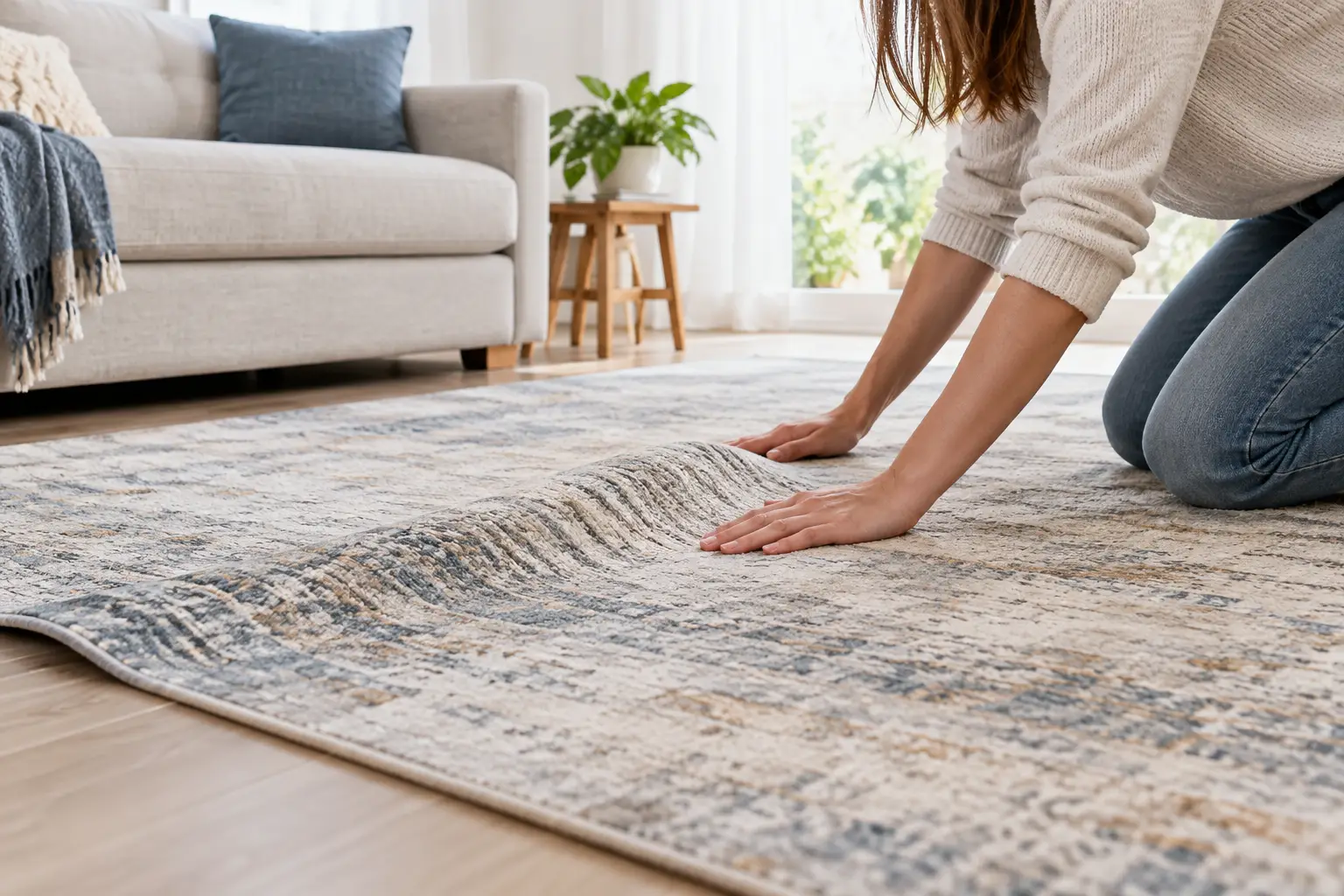
Wondering why rugs ripple? Learn the common causes, safe ways to flatten a rug, and when professional care can protect its shape and beauty for years.
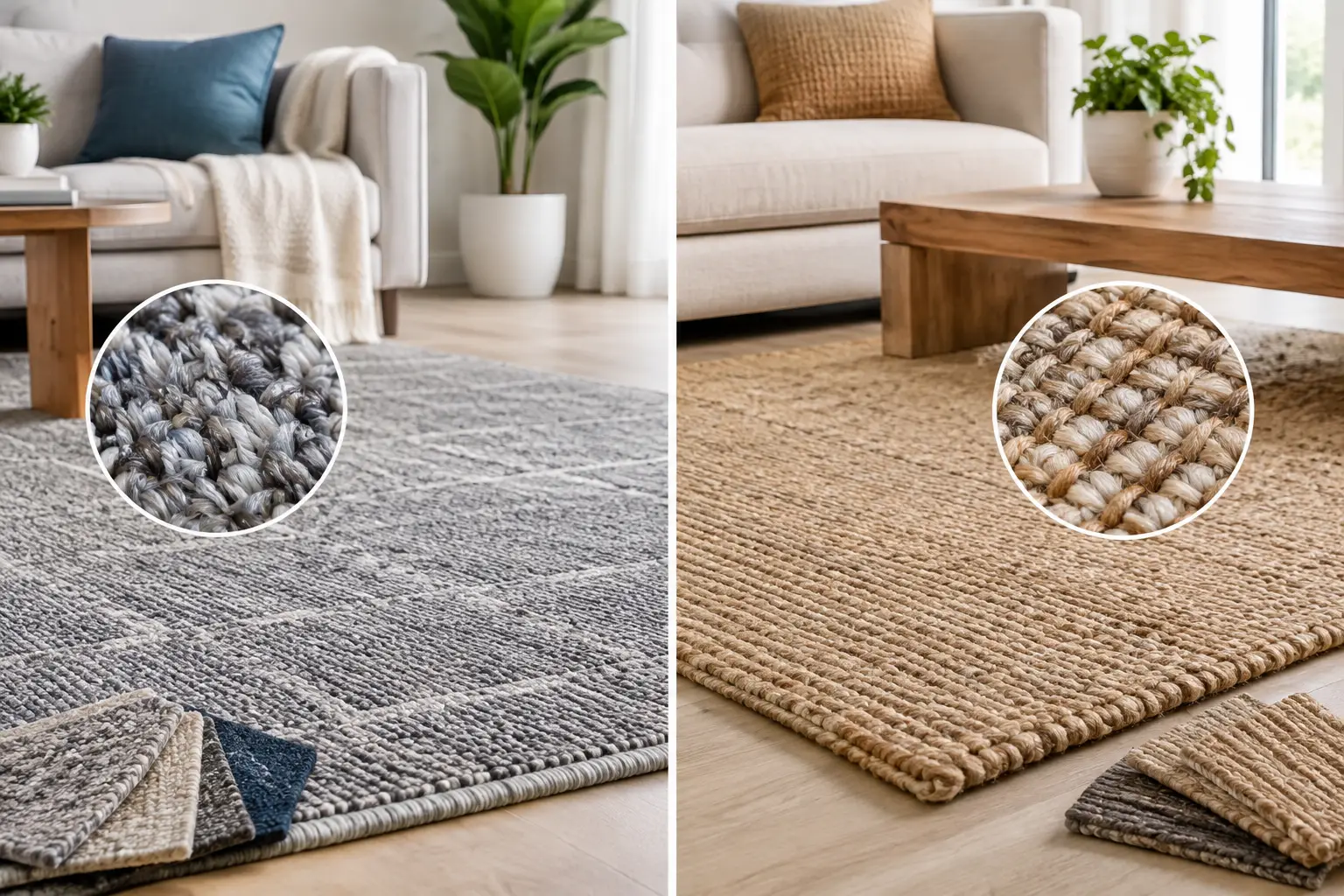
Compare synthetic versus natural fiber rugs for comfort, durability, care, and style to choose a beautiful, practical foundation for your home today.
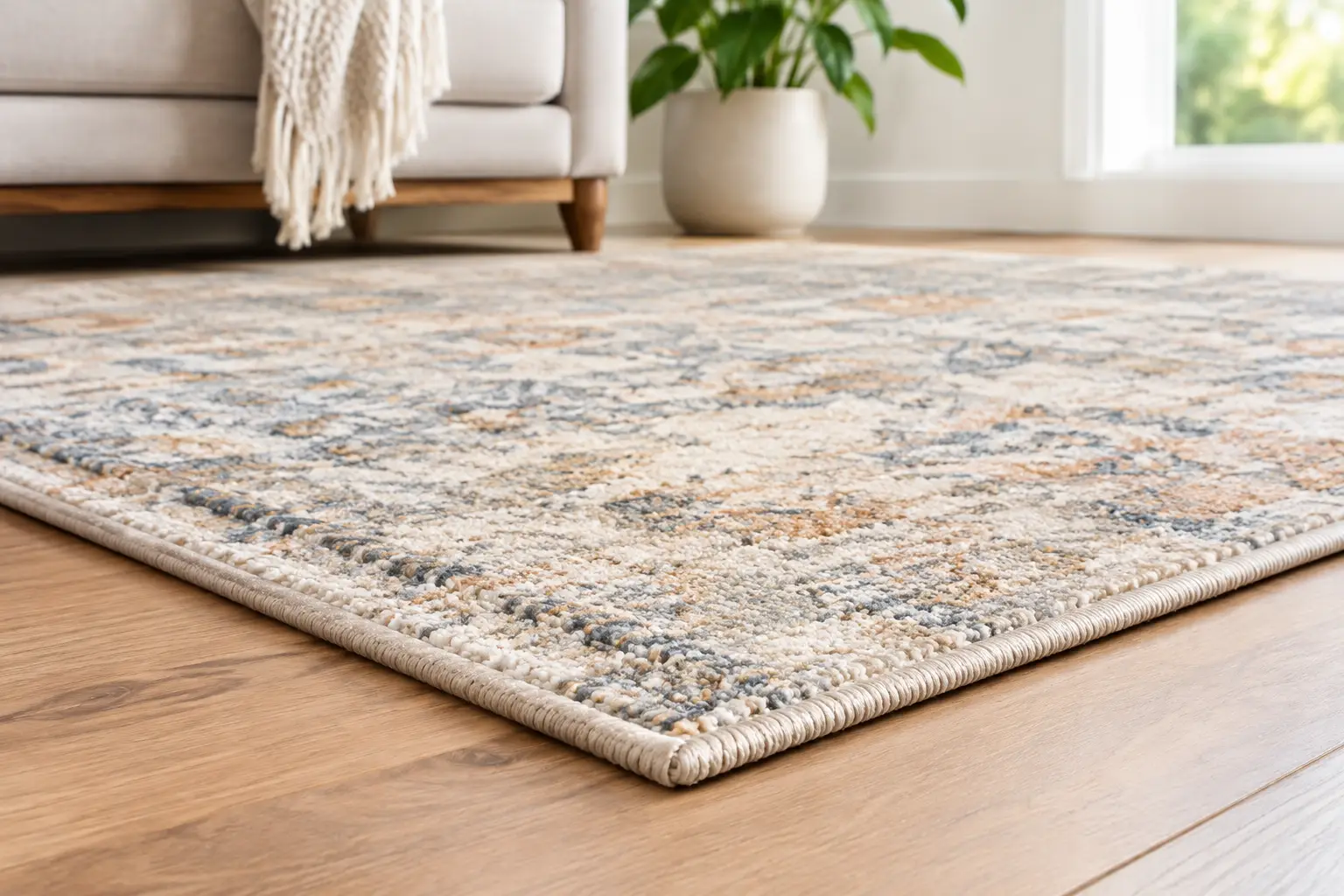
Rug binding gives worn, cut, or custom-sized rugs a polished edge, helping prevent fraying while preserving comfort, style, and everyday function at home.
From cozy area rugs to statement-making wall décor, our curated categories make it easy to explore what speaks to your space. Whether you’re refreshing a single corner or reimagining your whole home, start here and discover pieces that bring it all together.