A beautiful area rug can make a room feel finished, grounded, and deeply personal – until a wave appears across the surface or a corner refuses to lie flat. If you are wondering why rugs ripple, the answer is usually less mysterious than it looks. Rippling often comes down to how a rug has been stored, supported, exposed to moisture, or used in everyday life.
The good news is that many ripples can be corrected with a little patience and the right approach. The key is avoiding quick fixes that may stress the fibers, distort the backing, or compromise a rug you chose to bring warmth and quiet luxury to your home.
Why rugs ripple in the first place
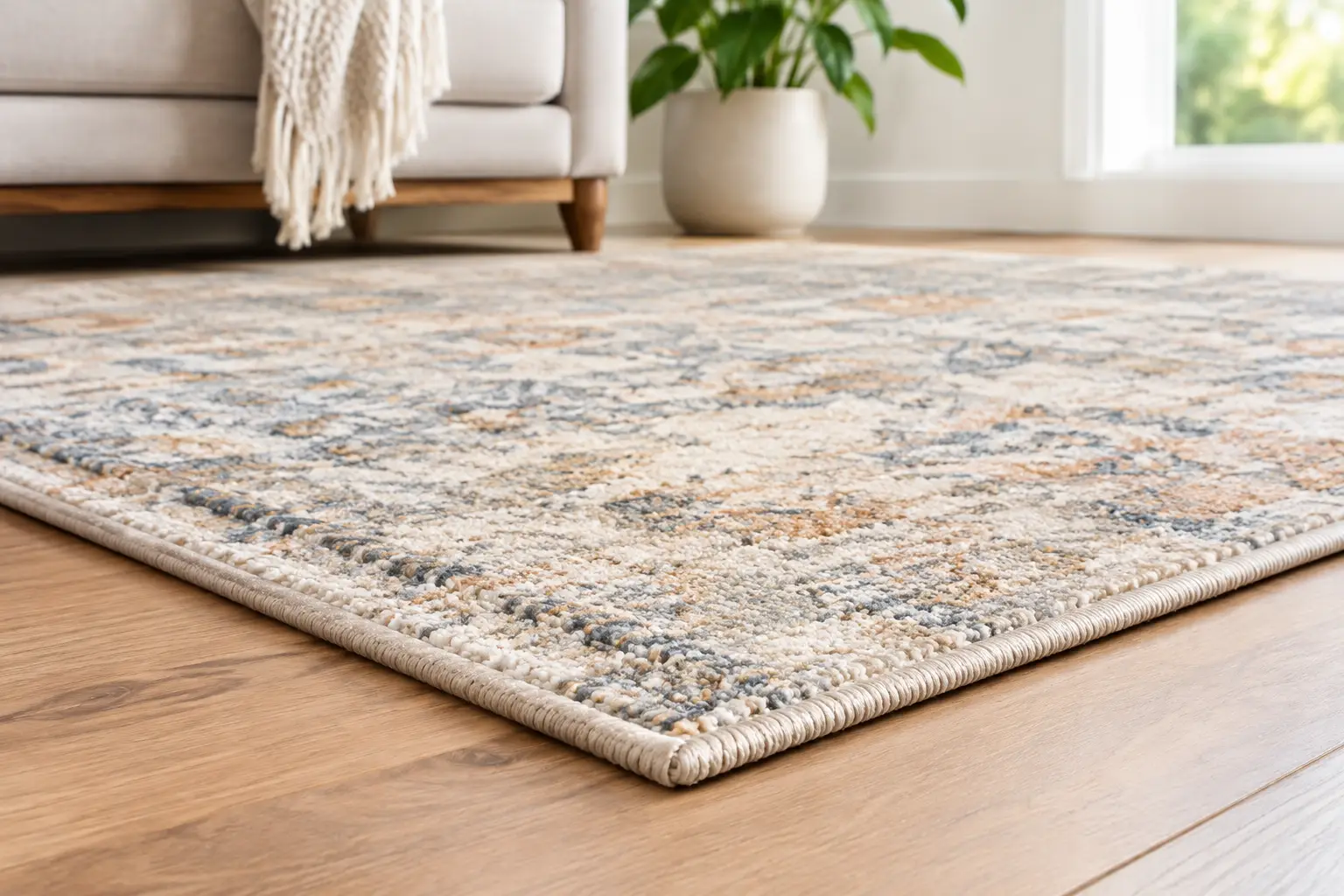
A rug is not a rigid surface. Its face fibers, foundation, backing, and edge binding can all respond differently to pressure, temperature, and humidity. When those layers shift out of balance, the rug may develop waves, buckles, curled corners, or raised areas that interrupt its otherwise smooth appearance.
A newly purchased rug may ripple simply because it spent time rolled tightly for shipping or showroom storage. This is especially common with larger area rugs, which may retain the curve of the roll for several days after they are placed in a room. A wool rug may relax gradually, while a synthetic rug with a firmer backing can need more deliberate flattening.
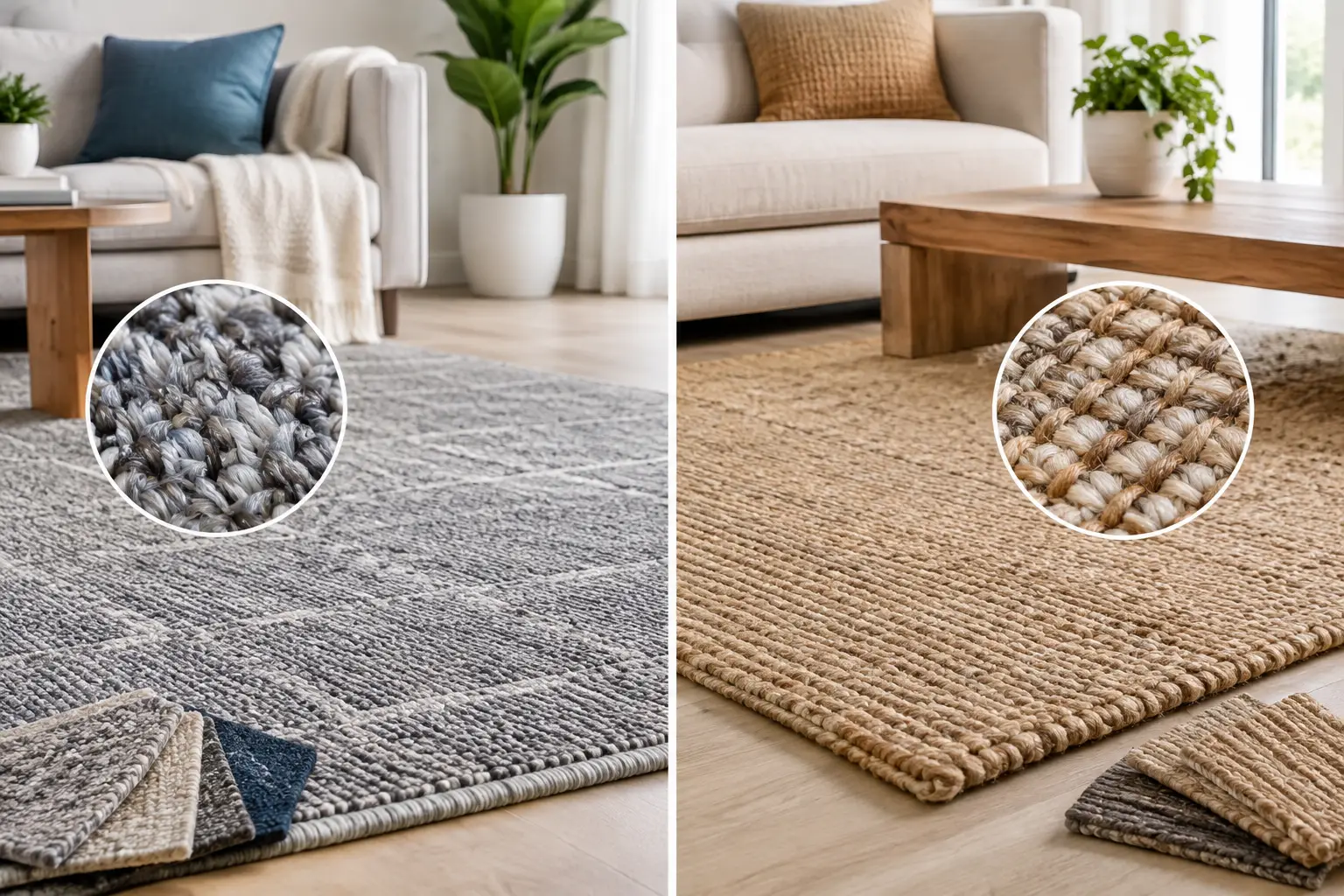
Changes in humidity are another common cause. Natural fibers, particularly wool, cotton, jute, and silk blends, can absorb and release moisture from the air. In North Georgia, seasonal humidity can be enough to make a rug expand slightly, then contract as indoor conditions change. That movement may show up as temporary rippling, particularly when the rug is placed over a smooth hard floor.
An uneven surface beneath the rug can also be the issue. Flooring transitions, a damaged subfloor, wide grout lines, or a rug pad that has bunched beneath the rug can all create visible waves. Sometimes the rug is perfectly sound, but it is responding to what is underneath it.
The role of rug pads, furniture, and daily movement
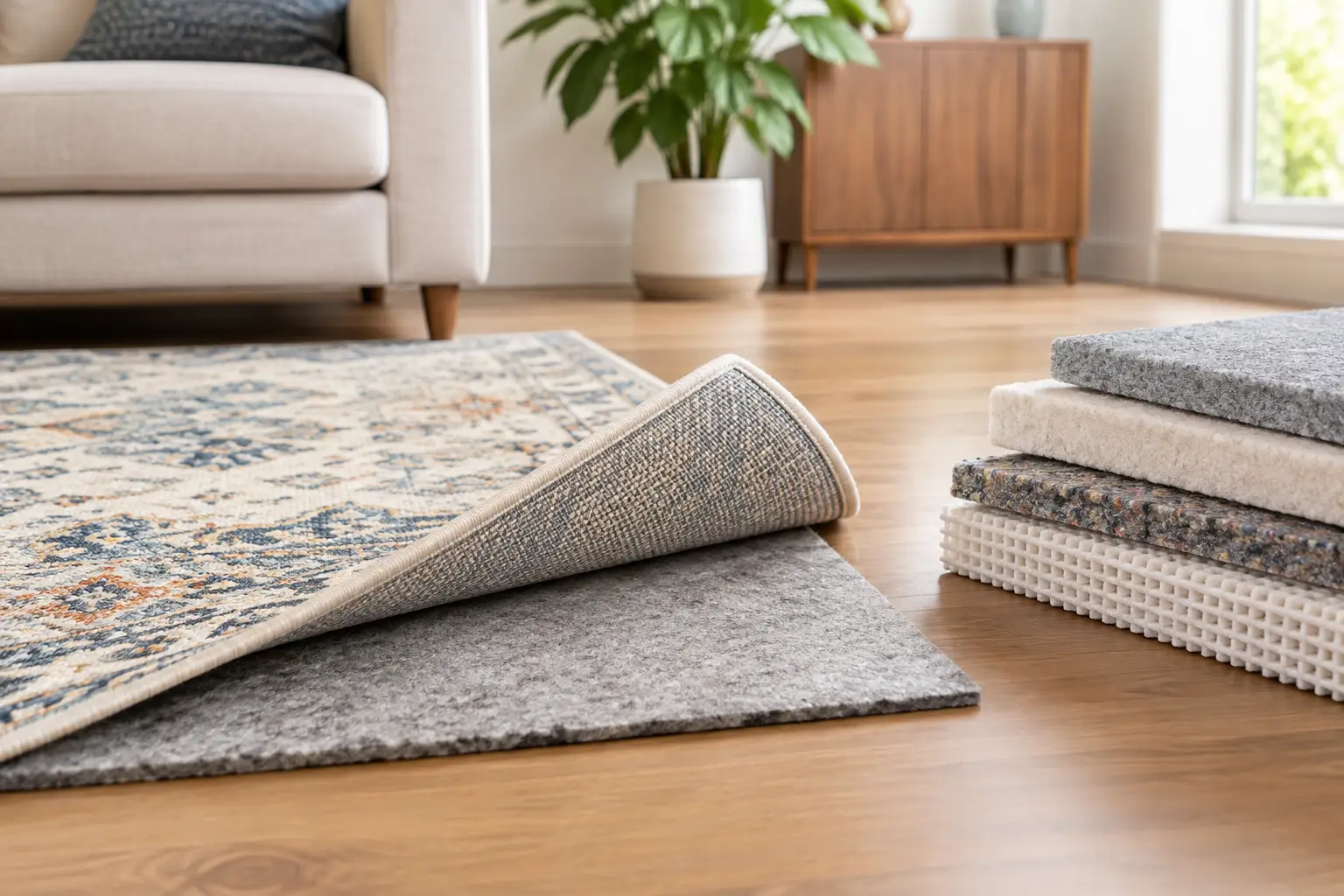
The right rug pad does more than add cushion. It helps hold the rug in place, reduces friction against the floor, and creates consistent support across the entire surface. A pad that is too small, too thick, or poorly matched to the rug and flooring can contribute to rippling rather than prevent it.
For example, a pad with excess thickness may allow a lightweight rug to shift as people walk across it. A thin pad that has curled or deteriorated can create ridges under the rug. A pad should sit slightly inside the rug’s perimeter, so it supports the field of the rug without pushing against its edges.
Furniture can create a different kind of distortion. Heavy furniture legs may compress the pile and hold a rug in one position for years. When furniture is moved during a redesign, the rug may briefly show raised areas or tension lines where it had been anchored. That does not always mean the rug is damaged, but it may need time to settle into its new layout.
Daily traffic matters, too. A rug in a busy family room, hallway, or dining space experiences repeated pressure in the same paths. If the rug slides on the floor each time it is walked on, those small movements can eventually create wrinkles or a ripple near the center. This is both a style concern and a safety concern, particularly in homes with children, pets, or anyone who may catch a foot on a raised edge.
How to flatten a rug safely
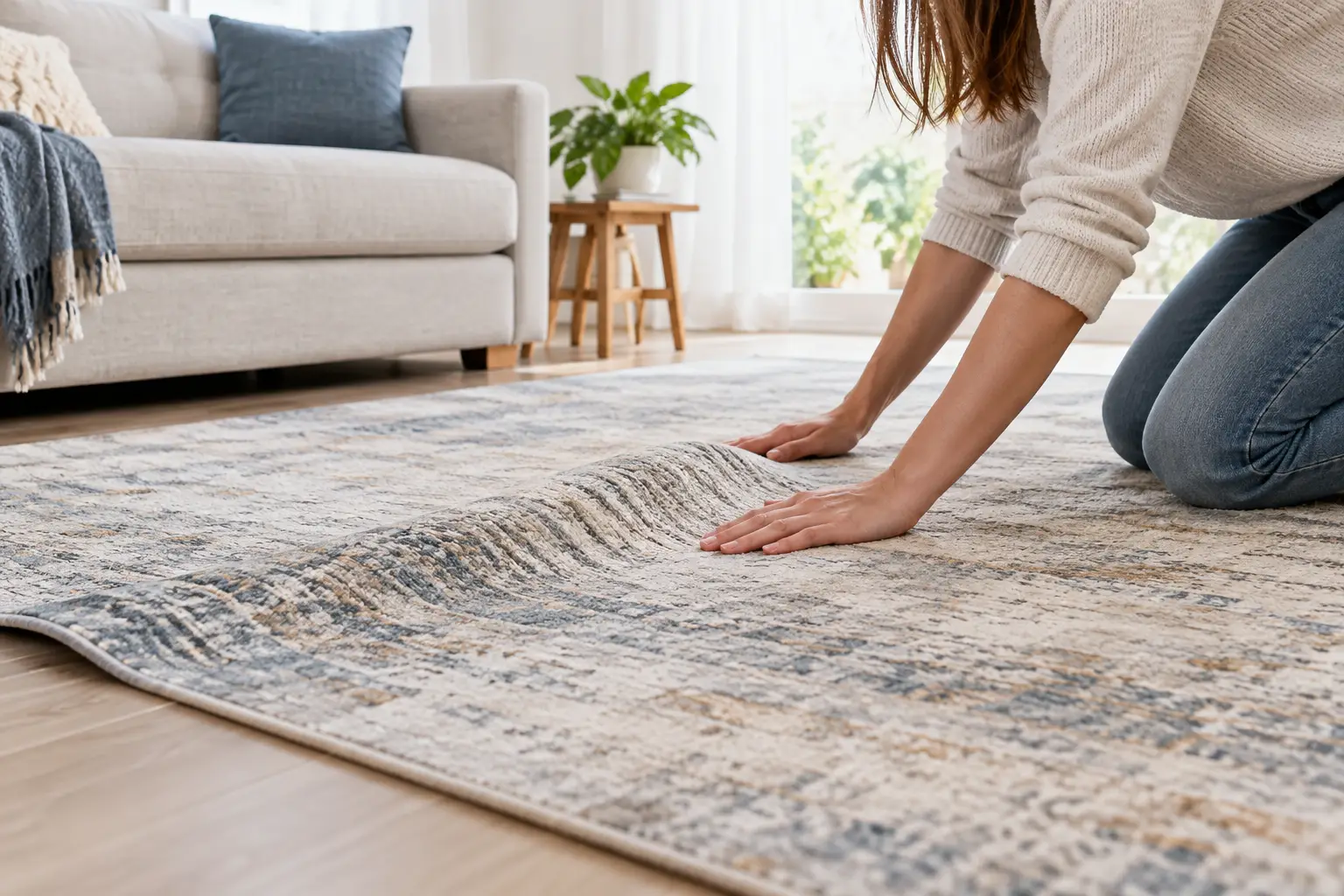
Start with the simplest solution: give the rug time to relax. If it has just been unrolled, lay it flat in the room where it will live and allow a few days for the fibers and backing to adjust. Keep the room at a comfortable, consistent temperature, and avoid placing very heavy pieces directly on a fresh ripple before you understand what caused it.
If the corners curl upward, gently reverse-roll only the affected end. Roll the corner backward, opposite the direction of the curl, and leave it that way for a short period. Do not crease the rug sharply. The goal is to ease the tension, not force the material into a new shape.
For a broader ripple, remove furniture from the rug and inspect the floor and pad first. Smooth out the pad, make sure it is centered, and check that it has not folded over itself. Then reposition the rug carefully, beginning at one end and working across the surface with clean hands or a soft, flat tool. Pulling aggressively can stretch the foundation, especially on hand-knotted, hand-tufted, or older rugs.
A little weight can help in the right situation. Place clean, evenly distributed objects such as books or low boxes over the affected area for a day or two, with a protective cloth between the object and the rug if needed. Avoid anything with a narrow edge that could leave an impression in the pile.
It is tempting to reach for high heat, excess water, or a household steam treatment. Those methods can be risky. Heat may damage synthetic fibers or adhesives, while moisture can cause dyes to bleed, backing to separate, or natural fibers to swell unevenly. A rug that appears to need moisture or heat to relax is often better evaluated by a rug care professional first.
When a ripple is more than a temporary wrinkle
Not every raised area will resolve on its own. Persistent rippling may point to a structural concern, especially if it appears after water exposure, a cleaning mishap, pet accidents, or years of use. In these cases, the rug’s foundation or backing may have shifted, shrunk, or weakened.
Pay close attention if a ripple is accompanied by a stiff or brittle backing, separated layers, uneven color, a musty odor, or edges that are beginning to curl and fray. These are signs that the issue may extend beyond normal settling. Antique, heirloom, handwoven, and finely constructed rugs deserve particular care, since an incorrect at-home fix can create lasting distortion.
Professional cleaning can sometimes address rippling caused by embedded soil, residue, or uneven moisture, but the treatment depends on the rug’s fiber, construction, dyes, and condition. Repair or restoration may be the wiser path when the rug has a warped foundation, damaged binding, or a backing issue. An in-person assessment gives you a clearer answer than guessing based on the surface alone.
Preventing rug ripples in a well-designed room
Prevention begins with choosing a rug that fits the way the room is used. A substantial wool rug may naturally stay put in a formal living room, while a washable or low-profile rug in a high-traffic kitchen or entry needs dependable grip underneath. There is no single best construction for every space. The right choice depends on foot traffic, pets, floor type, furniture placement, and the feeling you want the room to have.
Use a high-quality pad suited to your specific flooring, and replace it when it no longer lies flat. Vacuum regularly using settings appropriate for the rug’s pile and fringe, rotating the rug occasionally so traffic and sunlight are distributed more evenly. When moving furniture, lift rather than drag it across the rug whenever possible.
It also helps to address spills and moisture quickly. Blot rather than rub, and avoid saturating the rug with store-bought cleaners. Even a small amount of moisture can become a larger issue if it reaches the foundation and dries unevenly.
At Home Rug Gallery, we often find that the best solution begins with seeing the rug in person. Texture, backing, fiber, and construction tell a fuller story than a photo can. Whether your rug needs a better foundation beneath it or more attentive care, a thoughtful assessment can protect the comfort and visual balance you worked to create.
A rug should feel effortless underfoot and look settled within the room. When a ripple appears, treat it as a small signal to check the rug, the pad, and the space around it – then give the piece the care it deserves before a minor wave becomes a lasting problem.