


How to Remove Pet Odors From Rugs Safely
Learn how to remove pet odors from rugs without harming color or fibers, plus when professional washing is the smarter choice for a fresh home that lasts.
A rug can make a room feel effortlessly styled – or slightly off in a way you cannot quite place. More often than not, the issue is size. If you are wondering how to choose area rug size, the answer is less about strict rules and more about proportion, furniture placement, and how you actually live in the space.
The right rug grounds a room, softens hard surfaces, and gives everything from seating to lighting a more intentional presence. The wrong one can leave furniture floating, walkways cramped, or the whole room feeling smaller than it is. Once you know what to measure and what visual balance to look for, the decision becomes much easier.
Start with the room before you think about pattern or color. Rug size should respond to the layout, not compete with it. A beautiful rug in the wrong dimensions will still feel disconnected.
Measure the room and then measure the furniture grouping that needs to sit on the rug. In most spaces, the rug is meant to anchor a conversation area, a dining set, or the bed rather than cover as much floor as possible. You also want to leave a border of visible flooring around the edges of the room. That frame helps the rug feel intentional and keeps the room from looking crowded.
A useful guideline is to keep about 8 to 18 inches of bare floor between the rug edge and the walls, depending on the room size. In smaller rooms, that number may tighten up a bit. In larger rooms, more breathing room often looks more polished.
Before you buy, outline the rug dimensions on the floor with painter’s tape. It is one of the simplest ways to see whether the scale feels right. In a showroom, rugs often look smaller because they are surrounded by open space. At home, the same size can feel very different once furniture is in place.
Living rooms are where rug sizing mistakes show up fastest. A too-small rug tends to float in the center of the room and makes the furniture arrangement feel disconnected. A properly sized rug creates a sense of cohesion and comfort.
The most balanced look is usually achieved when at least the front legs of the sofa and chairs sit on the rug. This connects the seating pieces and gives the arrangement visual structure. In larger living rooms, placing all furniture legs on the rug can feel especially elevated and complete.
If your room is compact, you may need to work with a smaller footprint, but try to avoid a rug that only holds the coffee table. That often reads as underscaled. Even in a smaller seating area, the rug should extend beyond the coffee table enough to engage the surrounding furniture.
A few common living room layouts help simplify the decision. A standard sofa with two accent chairs often works well with a rug large enough to reach under the front legs of every piece. A sectional usually needs a more generous size so the shape of the seating arrangement feels supported. Open-concept rooms often benefit from a larger rug that clearly defines the living zone without making it feel boxed in.
It also helps to think about traffic. If one side of the rug lands awkwardly in the middle of a walkway, the room may feel cramped even if the dimensions technically fit. Good rug sizing supports movement as much as style.
Dining rooms have one practical rule that matters more than any other: the rug should be large enough for the table and chairs, even when the chairs are pulled out. That is what keeps the room feeling graceful instead of fussy.
A rug that stops too close to the table edge creates problems immediately. Chair legs catch on the border, diners have to readjust constantly, and the room loses that easy, finished look. As a general rule, allow at least 24 inches of rug beyond each side of the table. In some rooms, 30 inches feels even better if space allows.
Shape matters here too. A rectangular table typically looks best on a rectangular rug, and a round table usually pairs naturally with a round rug. You can bend that rule in more eclectic spaces, but matching the shapes often creates the cleanest result.
If your dining area is part of an open floor plan, rug size also helps define the dining zone. You want enough presence to frame the table without letting the rug crowd nearby cabinetry, islands, or adjacent seating areas. It is a visual balancing act, and a few extra inches can make a noticeable difference.
In bedrooms, the rug should support the bed and soften the experience of the room when you get in and out of it. The ideal size depends on whether the rug sits fully under the bed, partially under it, or is layered around the perimeter.
For a polished, spacious look, an area rug is often placed under the lower two-thirds of the bed, extending beyond both sides and the foot. This gives you something soft underfoot while still allowing the bed to remain the focal point. With queen and king beds, that extra extension is what makes the room feel finished rather than tight.
If the room is smaller, runners on each side of the bed can be a smart alternative. They add softness and warmth without forcing a rug into proportions that do not fit the space. Smaller rugs at the foot of the bed can also work, though they create a different look – more decorative than fully grounded.
Nightstands are another detail worth considering. Some homeowners prefer the rug to sit under the bed but stop before the nightstands. Others like the entire bed wall to feel anchored. Either can work, but consistency is what matters. A rug that lands halfway through a nightstand footprint can look accidental.
When thinking about how to choose area rug size, square footage is only part of the story. The visual weight of your furniture changes how a rug reads in the room.
Low-profile, airy furniture can usually handle a rug with a little more visible floor around it because the room already feels open. Heavier, deeper furniture often benefits from a larger rug to balance the mass of the seating. The same is true in rooms with bold lighting, dark case goods, or layered textiles. More substantial design elements generally call for a rug with enough scale to hold them together.
Room shape also matters. Long, narrow rooms may need a rug that emphasizes the seating area rather than mimics the full dimensions of the room. In square rooms, a rug that is too small can make the center feel isolated. The best fit is often the one that creates harmony between the architecture and the furniture grouping, not the one that simply fills floor space.
The most common mistake is buying too small because it feels safer. People often worry that a larger rug will overwhelm the room, when the opposite is usually true. A rug with proper scale tends to make the room feel larger, calmer, and more cohesive.
Another mistake is ignoring edge spacing. If the rug nearly touches the walls on one side but leaves a wide gap on another, the room can feel visually off-balance. Centering the rug within the usable layout matters more than centering it in the empty shell of the room.
Texture can also affect perception. Plush, high-pile rugs read fuller and softer, while flatwoven styles tend to look more tailored. That does not change the measurements, but it does influence how substantial the rug feels once it is in place.
If you are between sizes, the larger option is often the better choice – especially in living rooms and primary bedrooms. In a curated interior, a rug should look intentional, not apologetic.
Sizing becomes easier when you can compare proportions, textures, and shapes in a real setting. What looks balanced online can feel very different once you consider pile height, border width, and how the rug will sit beneath your furniture. For homeowners in Canton, Woodstock, Acworth, and Kennesaw, visiting a showroom like Home Rug Gallery can make that decision much more concrete because you can see scale and styling options side by side.
A well-chosen rug does more than cover the floor. It sets the tone for the room, supports the way you live, and makes everything around it feel more considered. If you are deciding between two sizes, choose the one that gives your furniture a place to belong and your room a little room to breathe.
Learn how to remove pet odors from rugs without harming color or fibers, plus when professional washing is the smarter choice for a fresh home that lasts.
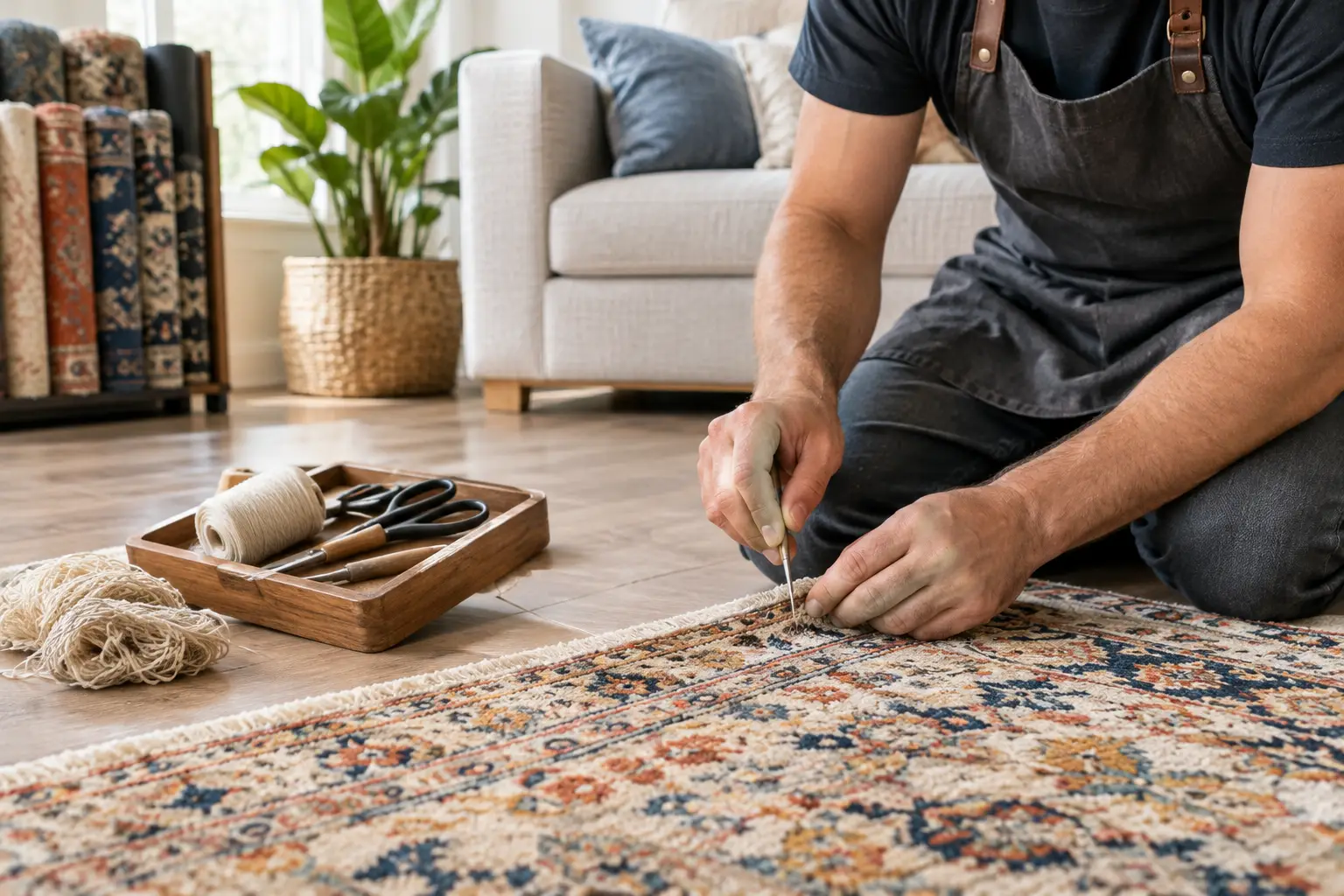
Use this Kennesaw rug repair guide to spot damage early, choose the right restoration, and protect the color, texture, and comfort of your favorite rug.
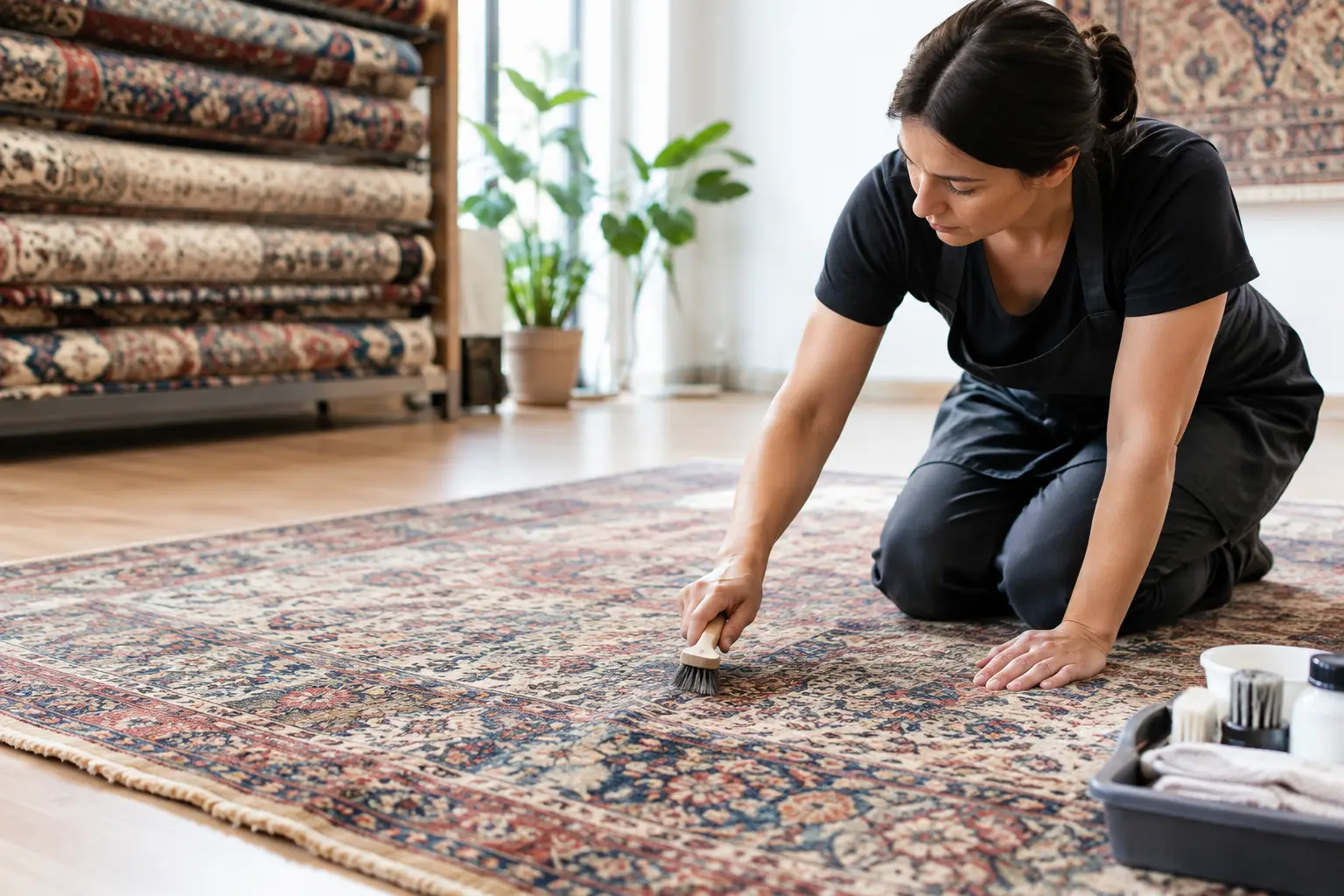
Marietta rug restoration can preserve color, texture, and history. Learn when repair makes sense and how thoughtful care protects a cherished rug at home.
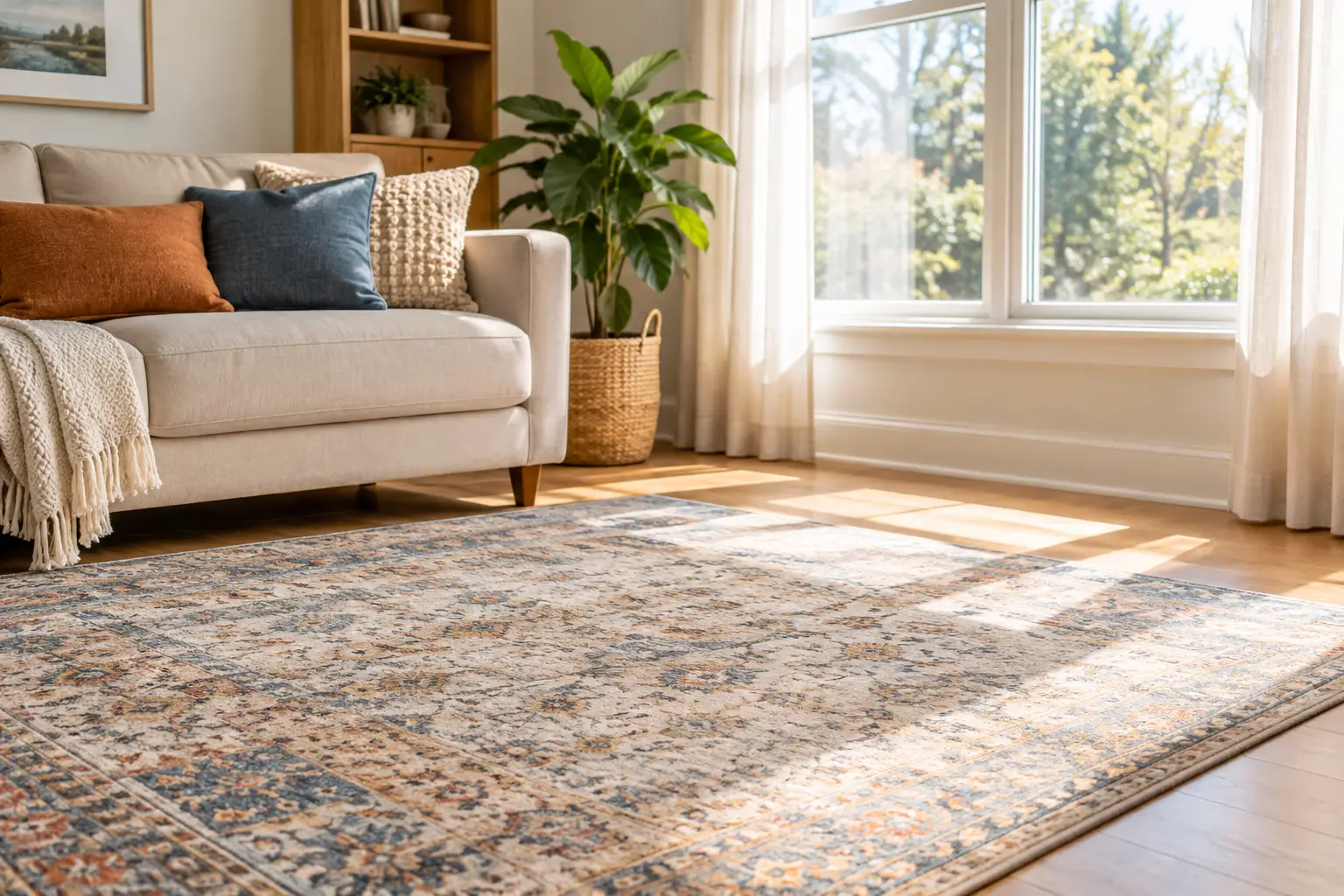
Learn how to protect rugs from sun fading with thoughtful window treatments, rotation, cleaning, and placement tips that preserve color and comfort daily.
From cozy area rugs to statement-making wall décor, our curated categories make it easy to explore what speaks to your space. Whether you’re refreshing a single corner or reimagining your whole home, start here and discover pieces that bring it all together.