


How to Remove Pet Odors From Rugs Safely
Learn how to remove pet odors from rugs without harming color or fibers, plus when professional washing is the smarter choice for a fresh home that lasts.
A rug can shift the whole feeling of a room. It softens hard surfaces, anchors furniture, and often carries the color story that makes a space feel finished. That is why rug restoration before and after results can be so striking. What looks faded, frayed, or beyond saving at first glance may still have the structure, character, and design value worth preserving.
The change is not only visual. A restored rug often feels different underfoot, sits more evenly in the room, and returns to doing the quiet design work it was meant to do. For homeowners who have invested in a rug they love, restoration can be the difference between replacing a meaningful piece and enjoying it for many more years.
Most people imagine a dramatic transformation, and sometimes that is exactly what happens. Colors appear clearer, fringe looks finished again, and worn areas no longer draw the eye. But true restoration is more than surface improvement. It is careful work that addresses the rug’s condition at the fiber, edge, foundation, and finish.
A before-and-after transformation might involve correcting edge damage that causes curling, repairing fringe that has started to unravel, or stabilizing holes before they spread. In other cases, the change is subtler. A rug may still look like itself, just more complete, more balanced, and more at home in the room.
That distinction matters. The goal is not to make every rug look brand new. It is to restore beauty, function, and longevity in a way that respects the piece itself.
The most compelling rug restoration before and after examples usually start with damage that has been ignored for a little too long. Sun fading, pet wear, water exposure, broken fringe, split edges, and thinning pile tend to worsen gradually. Homeowners often adapt to the damage visually, especially if the rug has been in the same room for years.
Then the rug is lifted, inspected, cleaned, and repaired, and the difference becomes obvious.
Fringe is one of the clearest examples. Because fringe sits at the rug’s outer edge, it often takes the first hit from foot traffic, vacuuming, and everyday wear. Once it begins to break down, the rug’s foundation may be exposed. Restoring fringe improves the finished look, but more importantly, it protects the structure.
Edges tell a similar story. A rug with damaged binding or unraveling sides can begin to distort in shape. After restoration, the rug often lies flatter and appears more tailored in the space. In a thoughtfully styled room, that cleaner outline makes a real difference.
Color loss is more complicated. Some fading can be softened or corrected depending on the material and extent of damage. Other times, the best result is visual balance rather than full color recovery. This is one of those areas where expectations matter. Good restoration work is skilled and precise, but it is also honest about what can and cannot be brought back.
Not every rug responds the same way to restoration. Fiber content, construction, age, dye stability, and the type of damage all shape the final result. A hand-knotted wool rug with localized wear may respond beautifully to careful repair. A machine-made rug with broad structural failure may have fewer restoration options.
This is why photos alone can be misleading. Two rugs may show similar fading or edge wear, but one has a strong foundation underneath and the other does not. The visible damage is only part of the story.
Material also changes the process. Natural fibers such as wool and silk have different restoration needs than synthetic rugs. Pattern complexity matters too. A simple border is easier to visually reintegrate than an intricate floral motif with multiple color variations.
From a design perspective, the rug’s role in the room matters as well. If it is the anchor piece in a formal living room, even modest damage may feel disruptive. If it is in a casual family space, a softer, less perfect restoration may still feel entirely right. Sometimes the best outcome is not perfection. It is a rug that once again feels effortless in the room.
The most impressive restoration work does not always announce itself. In fact, quality often shows up in the details that no longer distract you.
Look at shape first. Does the rug lie flat? Do the edges feel secure and even? Then notice the transitions. Repaired sections should not look abrupt or awkward against the original field. Fringe should appear intentional, not overly bright or disconnected from the rest of the piece.
Texture matters too. A rug that has been properly cared for and restored should feel more cohesive, not patchy or stiff. In the best before-and-after results, the rug regains visual harmony. The eye stops going straight to the damage and starts taking in the entire design again.
That is especially important in homes where rugs do more than cover the floor. They frame seating areas, soften bedrooms, and connect colors across furniture, art, and textiles. A well-restored rug supports the whole room.
Restoration is usually worth serious consideration when the rug has design value, sentimental value, or lasting structural quality. Maybe it is the piece that pulls together a primary bedroom. Maybe it came from a meaningful trip or has been part of your home through different seasons of life. Maybe it is simply difficult to replace because its scale, palette, or texture fits the room so well.
That said, worth is not only emotional. It is also practical. If the damage is localized and the rug’s foundation remains strong, restoration can extend its life in a very meaningful way. If deterioration is widespread and the structure has broken down across large areas, the conversation becomes more nuanced.
This is where expert assessment matters. A polished room depends on pieces that work hard without looking fussy. If a rug can be restored to that point, it may absolutely be worth saving. If not, knowing that early helps you make a more confident design decision.
Many before-and-after transformations begin with proper cleaning, even when repair is the main concern. Soil buildup can mute color, flatten texture, and make wear appear worse than it is. Once the rug is cleaned correctly, the true condition becomes easier to evaluate.
Cleaning alone will not fix broken edges or missing fringe, but it often reveals the rug’s actual beauty and clarifies what restoration work would be most effective. For homeowners, this can be surprisingly encouraging. A rug that felt tired or dated may simply have been carrying years of hidden buildup.
In a design-focused home, that shift matters. Cleaner texture, clearer pattern, and better color definition can make an entire room feel lighter and more intentional.
The most satisfying transformations are not just workshop stories. They show up in real rooms, where a rug stops looking like a problem and starts feeling like part of the design again.
A dining room rug with frayed ends can go from visually distracting to quietly polished. A living room rug with edge wear can return to anchoring the furniture instead of making the space feel unfinished. In homes around Canton, Woodstock, Acworth, and Kennesaw, where people are investing in spaces that feel both comfortable and curated, that kind of improvement carries real value.
And unlike trends that come and go, a restored rug often supports a more timeless kind of interior. It keeps a room layered, personal, and grounded in pieces that already belong.
The best time is earlier than most homeowners think. If you notice unraveling, curling, thinning areas, or fringe that is breaking apart, it is wise to have the rug evaluated before the damage spreads. Waiting usually turns a contained issue into a larger one.
The same goes for rugs with water exposure, pet accidents, or visible color change. Even if the damage seems cosmetic, underlying issues can affect the rug’s stability over time.
At Home Rug Gallery, the goal is not to push every rug toward restoration. It is to help homeowners understand what they have, what is possible, and what will best support the life of the piece in their home.
A beautiful room is rarely made up of perfect things. More often, it is built around pieces with substance, texture, and a story worth keeping. When a rug still has that foundation, restoration can bring back more than appearance. It can return a sense of balance to the room, and that is often the part people feel first.
Learn how to remove pet odors from rugs without harming color or fibers, plus when professional washing is the smarter choice for a fresh home that lasts.
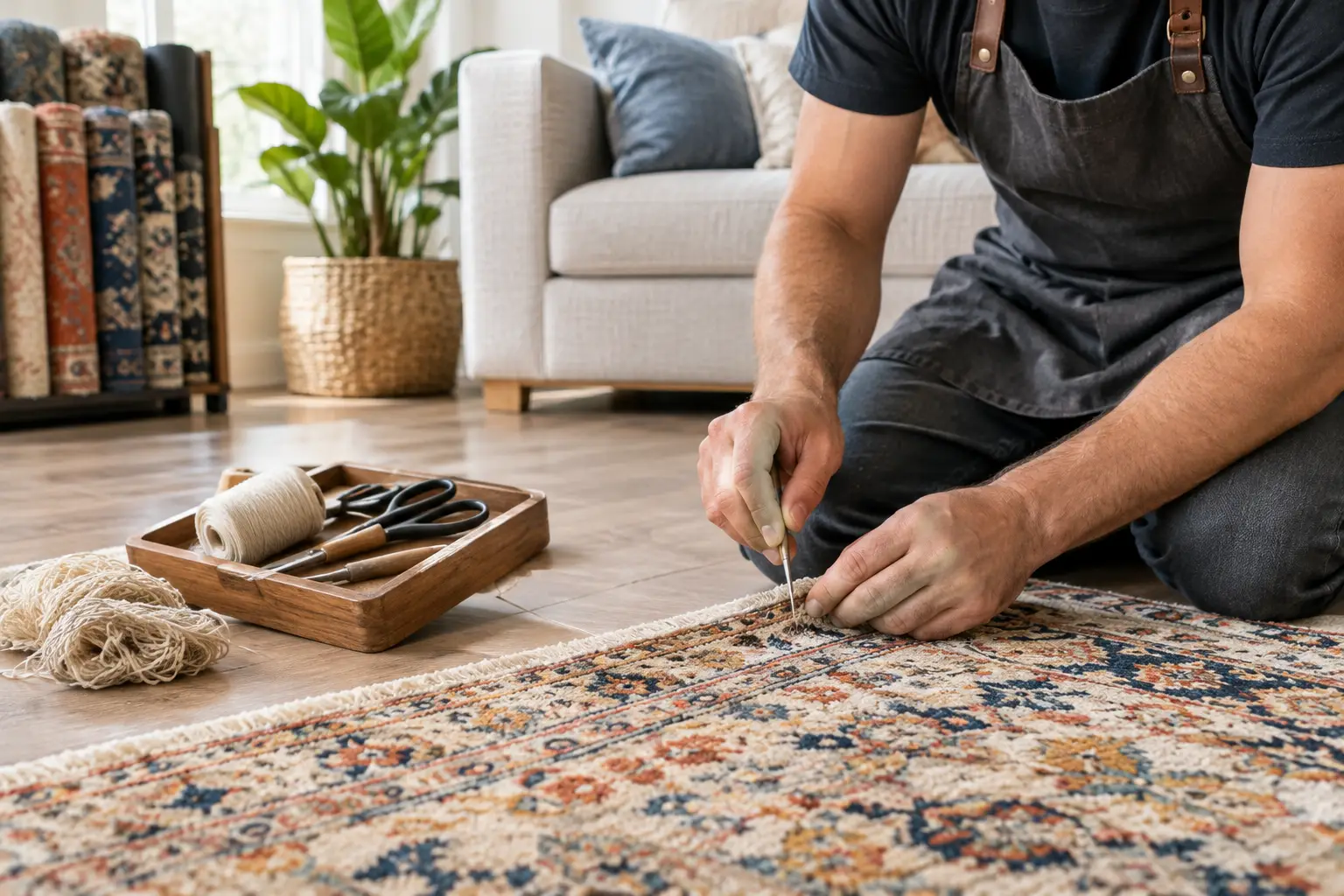
Use this Kennesaw rug repair guide to spot damage early, choose the right restoration, and protect the color, texture, and comfort of your favorite rug.
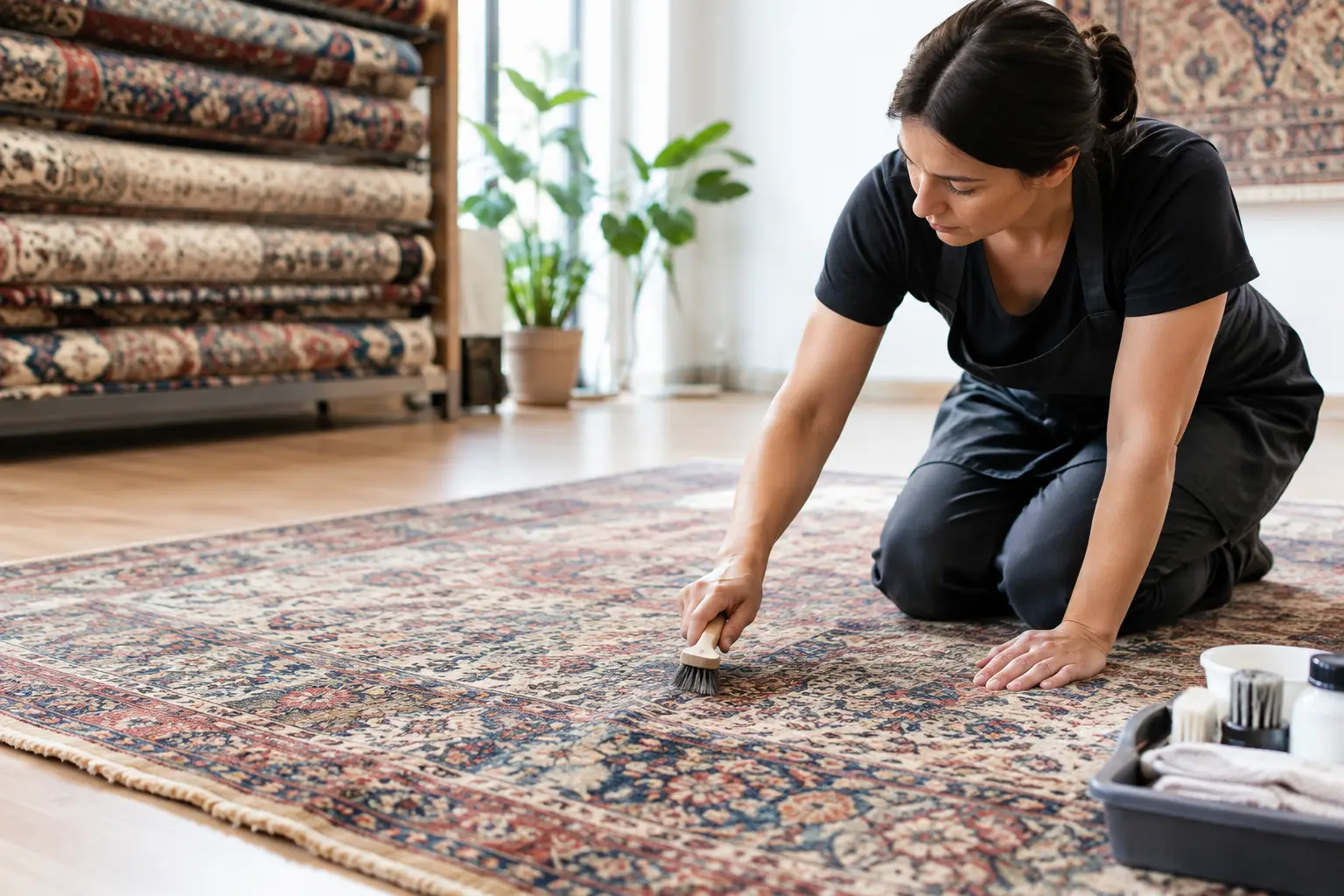
Marietta rug restoration can preserve color, texture, and history. Learn when repair makes sense and how thoughtful care protects a cherished rug at home.
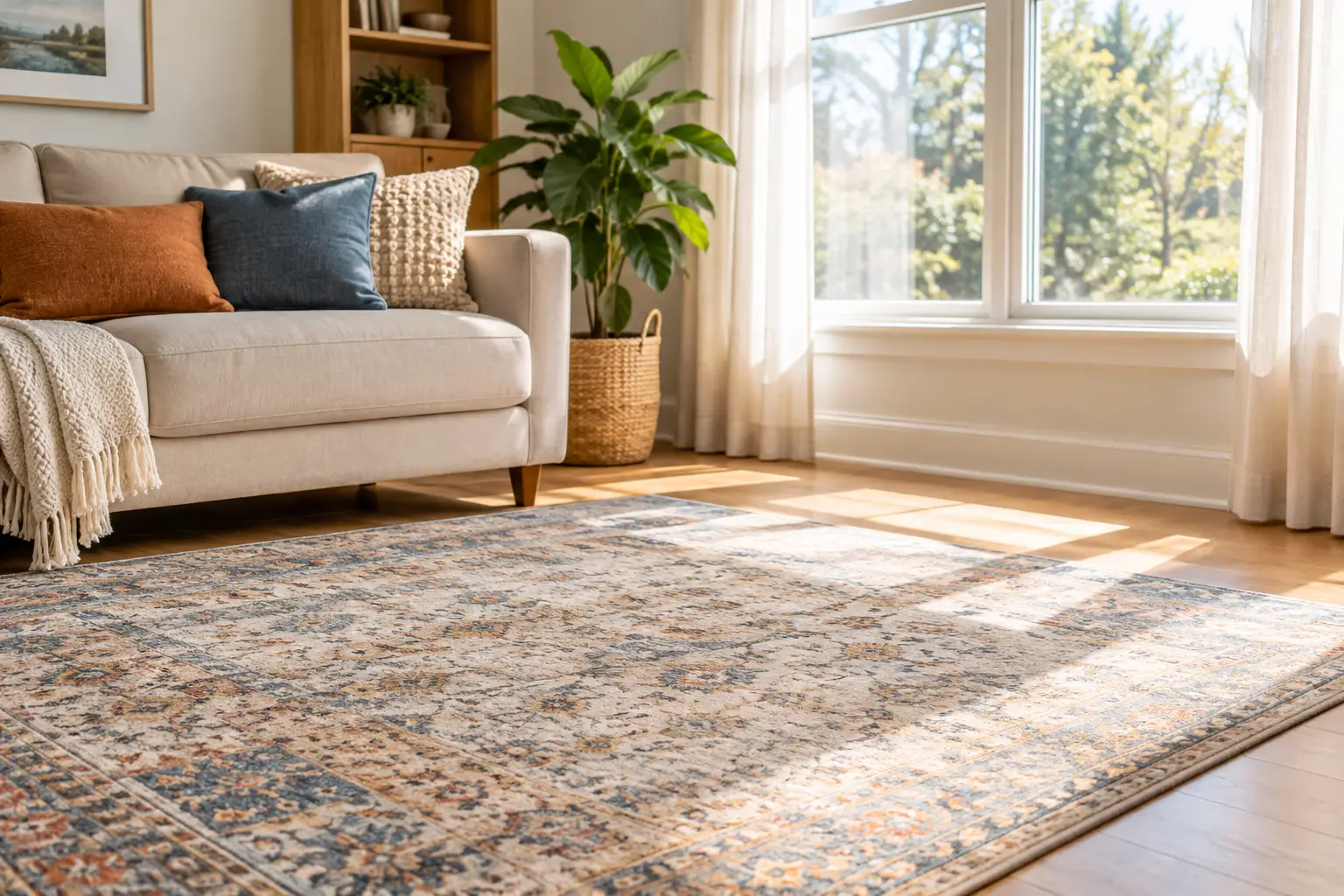
Learn how to protect rugs from sun fading with thoughtful window treatments, rotation, cleaning, and placement tips that preserve color and comfort daily.
From cozy area rugs to statement-making wall décor, our curated categories make it easy to explore what speaks to your space. Whether you’re refreshing a single corner or reimagining your whole home, start here and discover pieces that bring it all together.