


How to Remove Pet Odors From Rugs Safely
Learn how to remove pet odors from rugs without harming color or fibers, plus when professional washing is the smarter choice for a fresh home that lasts.
A rug can make a room feel finished in an instant, but the wrong fiber shows up fast. If you are weighing wool vs synthetic rugs, you are really deciding how you want a space to live, feel, and age over time. The difference is not just about softness underfoot. It affects everyday maintenance, how colors hold, how a room sounds, and whether your rug still feels like the right choice a few years from now.
For many homeowners, this decision starts with style and ends with practicality. You may love the rich texture of a wool rug, but need something forgiving in a family room with pets and constant foot traffic. Or you may be furnishing a quieter space where comfort, depth, and longevity matter more than quick cleanup. The best choice depends on how the room is used and what kind of home experience you want to create.
Wool rugs are made from natural fiber, which gives them a distinctive softness, resilience, and depth of texture. They tend to feel substantial and layered, with a quiet luxury that works beautifully in thoughtfully styled interiors. Synthetic rugs are typically made from fibers such as polypropylene, polyester, or nylon. They are often chosen for their easy care, broad pattern range, and practical performance in busy homes.
Neither is universally better. Wool usually offers a more elevated hand and longer-term appeal, while synthetic options can be a smart fit when easy maintenance and day-to-day durability are leading priorities. The right answer often comes down to where the rug will live and how much effort you want to put into its upkeep.
Wool has a natural richness that is difficult to imitate. It feels warm, springy, and dense underfoot, which is one reason it is so often chosen for bedrooms, living rooms, and other spaces meant to feel grounded and inviting. The fiber has natural crimp, so it tends to bounce back well from foot traffic and furniture weight.
That resilience gives wool a long-view advantage. In a well-designed room where you want the rug to anchor the space for years, wool often feels like the more refined choice. It also absorbs sound more effectively than many flatter synthetic constructions, which can make a room feel calmer and more comfortable.
Wool does come with a few realities. New wool rugs may shed at first, and that can surprise homeowners who were expecting a perfectly tidy finish from day one. Wool is also absorbent, which means spills need prompt attention. It is durable, but it is not casual in the same way some synthetic rugs are. If your household tends to be hard on soft furnishings, that trade-off matters.
Wool works especially well in primary living spaces, formal sitting rooms, bedrooms, and other areas where texture and atmosphere matter as much as performance. It suits homes that lean into layered, collected interiors rather than quick-turn decorating. If you want a rug that adds softness, depth, and a more tailored look, wool often delivers that beautifully.
Synthetic rugs appeal to homeowners for a reason. They are often easier to maintain, less prone to visible shedding, and generally more forgiving when life gets messy. In rooms where kids play on the floor, pets move constantly through the space, or entertaining happens often, synthetic fibers can offer a level of ease that makes the home feel more livable.
Polypropylene, polyester, and nylon each behave a little differently, but they share a practical advantage: they tend to resist moisture more readily than wool. That can make synthetic rugs appealing in dining areas, casual family rooms, entry-adjacent spaces, and other high-use zones where spills are not a rare event.
The trade-off is usually in the feel and visual depth. Some synthetic rugs are impressively soft, but softness is not the same as substance. Many do not have the same natural body, nuanced texture, or enduring character as wool. Over time, depending on construction and placement, some synthetic rugs may flatten or show wear differently than a quality wool rug would.
Synthetic rugs are often the better fit when the room needs to be beautiful but also low-pressure. They make sense in homes where practicality leads, in multipurpose spaces, and in households where easy cleanup matters more than heirloom-level longevity. That does not mean they look temporary. It simply means their strengths are different.
From a design perspective, fiber changes more than touch. It changes the whole presence of a rug in the room. Wool tends to read as softer and more dimensional, even in subtle patterns or neutral palettes. It can bring warmth to a modern interior and depth to a more traditional one. That is why it is often favored in spaces aiming for an effortlessly styled, collected feel.
Synthetic rugs can be incredibly versatile with pattern, color, and construction. If you want a bolder design statement, a performance-minded flatweave, or a playful rug in a more casual room, synthetic options can be very compelling. The key is being honest about the role the rug needs to play. Is it meant to quietly elevate the room, or is it there to handle daily traffic with minimal fuss?
In a showroom setting, this difference is often easiest to understand in person. Texture, pile, and color variation can look one way on a screen and another under actual lighting. For homeowners pulling together a cohesive room, the tactile comparison matters.
Care is where many wool vs synthetic rugs decisions become clear. Wool benefits from consistent maintenance and prompt spill response. It is naturally durable, but it performs best when treated thoughtfully. Dirt can settle into any rug over time, and wool especially benefits from proper cleaning methods that preserve the fiber rather than simply removing surface debris.
Synthetic rugs are often chosen because they feel more relaxed in everyday use. Many handle routine messes with less concern, and that can be a relief in active households. Still, low maintenance does not mean no maintenance. Dirt, oils, and wear can dull any rug if it is neglected.
If you know you want a rug that can live gracefully through years of use, it helps to think beyond the purchase itself. Consider how often the room is used, whether pets or children are part of daily life, and whether you are willing to care for a natural fiber properly. A rug is part design element, part daily surface. Both sides matter.
The room often answers the question for you.
In bedrooms and more formal living spaces, wool usually feels right at home. It brings comfort, elegance, and a more elevated finish. In dining rooms, playrooms, and casual family spaces, synthetic rugs often make more sense because they support a less precious way of living.
For entryways, it depends on the layout and how much debris the area collects. For homes with open-concept rooms, the decision can also be stylistic. A wool rug may create a stronger visual anchor in the main seating area, while a synthetic rug can be practical in nearby zones that absorb heavier daily wear.
This is also where personal habits matter more than ideals. A homeowner may love the look of wool in a breakfast nook, but if spills are frequent and cleanup needs to be quick, synthetic may be the more satisfying long-term choice.
Start with the room, then consider the lifestyle, and only after that focus on fiber preference. Many rug mistakes happen when people shop purely by appearance. A beautiful rug that does not suit the pace of the household rarely feels beautiful for long.
Ask yourself what matters most in that particular space. If you want softness, longevity, and a more luxurious texture, wool is often worth serious consideration. If you need a rug that can handle activity with less worry, synthetic may suit you better. If your home has a mix of formal and casual spaces, it is perfectly reasonable to choose both, using each where it performs best.
For homeowners around Canton, Woodstock, Acworth, and Kennesaw, seeing the difference in person often settles the question faster than reading specifications ever could. At Home Rug Gallery, comparing fibers side by side can make it easier to understand not just how a rug looks, but how it will live in your home.
The right rug should do more than fill the floor. It should support the way you live, add comfort where you want it most, and help the room feel deeply personal from the moment you walk in.
Learn how to remove pet odors from rugs without harming color or fibers, plus when professional washing is the smarter choice for a fresh home that lasts.
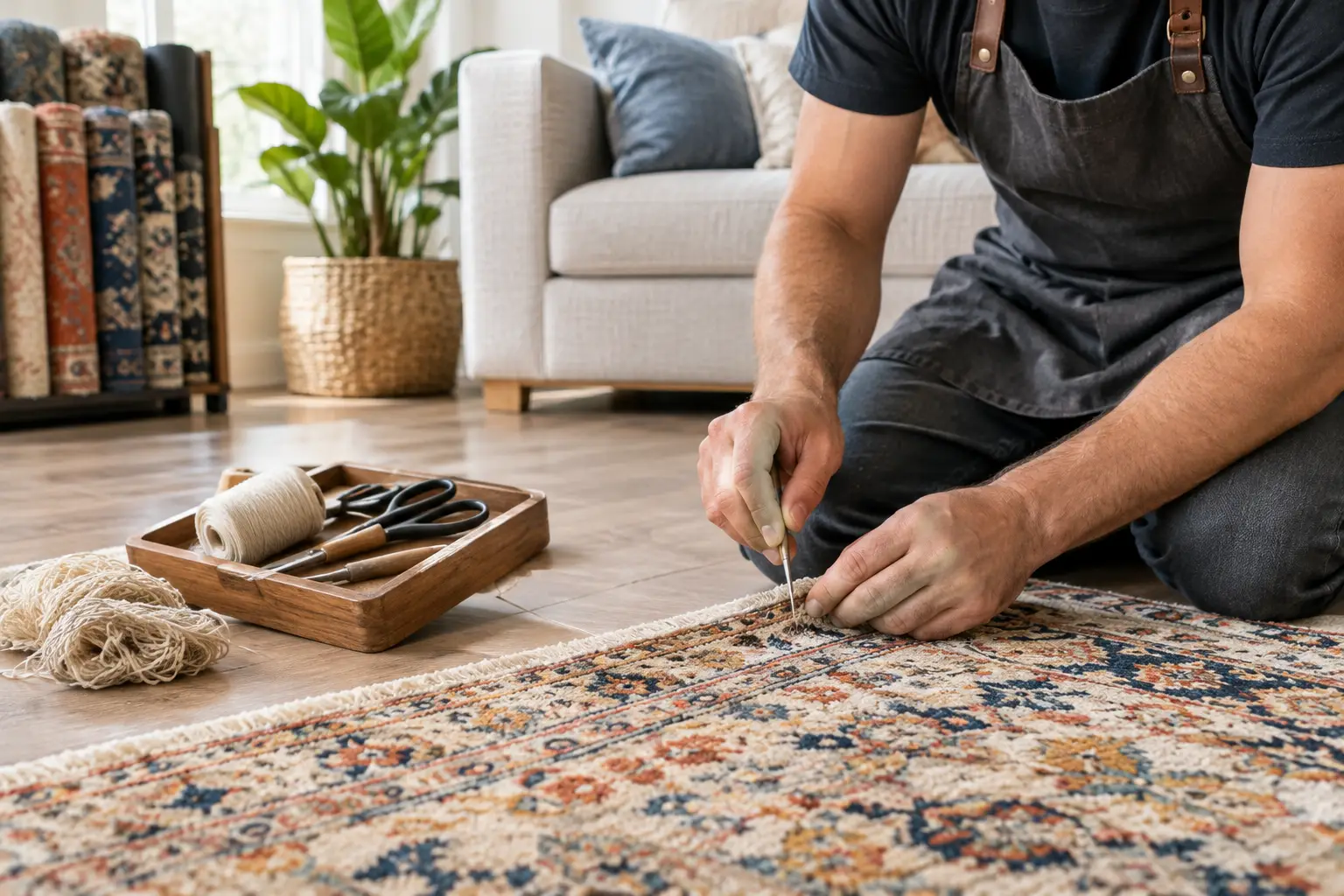
Use this Kennesaw rug repair guide to spot damage early, choose the right restoration, and protect the color, texture, and comfort of your favorite rug.
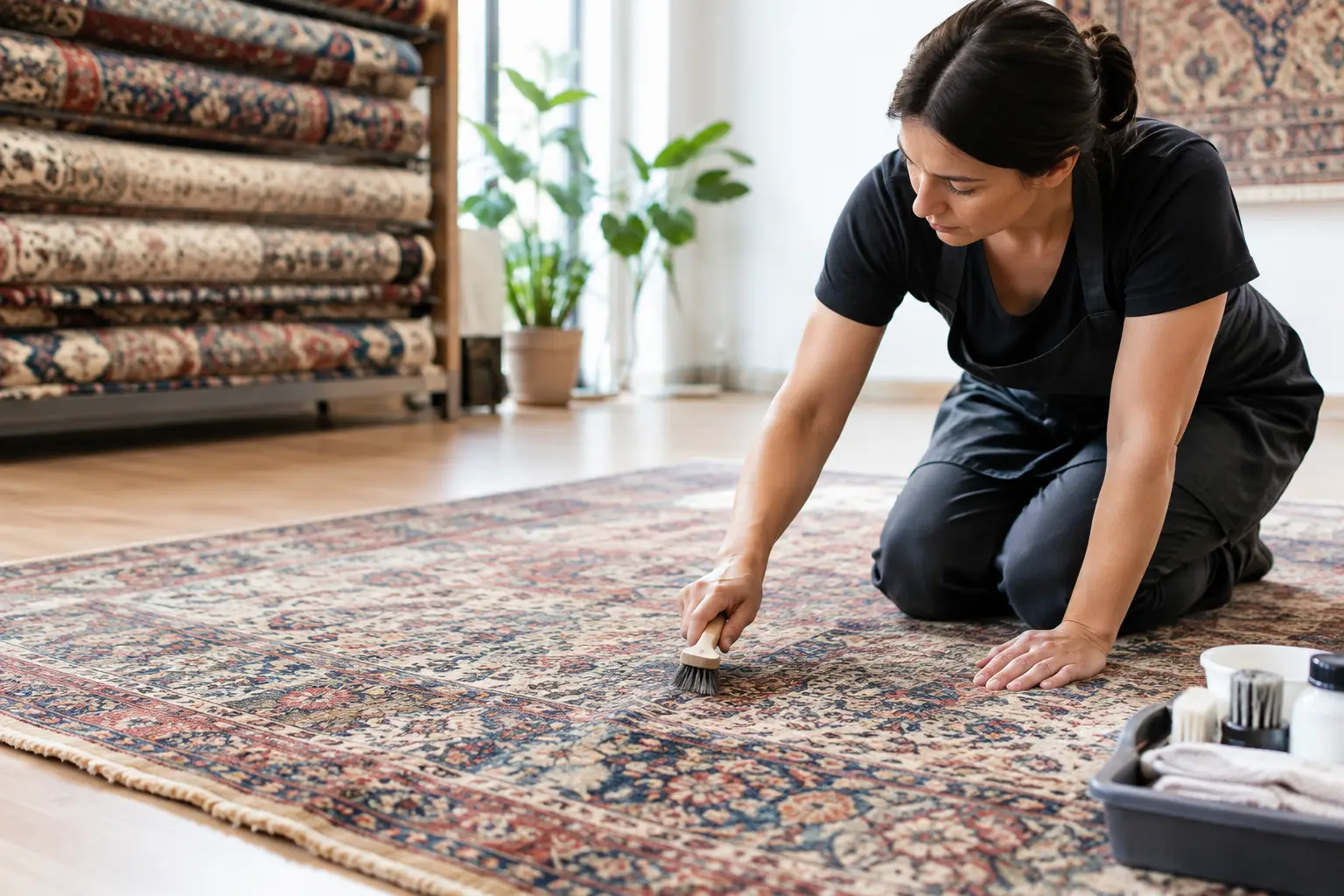
Marietta rug restoration can preserve color, texture, and history. Learn when repair makes sense and how thoughtful care protects a cherished rug at home.
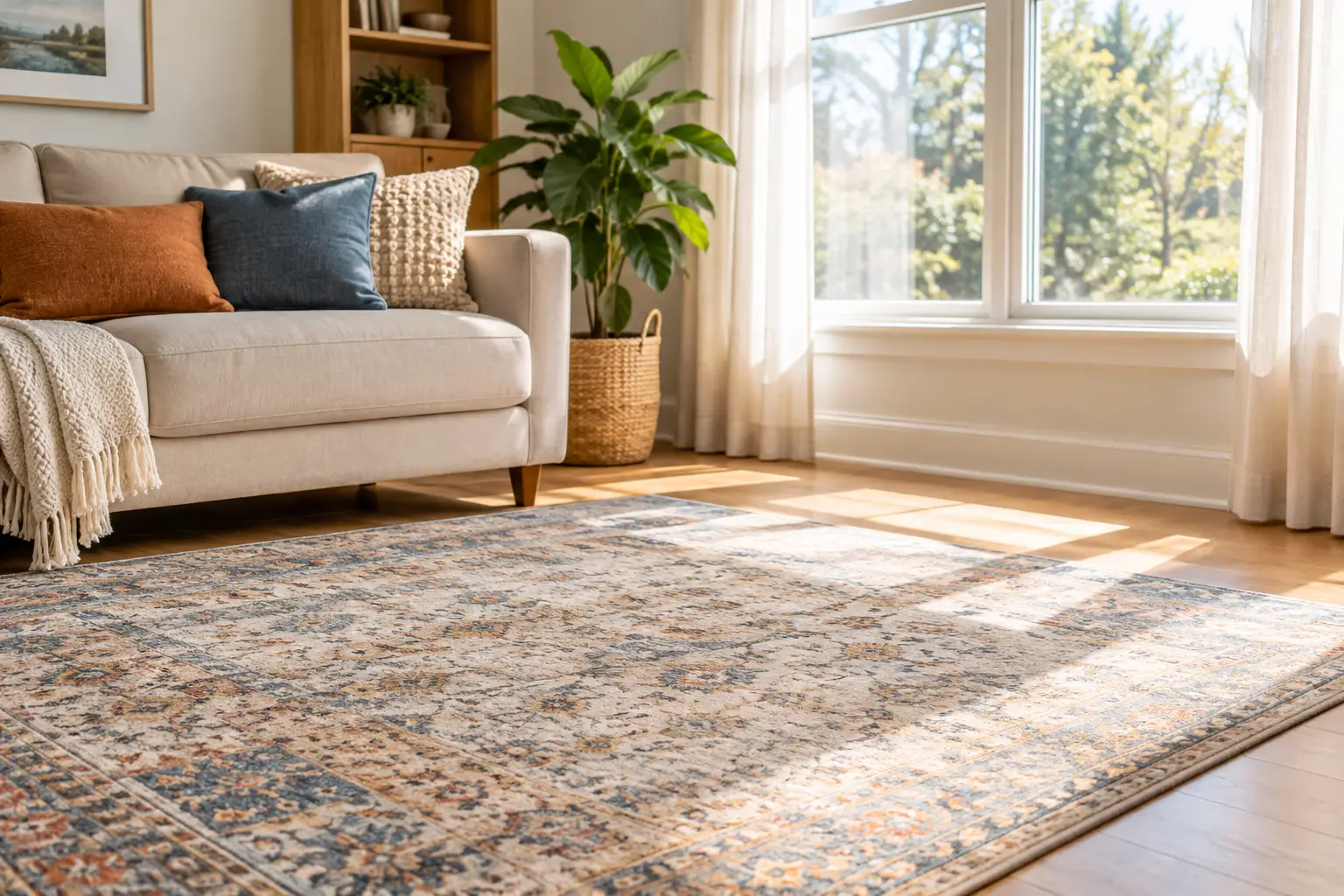
Learn how to protect rugs from sun fading with thoughtful window treatments, rotation, cleaning, and placement tips that preserve color and comfort daily.
From cozy area rugs to statement-making wall décor, our curated categories make it easy to explore what speaks to your space. Whether you’re refreshing a single corner or reimagining your whole home, start here and discover pieces that bring it all together.