

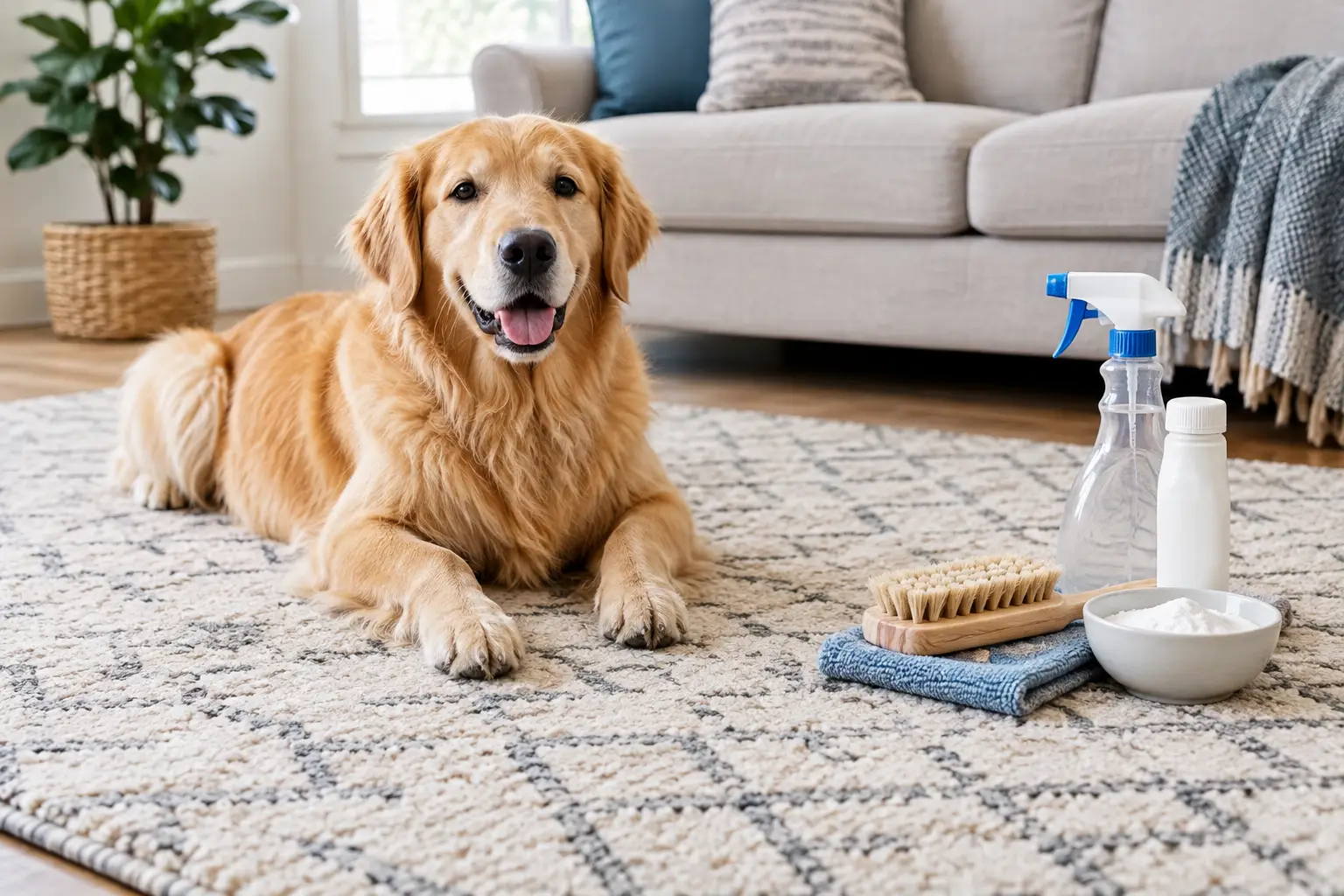
How to Remove Pet Odors From Rugs Safely
Learn how to remove pet odors from rugs without harming color or fibers, plus when professional washing is the smarter choice for a fresh home that lasts.
The moment you notice a pet accident on a rug, the clock starts. What happens in the next ten minutes often matters more than the cleaning product you reach for. A good pet stain rug cleaning example is less about one miracle fix and more about making the right choices in the right order so the stain, odor, and rug fibers all get the care they need.
For design-minded homeowners, this can feel especially frustrating. A rug anchors the room, softens the space, and brings together color, texture, and furniture placement. One pet stain can make the entire room feel unsettled. The good news is that many stains can be improved significantly when they are treated promptly and with a little restraint.
Imagine a medium-sized wool area rug in a family room. The palette is soft and layered – warm ivory, muted blue, and a little taupe. The family dog has an accident near the edge of the rug, and it is caught within a few minutes.
The first step is blotting, not scrubbing. A clean white towel or paper towel should be pressed firmly into the area to absorb as much moisture as possible. Scrubbing feels productive, but it usually pushes the stain deeper into the pile and can rough up the fibers. On a patterned rug, aggressive rubbing may also disturb the finish enough to make the cleaned spot stand out.
Once the excess moisture is removed, the area can be treated with a small amount of cool water to dilute what remains. Blot again. If the stain is still visible, a rug-safe cleaning solution can be used sparingly. This is where homeowners often go wrong. More product does not mean a better result. Too much cleaner can leave residue behind, and residue attracts soil. A rug may look improved that day and then appear dingy again within a week.
After applying a modest amount of cleaner, blot from the outside of the stain toward the center. That keeps the affected area from spreading. Then rinse lightly with cool water and blot until the towel comes away nearly dry. If odor is part of the issue, the rug needs to dry fully and quickly. Trapped moisture is what turns a minor incident into a lingering problem.
In this example, the stain lightens considerably, and the room returns to normal without much disruption. But that result depends on several details – fiber type, dye stability, how long the stain sat, and whether any previous cleaners have already been used on the rug.
A synthetic rug in a breakfast nook and a hand-finished wool rug in a formal sitting room should not be treated the same way. This is where rug care becomes more nuanced than general household cleaning.
Wool is absorbent and naturally resilient, but it can be sensitive to harsh chemistry and over-wetting. Silk or viscose blends are even more delicate and can react poorly to moisture, friction, or spot removers intended for wall-to-wall carpet. Even cotton rugs, which may seem casual and easygoing, can develop color movement or texture distortion if cleaned too aggressively in one spot.
The stain itself also matters. A fresh urine stain is different from an older pet accident that has dried into the foundation of the rug. Vomit introduces another layer because it contains acids and proteins. Mud tracked in by pets is simpler in some ways, but if it is mixed with moisture and oils, it can still leave a darkened patch that needs a more thoughtful approach.
Then there is construction. A flatwoven rug reacts differently than a dense, tufted pile. An antique or heirloom piece deserves far more caution than a casual everyday rug. A well-made rug can last for years, but it still benefits from treatment that respects its materials and structure.
The best immediate response is calm, quick, and minimal. Remove any solids first, gently and without pressing them into the fibers. Blot liquids with white absorbent cloths. Use cool water rather than hot, since heat can set certain stains and odors. Test any cleaning solution in a less visible area before using it on the stain itself.
If the rug is small enough to lift safely, placing a clean dry towel beneath the affected section can help keep moisture from reaching the floor. Air circulation matters too. A fan nearby can help the rug dry more evenly after spot treatment.
What should be avoided is just as important. Skip bleach, steam, strongly scented cleaners, and anything heavily soapy. Avoid saturated rinsing unless you know the rug can handle it. And if the stain has reached the rug pad, surface cleaning alone may not solve the odor.
Sometimes the rug looks clean, but the room still smells off. Sometimes the stain seems gone until humid weather brings it back. Those are signs that the issue may have moved below the visible surface.
Pet accidents often travel into the backing, the foundation, or the pad beneath the rug. When that happens, home spot cleaning may improve the appearance without fully addressing the source. This is especially common with repeated accidents in the same area. Pets can also return to spots they still detect, even when people no longer see a mark.
That is why professional rug care can be so valuable for households with pets. Proper cleaning is not only about removing a visible stain. It is about flushing out residues, treating odor at the source, and helping preserve the look and feel of the rug over time. For homeowners who have invested in a room that feels layered and intentional, that kind of care protects more than just the textile. It preserves the comfort and polish of the entire space.
A rug is rarely an isolated purchase. It sits in conversation with the sofa, the accent pillows, the lighting, and the wood tones in the room. When a pet stain changes the texture or color in one section, even slightly, the balance of the space can feel off.
That is one reason many homeowners hesitate to attempt strong stain treatments on their own. The goal is not simply to erase the accident. It is to restore the rug so it still feels like it belongs in the room. A cleaned patch that is overly bright, stiff, or rough can be almost as distracting as the stain itself.
A polished interior does not have to be precious or impractical. It just benefits from materials being cared for in a way that keeps them looking intentional. Households with pets can absolutely enjoy beautiful rugs. The key is choosing quality pieces that suit real life and responding to accidents with methods that support longevity rather than quick cosmetic fixes.
If pets are part of the household, rug care should be part of the design plan from the beginning. Pattern can be your friend. So can color variation and texture, which tend to be more forgiving than very flat, very pale surfaces in high-activity areas. That does not mean a home has to sacrifice softness or quiet luxury. It simply means selecting rugs with both style and daily use in mind.
Regular maintenance also makes a difference. Vacuuming dry soil before it settles deep into the pile helps the rug stay fresher overall. Rotating the rug can distribute wear more evenly. And when accidents happen, knowing the fiber type before you clean can prevent well-meaning mistakes.
For many homeowners, the smartest approach is a mix of quick at-home action and professional support when needed. Spot clean early, keep moisture controlled, and pay attention to lingering odor or discoloration. If the rug is valuable, delicate, or repeatedly affected by pet issues, more thorough care is usually the better choice.
In a showroom-focused, thoughtfully designed home, rugs do a lot of quiet work. They warm a room, soften acoustics, and create that finished feeling people notice as soon as they walk in. When a pet stain interrupts that, the solution should be just as thoughtful. A careful response protects the rug, respects the room, and helps everyday living still feel beautifully put together.
If you are ever unsure, trust the rug before the internet tip. The right cleaning approach should leave your home feeling fresh, comfortable, and still unmistakably yours.
Learn how to remove pet odors from rugs without harming color or fibers, plus when professional washing is the smarter choice for a fresh home that lasts.
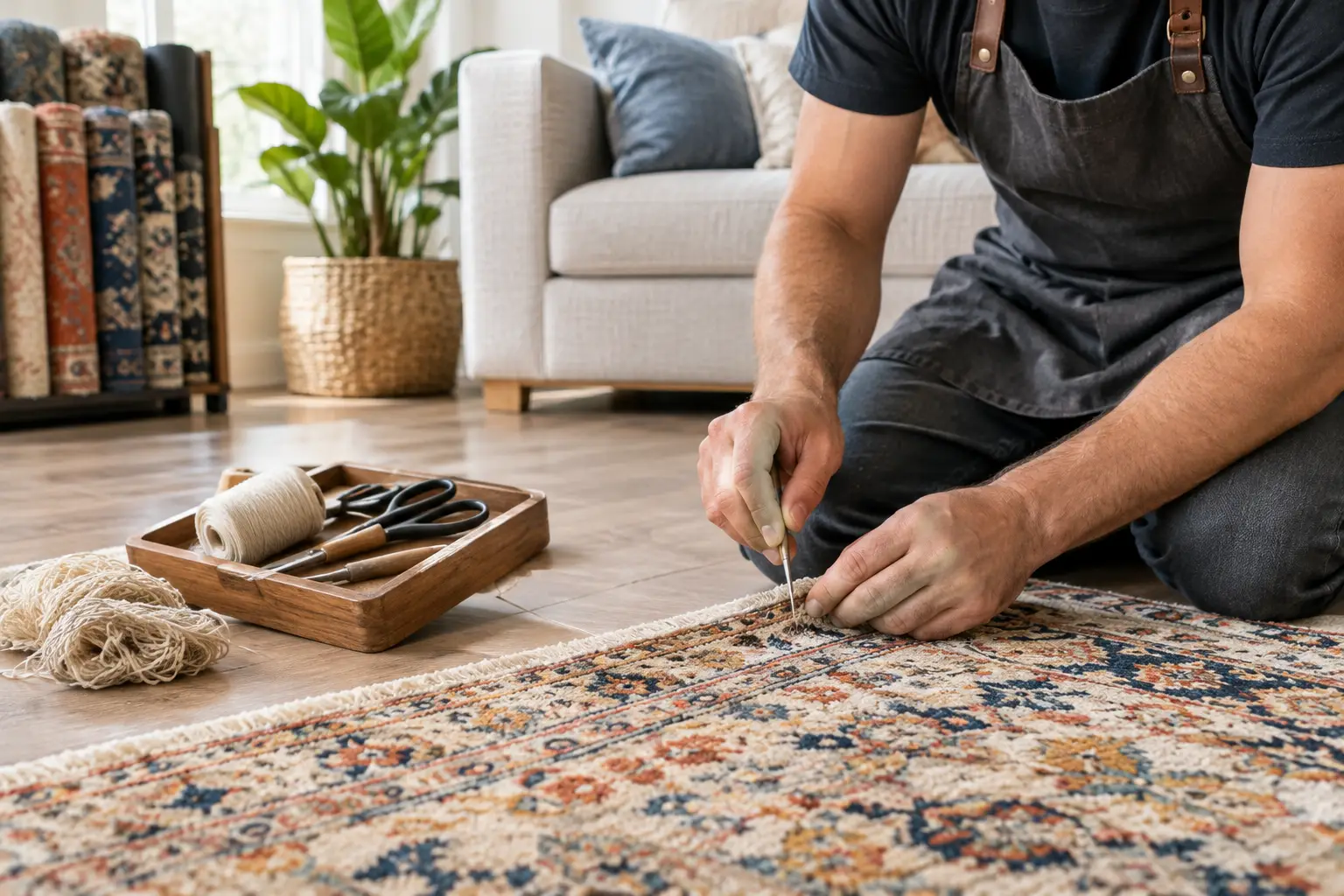
Use this Kennesaw rug repair guide to spot damage early, choose the right restoration, and protect the color, texture, and comfort of your favorite rug.
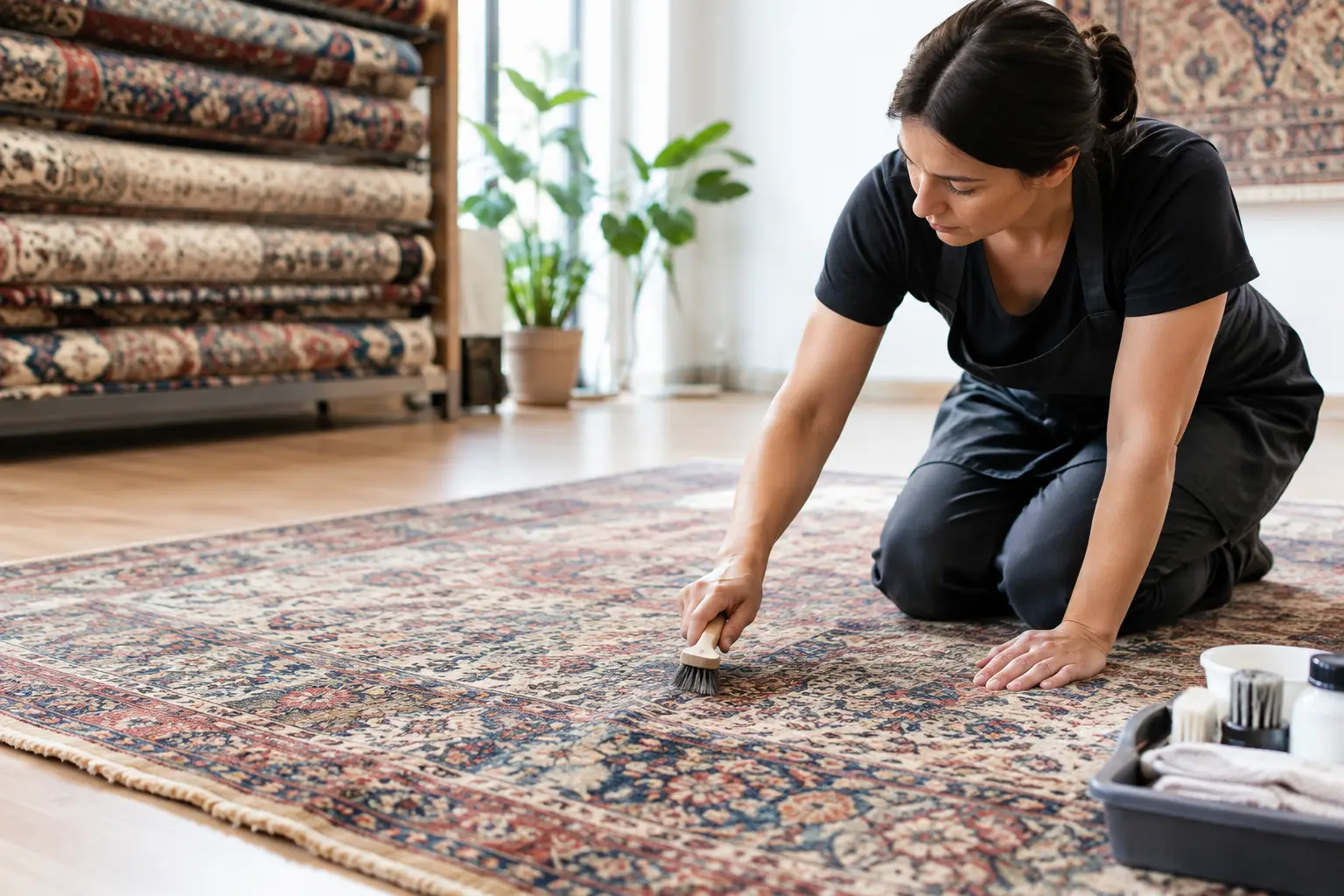
Marietta rug restoration can preserve color, texture, and history. Learn when repair makes sense and how thoughtful care protects a cherished rug at home.

Learn how to protect rugs from sun fading with thoughtful window treatments, rotation, cleaning, and placement tips that preserve color and comfort daily.
From cozy area rugs to statement-making wall décor, our curated categories make it easy to explore what speaks to your space. Whether you’re refreshing a single corner or reimagining your whole home, start here and discover pieces that bring it all together.