A room can have beautiful furniture, thoughtful lighting, and a well-chosen wall color, yet still feel unfinished. Often, the missing element is underfoot. Rugs give a space its sense of grounding, bringing separate pieces into a composition that feels comfortable, intentional, and deeply personal.
The right rug does more than fill open floor space. It softens acoustics, adds warmth to hard surfaces, creates visual boundaries in open-concept homes, and introduces the color or texture that makes a room memorable. Choosing one well is less about following a rigid rule and more about understanding how your household lives in the room.
Why Rugs Change the Feel of a Room
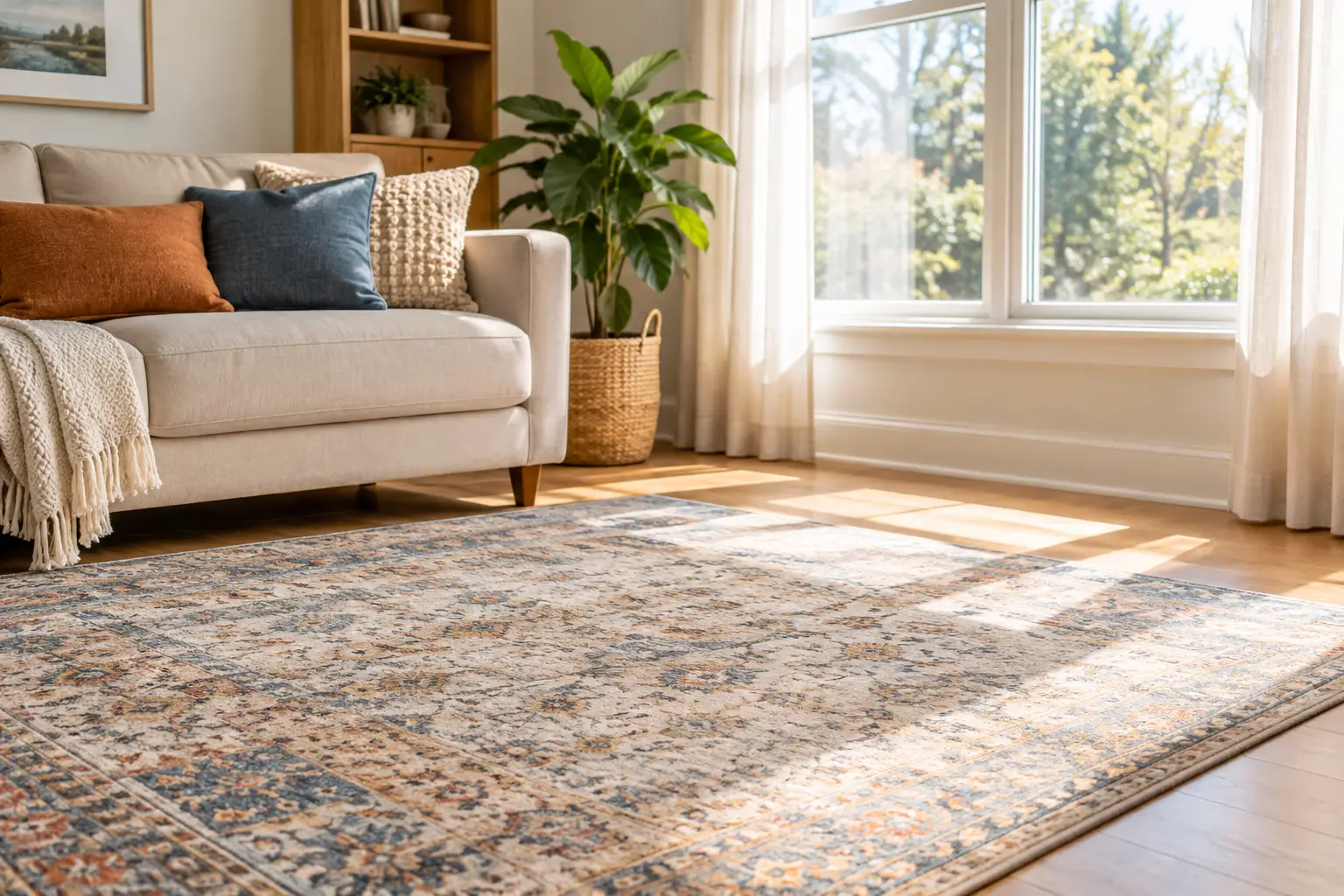
A rug establishes the room’s visual center. In a living room, it gives the sofa, chairs, and coffee table a shared foundation instead of allowing them to feel scattered around the perimeter. In a bedroom, it creates a softer first step in the morning. In a dining area, it helps the table feel like a destination rather than an object placed in an open space.
That sense of definition matters especially in homes with wide-plank flooring, open layouts, or neutral finishes. A rug can give each area its own identity while maintaining a cohesive flow from one room to the next. This is where a layered, collected look often begins: a muted rug might support sculptural lighting and patterned pillows, while a more expressive design can become the room’s focal point.
The most successful choices balance visual impact with livability. A pale, high-pile rug may create a feeling of quiet luxury in a formal sitting room, but it can be less practical near a busy entry or beneath a family’s everyday dining table. The goal is not to choose the most delicate option. It is to select a piece that still looks beautiful after real life happens on it.
Start With Rug Size, Not Color
Color is often what catches the eye first, but size is the decision that determines whether a rug looks polished in the room. A too-small rug can make even well-proportioned furnishings feel disconnected. When in doubt, it is usually better to give the furniture more room to sit on the rug than less.
Living rooms
For a living room, aim to place at least the front legs of the sofa and chairs on the rug. In larger rooms, placing all furniture legs on the rug creates an especially generous, anchored arrangement. Leave a visible border of flooring around the edge, but avoid choosing a rug that resembles a small island floating beneath only the coffee table.
Before shopping, use painter’s tape to outline a few likely dimensions on the floor. Walk around the shape, open doors, and notice where pathways fall. This simple step often makes the right scale immediately clear.
Dining rooms
A dining room rug should extend beyond the table far enough for chairs to remain on it when pulled back. This is a functional detail that makes meals feel more comfortable and protects both the floor and the rug from awkward chair movement. Flatweaves and low-pile options tend to work especially well here because chairs glide more easily across their surface.
Bedrooms
In a bedroom, the rug should create softness where it is needed most: along the sides and at the foot of the bed. A large rug placed under the lower two-thirds of the bed can make the room feel expansive and serene. For a smaller space, runners on either side of the bed offer warmth without overwhelming the floor plan.
Choose Materials for the Way You Live
Material affects how a rug feels, wears, cleans, and ages. There is no single best fiber for every home, but knowing the trade-offs helps narrow the choices with confidence.
Wool remains a favorite for many living spaces because it is naturally resilient, soft underfoot, and capable of holding color and texture beautifully. It can be a strong choice for a living room, bedroom, or dining room, particularly when you want a substantial feel and a finish that looks elevated year after year. Wool rugs may shed at first, especially when new, but this typically eases with regular care.
Synthetic fibers are often a practical fit for high-traffic rooms, active households, and spaces where spills are more likely. Many offer impressive softness and color variation while being easier to maintain. They can be ideal for an entry, family room, or casual dining area where durability needs to lead the decision.
Natural fibers such as jute and sisal bring organic texture and a relaxed, tailored quality to a room. Their neutral tones work beautifully with wood, linen, leather, and layered textiles. Because they can feel more textured underfoot and may be sensitive to moisture, they are often best in low-spill areas rather than beneath a frequently used dining table.
Silk and silk-blend rugs offer luminous detail and a refined hand, making them especially compelling in quieter rooms where their delicacy can be appreciated. They are not always the practical answer for a high-traffic household, but they can add remarkable dimension in a formal bedroom, office, or sitting area.
Let the Rug Lead or Support the Palette
A rug does not need to match every color in the room. In fact, rooms often feel more natural when the rug relates to the palette instead of repeating it exactly. Look for one or two tones that connect to the sofa, drapery, artwork, or accent pillows, then allow the remaining colors to add depth.
If your furniture is neutral, a patterned rug can introduce character without requiring a major commitment on the walls. Vintage-inspired motifs, soft geometrics, and subtle abstract patterns can all bring movement to a room while still feeling timeless. In a space with bold upholstery or colorful art, a quieter rug may provide the visual pause that keeps the overall design balanced.
Texture deserves the same attention as color. A tonal rug with a raised pattern can make a neutral room feel layered rather than plain. A low-profile weave can keep a room crisp and tailored. Plush pile adds softness and intimacy, particularly in bedrooms and cozy sitting spaces. Seeing these differences in person is valuable because a rug’s texture changes with light, angle, and touch.
Consider the Details That Protect Your Investment
A rug pad is one of the least visible and most worthwhile additions to a rug. The right pad helps prevent slipping, improves comfort, protects the flooring underneath, and can reduce wear by absorbing some of the pressure from footsteps and furniture. The pad should be slightly smaller than the rug so the edges remain flat and clean.
Placement also affects longevity. Rotate rugs periodically in rooms with strong sun exposure or a single dominant traffic path. Vacuum according to the fiber and construction, using care around fringe and delicate edges. Address spills promptly by blotting rather than rubbing, which can push a stain deeper into the fibers.
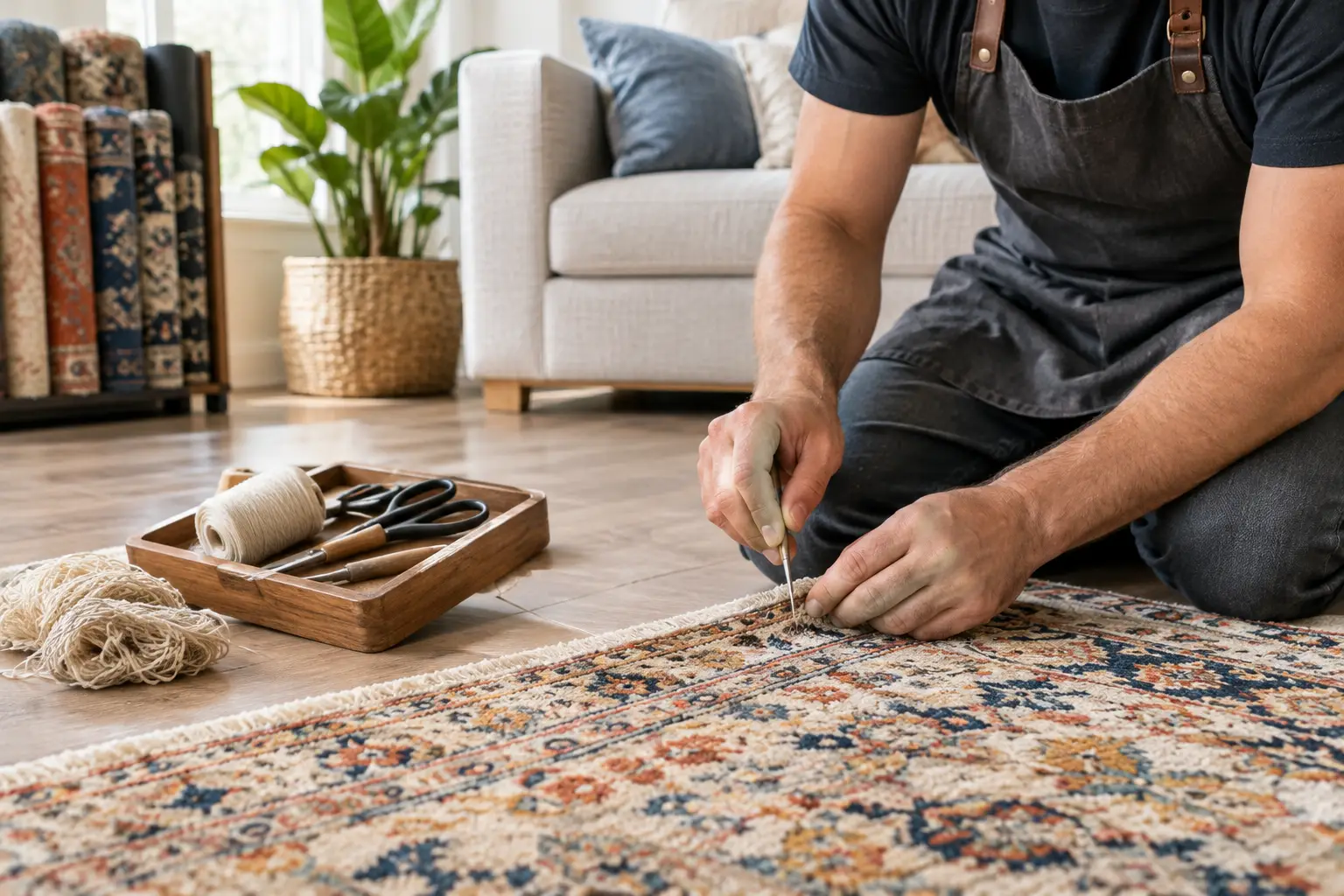
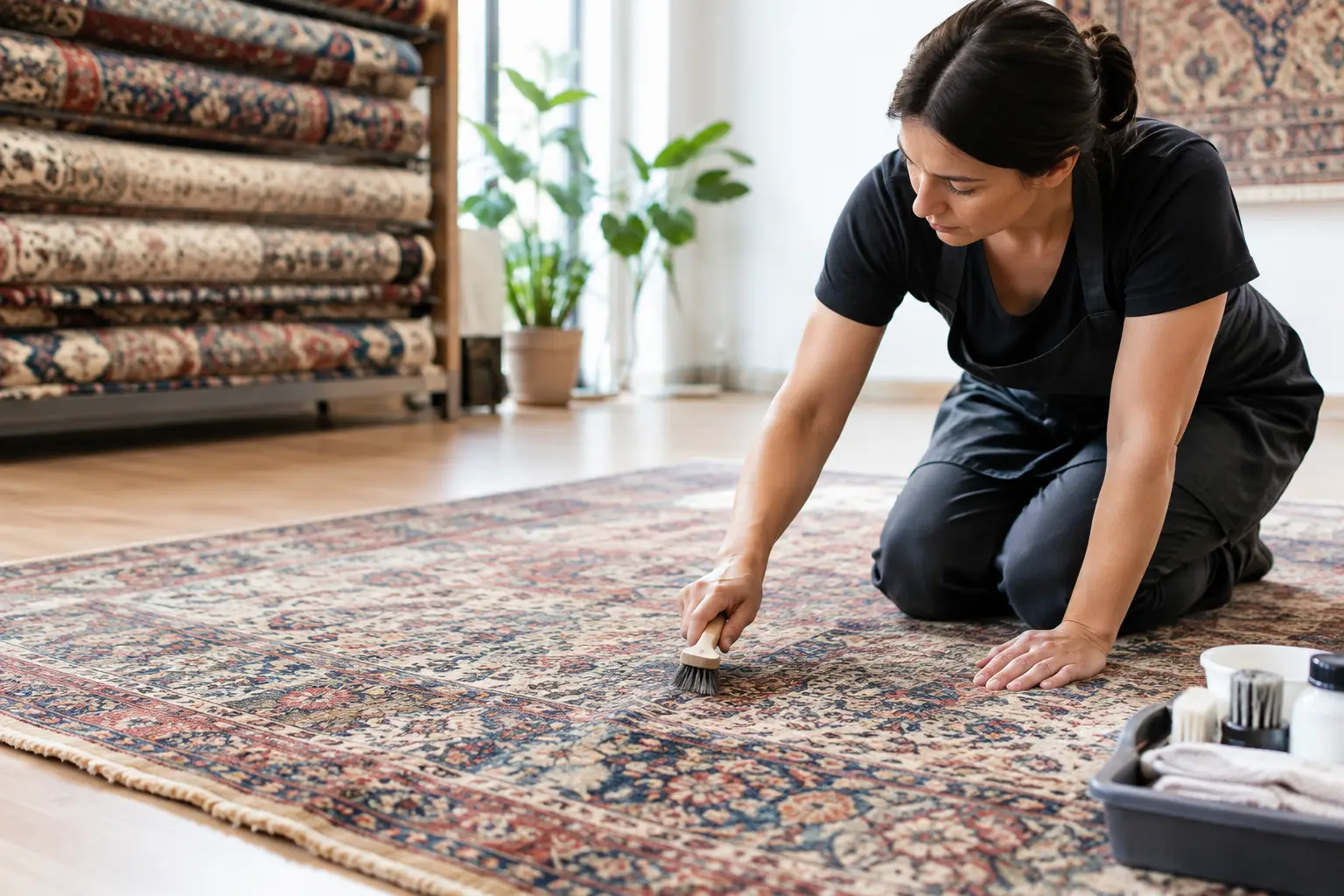
For pieces with sentimental value, hand-knotted construction, or signs of damage, professional rug cleaning and restoration can make a meaningful difference. Frayed edges, weakened areas, color changes, and lingering odors are easier to address before they become larger problems. A well-made rug is often worth preserving, particularly when it has become part of your home’s story.
Create a Home That Feels Collected
The best rooms rarely look assembled all at once. They feel gathered over time, with pieces that speak to one another through color, texture, scale, and mood. A rug can be the starting point for that process or the finishing layer that finally makes everything make sense.
At Home Rug Gallery, seeing rugs alongside pillows, lighting, throws, and accents can make those relationships easier to recognize. Bring a paint sample, a photo of your room, or a fabric swatch when you visit. The right choice should feel beautiful in the showroom, but even more importantly, it should make your everyday spaces feel warmer, more settled, and unmistakably your own.