

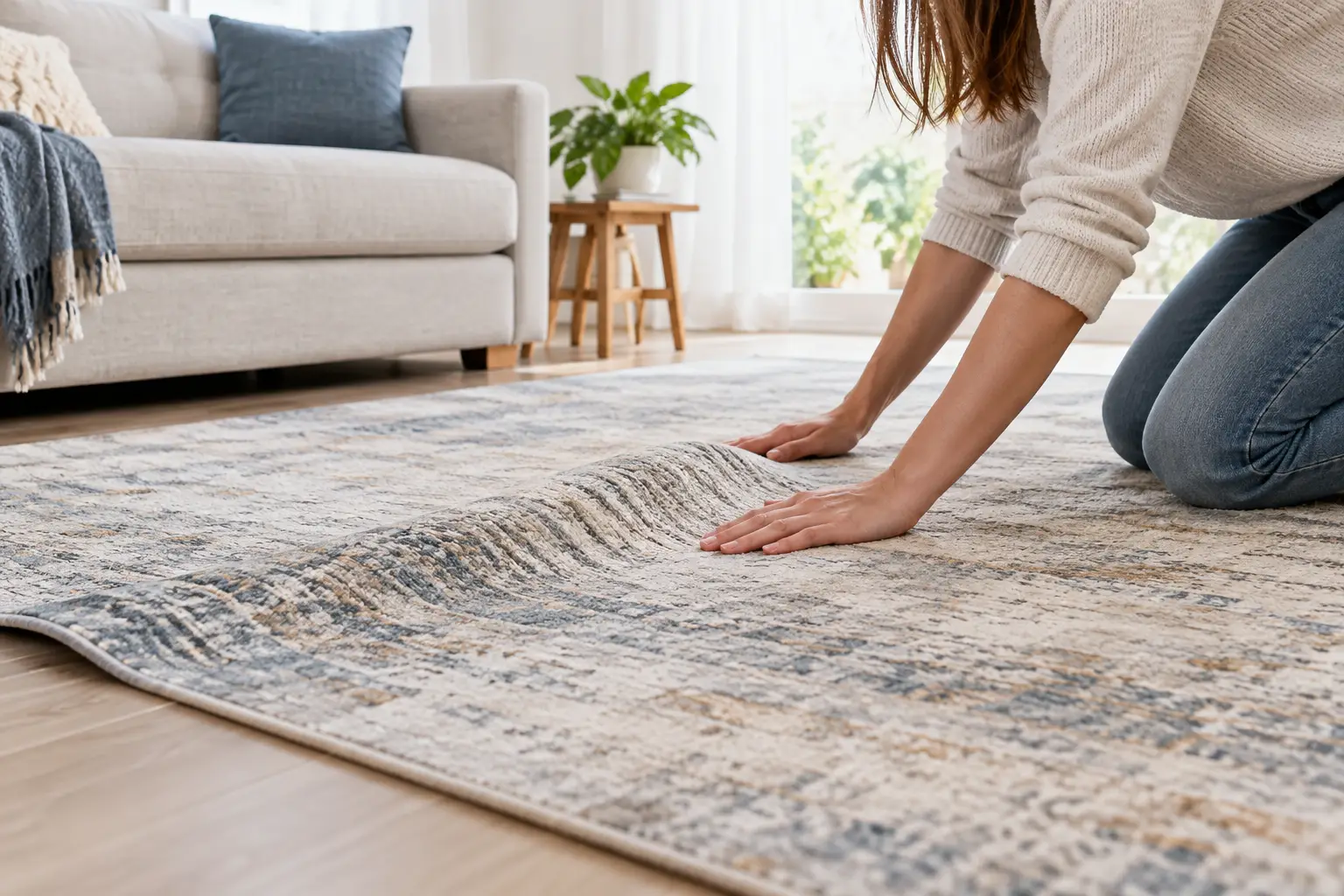
Why Rugs Ripple and How to Smooth Them Out
Wondering why rugs ripple? Learn the common causes, safe ways to flatten a rug, and when professional care can protect its shape and beauty for years.
A rug can be the element that makes a room feel intentionally finished – until one curling, frayed edge begins to distract from everything around it. Rug binding is a practical finishing detail that can protect a rug from further wear while giving it the clean, tailored edge a well-styled home deserves. Whether you are preserving a favorite piece, adapting a rug to a particular space, or restoring a worn edge, the right finish can extend both its life and its visual appeal.
Rug binding is a finished border applied around the perimeter of a rug. It covers the raw cut edge of carpet or rug material, helping keep fibers from unraveling and creating a more polished appearance. Binding is often made from durable fabric, cotton, polyester, leather-look materials, or coordinating synthetic trims, depending on the rug’s construction and the look you want to achieve.
It is easy to think of binding as merely functional, but it also has a design role. A narrow border in a closely matched color can make the edge nearly disappear, allowing the rug’s pattern to take center stage. A contrasting binding, on the other hand, can create definition and give a simple neutral rug a more custom, tailored presence.
For homeowners furnishing a living room, bedroom, hallway, or open-concept space, those details matter. The edge of a rug is not always the first thing people notice, but it often contributes to whether a room feels casually assembled or effortlessly styled.
Binding is especially useful when a rug has been cut to fit a specific area. This might include an unusual entryway, a hearth area, a long hallway, or a room with architectural details that make standard sizing impractical. Once a broadloom material or rug is cut, its perimeter needs a secure finish. Binding creates that finish while allowing the piece to look purposeful rather than improvised.
It can also be an effective option for rugs with edge damage. Fraying often starts small: a loose thread near a corner, a strip of wear along a frequently traveled path, or a border that has begun to separate. Left alone, that wear can spread inward and compromise more of the rug’s structure. Addressing it early may preserve a much larger portion of the piece.
There is a difference, however, between a rug that needs binding and one that needs more involved restoration. If a handmade rug has damaged fringe, unraveling foundation threads, moth damage, or weakened areas in the field of the rug, a simple new border may not address the underlying issue. A close evaluation helps determine the appropriate path and protects you from putting a cosmetic fix over a structural concern.
The terms surrounding rug edges can sound interchangeable, but each finish creates a distinct result.
Binding is typically a flat tape or strip folded over the rug’s edge and stitched in place. It has a crisp, clean-lined appearance that works beautifully with cut-to-size rugs, low-profile styles, and rooms with a more tailored aesthetic. It is often the most versatile choice when you want an edge that feels intentional but does not compete with the rug’s color or pattern.
Serging uses tightly wrapped yarn along the edge, producing a rounded, cord-like finish. It tends to look softer and more textural than binding. Serging can complement casual, transitional, and textured rug styles, especially when the yarn color is selected to blend with the rug’s ground color.
Fringe is decorative rather than protective in the same way. On many hand-knotted and handwoven rugs, fringe is part of the rug’s foundation, not an added trim. Replacing, shortening, or repairing fringe requires care because it can affect the rug’s construction. A rug with fringe should not automatically be treated like a machine-made rug with a simple fabric edge.
The best choice depends on the rug itself, how it will be used, and the feeling you want in the room. A refined formal dining space may call for a subtle, matched binding. A relaxed family room with layered textiles may benefit from a softer serged edge. There is no universal best finish – only the finish that suits the material and the home.
A well-chosen binding should support the rug rather than announce itself unless a bolder border is part of the design plan. Start by looking at the rug’s dominant tones, then consider the colors nearby: flooring, upholstery, drapery, and the room’s existing trim.
For a quiet luxury look, choose a binding close to the rug’s main color. Tonal edging creates a continuous visual field and works particularly well with wool textures, soft neutrals, and rugs that already have substantial pattern. It keeps the room calm and cohesive.
A darker binding can add definition to a pale rug and may be practical in busy areas where a light edge would show wear more quickly. A warm camel, charcoal, deep navy, or soft brown border can give a neutral rug a tailored frame without feeling stark. In a more playful room, a contrasting trim can echo an accent color from pillows, artwork, or lighting.
Texture deserves consideration, too. A sleek binding on a highly textured rug can create a sophisticated contrast, while a heavily textured edge may feel more natural on casual woven materials. Seeing options in person is valuable because color shifts, sheen, and texture are difficult to judge from a small screen image. What appears to be simple beige online may reveal a warm gold cast or a cool gray undertone in the room.
Rug edges absorb more daily stress than many homeowners realize. Vacuuming, furniture movement, pets, children, and repeated foot traffic can all catch or pull at the perimeter. Doorways, kitchen-adjacent areas, hallways, and the edges nearest seating arrangements are especially vulnerable.
A binding can help contain the edge, but it is not invincible. It should be paired with thoughtful placement and regular care. Use a properly sized rug pad to reduce shifting, which limits the tugging that occurs when a rug moves underfoot. Avoid catching the bound edge with a vacuum beater bar, and lift rather than drag heavy furniture when rearranging a room.
If a corner begins to curl, resist the temptation to force it flat with tape or heavy objects for long periods. The cause may be related to the rug’s backing, the floor surface, humidity, or an edge that needs professional attention. Addressing the reason for the curl is more useful than hiding the symptom.
Not every rug is an ideal candidate for rug binding. Machine-made rugs, carpet remnants, indoor-outdoor materials, and many flatweaves can often be finished successfully, provided the backing and fibers are stable. The result can be a beautiful custom-size solution for rooms that fall between standard rug dimensions.
Handmade rugs require a more careful approach. Their edges may be woven into the structure, and the value of the rug can depend on preserving original materials and methods. In these cases, repair or restoration may be more appropriate than applying a conventional binding. Antique and heirloom rugs deserve an assessment before any alteration is made.
Very thick rugs can present another consideration. A wide or bulky edge may affect how the rug lies beneath doors or how it transitions against adjacent flooring. For those spaces, the finish must be selected with both appearance and clearance in mind. A beautiful edge is only successful if the rug remains comfortable, safe, and functional in daily life.
The most successful rug decisions are rarely made in isolation. A rug’s edge, size, pile height, color, and placement all work together to shape how a room feels. Binding may be a small detail, but it can turn a worn piece into a refreshed one or help a custom-cut rug belong naturally in its setting.
For homeowners in Canton and surrounding North Georgia communities, bringing the rug or a clear set of measurements into a local showroom can make the decision more confident. At Home Rug Gallery, thoughtful guidance begins with how you live in the space, then considers the material, the finish, and the style you want to carry through the room.
A clean edge will not change the entire character of a rug, but it can preserve the one you already love – and give it the composed, finished presence your home has been waiting for.
Wondering why rugs ripple? Learn the common causes, safe ways to flatten a rug, and when professional care can protect its shape and beauty for years.
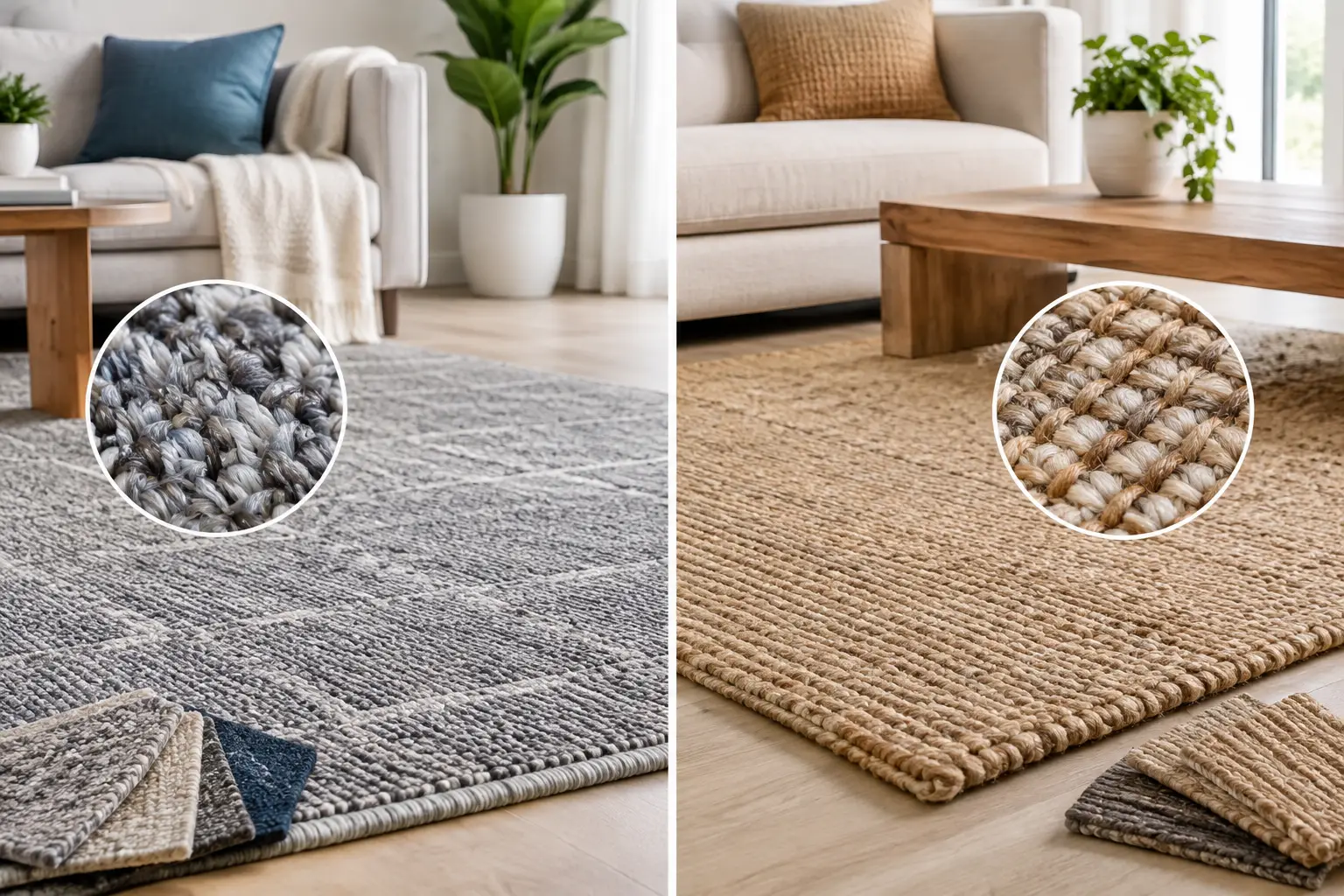
Compare synthetic versus natural fiber rugs for comfort, durability, care, and style to choose a beautiful, practical foundation for your home today.
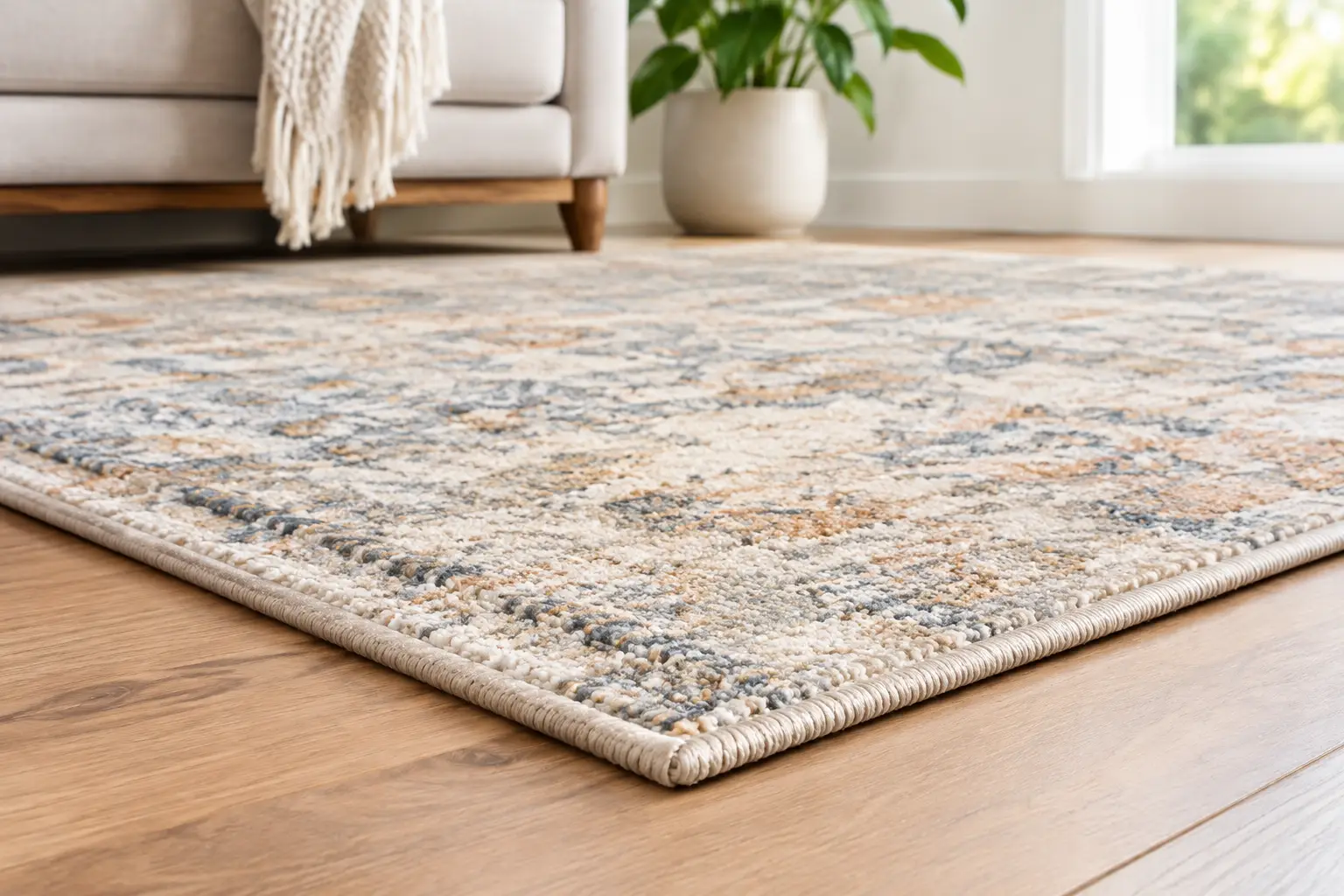
Rug binding gives worn, cut, or custom-sized rugs a polished edge, helping prevent fraying while preserving comfort, style, and everyday function at home.
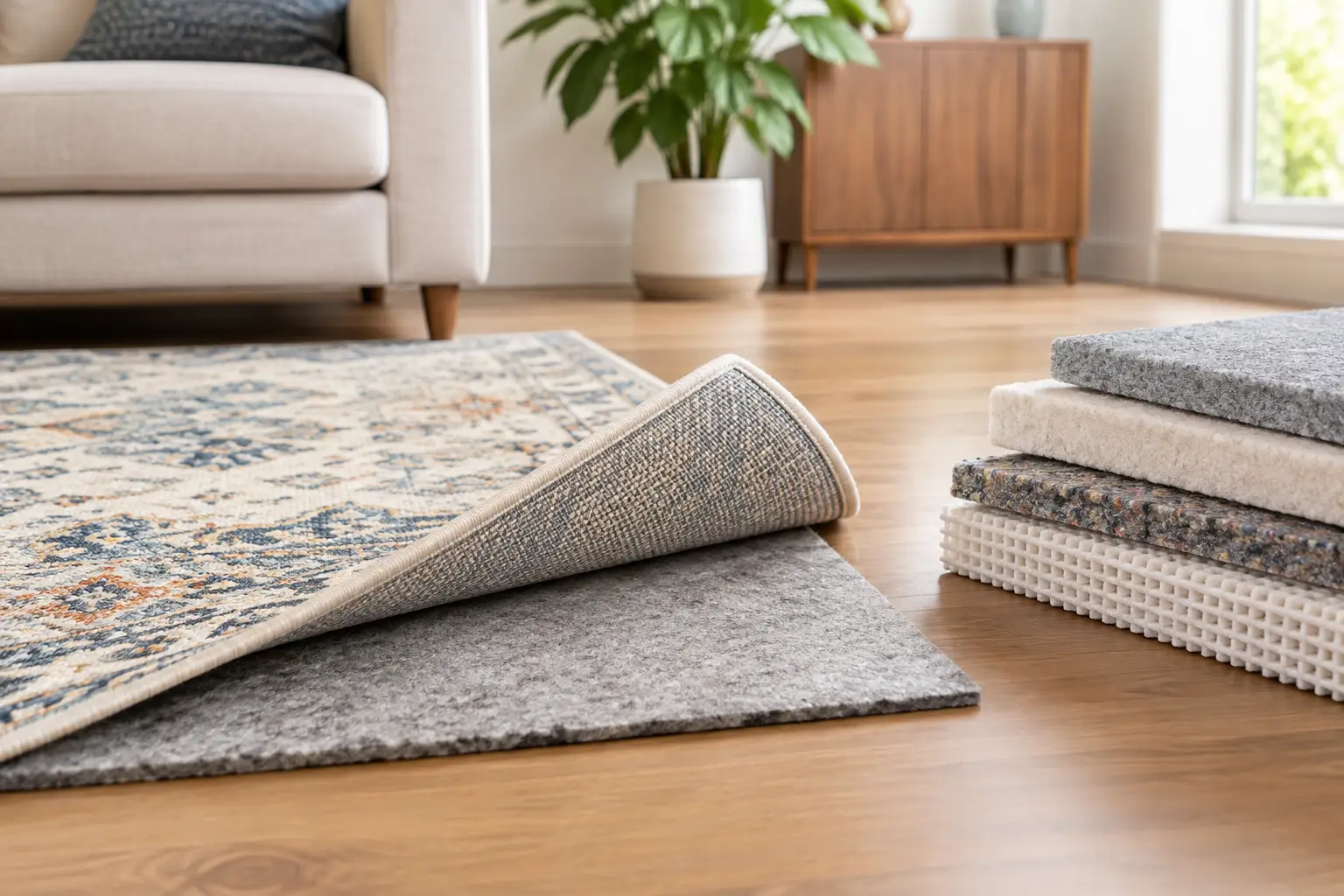
Learn how to choose rug pad thickness by room, floor type, and rug style for more comfort, a tailored look, and longer-lasting rugs at home every day.
From cozy area rugs to statement-making wall décor, our curated categories make it easy to explore what speaks to your space. Whether you’re refreshing a single corner or reimagining your whole home, start here and discover pieces that bring it all together.