

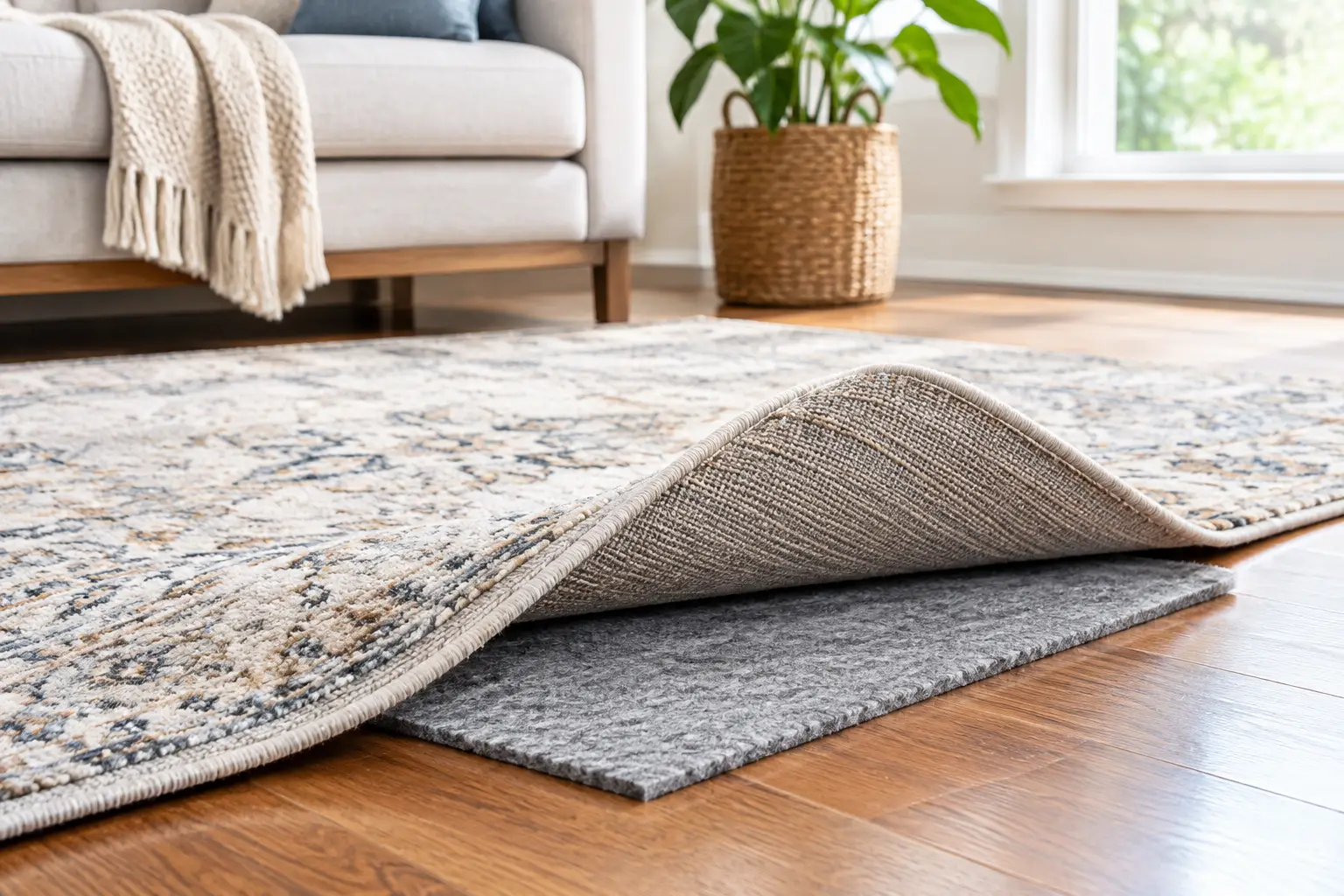
Best Rug Pads for Hardwood Floors at Home
Choosing the best rug pads for hardwood protects floors, keeps rugs in place, and adds a softer, more polished feel to every thoughtfully designed room.
A beautiful area rug can give a room its warmth, color, and point of view. But without the right foundation beneath it, even the most thoughtfully chosen rug can shift underfoot, curl at the corners, or leave your hardwood vulnerable to scratches and discoloration. The best rug pads for hardwood do more than stop slipping – they protect the finish, improve comfort, and help a rug look as tailored as the rest of the room.
For homeowners who have invested in wood floors, the pad is not an afterthought. It is a small, practical decision that supports the longevity of both the rug and the room. The right choice depends on the rug’s construction, the amount of foot traffic, and whether softness, grip, or added insulation matters most in your space.
Hardwood is durable, but it is not indestructible. Fine grit can make its way beneath a rug and act like sandpaper when the rug moves. A pad creates a barrier between the rug backing and the floor, reducing friction and helping prevent tiny scratches that can dull a finish over time.
Pads also solve a common safety concern. Rugs can slide when someone steps onto them, particularly in entryways, hallways, kitchens, and homes with active children or pets. A non-slip pad keeps the rug grounded without relying on adhesives that may be difficult to remove or harsh on finished wood.
There is also a comfort benefit. Even a thin rug pad can make a flatwoven or low-pile rug feel more substantial. In a sitting room or bedroom, that extra layer adds a quiet sense of softness underfoot while giving the rug a more polished, settled appearance.
The most suitable rug pad begins with safe materials. Hardwood finishes vary, so it is wise to look for pads clearly made for use on hardwood and finished floors, especially when the rug will stay in place for years.
A felt-and-natural-rubber pad is often the most versatile option for hardwood floors. The felt side adds cushioning, absorbs sound, and gives the rug a fuller feel. The natural rubber side provides grip, helping keep the rug from migrating across the floor.
This combination works especially well beneath area rugs in living rooms, bedrooms, dining rooms, and family spaces. It offers enough density to improve comfort without making the rug feel overly padded. For many homes, it strikes the right balance between practical performance and everyday luxury.
When shopping, confirm that the rubber is natural or labeled safe for hardwood floors. Some synthetic rubber products can react with certain floor finishes, particularly when exposed to heat or left in place for long periods. A quality pad should never feel tacky, oily, or strongly chemical-smelling.
A dense felt pad is an excellent choice beneath a large rug that is already held in place by furniture. Think of a living room rug anchored by a sofa and chairs, or a dining room rug centered under a substantial table.
Felt pads provide cushioning and sound absorption, making them especially appealing in open-concept rooms or upstairs spaces where footfall can carry. They also help extend the life of the rug by reducing wear from pressure points. However, felt alone does not provide much grip. If your rug is not anchored by furniture or sits in a high-traffic walkway, choose felt with a non-slip backing instead.
Not every room calls for added thickness. In a hallway, kitchen, entry, or near an exterior door, a slim non-slip pad can be the better fit. These low-profile options help stabilize the rug while keeping doors clear and reducing the chance of a raised edge becoming a tripping point.
A thin pad is also useful beneath low-pile rugs where a thick cushion would change the rug’s proportions or make it feel less intentional. The goal is not always plushness. Sometimes the best pad is the one you barely notice because it allows the rug to sit flat, clean, and secure.
The wrong pad can create more problems than no pad at all. PVC, vinyl, and plastic-based waffle pads are often inexpensive, but they may break down over time, stick to a floor finish, or leave discoloration behind. That risk is not worth taking under a rug you plan to enjoy for years.
Avoid anything with adhesive directly against the floor, unless it is specifically designed for your finish and intended for temporary use. Double-sided tapes and sticky rug grips can be tempting for a persistent corner curl, but they can leave residue or pull at a finish when removed.
It is also worth avoiding pads that are too thin or too loosely constructed for the rug’s weight. A pad that bunches beneath the rug can create uneven pressure and make a room feel less finished. A quality pad should lie flat and remain stable, not shift or wrinkle when the rug is walked on.
Thickness is largely a matter of location and use. A thinner pad, often around 1/8 inch, is best for high-traffic areas, doorways, and rugs that need a crisp, low-profile look. It provides protection and grip without adding bulk.
For bedrooms, living rooms, and spaces where comfort matters, a pad around 1/4 inch can add noticeable softness while still allowing furniture to sit securely. Thicker felt pads can feel particularly inviting beneath a hand-knotted or wool rug, but consider furniture placement before choosing one. A very cushioned pad under a dining rug can make chairs feel less stable as they slide in and out.
If the rug is delicate, antique, or has a finely woven construction, a dense, supportive felt pad is usually preferable to a spongy material. The pad should support the rug evenly rather than stretching it or creating pressure along its edges.
A rug pad should be slightly smaller than the rug itself, usually by about one inch on every side. This keeps the pad hidden and allows the rug’s edges to taper naturally to the floor. If the pad extends beyond the rug, it can collect dust, show at the perimeter, and create an awkward edge.
For an irregularly shaped rug, a custom-cut pad can make a significant difference. Round, runner, and oversized rugs all benefit from a pad that follows their proportions rather than being forced into a close approximation. This is one reason seeing options in person can be so helpful: you can assess the rug’s weight, backing, and room placement together rather than choosing a pad in isolation.
A rug pad should work with the life of the room, not simply the dimensions of the rug. In an entryway, grip and a low profile usually take priority. In a bedroom, comfort may be the deciding factor. In a formal dining room, choose a dense pad that supports the rug but does not make chair movement difficult.
For homes with pets or young children, look for a pad that is easy to lift and clean beneath during regular rug care. It is also smart to check underneath periodically, especially near sunny windows, exterior doors, or areas exposed to humidity. Keeping the floor and underside of the rug clean and dry is one of the simplest ways to preserve hardwood beautifully.
At Home Rug Gallery, comparing rug pads alongside the rug itself can help take the guesswork out of the decision. The texture, weight, and intended placement of a rug all influence which foundation will feel right in your home.
The ideal rug pad is largely invisible, yet its effect is felt every day: a rug stays square, steps feel softer, and hardwood retains the rich finish that makes a home feel cared for. Choose a floor-safe material, the right thickness for the room, and a size that disappears just inside the rug’s edge. That quiet layer beneath your rug is one of the easiest ways to keep a beautifully styled room feeling comfortable, composed, and ready for real life.
Choosing the best rug pads for hardwood protects floors, keeps rugs in place, and adds a softer, more polished feel to every thoughtfully designed room.
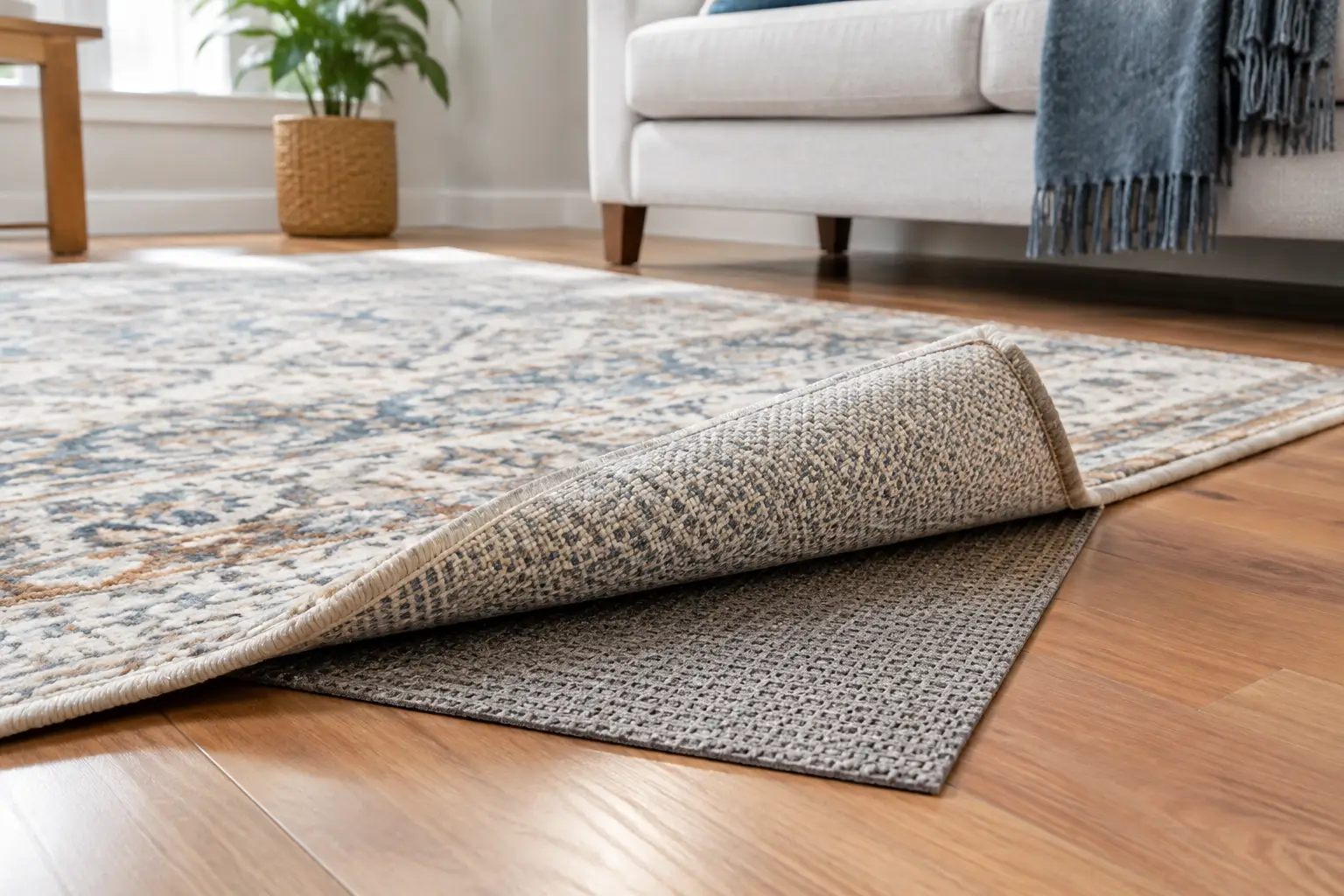
Do rug pads prevent slipping? Learn how pad material, rug size, flooring, and proper placement work together to keep rooms safe and beautifully styled.
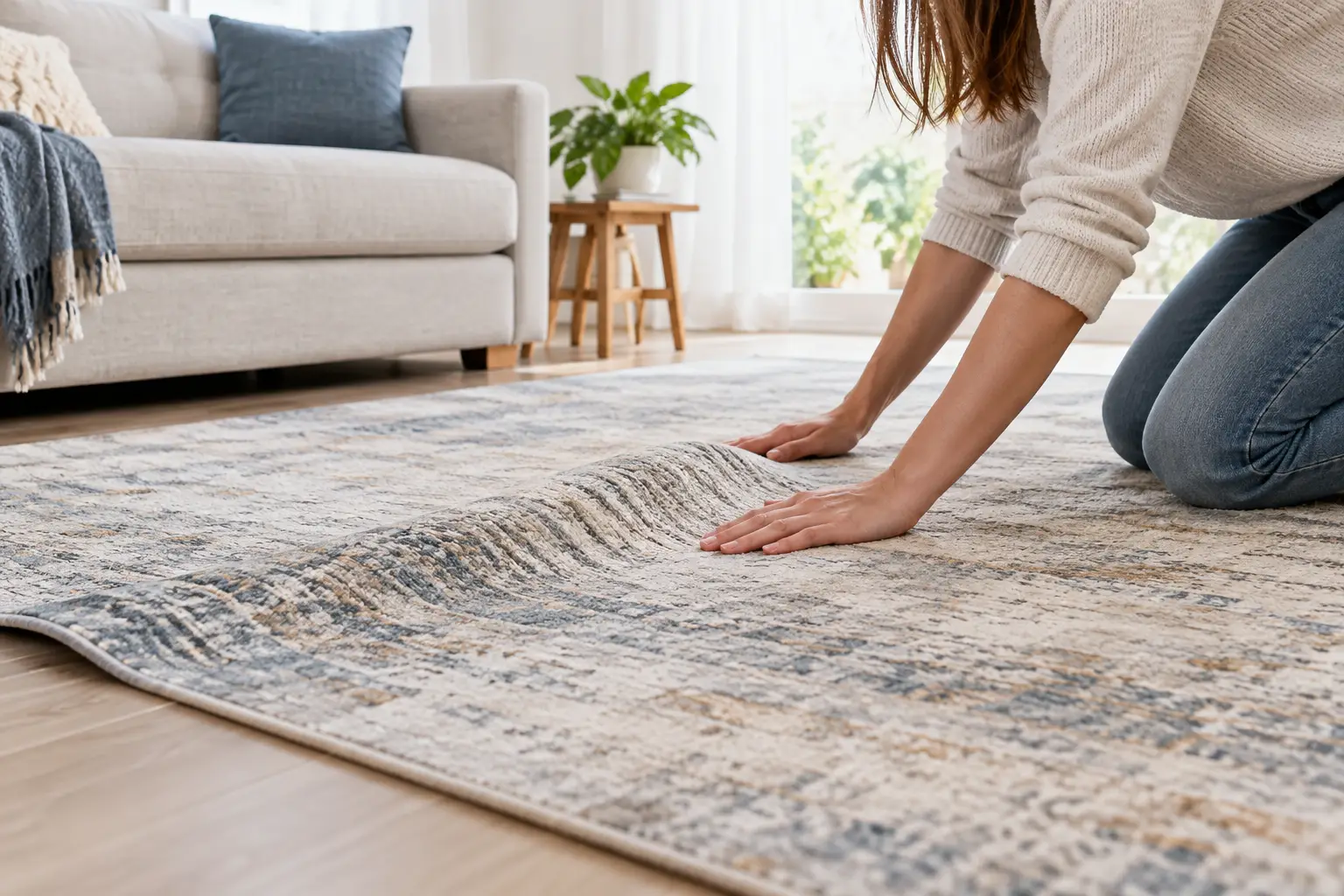
Wondering why rugs ripple? Learn the common causes, safe ways to flatten a rug, and when professional care can protect its shape and beauty for years.
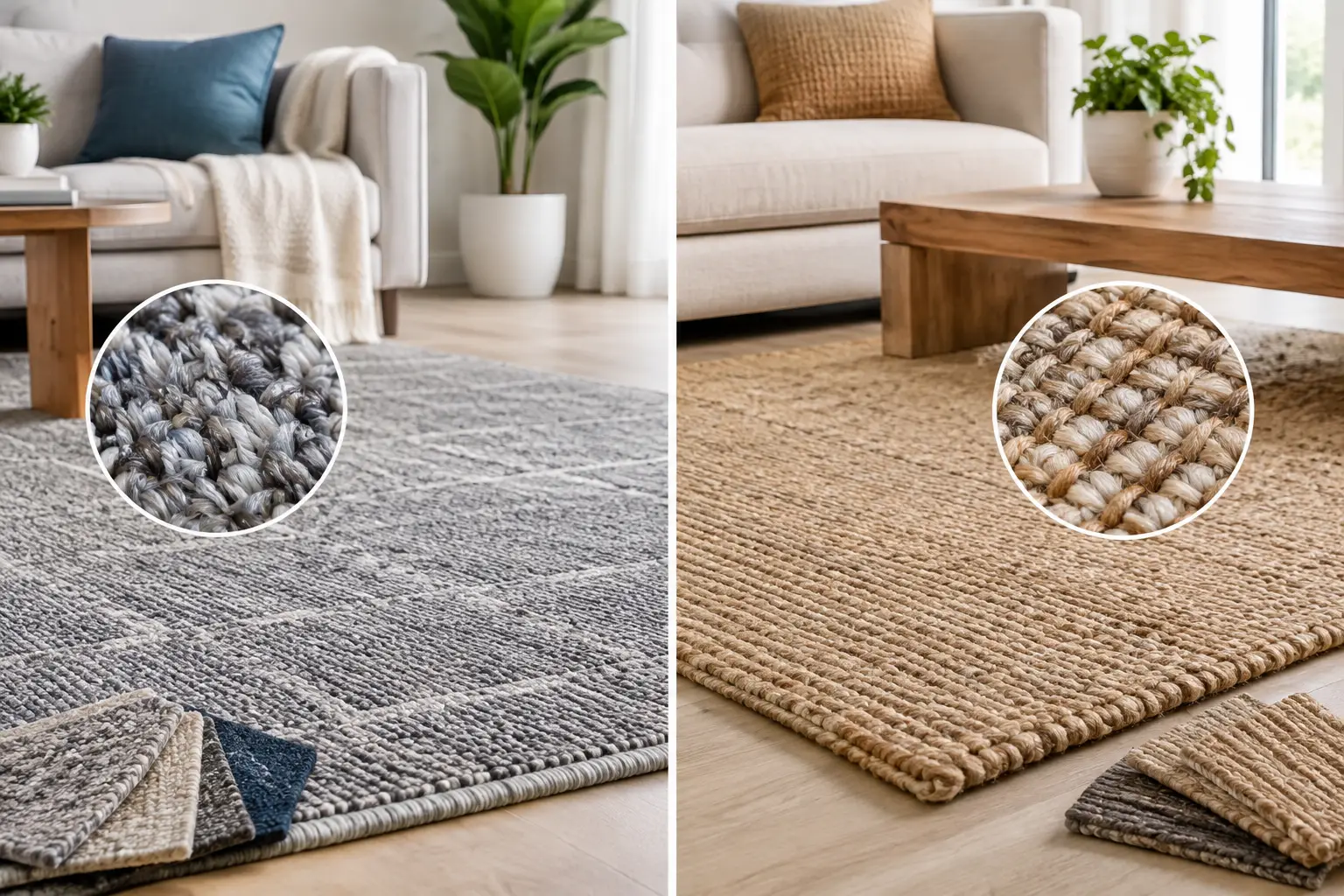
Compare synthetic versus natural fiber rugs for comfort, durability, care, and style to choose a beautiful, practical foundation for your home today.
From cozy area rugs to statement-making wall décor, our curated categories make it easy to explore what speaks to your space. Whether you’re refreshing a single corner or reimagining your whole home, start here and discover pieces that bring it all together.